
Seeing Something on Sale Doesn’t Mean that You Are Saving Money
Are You Really Saving Money When Shopping?
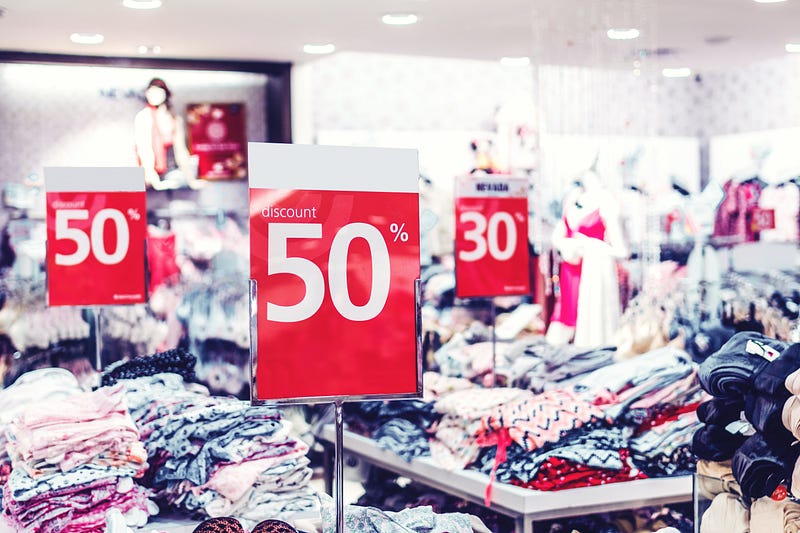
Do you ever wonder why, when you go to the grocery store, you always end up buying more than what was on your shopping list? Maybe you’re not thinking that it has to do with the words Sale, Discount, and Save (Or Saving).
In my opinion, those words are nothing more than tricks retailers used to get you to buy more than you need.
This is something that I have noticed my mother doing ever since I moved back in with her two years ago.
Prior to that, when I lived alone, I had a list of groceries I needed and bought every week. Occasionally, I bought one or two extra things, but that’s it. Since I do not drive, I shop out of convenience. At that time, I went to the grocery store closest to a bus stop. When there are several brands of the same item in one aisle that I want, I will look for the cheapest one. I don’t overspend by finding a great deal on something, like say, a bag of apples, so that I can eat them later. But then they rot in the fridge.
I had a budget of $100 per week for groceries at that time. I went over the limit a few times, but I stuck to that list.
On the other hand, my mother drives to almost every store to find the best deals. She usually has a list of what she wants to buy. She then sees something on sale that’s not on the list, thinking that she’s saving money, and buys it. Then she fills her cart with items she did not intend to buy. She claims she is saving money by doing so. In reality, she is spending more of it.
My mom doesn’t know that supermarkets know the psychology of their customers and that they have a lot of tricks up their sleeves to get you to spend more.
How I knew About One Supermarket Gimmick
Years ago, when I worked as a demonstrator at Costco, I noticed this firsthand. There were items that failed to sell at that particular store. They used us as demonstrators to give customers food samples of those that weren’t selling well. And then those sold out.
Next time you see a demonstrator giving out samples of food, avoid them. I do. The only purpose behind that is so that you can purchase these items that aren’t best sellers.
As a copywriter, I am also aware of the psychology behind consumer behavior. It’s all about you asking yourself, “What is in it for me?” when it comes to sales. That’s what copywriting is all about, selling to you.
In any case, I am going to go back to how supermarkets are fooling you into thinking you are saving money when they want you to spend more of it.
How do stores make you spend more than you planned to?
There are several ways. At the moment, I can only list three. And you are unaware of them until now. Plus, there are always other psychological ways that retailers want you to buy more at their store if you Google them.
The first one, I don’t use this first one for three reasons: 1) I always forget to show it at the checkout counter, 2) They take up space in my wallet, and 3) I don’t want to end up as a hoarder.
Do you know what that is? Coupons.
Coupons are all based on something called unit pricing. A Forbes.com article titled When Sales Don’t Save You Money gave the example of a “six-pack of soda.”
What they’re stating is that a unit price is the cost of individual items. According to the Forbes.com report, it would be each of the six-soda pack’s bottles. When stores and companies publish coupons, they meddle with all this to get you to spend more money.
It is better to buy items at a regular price rather than using a coupon. If you find a coupon on an item you need, that’s fine. However, if you don’t need it, then you’re spending more than what’s in your budget.
One of the tactics mentioned in Forbes.com that I have seen when I worked for Costco is Loss Leaders. Loss leaders are items that don’t sell. Please read the first half of this article about my experience working there if you have forgotten what I mean.
One thing I forgot to mention about that experience is that many customers are unaware that they are only allowed to sample from three cups. Each demonstration cup represents one person. These Loss Leaders are not without caveats.
Caveats are what you get off the regular price of a product by a certain percentage. Because of the deep discounts on these items that you don’t intend to buy, you will spend more.
The Forbes article gives the example of Turkey during Thanksgiving. Stores know you want turkey, but they have the loss leaders and caveats on all the other Thanksgiving items, such as gravy and cranberry sauce. Creating the illusion that you are saving money on those extra items when, in fact, you are spending more.
If you are planning to buy something that you need and you find out that it is on sale, you should take advantage of it. Go for it! Don’t buy anything on sale if you don’t plan to buy it.
The third way is the most obvious. I mentioned it when I spoke about my Costco experience: Don’t shop for groceries when you’re hungry. This is because 1) you will spend even more money, and 2) it will be on junk food. Therefore, it’s not just bad for your wallet, but also for your health. There was a study done on this. Otherwise, it’s best to eat before you go.
What is the best way to save money if stores trick you into spending more?
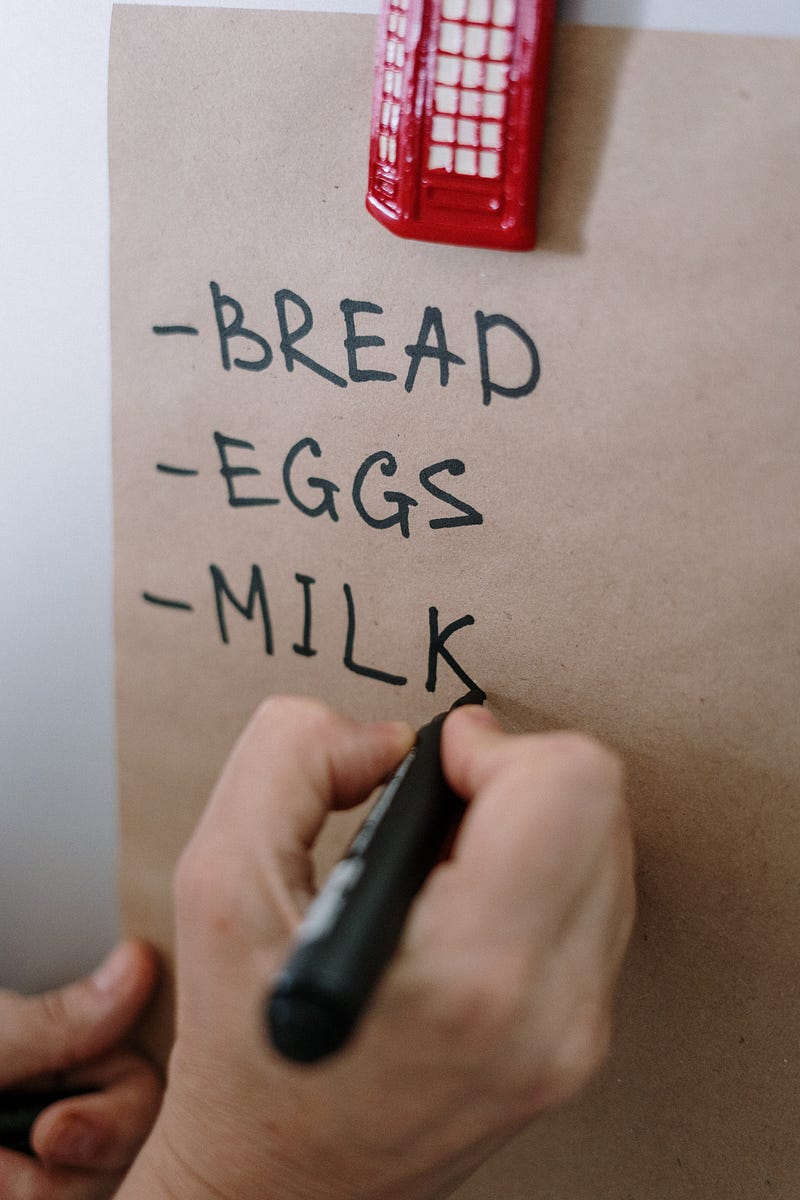
If you want to save money, make a shopping list and stick to it. This is the only way to save money. Don’t overfill your cart with items you won’t use or eat. It’s okay to buy one or two extra items that weren’t on your list.
What if it is a non-food item? A list is still necessary. Whenever I plan to buy something, say a pair of shorts, I only plan to buy those pairs of shorts and nothing else.
Is This Also True When You Shop Online?
Yes, in a way. The biggest problem here is impulse.
Even if the price is low, the biggest online retailers, like Amazon, AliExpress, and eBay, use psychological strategies to hook you into buying more.
Controlling your impulses is the best thing you can do. I know it’s hard. I will tell you how I do it.
Currently, I use Evernote for this. Evernote has an extension for Chrome and Edge called Web Clipper.
To begin with, if you see something you want, ask yourself these questions: Do I really need it? Is it a good deal? Will I use it? Will it make me happy? Is it better to buy it in a brick-and-mortar store? Can I afford it?
If you say no to any of them or all of them, then it’s best to leave the site. Evernote can help you if you are unsure.
For those who have never used Evernote before, it is an app for organizing your life. Why not create a wish list notebook so that you can come back to it and see if you can purchase it later, or you can delete it?
You can also Google ways to avoid impulse buying online. I know there are other ways to avoid impulse buying.
Conclusion
Don’t be fooled by the words Deals, Save, Discount, or Sale, in flyers or online unless you really need that product. Those are just words that copywriters and advertisers use to get you into the door to that store.
You should also research other ways retailers use to get you to buy more. I forgot to mention one more thing, which is the placement of items on shelves. They do this for a reason that has to do with where you first look.
Besides that, since everything is getting expensive (and my mother complains about it every day), it is better to stop shopping to save money, and rather to shop and be smart about how you spend it.
Note: This article contains affiliate links. If you click on it, I get a commission at no additional cost to you.
If you like any of my stories, why not help me and add a little coffee money to my Ko-fi account?
References
Ashford, K. (2015, February 25). Shopping Hungry? You’ll Spend More (Even If You’re Not Buying Food). Forbes.com. Retrieved June 1, 2022, from https://www.forbes.com/sites/kateashford/2015/02/25/shopping-hungry/?sh=6a7dce2419dd
Belland, D. (2017, November 28). Do you really save money when you buy items on sale? Your Financial Launchpad. https://yourfinanciallaunchpad.com/do-you-really-save-money-when-you-buy-items-on-sale/
5 Questions to Ask Yourself Before Making a Purchase. (n.d.). Take Charge America. Retrieved June 1, 2022, from https://www.takechargeamerica.org/5-questions-to-ask-yourself-before-making-a-purchase/
Holterman, A. (2015, May 14). Here’s Why You Should Never Go Shopping When You’re Hungry. Healthline. https://www.healthline.com/health-news/why-you-should-never-go-shopping-when-hungry-021715#1
Rent.com Contributors. (2015, July 15). When Sales Don’t Save You Money. Forbes.com. Retrieved May 28, 2022, from https://www.forbes.com/sites/rent/2015/07/15/when-sales-dont-save-you-money/?sh=d1cc265594b2