
Spring 2021 Contest Winner
Seedings
“Spring is the time of plans and projects.” ― Leo Tolstoy, Anna Karenina
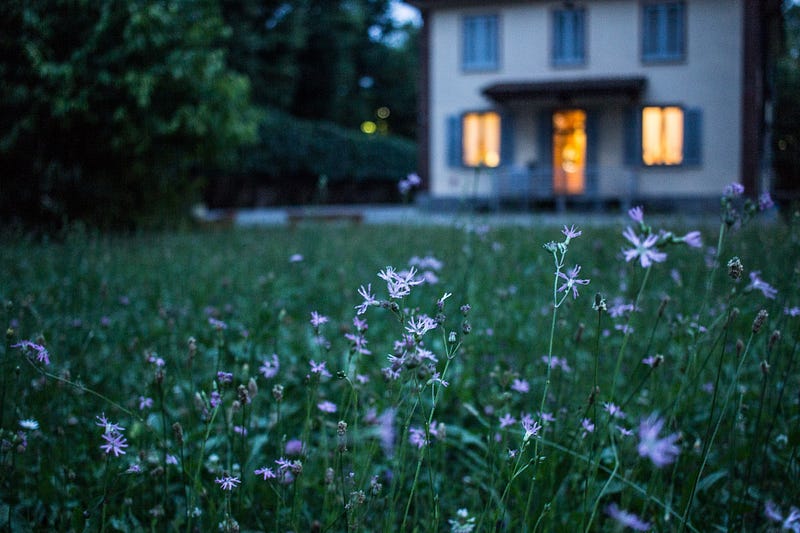
That April, with long hours of sunlight and buzzing bees in the meadow destined to become my yard, I had vision. While others saw a house rising from four feet of weeds in what once was a grazing pasture, I saw a yard replete with delicately blooming apple trees, blue stone walkways and the possibility of a koi pond or two. Having grown up in New York City, large properties hold a distinctly mystical lure for me. As I stood in my meadow-yard just after closing on the house, images from long-perused gardening magazines imposed themselves on the bucolic splendor. I only had to plan everything out. Such is the boundless happiness of the ignorant.
My first task here would be to get the one-acre plus mowed down to see what I had to work with in terms of design. Would a lawn mower work on weeds this tall? Where, exactly, did they sell lawn mowers? I certainly had never seen one at Macy's or Nordstrom. Hardware stores might have them, but I hadn’t seen such a store in the village. I supposed I could call a lawn service. That way, I would not have to be out mowing when I could be planting rows of sunflowers or daisies.
I went inside and called the local landscaping business (yes, there was only one). I gave the man my address and explained the meadow situation, asking if I could arrange to get it mowed.
“You bought that place out on Plains Road?” the man asked.
“Yes.”
He laughed softly.“You need a scythe out there, not a mower.”
A scythe? Wasn’t that what the Anglo Normans used on the rye crop?
“I really just want to arrange to have it cut down,” I said, trying not to be defensive. “And then I would like to have sod put down.” My brother had put down sod during his summers in law school, so this suggestion seemed completely reasonable to me. Of course, he did this on New York City townhome and co-op lawns that could be measured with a yardstick.
“Sod?” Now he was laughing heartily. “You’ve got what — over an acre out there, right?”
“That’s right.”
“M’am, you can’t sod that much property. You know what that would cost? You’re gonna have to get that brush hogged after you cut some of that down and clear the stones out.”
Brush hogged? That sounded reminiscent of some type of specifically rural torture. I thanked him and said I would call back. I had not planned on any type of bush whacking adventure by moving to the country.
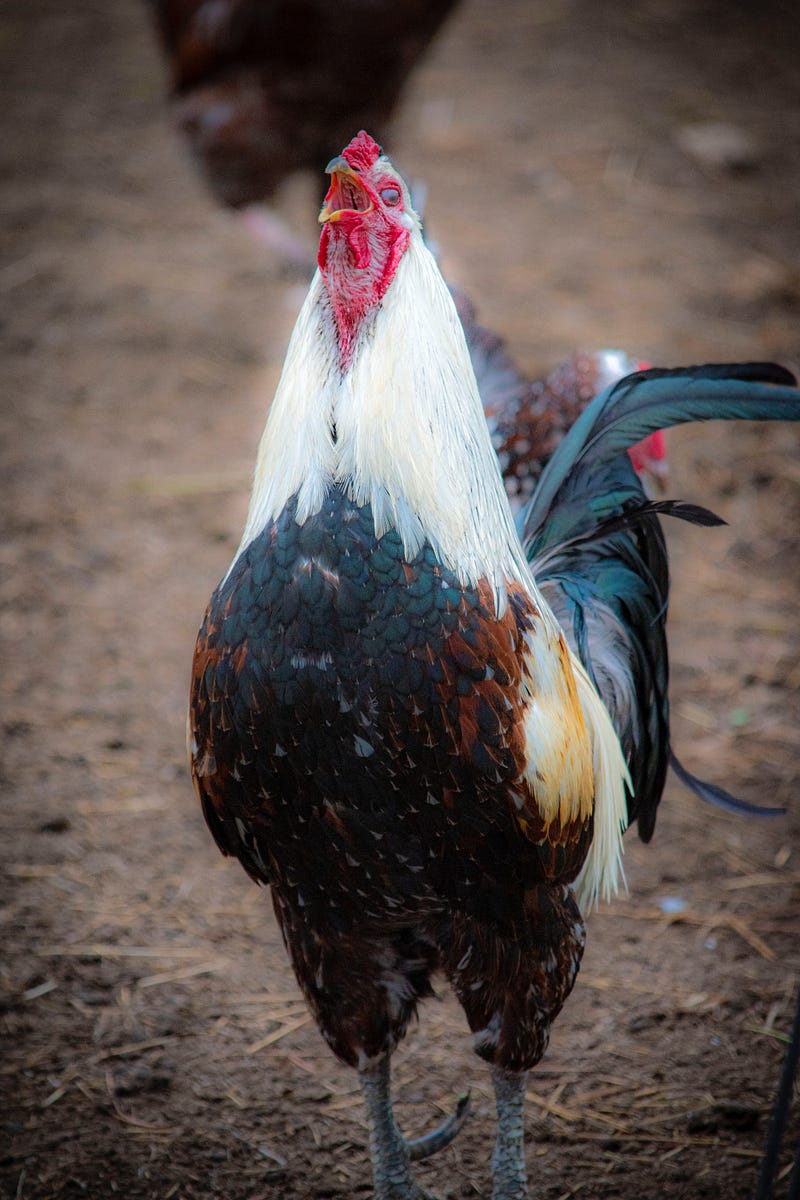
For a few minutes, I listened to a rooster crow in the distance, wondering why on earth he was crowing at three o’clock in the afternoon. Between his trills, I convinced myself that I could move stones and clear areas to be brush hogged. It would familiarize me with the property blueprint. Instead of channeling my inner gardener, I would now have to channel my inner pioneer spirit that I never knew I possessed. I wasn’t exactly sure I did possess any, but I would at least try — and wasn’t that kind of a pioneer attitude?
Two weeks into clearing stones and doing a bit of chopping and shearing with a clipper, I met him. My foot came down onto a cleared area, and since it was hot, I was wearing flip-flops. He slithered right over my foot flesh, not seeming to register that we were different species, and in my extremely robust and unwavering opinion, never meant to touch. That moment, like all trauma, was slow and surreal. I was paralyzed, in the way you are paralyzed in a dream when you try to run and your legs turn into sandbags. I could not scream. I could not move. I stood there for a few frozen seconds before turning to the handyman I had hired to help me clear and brush hog.
“There was a snake…”
He nodded and motioned for me to come to where he was raking. “See that?”
I looked down to where he pointed to a mass of white and brown gooey substance that looked like bird poo. “Birds?”
“Nah. Snakes. Everyone thinks it’s birds. Thing about snakes is they mix their solid and liquid droppings together to make that stuff. Called urate.”
“There’s a lot of…urate there. How many snakes…”
“You got an infestation. You didn’t know?”
I shook my head. I do not like the word infestation, and when the adjective preceding it is SNAKE, I am immediately stricken with something resembling the vapors. I told him I needed to go inside for a few minutes. I lay down on the sofa with a cool cloth on my head. The rooster let out a warble. At that moment, my pioneer spirit got up and walked out the door, slamming it behind her.
By early June, I had a little over a quarter of the property cleared. The snakes had moved elsewhere as the grasses were pruned and they heard me and the handyman moving around the yard. Still, I bought sneakers and always looked down when I walked in the yard, not trusting that every snake had migrated.
Lightning bugs began jeweling the dusk on warm evenings, and I got used to bats plunging from the trees at dusk. A neighbor assured me that Benny, the rooster, had always crowed at different times during the day to protect the hens at a nearby egg farm. It wasn’t, as I had thought, some sinister foreshadowing that the wells would soon be poisoned.
I began to like walking around the yard, even if I did it with cautious, cat-like steps. I decided to let the remaining field remain a wild meadow, at least for now. I also decided that I would appreciate that meadow from afar as nature is not nearly as organized or as friendly as I had once imagined. I stayed close to the house, spending my newly minted farming time tending to a little fenced in area that sprouted some herbs and tomatoes. Watering and weeding that patch made me feel like a true homesteader.
“That’s cute,” my neighbor Trudy, said, pointing to my six tomato plants and three types of herbs. She owned Benny and came over to chat from time to time. That day, she brought bread with nettle tea brewed from nettles she had grown.
“I like it,” I said, proud of my tiny patch, “it makes me feel like a farmer.”
“Does it?” She looked at me for a few long, county-bred seconds. “Well, I hope you like this bread. I made it from ground wheat berries that I grew.”
“You grow wheat? Here?”
She nodded. “It’s super easy. You could grow some, too.”
For a moment, I saw myself creating You Tube videos on how to grind organic wheat berries and becoming a bread influencer of some sort. I could buy one of those old fashioned ovens like they have in the south of France, the iron ones with filigreed doors, and, oh, those adorable vintage rolling pins on a wall rack, I could pen cookbooks…and then I remembered the four foot weeds, my misguided belief in how simple it would be to go from wild field to chirpy garden patches, the snake that brushed against me, all the work it took to clear only part of the yard, and I stopped.
“I’m a bit of a novice,” I said, “but thanks for the offer.”
“I’ll save you just a few seeds,” Trudy said, “you never know what might happen. You must have some plans for this big yard, don’t you?”
I smiled. “Yeah, but now I’m more of a day-to-day farmer, sort of a seed myself. Going a lot slower. But I’m open to growing a few wheat berry plants. We’ll see what happens.”
And I still have those seeds, on a shelf, happily contained in a labeled jar where they look nicely settled and rustic. I may plant some wheat berries this spring. But when I look at those seeds, so peaceful with sunlight striking them in pastoral contentment, I understand how sometimes the best place for plans is captured inside a jar.