avatarChristina M. Ward

Summary

"Seed to Earth" is a poem that reflects on the cyclical nature of life, using the imagery of fruit and pine trees, and the role of fire in ecological renewal.

Abstract

The poem "Seed to Earth" delves into the resilience of nature, illustrated through the seasons and the process of regeneration. It describes the fall of fruit from trees, the decomposition that follows, and the eventual sprouting of new life from seeds. The poem also touches on the ecological importance of fire in pine forests, highlighting how new life emerges from the ashes, with blackened trunks becoming habitats for various species. The author draws from personal experience living in a Florida National Forest, where they encountered sour orange trees and studied the ecology of post-fire habitats. The poem is both a literal depiction of ecological processes and a metaphor for the enduring nature of life.

Opinions

  • The author finds beauty and inspiration in the way life emerges from ashes, viewing it as a metaphor for overcoming adversity.
  • There is a personal connection to the subject matter, as evidenced by the author's excitement about living among fruit trees and their scientific interest in environmental science.
  • The author values the practice of prescribed burning as a method of forest management, as indicated by their senior project and the recommendation to visit The John Muir Project for more information.
  • The poem is presented not just as an ecological celebration but also as a reminder of life's persistence and the potential for beauty to arise from destruction.
  • The author encourages readers to appreciate the complexity and benefits of natural ecological processes, including those that might initially appear destructive, like forest fires.

POETRY

Seed to Earth

a poem
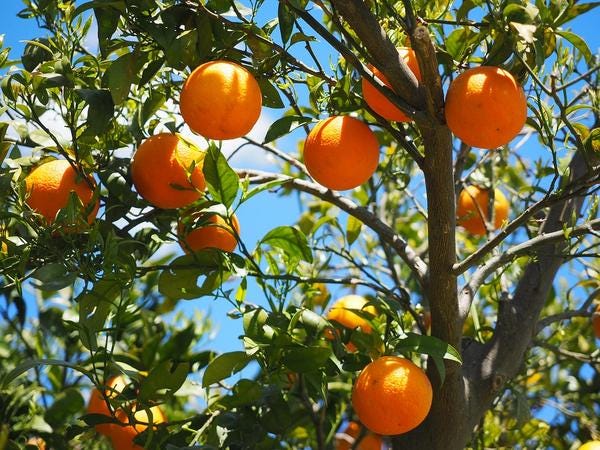
Orange trees, Pixaby

Fruit trees drop them one, two, three…we twist some free. Flesh-juice skinned; we wipe the sugary dribble from our chins. Time melts flesh from the fallen in weathered decay, seed to earth to green in the flowering seasonal swing of things life continues still.

Pine trees drop them one, two three… serotinous and resin-rich, pregnant with seed, flame sets them free! Bud scales open petal-wide, exposing knobby core. Life springs from ash, the earth peeled clean blackened trunks rising like pillars of ghosts, awaiting wing and chirp and beak. Some birds prefer to nest in post-fire trees.

Time heals the scorched, the black, the white-ash grays to leak green and leaf forth in the wake of flame growth anew and spirit churning life continues, still.

A few brief notes on this poem:

When I lived in Florida for a few years I was very excited to be moving into a lovely rental in the middle of a National Forest. There was an orange tree in my yard! I could not have been more excited. Did you know there are “sour orange” trees? They were the most terrible things, those oranges. But I learned to make a mean sour orange pie.

Also, and in abundance, were pine trees. When I studied for my Bachelor of Science in Environmental Science, I became fascinated with the life cycle of the pine tree and the the ecology of post-fire habitat. I was fortunate enough to train for Prescribed Fire Training as part of my senior project. (The forests surrounding our Florida home were often treated with prescribed burning as part of the state-wide forest management plan. (My Senior paper was entitled “Developing a Comprehensive Fire Management Plan in the United States.”)

As a poet, the beauty of life rising out of ashes is both inspiring and metaphorical. While the above poem was not metaphorical in nature, I hope that you will take it as both an ecological celebration, but also as a reminder that out of what seems to be the worst thing imaginable — life continues still. Beauty from ashes.

If you are interested in reading more about how prescribed burning is used to manage pine forests please visit The John Muir Project.

Thank you for reading Seed to Earth.
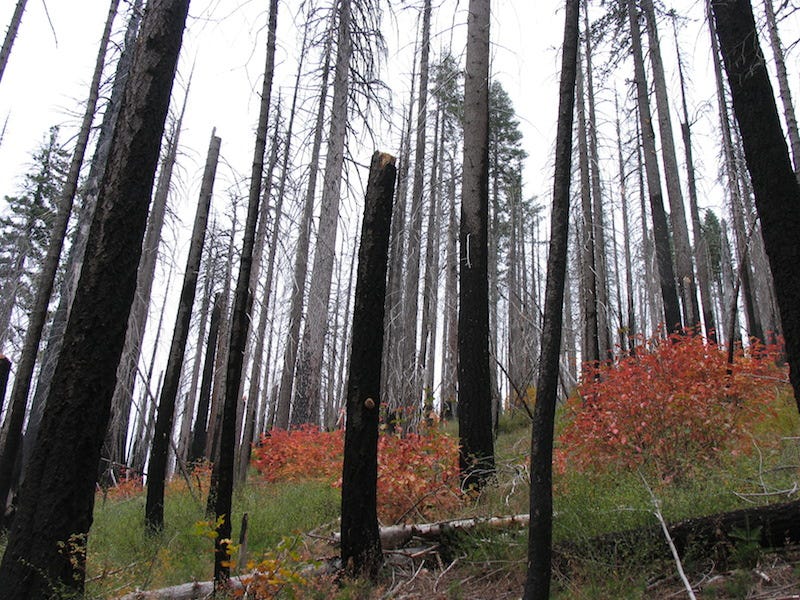
Unlogged/unmanaged snag forest habitat 5 years after the Storrie Fire on Lassen National Forest, with an abundance of snags (standing fire-killed trees), natural conifer regeneration, oaks and dogwoods, and native shrubs. JMP has protected tens of thousands of acres of CESF from post-fire logging on National Forests since 2000. — http://johnmuirproject.org/forest-watch/post-fire-habitat/

Follow my Blog!

Don’t Miss Updates on Christina’s Poetry and Book Releases!

Poetry
Ecology
Nature
Environment
Trees
Recommended from ReadMedium