
See You in the Next Geological Era
When life gets difficult, it’s always lovely to take some time off. In the Siberian permafrost, there’s a worm that, a bit too stressed, took a 46,000-year break — before a team of scientists woke it up

Nature is always more creative than we think. A female spider eating her partner after mating, birds orienting themselves through the Earth’s magnetic field, or a jellyfish reverting the life cycle when stressful environments become overwhelming.
One fascinating natural solution that I have always found intriguing is cryptobiosis. This term refers to the ability of an organism to enter a specific dormancy state (known as the cryptobiotic phase), in which metabolism nearly stops, and the organism does not grow or reproduce. This state occurs as a response to adverse environmental conditions, such as dehydration, freezing, or hypoxia. The organism remains technically alive, as metabolic processes can restart as soon as the environmental stress subsides.
The cryptobiotic phase can be achieved by both unicellular organisms (such as yeast) and multicellular organisms like tardigrades. Tardigrades are micro-animals often found in lichens and the soil of freshwater sediments. While in this state, their metabolism decreases to less than 0.01% of normal, and their water content can drop to 1% of the normal level. They can endure without additional food or water supply for decades, only to be reactivated later on when the conditions ease.
How Does It Work?
Cryptobiosis is still not fully understood. One significant aspect that has been investigated is the accumulation in the organism of a sugar called trehalose, composed of two glucose molecules. This sugar appears to play an essential role by providing structural support to cell membranes during desiccation (drying out).
Studies have been conducted on the model organism (i.e. an organism standardly used in scientific research) Caenorhabditis elegans, a small worm belonging to the phylum Nematoda. It can enter a state of cryptobiosis through desiccation as a response to harsh environmental conditions during its larval stage. While C. elegans cannot handle sudden severe stress, if exposed to a milder period of desiccation stress first (referred to as preconditioning), it adapts and responds by activating protective mechanisms. These mechanisms include trehalose accumulation, the production of a protective protein called LEA-1, and glycerol synthesis. Glycerol accumulation prevents the formation of ice crystals in case of freezing, which would otherwise be lethal to the organism.
The 46,000 Years Old Siberian Sleeping Beauty
In 2018, biological samples were collected from the Siberian permafrost at around 40 meters (approximately 131 feet) below the ground. Astonishingly, scientists found alive worms in the cryptobiotic phase.
More recently, DNA sequencing confirmed that this organism belongs to an uncatalogued species of the phylum Nematoda, the same as the above-mentioned C. elegans. In their latest PLOS Genetics publication, researchers named it Panagrolaimus kolymaensis. For simplicity, I will refer to it here as the ‘Siberian Worm’. Carbon dating of organic material from the sample accurately determined that the nematodes had frozen around 46,000 years ago. This indicates that the Siberian Worm has endured in a cryptobiotic state for an astonishing amount of time, the longest known so far.
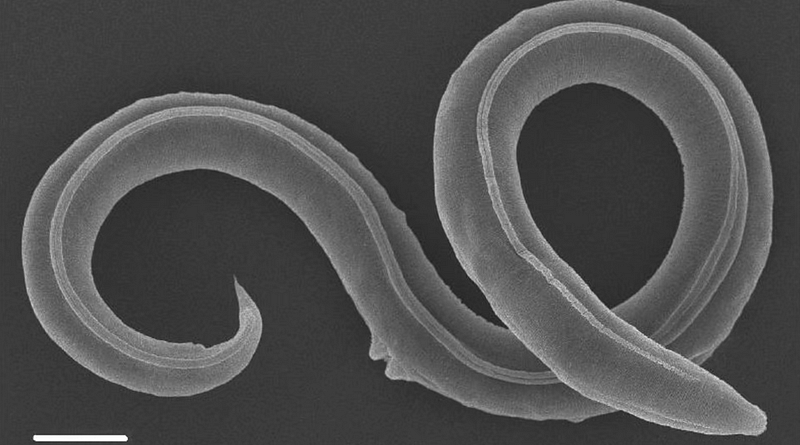
Interestingly, many genes that play a role in cryptobiosis regulation in C. elegans are conserved in the Siberian Worm. Some of the molecular mechanisms responsible for regulating cryptobiosis may therefore be shared between these two species.
By performing experiments on both larval and adult individuals, researchers discovered that the Siberian Worm enters cryptobiosis through harsh desiccation and immediate freezing, with or without the preconditioning step that is instead essential for C. elegans. Furthermore, C. elegans cannot enter cryptobiosis as an adult. This indicates that the Siberian Worm is more versatile in this regard.
Although further studies are needed to explore the underlying molecular mechanisms, the Siberian Worm increases trehalose levels up to 20-fold during preconditioning while depleting fat reserves (similarly to C. elegans). Researchers have demonstrated that freezing after desiccation, a condition likely to occur in permafrost significantly enhances the likelihood of worms surviving in a cryptobiotic state. Interestingly, they have shown that a similar sequence of events also increases survival in cryptobiotic states for C. elegans, with a monitoring period of up to 480 days.
The discovery of the Siberian Worm thus raises the following question: is there a limit to the time an organism can endure in a cryptobiotic phase?
What Permafrost Can Teach Us
The way we learn history in school, humans often take up too much space. I find it fascinating that while civilizations grew in glory and collapsed into slow or sudden decay, those little worms were out there, somewhere in the permafrost, performing the incredible magic of taking an almost 50,000-year nap.
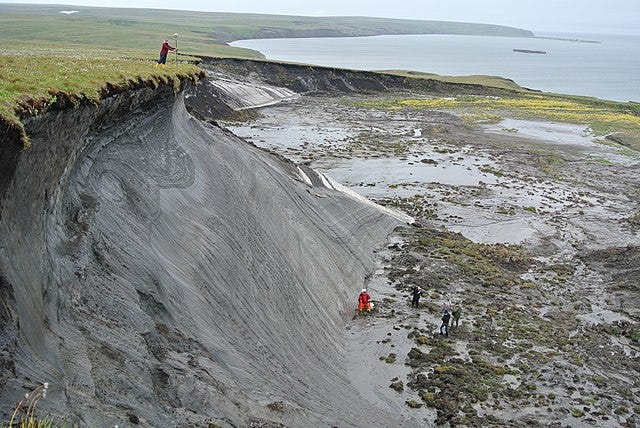
As mentioned above, the sampling that led to the discovery of the Siberian Worm was taken at around 40 meters below the permafrost surface. In some parts of Siberia, permafrost thickness can reach 1500 meters (approximately 4921 feet), which means 40 meters is not that far from the surface. Examining organisms preserved in these deposits offers precious insights into Earth’s ancient history, as well as a deeper understanding of the remarkable survival mechanisms that enable organisms to withstand extreme conditions for extended periods. Beyond the intrinsic value of this knowledge, it has a range of practical applications in today’s world, from improving the preservation of organs for transplantation to the development of innovative, resilient biomaterials.
Furthermore, as permafrost undergoes changes due to global warming — a trend expected to continue — we could gain insights into ancient species that might re-emerge in the near future. Among these, there could be pathogens, perhaps some that have been dormant for even more than 46,000 years.