
Seductive Science and Engineering: Decoding Big Food’s Hold on Your Taste Buds
Big food’s mind-control techniques are designed to hijack our palate psychologically and physiologically.
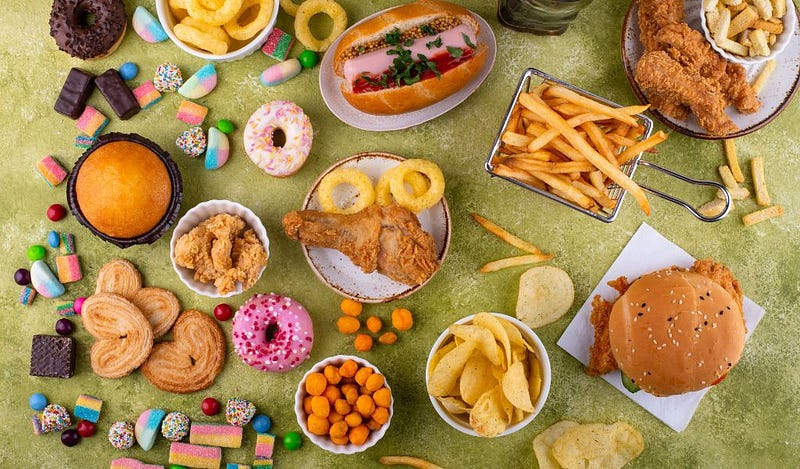
Have you ever found yourself unable to stop after just one chip? Or wolfed down an entire bag of cookies without even realizing it? You’re not alone.
I think we’ve all zoned out in front of the pantry and suddenly found ourselves surrounded by empty bags and boxes, wondering how we got there and where all the snacks went.
No judgment here — we’ve all been trapped in that snacking vortex before. But did you know this? Behind every irresistible snack food is an intentional recipe engineered by food scientists to hijack your senses and light up the reward circuits in your brain.
Like puppet masters, mega food corporations carefully concoct combinations of fat, sugar, and salt that are addictive. They know exactly how to engage your taste buds and leave you craving more.
It’s no accident that it’s nearly impossible to eat just one potato chip or Oreo.
Plus, as research shows, one of the main factors that drives food selection is taste. So, manufacturers can easily exploit our desire for foods that titillate our taste buds and leave us craving more despite their lack of nutrients.
Based on my reviews and personal experiences as a family physician, I want to uncover this topic from multiple angles, showing you big food’s cunning strategy to control our cravings.
1 — Exposing Their Tactics
Let’s venture inside the secretive labs where food engineers design hyper-palatable, habit-forming snacks. You might be surprised by the psychological tricks and marketing ploys they use to get into your shopping cart.
Let’s pull back the curtains on the hidden forces that compel you to buy junk food and reach for a second, helping against your better judgment.
Are you ready to uncover the dark science behind food addictions? Let’s dig in.
2 — The Science of Addictive Foods
For people who suffer from food addiction, navigating a grocery store is like entering a war zone. They know firsthand the overwhelming allure of processed foods.
These products are designed to trigger cravings by sight, a testament to the deep science and research invested by food companies.
Their goal? To create the perfect combination of salt, sugar, and fat that sends us over the moon and keeps us coming back for more.
3 — Unveiling the Secrets
When investigative reporter Michael Moss peeled back the curtain that shrouds the food industry, what he discovered was startling.
Behind the wholesome commercials and happy slogans was a calculating, profit-driven machine fine-tuned to exploit our biological urges.
For his book “Salt Sugar Fat: How the Food Giants Hooked Us,” Moss went undercover into the corporate labs where food scientists work their magic.
Like alchemists, these labs employ an arsenal of tools to concoct irresistible, habit-forming snacks and drinks.
How do they do it? Advanced technologies allow them to dial in the exact ratios of salt, sugar, and fat that light up the brain’s reward pathways.
They analyze consumer data and run regression models to maximize the chances you’ll grab a product off the shelf. It’s a sophisticated numbers game designed to override self-control.
4 — Striving for the “Bliss Point”
Moss recounts secret interviews with industry insiders who spilled their trade secrets. He witnessed the creation of snacks scientifically formulated to hit what they call the consumer’s “bliss point.”
This shadowy side of the food industry reveals an insatiable drive for bigger profits, even at the expense of public health.
By cracking open what goes on behind closed doors, Moss exposes the hard truths about the addictive allure of processed foods. It’s a fascinating read!
5 — The Art of Temptation
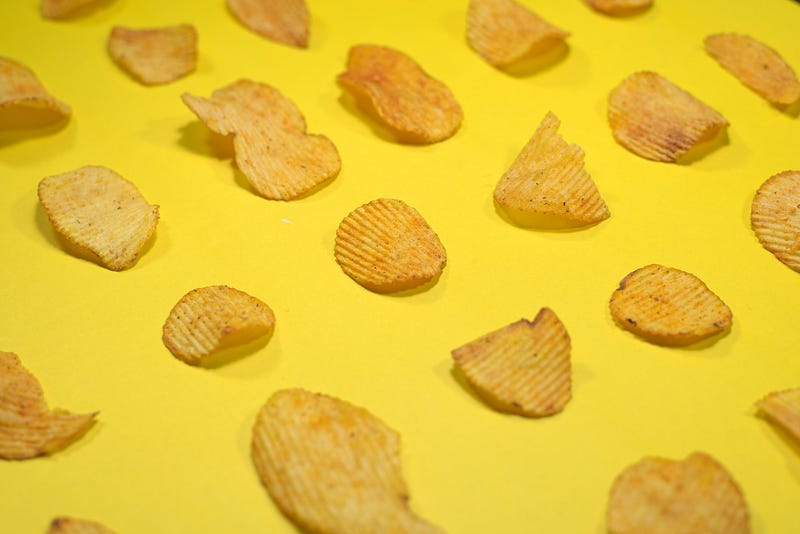
Creating addictive foods involves a nuanced understanding of human sensory experiences. Terms like “mouth feel,” “maximum bite force,” and “sensory-specific satiety” become vital.
Foods must be appealing without causing fullness too quickly. The goal is to keep consumers eating non-stop. This requires striking a delicate balance in taste, texture, and mouthfeel.
6 — The Science of Sound
Sound is another intriguing aspect. Research funded by Unilever found that the enjoyment of food is influenced by the sound it makes when you sink your teeth into it. This auditory cue can subtly affect how you perceive the product, its freshness, and whether you want to eat more of it.
7 — The Role of ‘More-ishness
A study finds that products like savory snacks use intense initial flavors that quickly fade, compelling consumers to reach for more. Intense flavors make food taste really good — almost addictively good — which drives us to eat more than we otherwise would.
They also disrupt the normal learning process, where we associate tastes with the nutrition and calories in foods. So flavored foods trick us into expecting more nutrition than is actually there, leading us to overeat to satisfy nutritional needs.
8 — Tricking the Brain
Some ingredients have nothing to do with taste but everything to do with texture, moisture control, and preventing ingredient separation. Flavor enhancers, often hidden under labels like “natural flavors,” manipulate our taste perception. They create tastes and smells that feel real but are entirely artificial, ensuring that processed foods remain palatable.
9 — The Pressure Mounts
Food companies are facing increasing pressure from health-conscious consumers, Wall Street, and government regulators. And they should be!
There’s a growing awareness of the consequences of overconsumption of salt, sugar, and fat. The industry may be compelled to adapt and create healthier alternatives in the future.
Conclusions
The food industry’s mastery of the science of cravings is both fascinating and concerning. As consumers become more health-conscious and regulators tighten the reins, the future of food engineering remains uncertain.
A complex relationship between science and marketing shapes what we eat and crave.
The ultimate goal? To keep us coming back for more, and in that pursuit, the industry’s power remains undeniably strong.
Let’s not let them have their way with us!
Key Takeaways
Food companies carefully engineer foods to trigger our “bliss point” — the perfect combination of salt, sugar, and fat to make foods irresistible and addictive. They tap into your brain’s reward pathways to drive overconsumption.
Processed foods are designed to be conveniently packaged, affordable, and hyper-palatable. This makes less nutritious options more appealing and nutritious options, like fruits and vegetables, less crave-worthy.
Manufacturers add food coloring, texture modifications, and flavor enhancers to improve taste, appearance, and mouthfeel in ways that do not occur naturally. This distorts the palate.
Marketing and advertising build psychological associations between junk foods and pleasure. This further drives unhealthy cravings and tastes.
It’s up to us to slowly cut back on these foods and replace them with healthier options, allowing our palates to readjust.
Cited References
Liem DG, Russell CG. The Influence of Taste Liking on the Consumption of Nutrient Rich and Nutrient Poor Foods. Front Nutr. 2019 Nov 15;6:174. doi: 10.3389/fnut.2019.00174. PMID: 31803750; PMCID: PMC6872500.
Neumann NJ, Fasshauer M. Added flavors: potential contributors to body weight gain and obesity? BMC Med. 2022 Nov 1;20(1):417. doi: 10.1186/s12916–022–02619–3. PMID: 36319974; PMCID: PMC9623908.
Spence C. Eating with our ears: assessing the importance of the sounds of consumption on our perception and enjoyment of multisensory flavour experiences. Flavour. 2015;4(1). doi: https://doi.org/10.1186/2044-7248-4-3
“Food cravings engineered by industry”. Www.Cbc.Ca, 2023, https://www.cbc.ca/news/health/food-cravings-engineered-by-industry-1.1395225. Accessed 28 Sep 2023.
Moss, Michael. Salt Sugar Fat: How the Food Giants Hooked Us. Random House, 2013.
Thank you for reading my story. I wish you a healthy life.


