
The Secret to Writing a Good Story
Do this, you cannot help but succeed
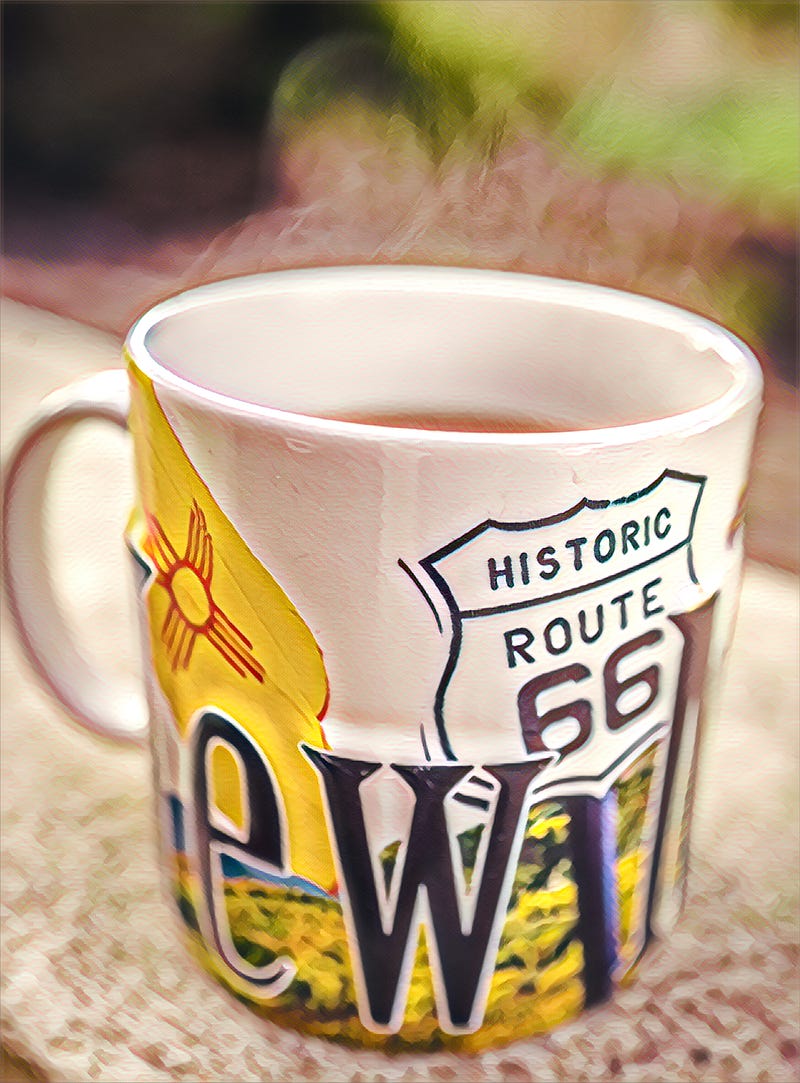
No, it’s not a good mug of coffee, though it feels like that way sometimes. Nor is it a writing sojourn in an enchanting land, though that can help. Bonus points for combining the two, but still not there!
In fact, one of the most successful authors of our time, J K Rowling, wrote much of the Harry Potter series in some very ordinary cafes in Edinburgh.
They were warm, full of interesting characters, close to shops and transport, had an endless supply of tea and the occasional scone, and nobody cared if you sat at the corner table writing weird stuff.
They are no longer ordinary, because of the history — charmingly embroidered — but in the days before she was famous, they were just cafes. If someone had said, “Look, that’s J K Rowling and her infant daughter, writing a fantasy novel,” you’d say, “Can I have a table on the other side of the room, please?”
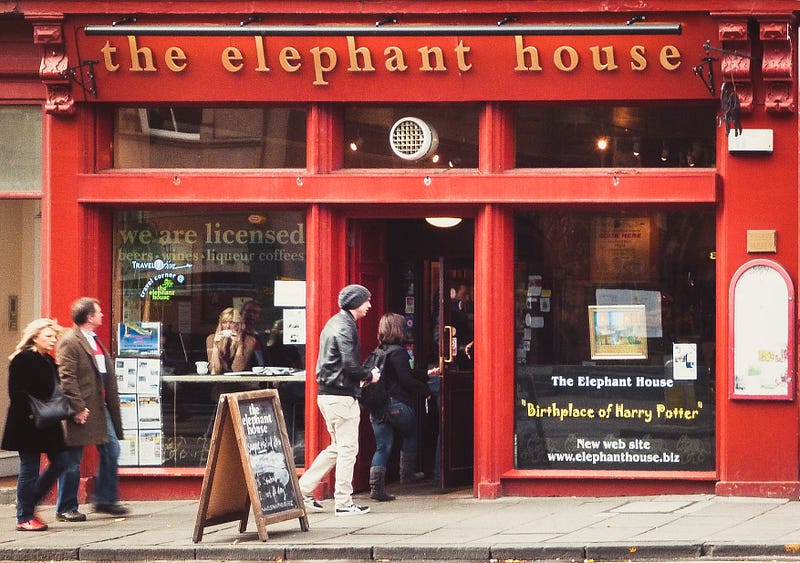
I’ve had several meals at The Elephant House and Spoon. I love Edinburgh, and these are great places for visitors. The Elephant House is just a few metres from the famous statue of Greyfriars Bobby, and it makes a big deal of Rowling working on her books there. Not quite the birthplace as advertised, but she did sit at a corner table writing her books.
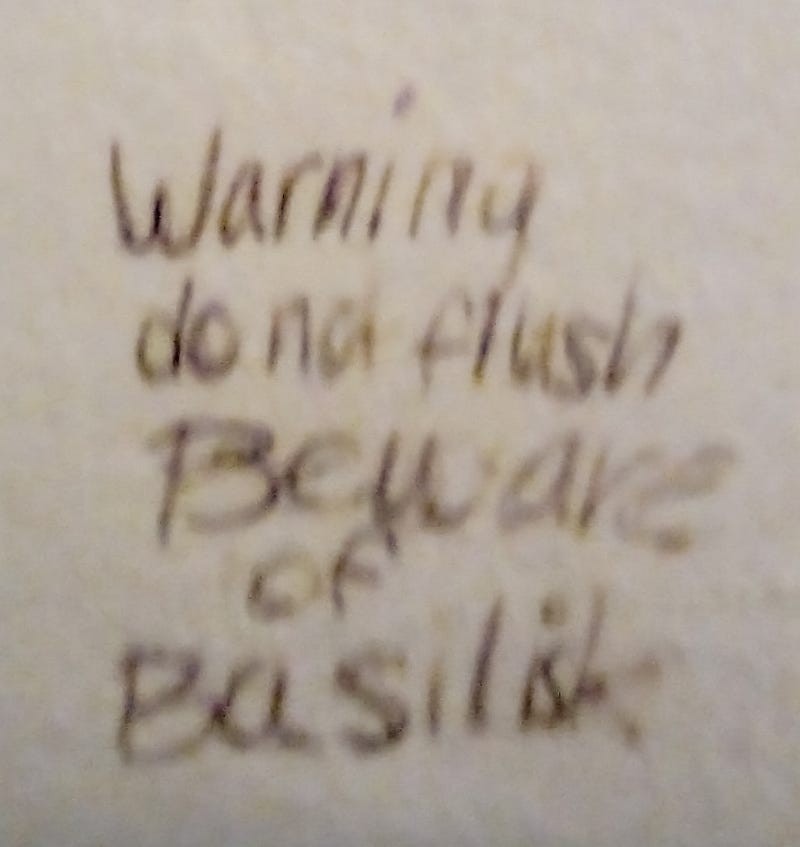
On that note, the facilities are full of Harry Potter-themed graffiti. In the Ladies, you may discover exactly what Harry can do with his wand, and in the Gents (I’m reliably informed) he and Ron Weasley feature together in some sharpie love epics. “Too much teeth, Ron!”
The cutest part is that there are always writers scribbling into their Moleskines, working on their own masterpieces.
And good on them.
Perhaps the best part is that both places are comfortable, modest in their pricing, and full of fun decorations. The Elephant House sells some pretty strong Scottish cider, and the staff are students and backpackers and delightfully chaotic.
Writing can be hard work
I’m sure that you have read all the tips and ten best things to do and craft secrets on how to write your bestseller.
I have.
It’s all good guff. Read the articles, think about them. One thing for sure is that it’s going to take a lot of work. Nobody sits down and cranks out a best-seller in a week. Maybe a month.
So if you think that the secret I’m about to share is going to short-circuit all the work, think again. You are going to have to write the thing, edit it, send it out to beta-readers who aren’t friends and family, edit it again, crank out a rewrite, and then start on polishing it.
Quite apart from doing all the grammar and plotting and characterisation and learning how to do dialogue that doesn’t sound like a narrator filling in the backstory.
It’s not the plot
I had an uncle — now gone to tell jokes on a heavenly stage — who would tell stories at family gatherings. He would gather us all round, tell the story, do the actions, speak in accents, raise and lower his voice, and we’d all giggle and gasp, groan and sigh at the appropriate parts.
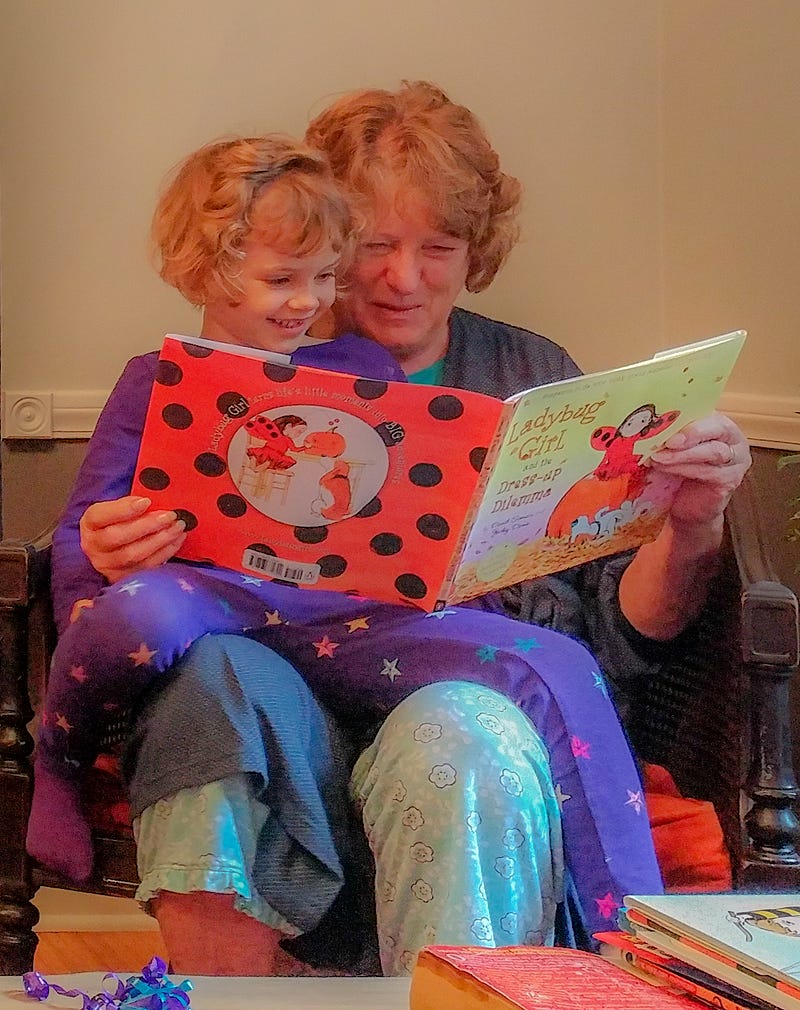
Funny thing was, he would always tell the same stories.
It was the way he told them. We might have heard the same old chestnuts every Christmas, but we still clamoured for our favourites. I learnt a lot about story-telling from Uncle Bob.
It’s not the plot, or the setting, or even the colourful characters. You can tick all those boxes and still end up with a book that is universally loathed.
Think about your chapter outline, when you write down what happens in a paragraph or dot points, so you have a map to follow as you write.
Is anybody going to read the outline and think it’s a great story and there’s no need for anything more? Just publish the outline and rake in the money, yeah? No.
It’s the relationship
Every story is a relationship between two souls. The teller and the listener. We evolved as a social animal, and the reason why we succeeded — succeeded a little too well, if you ask me, considering the sad state of the world — is because we could transmit information between generations through the spoken and later written word rather than being limited to encoding it in our DNA like other creatures.
In exactly the same way as my comic uncle, the storytellers in days gone by would address the tribe gathered around the fire, tell the stories exactly the same each time, and when they were gone the same stories would be told by someone else.
The stories that got remembered best didn’t depend on the personality of the storyteller — though that certainly helps — but on the various tricks to aid memory that were incorporated into the story.
Stories have to be a little out of the ordinary to be remembered. The differences, the thought-provoking episodes, the odd settings, the interesting turns of phrase; they all have to penetrate past the everyday to lodge in the memory.
There has to be some tension to keep the audience listening to see what comes next. But when what comes next turns up, it has to be exciting and interesting in its own right, because if it is predictable and straightforward, the listener’s mind will wander. You don’t want that.
Do what Jane did
Think about Jane Austen. Her novels don’t have much in the way of action, but the reader is kept busy inside the heads of the various characters, each doing their best to understand what is driving the others in the tale. Jane merrily teases her readers through her stories, and the reader has to pay careful attention to understand what’s going on. And why.
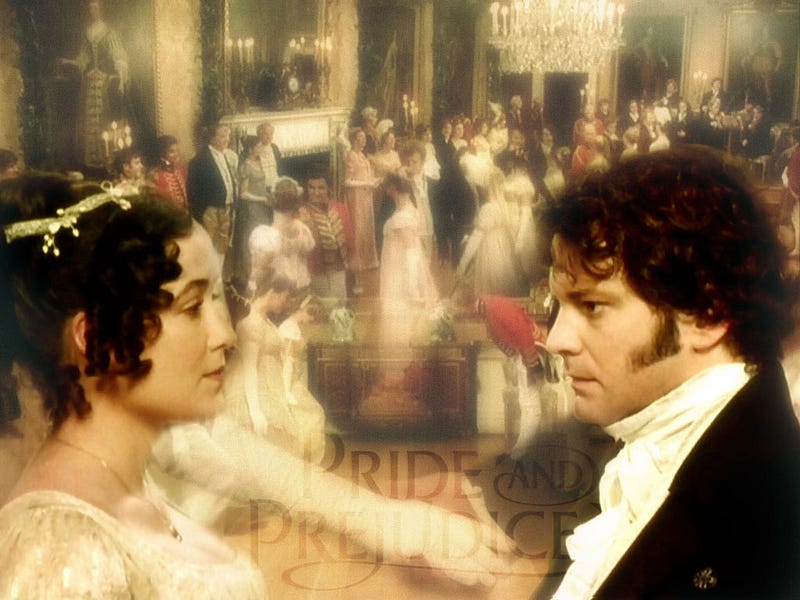
I have a dear friend who must have twenty editions of Pride and Prejudice. In various languages. She is fiercely independent, highly intelligent, learned, wise, and an utter darling.
She has read the book a hundred times in the several editions and translations, seen all the movies, knows every line of dialogue. There is nothing that is a surprise to her.
But she always has a copy somewhere about her person to fill in a spare moment on the train or waiting for the hairdresser or whatever.
Why? There are no surprises. It’s not as if any of Austen’s books have a — spoiler alert here — different destination than marriage and happily-ever-after.
Read the thing once and you’re done, right?
Nope. Not with a good tale told by a good author. The final page is turned, all the threads are tied up with a bow, you close the book with a sigh, and you are blue because it’s over. And, like my friend, you go back to begin again.
This is the strategy used by best-selling authors. They write a book a year, knowing that their readers who finished the last one wanting more will cheerfully buy the next, and the next, and the one after that.
Harry Potter, anyone?
Be the reader
If you are writing for an audience of one, and that one is you, you are in trouble. Sure, you may enjoy your clever writing and skillful plotting, but self-indulgent wankers don’t write great stories.
Write for someone that doesn’t know how it turns out, and is along for the ride and wants to be entertained. And then write for someone who does know how it turns out, but still enjoys the ride.
Write for both those people, and then write for the clever person who tries to be one jump ahead of you, and then write for the slow person who may get lost in the details.
Ask yourself, “what would the reader think?”
And then give them something different!
That’s the key right there. The plot, the characters, the setting may be familiar, but when you are blocking out a scene, you want the reader to be pleasantly surprised. Comfortably shocked. Delightfully appalled. Happily miserable.
The reader must know what is going on — eventually — but not to get there in a straightforward manner. Think about how to write the scene, and then discard the first thing that pops into your mind, because it’s also the first thing that the reader will think of as well. Ditch the second, the third, and so on until your subconscious comes up with the answer while you are taking a shower, or meditating, or walking the dog.
You'll know it when it hits you.
And — final thought — be yourself. Have your own voice. Don’t try to write in the style of someone else; it will come out as forced and awkward. You can write as much as you want in The Elephant House, but you’ll never be J K Rowling.
You’re a human being. You know how a story works, even if you can’t put it into words.
Put it into words.
Britni
More writing stuff: