
Creative Actions: Second-order Affordance and Attachance
The Ecological Practice Approach to Creativity or Creative Actions.
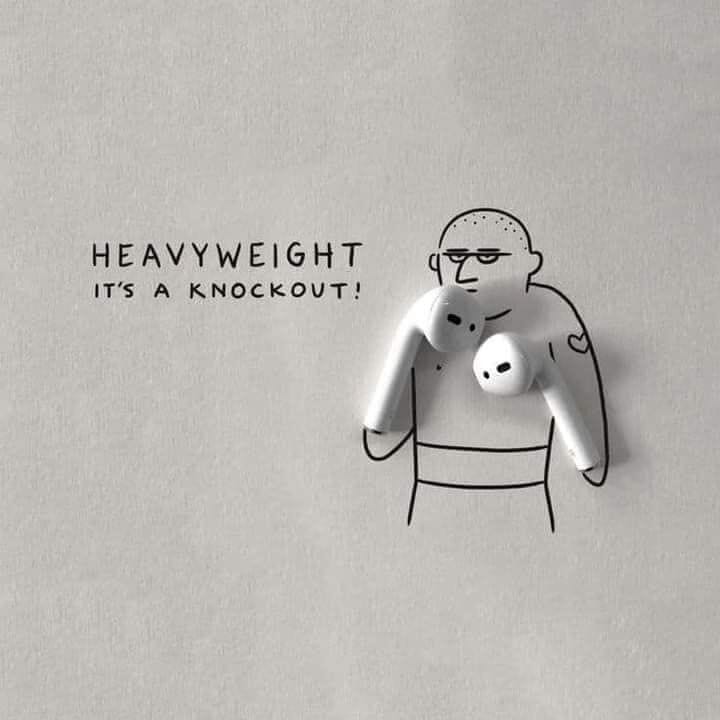
Two days ago, I saw the above picture and other similar pictures from Maurizio Goetz’s post on Linkedin. It reminded me of the Ecological Practice Approach to Creativity or Creative Actions.
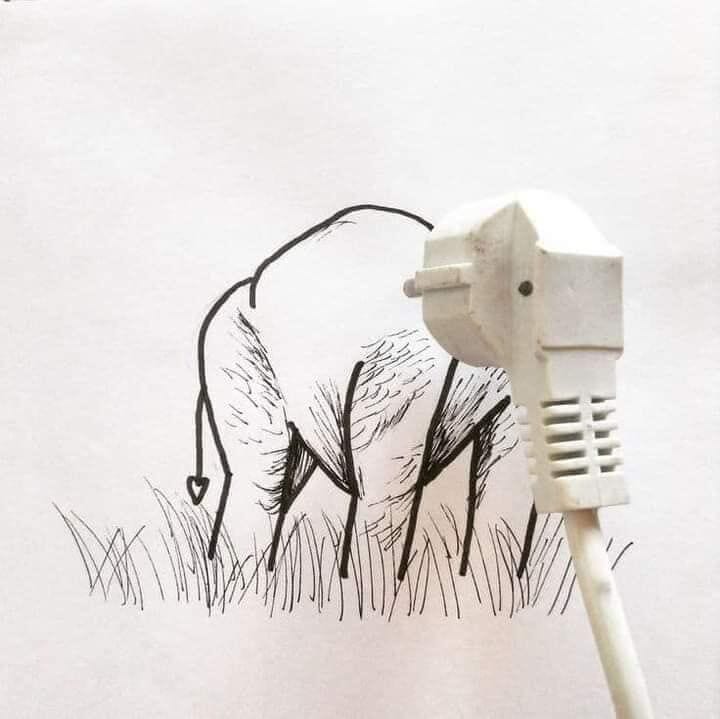
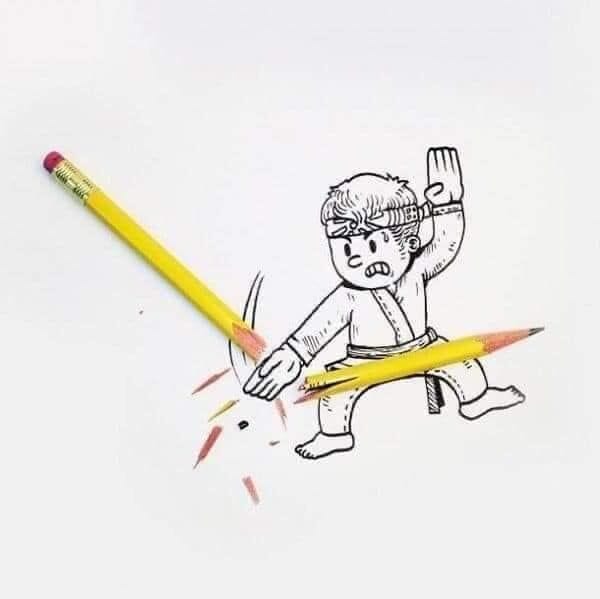
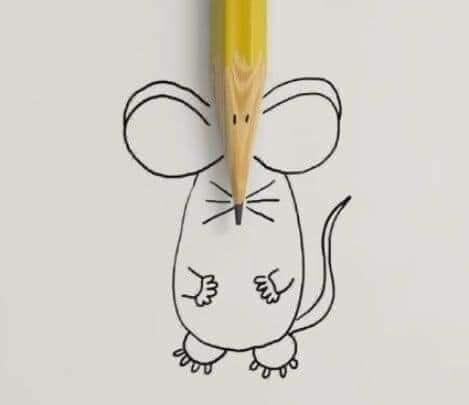
Let’s look at other pictures. See below.
1

2
3

4

5
6
Now we can move from examples to the theory-based discussion. I will use “Affordance” and “Attachance” to discuss the above examples. These two concepts are adopted from the Ecological Practice Approach.
The Ecological Practice Approach
I started developing the Ecological Practice Approach in 2019. In the past three years, I wrote several books (in drafts) about the approach:
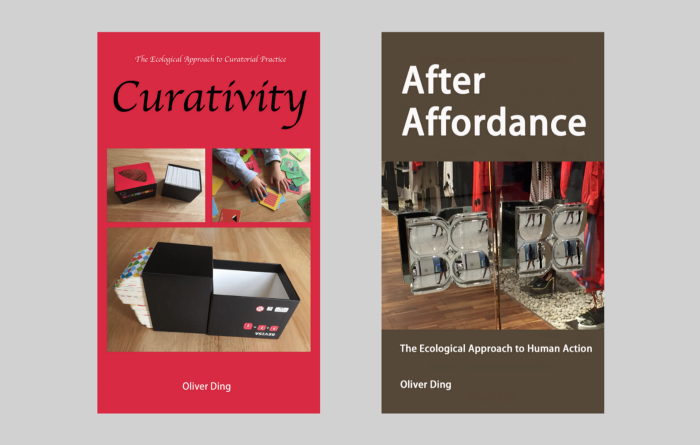
- Curativity: The Ecological Approach to General Curation Practice (2019)
- After Affordance: The Ecological Approach to Human Action (2020)
- Platform for Development: The Ecology of Adult Development in the 21st Century (2021)
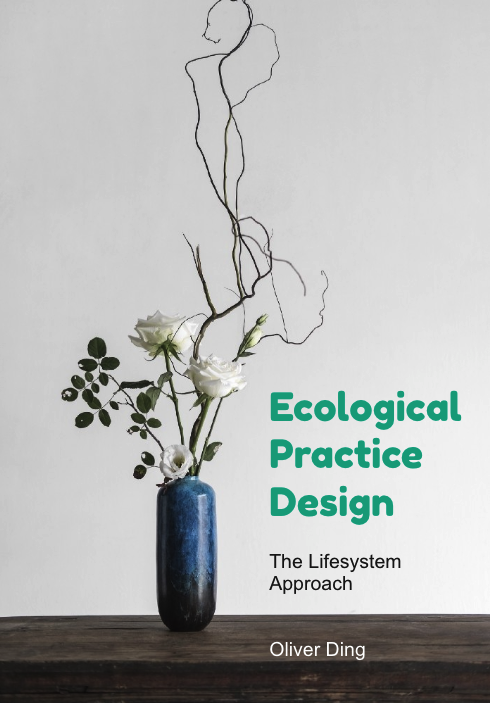
- Ecological Practice Design: The Lifesystem Approach to Everyday Life Innovation (2022)
Each year I write a book and each book establishes an important theoretical concept for the approach. Curativity introduces the concept of Curativity and develops the toolkit version of the approach. After Affordance introduces the concept of Attachance and develops the germ-cell version of the approach. Platform for Development introduces the concept of Supportance. Ecological Practice Design introduces the Lifesystem framework and connects the approach and the field of design.
The Ecological Practice Approach was developed as a meta-theory for general social analysis from the perspective of ecological psychology. The term “Ecological” refers to the following meanings:
- It considers the “organism-environment” relationship as a whole.
- It considers the “action — experience” dynamics as an engagement.
- It considers the “potential — actual” transformation as a reality.
You can find more details about the approach in Ecological Practice Design (Book) and The Development of Ecological Practice Approach.
Everyday Life Innovation
Everyday Life Innovation refers to the innovation of improving the quality of individual daily life. It considers both Design and Use.
From the perspective of Designers, the Ecological Practice Approach offers a series of theoretical concepts and frameworks for research and design. It encourages designers to design innovative products, services, places, and systems as Creative Contexts of everyday life.
From the perspective of Users, the Ecological Practice Approach suggests a new perspective to perceive environments, artifacts, activities, and systems. It also encourages people to take Creative Actions.
According to Klaus Krippendorff, the difference between Users’ mindsets and Designers’ mindsets is called User’s Understanding and Designer’s Understanding in his 2005 book The Semantic Turn: A new foundation for design. See the diagram below.
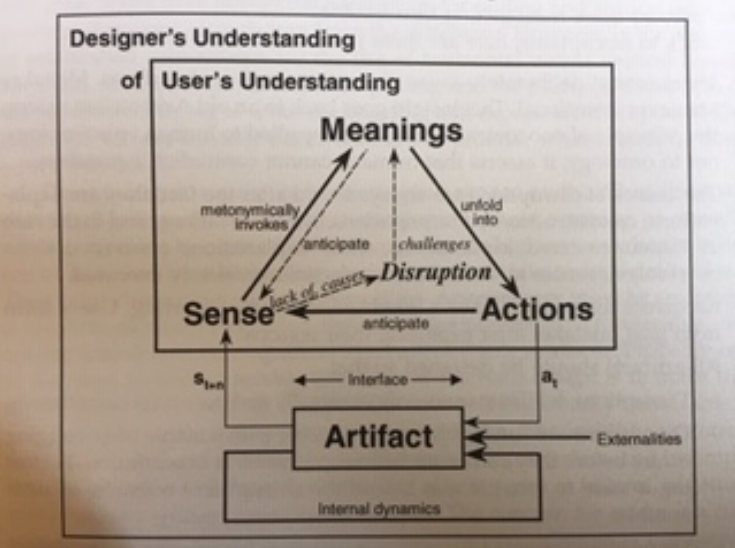
Inspired by Klaus Krippendorff, we use First-order Thinking for describing the Using mindset and Second-order Thinking for describing the Making mindset.
While other theoretical approaches focus on Artifacts, the Ecological Practice Approach considers Artifacts such as products, services, places, and systems as Environments, or Contexts of everyday life.
We also pay attention to the transformation between Users and Designers. If a person perceives some Creative Actions in everyday life, he or she could turn the Significant Insight into a starting point of a creative design. He or she can make new environments, artifacts, activities, and systems as Novel Creative Contexts in order to support or scale Original Creative Actions.
As a meta-theory, the Ecological Practice Approach was formed by the following theoretical concepts:
- Affordance
- Attachance
- Supportance
- Curativity
- Relevancy
- Genidentity
- etc
The following sections will use “Affordance” and “Attachance” to discuss the above creative artworks.
First-order Affordances
The concept of Affordance is an important theoretical concept for understanding human — material engagement.
What’s Affordance? Let’s look at the original definition made by James J. Gibson who is the founder of the Ecological approach to Visual Perception:
The affordances of the environment are what it offers the animal, what it provides or furnishes, either for good or ill. The verb to afford is found in the dictionary, but the noun affordance is not. I have made it up. I mean by it something that refers to both the environment and the animal in a way that no existing term does. It implies the complementarity of the animal and the environment. (p.119)
Though the core of Gibson’s theory is visual perception, we can see the whole “Perception-Affordance-Action” loop as a theory of action and apply it to new fields. Perceiving affordances is for taking actions, taking actions has an impact on the environment and changes the affordances of the environment. I draw the diagram below to visualize this loop.
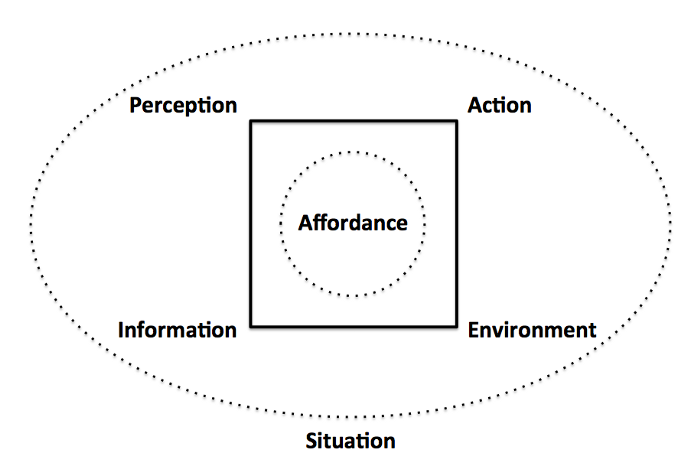
If we adopt Gibson’s version of Affordance, then we can pay attention to the Immediate Experience of human — material engagement. For the Lifesystem framework, we can use the perspective of Affordance to guide our observation of the real-life research.
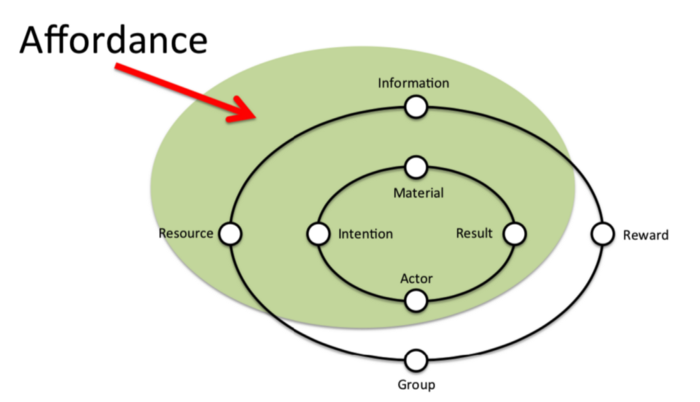
The above diagram shows the perspective of Affordance for Lifesystem study. The perspective focuses on an Actor, not the Group which is defined as the social context of the Actor. It doesn’t consider Reward because Immediate Experience is about a particular moment while Reward is about an outcome of a long-term activity.
We can start with the following simple question:
How does a person use a material thing and act in a particular environment?
I use the term “material thing” because I want to remove cultural meaning from the thing. This is the essential point of Affordance theory because it is about the Perceive-Affordances-Action loop.
Anthropologist Tim Ingold (1993) argued a distinction between tools and artifacts: “A tool, in the most general sense, is an object that extends the capacity of an agent to operate within a given environment; an artefact is an object shaped to some pre-existent conception of form” (p.433) Ingold’s view focused on “non-designed” or “designed”.
Ecological psychologist Harry Heft (2001) suggested that it’s better to use “Found Tools” to refer to “non-designed” tools. He gave many examples, “…found tools, are identified and selected because of the suitability of their affordance properties in support of some action. Long grasses or stripped branches employed as probes in feeding at insect nests; broad, rigid leaves used to shovel insects into the mouth; stones used as hammers for cracking hard shells of nuts are examples. ” (p.341)
Another distinction is “Immediate use” and “Conventional use” as suggested by Heft, “…in addition to learning about how to use an object, the individual learns the meaning of the object itself within the practices of the culture. To the extent that this possibility has merit, it is an important step in understanding how objects take on conventional or culturally prescribed meaning beyond their immediate use functions.”(p.345)
“Immediate use” can be “designed use” or “found use”. I think the most important idea behind “immediate use” is resourcefulness or everyday creativity while Heft used the distinction to highlight the aspect of social learning.
A designer can get an insight from his own creative “immediate use” or observe others’ creative “immediate use” and turn the insight into a “designed use” which could be turned into a “conventional use” by the distribution of a newly designed artifact.
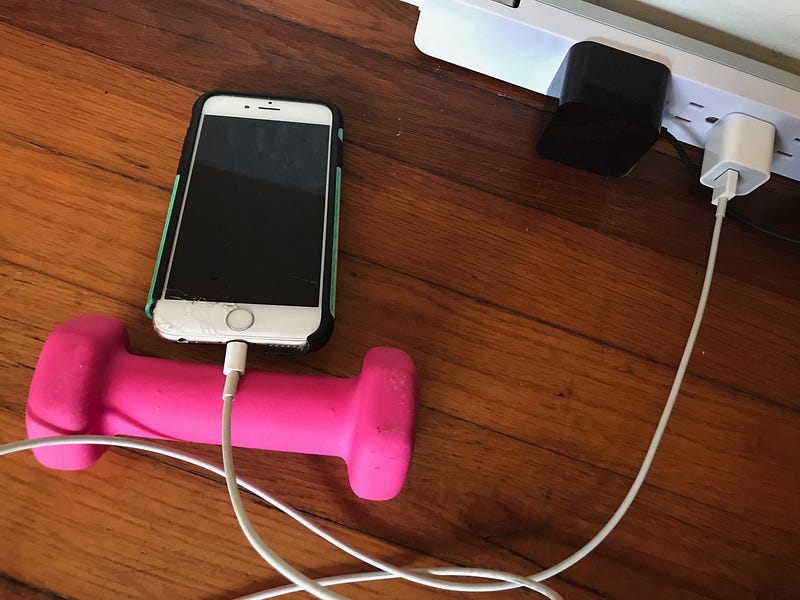
The above picture shows one way of using the small pink dumbbell. I have been having trouble with charging my iPhone recently, the only workable way of charging is placing the dumbbell under the charging cable. Obviously, the dumbbell is not designed for this purpose.
Gibson and other scholars don’t use the term “First-order Affordance”. In order to discuss the relationship between Affordance and Creativity, I developed the pair of concepts of “First-order Affordance” and “Second-order Affordance”.
- First-order Affordance is about 1) Perception, 2) Immediate Experience, and 3) Situation-dependent Action.
- Second-order Affordance is about 1) Reflection, 2) Mediate Experience, and 3) Situation-independent Imagination.
Gibson once mentioned, “Knowing is an extension of perceiving.” However, Gibson didn’t have enough time to develop a complete theory of “extension of perceiving.” The concept of “Second-order Affordance” aims to provide a brick for building the house of “extension of perceiving”.
Taking Second-order Affordances
Creators tend to perceive the “non-official purposes” of things and turn these new meanings into their creative work.
From the perspective of Affordance theory, both “official purposes” and “non-official purposes” of things are Affordances of things. In this way, things can bring more value to our everyday life.
However, we need to Take Second-order Affordances with some techniques.
I use the concept of “Attachance” to describe a technique and a mechanism for Taking Second-order Affordances.
The “Attachance” Technique
The term Attachance was inspired by Gibson’s writing about the relationship between people and the environment, “When in use, a tool is a sort of extension of the hand, almost an attachment to it or a part of the user’s own body, and thus is no longer a part of the environment, graspable and portable, to be sure, but nevertheless external to the observer. This capacity to attach something to the body suggests that the boundary between the animal and the environment is not fixed at the surface of the skin but can shift. More generally it suggests that the absolute duality of ‘objective’ and ‘subjective’ is false. When we consider the affordances of things, we escape this philosophical dichotomy (1979, p.35)”
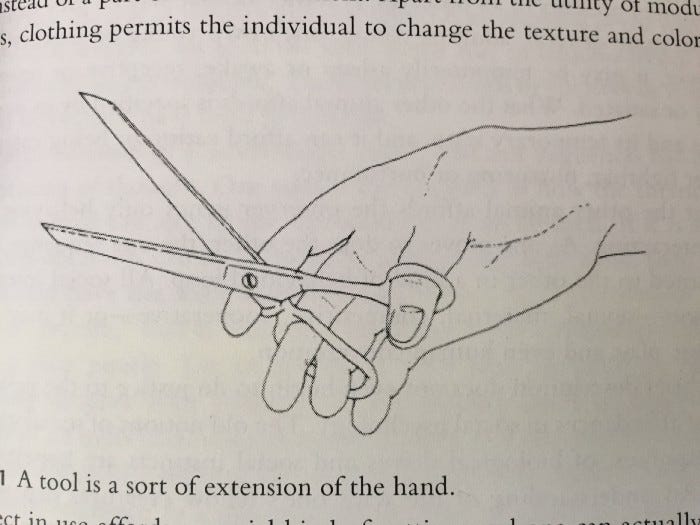
Gibson’s idea is not alone. The classic example of the blind man’s stick (Merleau-Ponty 1962; Polanyi 1962; Bateson 1973) described the same viewpoint. Gregory Bateson asked the below question in 1973: “Consider a blind man with a stick. Where does the blind man’s self begin? At the tip of the stick? At the handle of the stick? Or at some point halfway up the stick?” Merleau-Ponty, Bateson, and Gibson, seeded a great tree about the human mind. Today we see their ideas are driving the emergent embodiment cognitive science.
Gibson didn’t develop a theory about “attach” and “detach”. He used terms such as “attached object” and “detached object”. For Gibson, an attached object refers to a layout of surfaces less than completely surrounded by the medium, and a detached object refers to a layout of surfaces completely surrounded by the medium. This piece is complex because Gibson used his own terms such as Medium, Substance, and Surfaces to describe the meaningful environment.
Gibson focused on the human body and environment, he considered objects and tools as environments too. His theory is body scale analysis. The Attachance concept I am working on goes beyond the body, I want to expand it to multi-level scales. In fact, this is the primary theme of After Affordance: The Ecological Approach to Human Action.
As mentioned above, First-order Affordance is about 1) Perception, 2) Immediate Experience, and 3) Situation-dependent Action. Second-order Affordance is about 1) Reflection, 2) Mediate Experience, and 3) Situation-independent Imagination.
The concept of “Attachance” describes the cross-situation immediate experience. The “Attach > Detach > Attach > Detach” chain offers a new way to model the flow of everyday life.
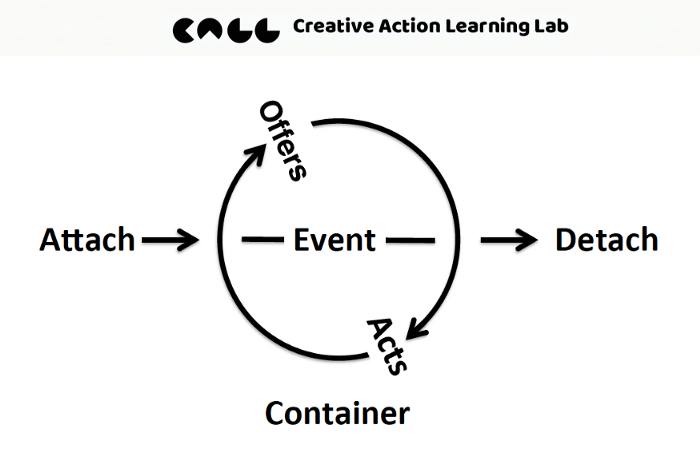
The above diagram combines three core concepts of the Ecological Practice approach together: Affordance, Attachance, and Containance. The term “Offers” is an affordance-inspired concept, it refers to opportunities afforded by the Container. The group of “Offer — Act” forms “Event” which changes the status of the Container. The new status of the Container affords new opportunities which guide the new acts and events.
Designers and artists tend to perceive First-order Affordance in a particular situation which is a Container and take Second-order Affordance in the other particular situation which is the other Container.
The creator of the above artworks also uses the “Attachance” technique at the material level. The creator detaches the drawings from paper-only drawings and attaches some pieces of drawings to physical material objects.
This “Attachance” technique offers audiences a Wow moment because the hybrid material art is more novel than single material art.
Mechanism and Pattern
The above discussion describes a mechanism of creativity from the perspective of the Ecological Practice approach.
The creator of the above artworks uses a pattern for the set of work. Our theory offers a theoretical explanation for the pattern. Once we have a theory of a pattern, there is no secret behind creativity.
We can also test the theoretical explanation with other examples. In 2020, I wrote a new chapter titled Collect and Display to expand the concept of “Curatorial Affordances” which is a core concept of my 2019 book Curativity: The Ecological Approach to General Curation Practice.
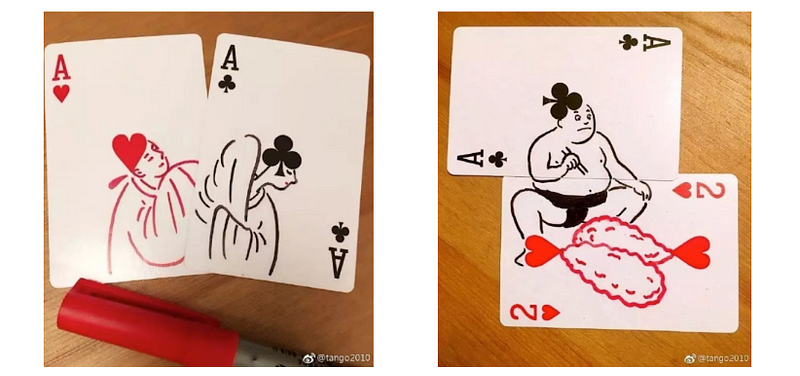
I collected an artwork created by Tango who is a Chinese artist for Collect and Display. See the pictures below.
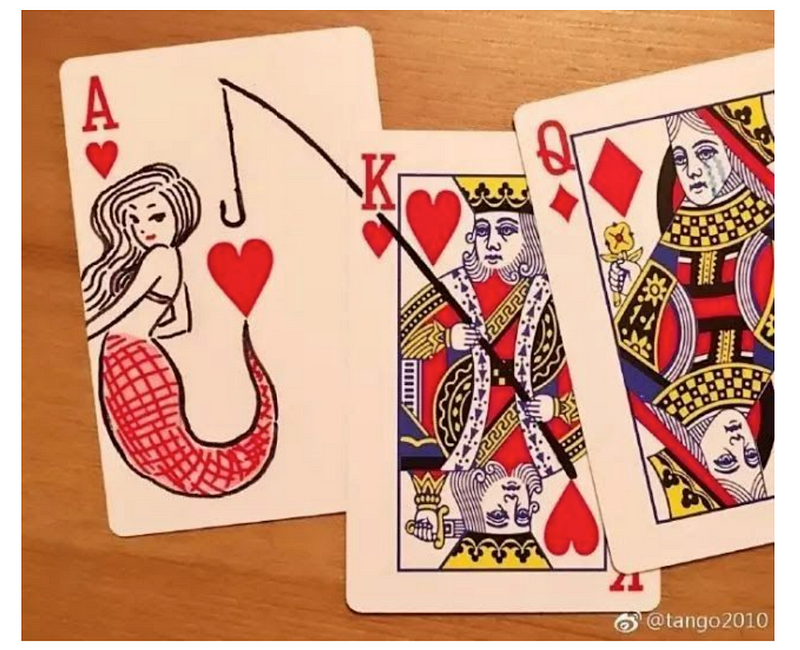
Do you see the pattern behind the above artwork?
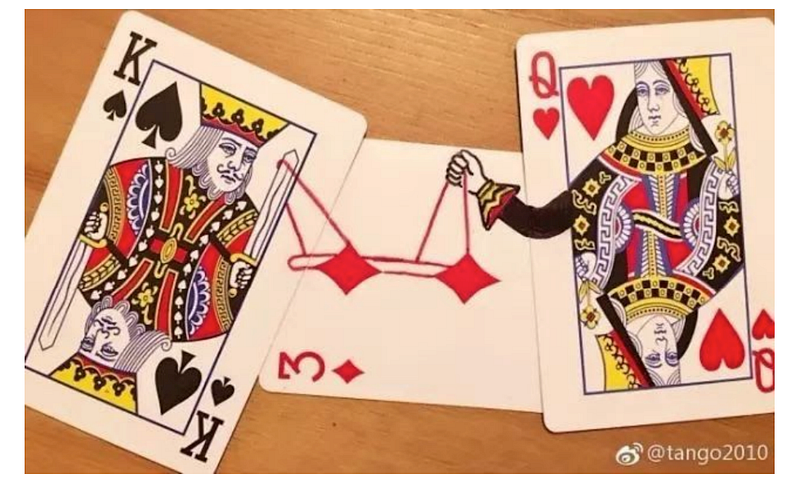
While the artist who created the “earphones/elephant/crabs” artworks uses paper-based drawing as a background for physical objects, Tango uses physical play cards as a background for drawing.
Both two artists perceive First-order Affordances of physical objects: they can use physical objects as a part of artworks.
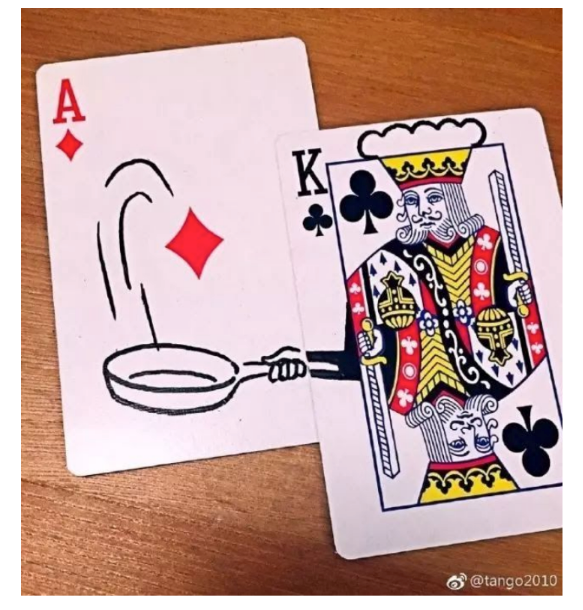
Both two artists take Second-order Affordances with the following three creative steps:
- Attaching physical objects to hand-drawing at the medium level.
- Detaching visual symbolic meanings of physical objects from their original context, and attaching them to new imagined meaningful wholes.
- Turning imagined meaningful wholes into real artworks.
While the last step requires professional skills such as artistic drawing, the first step, and the second step are about creative imagination.
Of cause, these two artists don’t know the above theoretical ideas. They just create great artworks. We have to notice that they made a series of artworks, we can claim that they have perceived the pattern. We don’t know when they discover the pattern and how they describe the pattern and talk about the pattern with others. At least, we can claim that the pattern is part of their tacit knowledge.
Artists don’t care about the name of the pattern and they don’t care about sharing the pattern as public knowledge too. They just use the pattern to make more and more artworks.
As a theorist, my motivation is to make a discovery of a creative mechanism from the perspective of the Ecological Practice Approach. My work is sharing the mechanism as a piece of public knowledge.
Claim A Creative Action
Now we can claim that there is a Creative Action behind the above two case studies:
Detaching a part of a material thing from its original context and attaching it to a part of a symbolic thing and make a brand new hybrid thing.
By adopting “Affordance” and “Attachance”, we can unpack the pattern from artists’ artworks.
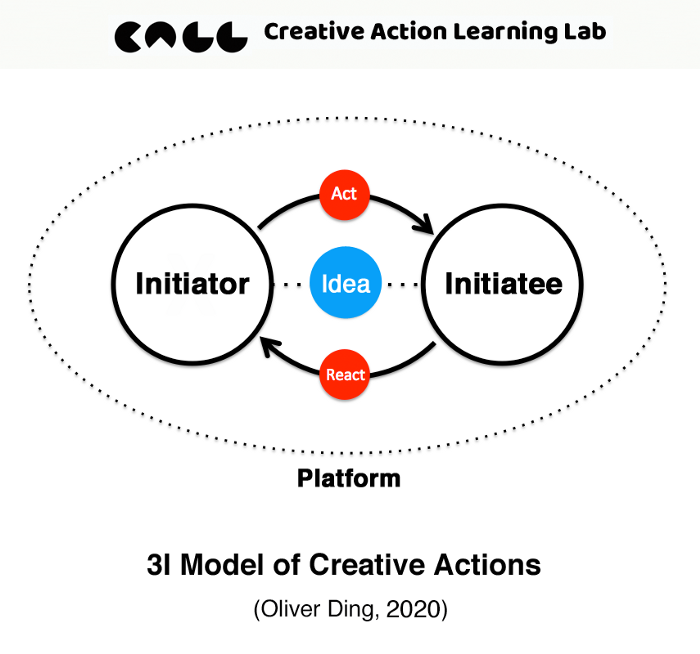
In order to make the “Process as Product” approach to Creativity Research, I made the above 3I model of Creative Actions. The model uses the term “Idea” to refer to the product aspect of creative actions and uses the term “Act/React” to refer to the process aspect. This pair of concepts solve the problem of the disappearance of immediate experience.
To claim a Creative Action is to discover the Idea behind the Creative Action and turn it into a piece of public knowledge.
More examples:
I am also working on building a new website for the Platform Ecology project. You can save the following links:
- PlatformEcology.org
- Twitter: @PlatformEcology
- Linkedin: @PlatformEcology
You are most welcome to connect via the following social platforms:
Linkedin: https://www.linkedin.com/in/oliverding Twitter: https://twitter.com/oliverding Polywork: https://www.polywork.com/oliverding Boardle: https://www.boardle.io/users/oliver-ding


