
Why is Everyone So Lonely?
Understanding the loneliness epidemic to find genuine human connection.
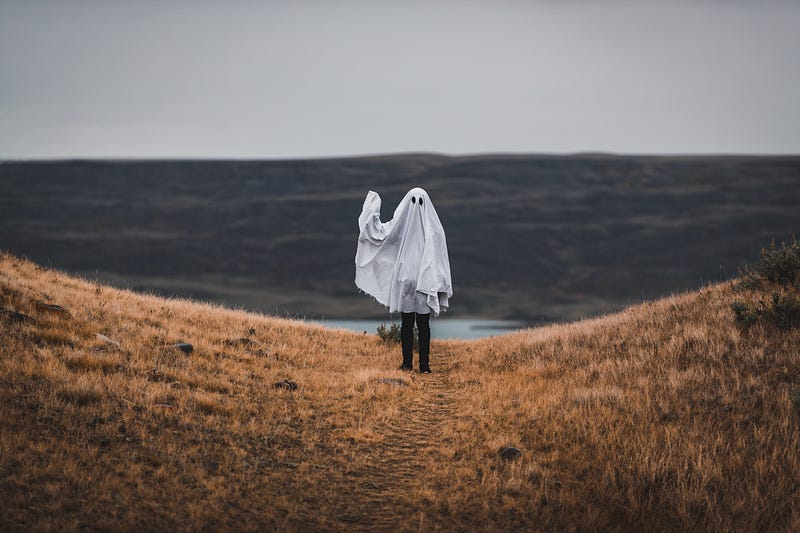
It’s amazing how we can quantify a complex human emotion into a statistic. Like, for example, did you know that 60% of adults in the United States say that they feel lonely, left out, poorly understood, and lacking companionship?
Statistics only provide large, sweeping generalizations about an issue without providing a ton of context. Okay, so three out of five Americans say they are lonely. Well, which three? Even boiling it down to the age bracket — 18–22-year-olds mostly, but also a lot of people in the 55+ range — only gives a rough, clinical overview.
So now we have this mass pool of information without any sort of actionable plan because, well, we’re researchers, it’s not our job to figure out a solution!
It’s hard to empathize with a statistic. 60% of the American population is just over 196 million people. That’s such a Brobdingnagian number, it’s nearly impossible for our mind to accurately comprehend what it really means.
If I said, “Picture three,” you might be able to imagine, say, three apples or three trees next to each other. Easy, right? What does 196 million looks like? How are we supposed to understand that?
Yet, the statistics show that this is the number of people in the United States that say they are lonely. An unprecedented, incomprehensible number of people are lonely.
Loneliness, like depression, is a serious issue
Language can be a tricky, messy thing. When words like “literally” come to mean “figuratively,” we may find that we are literally up the creek without a paddle trying to get a reasonable grasp on just what the hell everyone’s trying to say.
Likewise, when we synonymize words like “depression” with words like “sad,” we muddle and mute the definition of the feeling we’re trying to express. Depression is not sadness. Depression is dread. It is television static at the back of your mind, distorting and degrading happiness and presenting it on screen as apathy. It is not feeling down, it is the thought that you might never feel up.
In the same way, loneliness is not “being alone.” Loneliness is the feeling that you are unwanted by the people around you. It is desperately craving human connection but having such a frail state of mind that actually forming those connections becomes a Sisyphean effort. It is crawling through a dark cave with only a match to light the way.
Loneliness can have long-term effects too:
- Increased risk for substance abuse
- Decreased memory and learning
- Cardiovascular disease and stroke
- Antisocial behavior
- Altered brain function
- Depression and suicide
Moreover, loneliness is like a disease: it’s contagious. When paired with lonely people, those who wouldn’t consider themselves lonely suddenly found that they were.
Researchers have also found a genetic “loneliness trait” that can impact the effects of social disconnection one feels. While this gene doesn’t necessarily dictate that you will be alone, it does facilitate the negative psychological influence of loneliness.
Why is everyone so lonely?
When I brought up the idea of this article to my therapist, he mentioned an interesting concept to me: forced social interaction.
A lot of people, he said, do well socially in high school or in the office because they are placed in situations where they have to interact with others. But now? Taking the initiative and reaching out directly might prove to be too difficult for some people amid life’s other stressors.
But this is not a new phenomenon. Many people drift away as time goes on — you meet new people, start careers and families, and you change. If anything, modern technology makes it easier than ever to keep in touch with old friends.
But modernity might also be the largest contributor to feelings of loneliness. Historically, people have dabbled in creative efforts, reading, and exercise as ways of coping with loneliness. These things are obviously still around, but now they compete with an even more attention-hungry timesink: social media.
It’s not that social media in and of itself is damaging us, but rather the negative experiences we find on it. A report from the University of Pittsburgh and West Virginia University concluded that for every 10% increase in negative online interaction someone faced, their likelihood for depression increased 20%. Positive online interaction, however, didn’t make any difference.
Partly, this plays into our negativity bias. Our brains are hardwired to register negative events more easily than positive ones, as well as dwell on those negatives for much longer. One person might complement our performance at work only for another to make an off-hand comment about how tired we look; we’re more likely to spend the day thinking about the crow’s feet and dark circles under our eyes than we are feeling good about our job.
Social media is fundamentally dishonest, a highlight reel of people’s best moments and posed photographs. When we are feeling particularly low, these fairytale-like stills can spark envious tendencies that can spiral us into depression. We may see a group of friends out to dinner together and be suddenly reminded that, for the fifth day in a row, we’re alone on the couch eating pasta.
Coupled with our inherent bias towards negativity, social media’s addictive, dopamine-hit-fueled algorithms promise us a brief feeling of having done something while thriving off of making us feel worse. It becomes, then, an endless cycle: open social media, feel a rush of dopamine as something new pops up, feel bad about what we’ve seen, crave dopamine, refresh.
Still, social media can’t take all the blame for our loneliness epidemic. Here are some other reasons people feel lonely:
- Heartbreak
- Death
- Social anxiety
- Distance
- Finances
- Intelligence
- Emotionality
Some of these are more obvious than others — when a serious romantic relationship ends, for example, it makes sense that we would feel lonely — but others might come as more of a surprise.
If we are surrounded by people who aren’t as in tune with their emotions or others whose intelligence differs greatly from ours, we are likely to feel distant and disconnected from our interactions with them. We should also consider the fact of actual, physical distance as well. It’s hard to stay connected with those who live far away, even with the advantages of modern technology.
Loneliness is usually the result of some combination of these factors. We live in a new city and we’re afraid of going out in unknown circumstances, so we fail to make new friends. We work a job we hate and find ourselves surrounded by people with who we don’t mesh. Whatever it may be, it’s important to understand the root causes of our loneliness if we are to be able to tackle it.
Dealing with loneliness
As Jill Lepore at The New Yorker puts it, “We hunger for intimacy. We wither without it.” We’ve seen the effects loneliness can have on the physical body. Mental health and physical health are intrinsically linked. This is why exercise is often recommended as a coping mechanism for depression or why a healthy diet can improve our mood.
A lonely mind can rot a healthy body.
Thankfully, there are ways of managing our loneliness. Humans are social creatures, and they tend to flock towards one another in some form, whether that be online communities of like-minded individuals or in-person support groups.
Most importantly, however, is acknowledging the feeling. Bottling up one’s emotions can lead to physical stress on the body, among other issues with memory, anxiety, and depression.
We can’t begin to truly work towards a better tomorrow without first acknowledging where we are today. If you are feeling lonely, here are a few things that might help:
- Engaging with non-humans; ie. cats, dogs, horses, hamsters, birds, fish, bugs, etc.
- Journaling
- Joining a support group
- Participating in online niche forum discussions
- Learning a new hobby
- Re-connecting with old friends
- Taking care of yourself: sleep, exercise, and challenge yourself
- Saying yes to new things and take a risk
- Volunteering
- Talking to a professional
In an interconnected world, it’s strange that people are finding themselves more lonely than ever before. Perhaps there’s something to be said about the human condition, our relationship to technology, or the basic fundamentals of empathy, but ultimately these hypotheses don’t present concrete solutions to the problem.
The truth is that loneliness has always been an issue, and it doesn’t seem to be going away. We live on an anxious planet in a fast-paced, nervous society. Life is short, and it comes at us fast. The most important things we can foster are our relationships not just with other people, but with ourselves.
If you’re of the 60% of the population that feels lonely, perhaps there is some solace in the statistic: you are clearly not alone. There are 7 billion people in the world, and we are steadily approaching 8 billion. While no two people are exactly the same, take some comfort in the fact that there are likely many who are similar.
The most encouraging thing about loneliness is this: you don’t have to feel alone. There will always be someone out there looking for someone just like you.