avatarDarren Weir

Free AI web copilot to create summaries, insights and extended knowledge, download it at here

5205

Abstract

n-images-1.readmedium.com/v2/resize:fit:800/1*iR07oTLBtT1b3CDR8br6mg.jpeg"><figcaption></figcaption></figure><figure id="3cd7"><img src="https://cdn-images-1.readmedium.com/v2/resize:fit:800/1*qI1sr6uZnTe5E8j1K70nbg.jpeg"><figcaption>Pyramids in the distance — author’s photos</figcaption></figure><p id="29f2">When I arrived in Cairo, I kept searching for the iconic structures, catching glimpses here and there, but when I arrived at my hotel room and stepped out onto the balcony there they were. They were shrouded in a smoggy late-afternoon haze but they were still breathtaking. They appeared to be in the city and not in the desert. Cairo and Giza had grown up all around them.</p><figure id="fa89"><img src="https://cdn-images-1.readmedium.com/v2/resize:fit:800/1*WWjWwYCCqBDvfupT_lfOOg.jpeg"><figcaption>View from my hotel — author’s photo</figcaption></figure><p id="daa1">The next day I got up early to visit these historic icons. The gates don’t open until 8 am and usually, there is a stampede to the ticket booth to be among the 150 lucky people to be able to purchase a pass to climb inside the Pharaoh Khufu’s Great Pyramid. It is the largest of the 111 pyramids scattered around Egypt. But when I arrived there were just a handful of people there, tourist numbers had fallen off because of the Spring Uprising revolution which had just ended.</p><figure id="61c0"><img src="https://cdn-images-1.readmedium.com/v2/resize:fit:800/1*ZrbqG9BCvQUIQnmYIyTIgA.jpeg"><figcaption></figcaption></figure><figure id="64ff"><img src="https://cdn-images-1.readmedium.com/v2/resize:fit:800/1*CJ8ZksFoKTOonnO_XLvWdQ.jpeg"><figcaption>Our van all alone in the parking lot; no lineup for tickets— author’s photos</figcaption></figure><figure id="4d9e"><img src="https://cdn-images-1.readmedium.com/v2/resize:fit:800/1*AKSJ5ea5Ph3-VNFPosQKsw.jpeg"><figcaption>I was relieved there was no lineup to go inside — author’s photo</figcaption></figure><p id="b77a">My guides and I got our tickets and made our way inside. Unfortunately, I had to leave my camera behind. There are strict rules against taking any flash photos inside the tomb and possibly adding to the cumulative light damage to the hieroglyphics. I found <a href="https://www.youtube.com/watch?v=lqCcrJPbN2c">a video online</a> (I have no idea how the guy got his camera in there) that gives a good look at what it’s like inside.</p><p id="0219">It was a strenuous climb up a massive ramp of stairs. I huffed and puffed my way about sixty meters up the steep incline inside a narrow shaft. I had to stoop over to risk hitting my head on the low stone ceiling, which is less than two meters high. Going up is manageable despite the climb, but going down was more of a challenge because I had to stay stooped over while walking downhill. Try it sometime, it’s not easy.</p><figure id="3e4b"><img src="https://cdn-images-1.readmedium.com/v2/resize:fit:800/1*YtpIs_MajR6ZUXH8aHzbQA.jpeg"><figcaption></figcaption></figure><figure id="bc3a"><img src="https://cdn-images-1.readmedium.com/v2/resize:fit:800/1*FFqIjGjPUU1TLe18zxzUaw.jpeg"><figcaption>Khufu’s Great Pyramid — author’s photos</figcaption></figure><p id="3032">Once I reached the top, I entered the chamber which contained… nothing. It was warm and stuffy but luckily there were only two other people inside at the time. During the peak tourist season, there would be dozens of people making the climb, making it slower, hotter, and even stuffier. And if we missed the first ticket release, there was another opportunity at one pm. But I was told “You don’t want that. It is the hottest time of the day and it’s almost unbearable.” I was winded by the time I climbed all the steps to the inner chamber. There was less oxygen inside the enclosed space and I found myself starting to gasp as I tried to catch my breath. If you are claustrophobic at all I would not recommend going inside.</p><p id="a454">Built for Khufu, it is the <a href="https://en.wikipedia.org/wiki/Great_Pyramid_of_Giza">largest pyramid in the country</a> and was the tallest structure in the world for more than 3,800 years. It was 146 meters when it was built in 2600 BC. But since then, erosion has made it shrink by several meters. It’s made up of 2.3 million stone blocks, each weighing up to 80 tonnes.</p><figure id="3290"><img src="https://cdn-images-1.readmedium.com/v2/resize:fit:800/1*K136CdGbF4l-2kaBrHp1Xg.jpeg"><figcaption></figcaption></figure><figure id="1e8b"><img src="https://cdn-images-1.readmedium.com/v2/resize:fit:800/1*Jc8Kzy_Yql3n_P-40TFmVg.jpeg"><figcaption>Egypt’s Great Pyramid — author’s photos</figcaption></figure><p id="c808">It took more than twenty years to construct because workers only had three months each year when water levels were high enough to ship the massive stone blocks up the Nile from Aswan.</p><p id="b832">All of the pyramids were clad in white limestone to reflect the sun, but only a small part of the peak of the Khafre pyramid still retains its white covering. The casing stones were removed to build other structures in the region.</p><figure id="9500"><img src="https://cdn-images-1.readmedium.com/v2/resize:fit:800/1*vB10tik34T-f4wBiVf7bdg.jpeg"><figcaption></

Options

figcaption></figure><figure id="6843"><img src="https://cdn-images-1.readmedium.com/v2/resize:fit:800/1*aJ8mbc0VeiRwf6LT9hSBCQ.jpeg"><figcaption>Khafre’s Pyramid with some limestone cladding still in place — author’s photos</figcaption></figure><p id="ad81">Khafre’s pyramid is next to his father Khufu’s Great Pyramid. It was built on a raised platform, so while it looks bigger than his father’s, it was 137 meters, about nine meters shorter, when completed. He had planned to cover it in granite but died before it could be completed so just a small section at the bottom has the granite cladding.</p><p id="1dcd">Khafre was also responsible for ordering the construction of the mighty Sphinx to guard his pyramid. It’s believed the face of the Sphinx is actually Khafre’s face.</p><figure id="4440"><img src="https://cdn-images-1.readmedium.com/v2/resize:fit:800/1*luT5NplDh5r4RLNs6U1dPA.jpeg"><figcaption></figcaption></figure><figure id="1454"><img src="https://cdn-images-1.readmedium.com/v2/resize:fit:800/1*3kRMtjKmjbakCEr2VP6X6g.jpeg"><figcaption>Sphynx and Khafre’s Pyramid — author’s photos</figcaption></figure><p id="f9a7">Because the city has built up around these magnificent monuments, the Sphinx now looks down onto a Pizza Hut and a KFC.</p><figure id="8a30"><img src="https://cdn-images-1.readmedium.com/v2/resize:fit:800/1*ZIUQkgPnp_vnGxWiXoVveg.jpeg"><figcaption>The view from the Sphynx — author’s photo</figcaption></figure><p id="b59d">Next to each Pyramid is what appear to be piles of rocks, but in fact, are much smaller Pyramids for each of the king’s wives.</p><figure id="aa1a"><img src="https://cdn-images-1.readmedium.com/v2/resize:fit:800/1*bNhRz6j5tPU15q4NloFn9g.jpeg"><figcaption>Pharoah’s Wives pyramids — author’s photos</figcaption></figure><p id="aa5f">It’s not difficult to imagine the herculean effort that went into constructing the pyramids. I could imagine thousands of men cutting the massive blocks of stone, then hauling them onto barges to float up the Nile to their final resting place, where they were dragged to the construction site and then hoisted up, one on top of the other to create this stairway to heaven, which the Egyptians called the <i>Field of Reeds</i>.</p><p id="3cf2">Nearby are the Pyramids of Saqqara, the largest burial site in Egypt. When I visited, 11 Pyramids had been excavated there. Another was subsequently uncovered nearby. Each contained several mummies, one wearing a golden mask encased in a brightly painted wooden sarcophagus.</p><figure id="e75f"><img src="https://cdn-images-1.readmedium.com/v2/resize:fit:800/1*AUbuEjsbGucbT_NcFJSMjA.jpeg"><figcaption></figcaption></figure><figure id="42cb"><img src="https://cdn-images-1.readmedium.com/v2/resize:fit:800/1*qsjh0L971FvhmwcbL7EOKA.jpeg"><figcaption>Saqqara site; excavation — author’s photos</figcaption></figure><p id="80e1">The Step Pyramid was Egypt’s first pyramid, built for King Djoser (aka Zoser) in the 27th century BC. It has four sides and six steps, all encased in white limestone. It is the world’s oldest stone structure. Before this pyramid, royalty had been placed in tombs and buried under mud and brick mounds. But even with all that history, it’s not invincible. When I was there, scaffolding was set up around one side to shore up the crumbling stones.</p><figure id="2db2"><img src="https://cdn-images-1.readmedium.com/v2/resize:fit:800/1*teXqMk4URGD7Xvcnr32viQ.jpeg"><figcaption></figcaption></figure><figure id="54c5"><img src="https://cdn-images-1.readmedium.com/v2/resize:fit:800/1*GiJUspS_gwWstQ1tcsxa5g.jpeg"><figcaption>Cobra’s guard site of King Djoser’s pyramid, the oldest in Egypt — author’s photos</figcaption></figure><p id="8dc4">The entire Saqqara ancient burial grounds, on the site of the former capital Memphis, are massive and were surrounded by a wall, part of which still stands today. A colonnade of columns leading to a false door, allows the King’s spirit to enter and leave whenever he wants.</p><figure id="e00b"><img src="https://cdn-images-1.readmedium.com/v2/resize:fit:800/1*UVwDg10TyKGFLD_dhCWljw.jpeg"><figcaption>Saqqara Collonade — author’s photo</figcaption></figure><figure id="e7fc"><img src="https://cdn-images-1.readmedium.com/v2/resize:fit:800/1*Xx8LoK_Tae2mnfmTFeqCfg.jpeg"><figcaption>Father and son ride the camel home from work at the pyramids — author’s photo</figcaption></figure><p id="7472">For more on my visit to Egypt, check out my tour of the Black Desert and the White Desert with its alien landscape.</p><div id="1823" class="link-block"> <a href="https://readmedium.com/the-beauty-of-egypts-white-and-black-deserts-55041c6397dd"> <div> <div> <h2>The Beauty Of Egypt’s White and Black Deserts</h2> <div><h3>A-Z of my favorite travel destinations — E is for Egypt</h3></div> <div><p>medium.com</p></div> </div> <div> <div style="background-image: url(https://miro.readmedium.com/v2/resize:fit:320/1*TNqEAsMPoUkhvOIoXj0PSA.jpeg)"></div> </div> </div> </a> </div><p id="c1f1"><i>Thank you for reading.</i></p></article></body>

EGYPTIAN HISTORY TOUR

Searching for Egypt’s Ancient History

Inside the Great Pyramid and finding a temple to a gender-fluid Pharoah
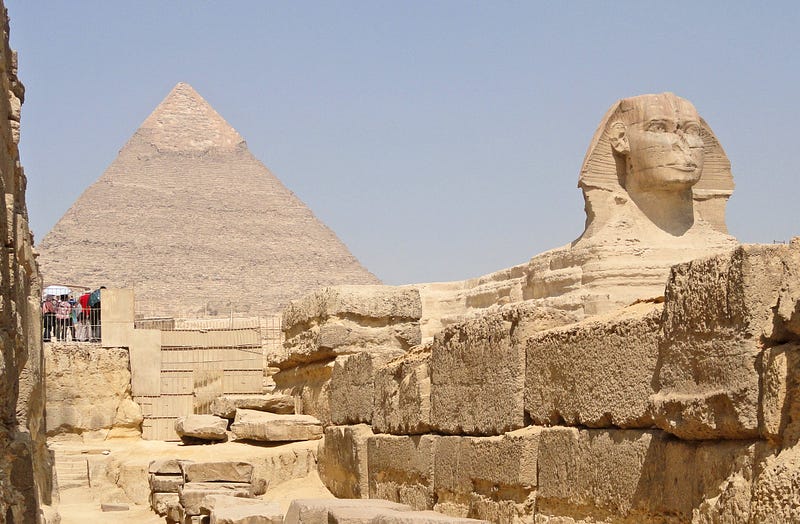
Sphynx and Khafre Pyramid — author’s photo

There are some world monuments that have become iconic. We’ve seen pictures of them thousands of times, studied them in school, read about them in books, and have seen them depicted on television and in films. Their stories inspire the imagination, The Taj Mahal, the Great Wall of China, and the Coliseum in Rome. But none are as famous or as spectacular as the Pyramids of Egypt or the antiquities spread across that country. You can’t really grasp their magnitude until you see them up close with your own eyes and walk in the footprints of the Pharoah Kings and Queens.
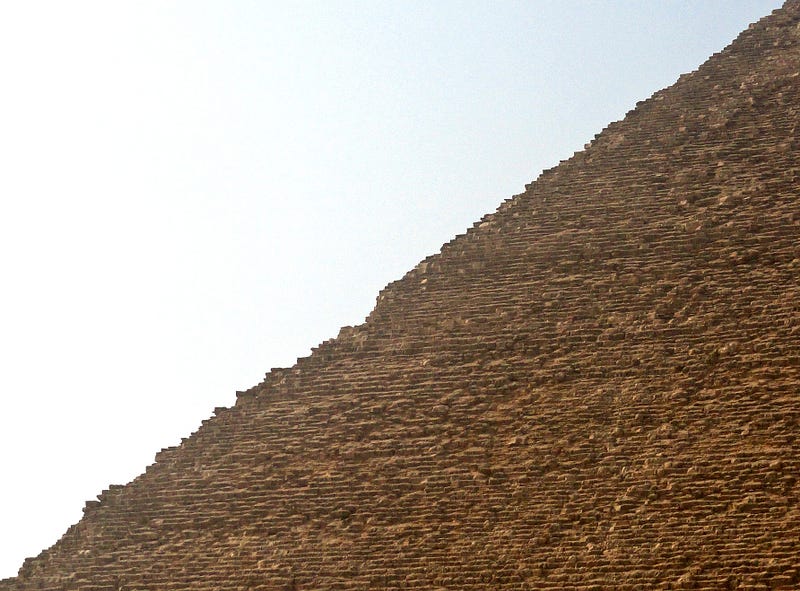
Great Pyramid angle — author’s photo

Egypt has more evidence of ancient civilization than any other place I have visited in the world. I lost myself in the ancient history I found in Giza, Luxor, the Temple of Karnak, and the Valley of the Kings where I was surrounded by Egypt’s past.
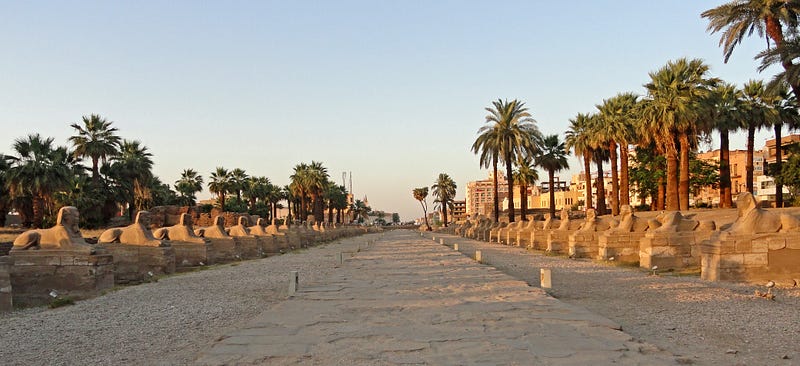
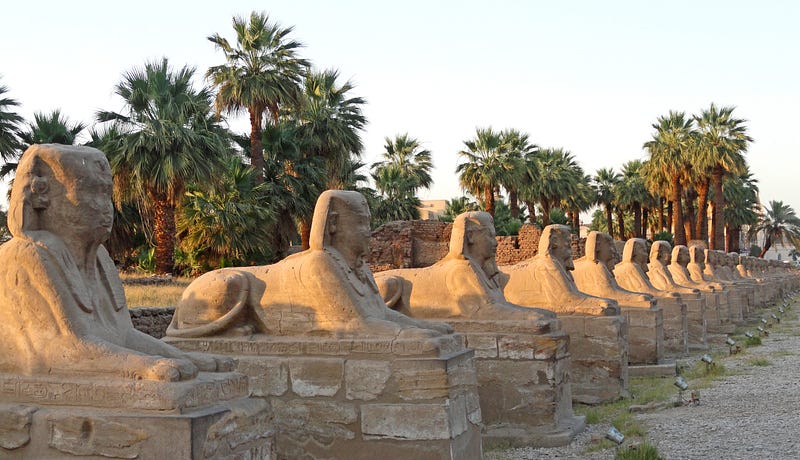
Avenue of the Sphynx stretches from Temple of Luxor to Temple of Karnak — author’s photos

Just about everyone knows a bit about Egypt’s history and the pyramids. The names Tutankhamun (King Tut) and the Pharaoh Ramses are well known but there’s one Pharaoh that you probably have never heard of.

One of the most fascinating stories, even more than King Tut’s story, was found at the temple of Pharoah Hatshepsut. Up to that point in history, only males were allowed to inherit the throne in succession. Hatshepsut was one of only a few women Pharaohs in history, Nefertiti and Cleopatra were the others. And she is the only one who was able to attain full power as a ruler. She was a prolific builder and a very prosperous trader.

Hatshepsut’s history is on display in her temple at the base of a rocky mountain, told through hieroglyphics and painted walls.
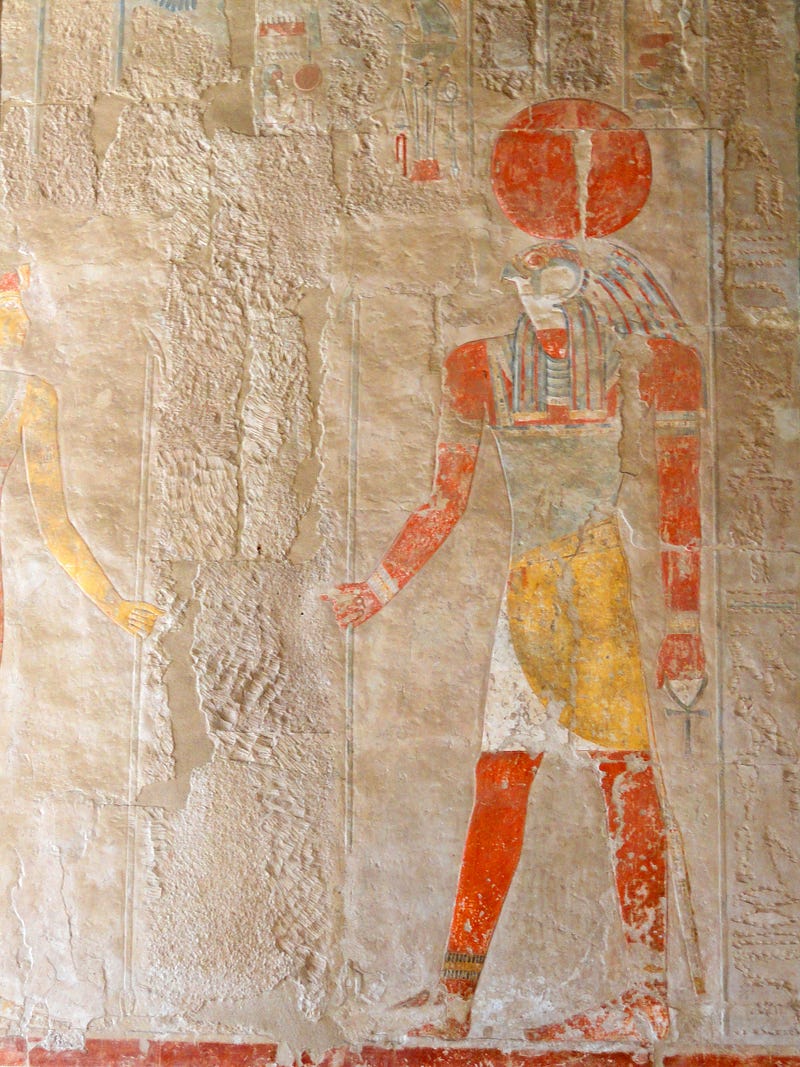
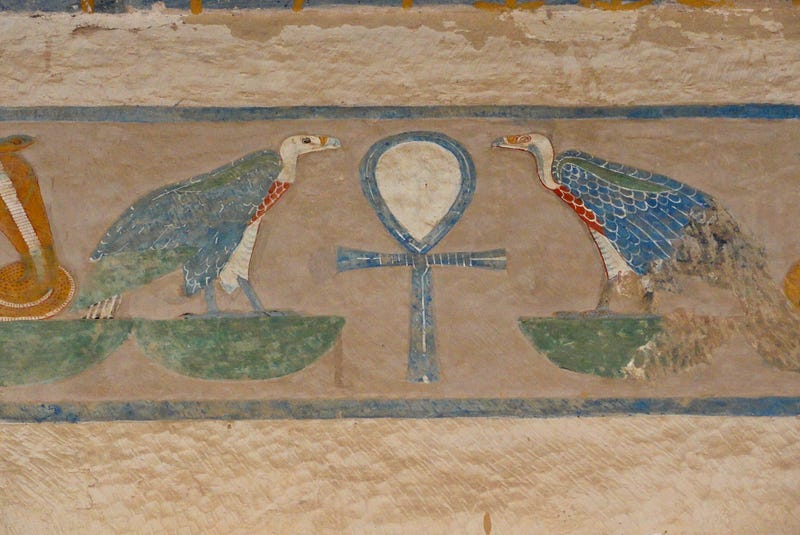
Hatshepsut Temple painted hieroglyphics — author’s photos

Her father Pharaoh Thutmose died when she was 12 years old, so Hatshepsut married her half-brother and became Queen. Her brother, Thutmose II, didn’t live long, dying when she was in her mid-twenties. They had no children so her infant stepson, born to one of her husband’s secondary wives, became heir to the throne. Hatshepsut acted as a Regent for her infant stepson, Thutmose III, by handling the affairs of the state until he was old enough to take over. Several years later she claimed the throne, becoming co-ruler with her stepson and claiming that her father had decreed that she should be Pharaoh.
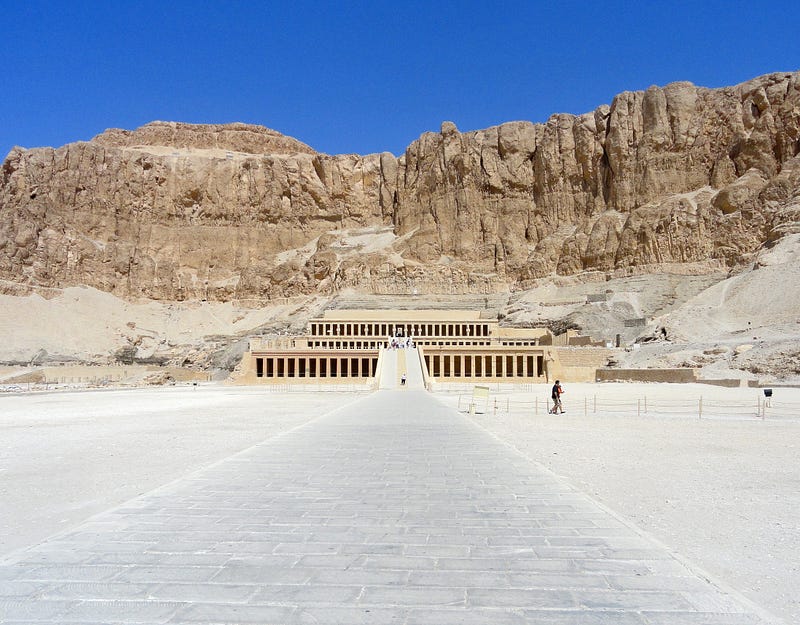
Pharaoh Hatshepsut Temple — author’s photo

She had to fight to hang onto power though. One way she did that was to insist that her public images and sculptures be depicted as masculine with large muscles and a beard.
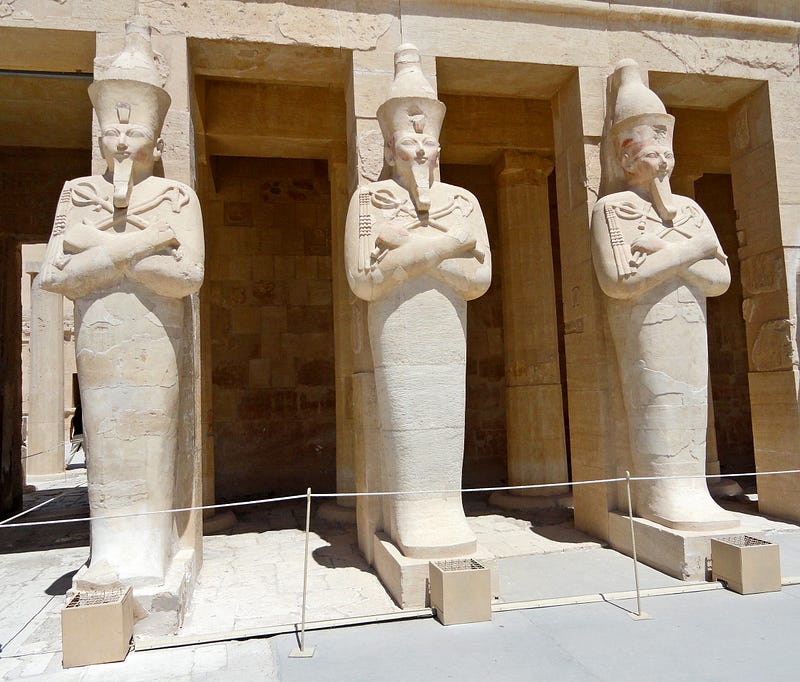
Statues at temple — author’s photo

When Hatshepsut died in her mid-forties she was buried in the Valley of the Kings near Luxor. But her stepson decided he wanted to rewrite history. He ordered that all evidence of her reign be wiped out including her depictions as a King. Statues were destroyed, monuments defaced and her name was removed from the List of Kings.

As a result, Hatshepsut remained virtually unknown until experts were able to decipher hieroglyphics in the 19th century, more than 3,000 years after her death. Her mummy wasn’t discovered until 2007 and is now in the Egypt Museum in Cairo. A full statue of her that survived her stepson’s destruction is in New York’s Metropolitan Museum

No visit to this part of the world, Northeast Africa and the Middle East, would be complete without touring the Pyramids. The giant stone monuments to long-gone kings and queens were near the top of my must-see list.
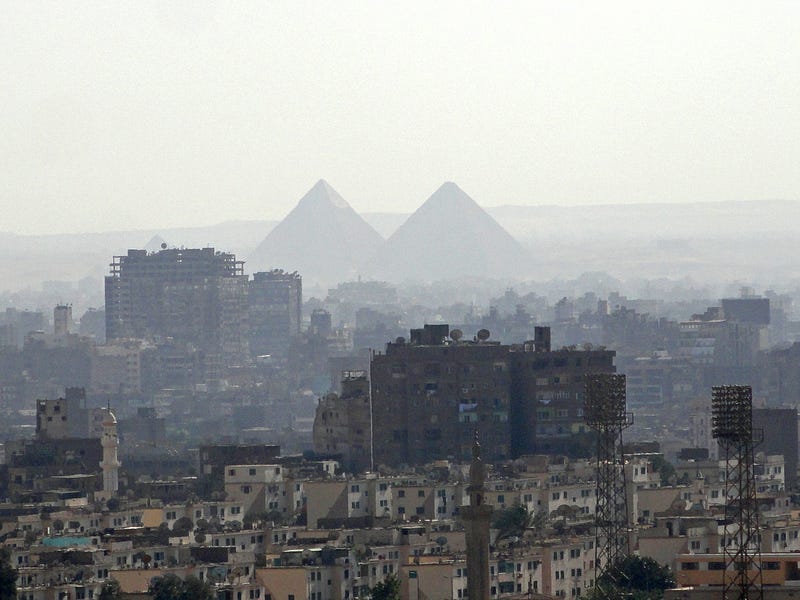
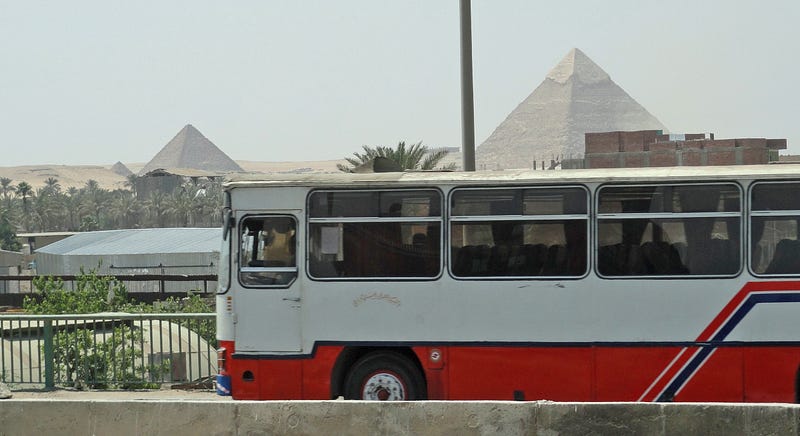
Pyramids in the distance — author’s photos

When I arrived in Cairo, I kept searching for the iconic structures, catching glimpses here and there, but when I arrived at my hotel room and stepped out onto the balcony there they were. They were shrouded in a smoggy late-afternoon haze but they were still breathtaking. They appeared to be in the city and not in the desert. Cairo and Giza had grown up all around them.
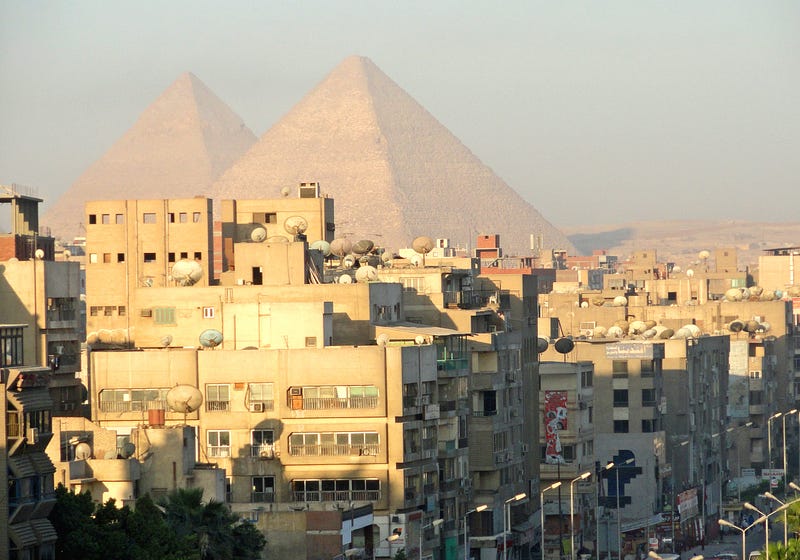
View from my hotel — author’s photo

The next day I got up early to visit these historic icons. The gates don’t open until 8 am and usually, there is a stampede to the ticket booth to be among the 150 lucky people to be able to purchase a pass to climb inside the Pharaoh Khufu’s Great Pyramid. It is the largest of the 111 pyramids scattered around Egypt. But when I arrived there were just a handful of people there, tourist numbers had fallen off because of the Spring Uprising revolution which had just ended.
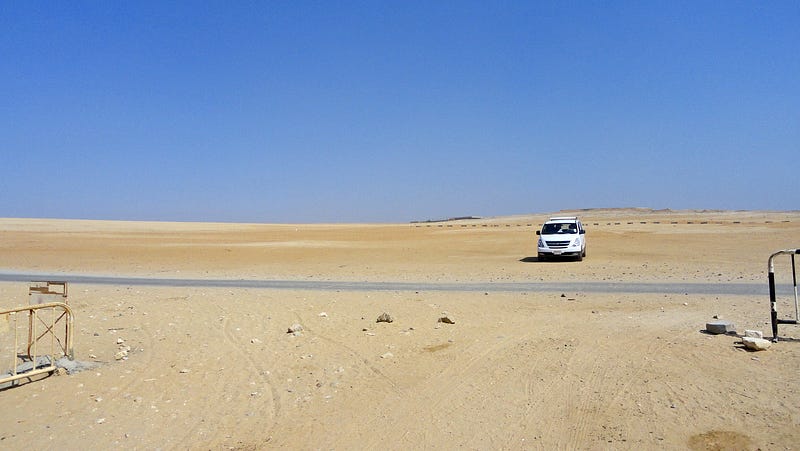
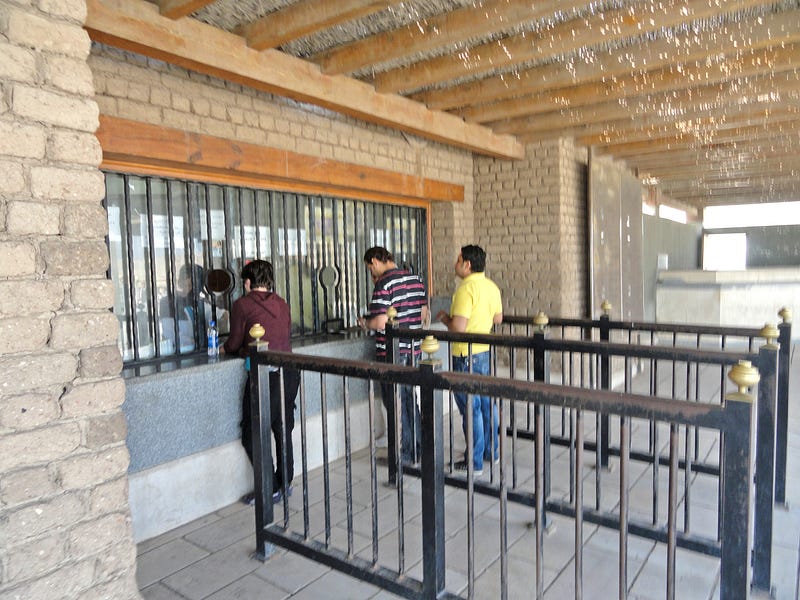
Our van all alone in the parking lot; no lineup for tickets— author’s photos
I was relieved there was no lineup to go inside — author’s photo

My guides and I got our tickets and made our way inside. Unfortunately, I had to leave my camera behind. There are strict rules against taking any flash photos inside the tomb and possibly adding to the cumulative light damage to the hieroglyphics. I found a video online (I have no idea how the guy got his camera in there) that gives a good look at what it’s like inside.

It was a strenuous climb up a massive ramp of stairs. I huffed and puffed my way about sixty meters up the steep incline inside a narrow shaft. I had to stoop over to risk hitting my head on the low stone ceiling, which is less than two meters high. Going up is manageable despite the climb, but going down was more of a challenge because I had to stay stooped over while walking downhill. Try it sometime, it’s not easy.
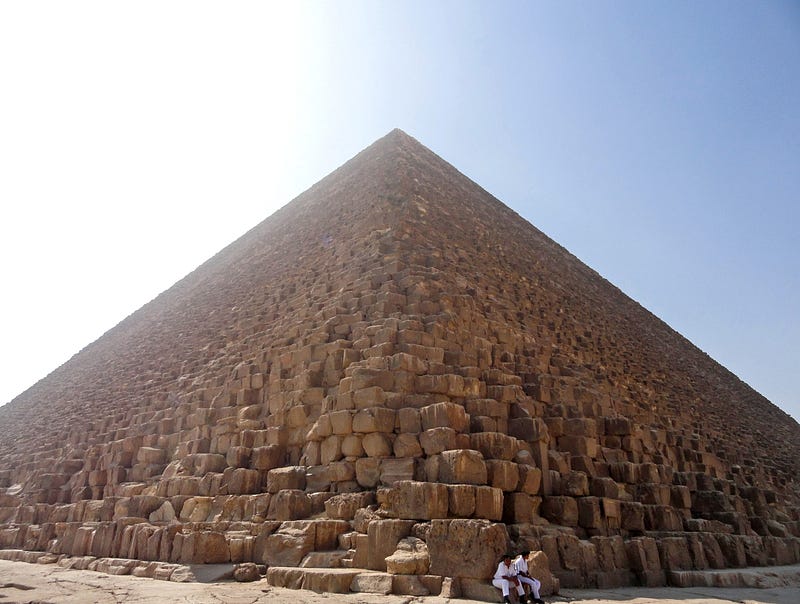
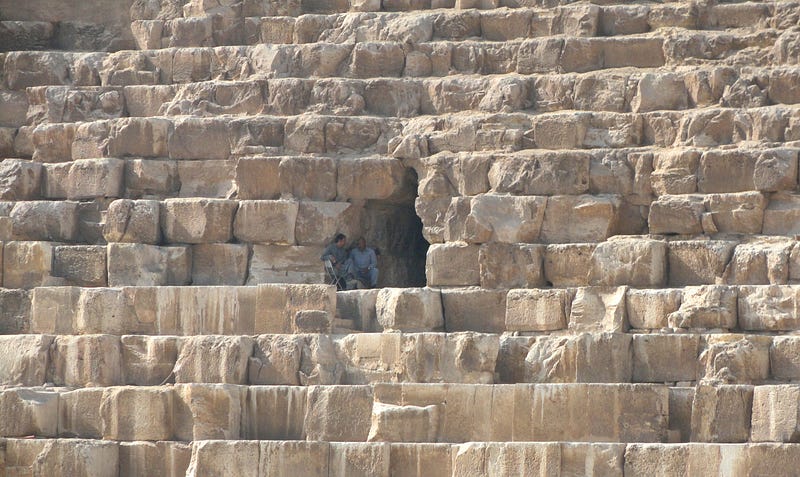
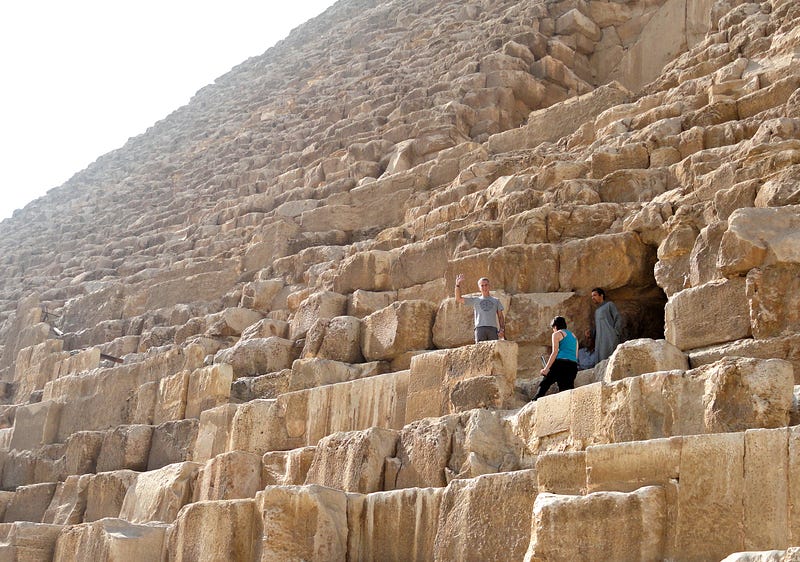
Khufu’s Great Pyramid — author’s photos

Once I reached the top, I entered the chamber which contained… nothing. It was warm and stuffy but luckily there were only two other people inside at the time. During the peak tourist season, there would be dozens of people making the climb, making it slower, hotter, and even stuffier. And if we missed the first ticket release, there was another opportunity at one pm. But I was told “You don’t want that. It is the hottest time of the day and it’s almost unbearable.” I was winded by the time I climbed all the steps to the inner chamber. There was less oxygen inside the enclosed space and I found myself starting to gasp as I tried to catch my breath. If you are claustrophobic at all I would not recommend going inside.

Built for Khufu, it is the largest pyramid in the country and was the tallest structure in the world for more than 3,800 years. It was 146 meters when it was built in 2600 BC. But since then, erosion has made it shrink by several meters. It’s made up of 2.3 million stone blocks, each weighing up to 80 tonnes.
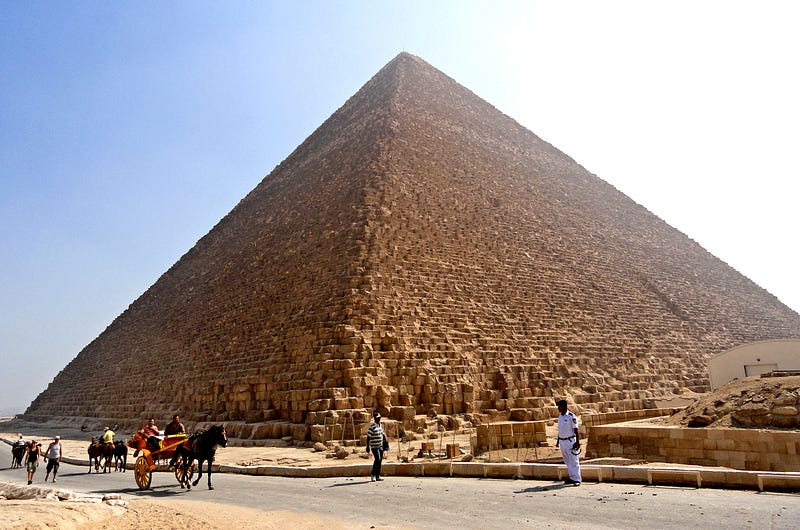
Egypt’s Great Pyramid — author’s photos

It took more than twenty years to construct because workers only had three months each year when water levels were high enough to ship the massive stone blocks up the Nile from Aswan.

All of the pyramids were clad in white limestone to reflect the sun, but only a small part of the peak of the Khafre pyramid still retains its white covering. The casing stones were removed to build other structures in the region.
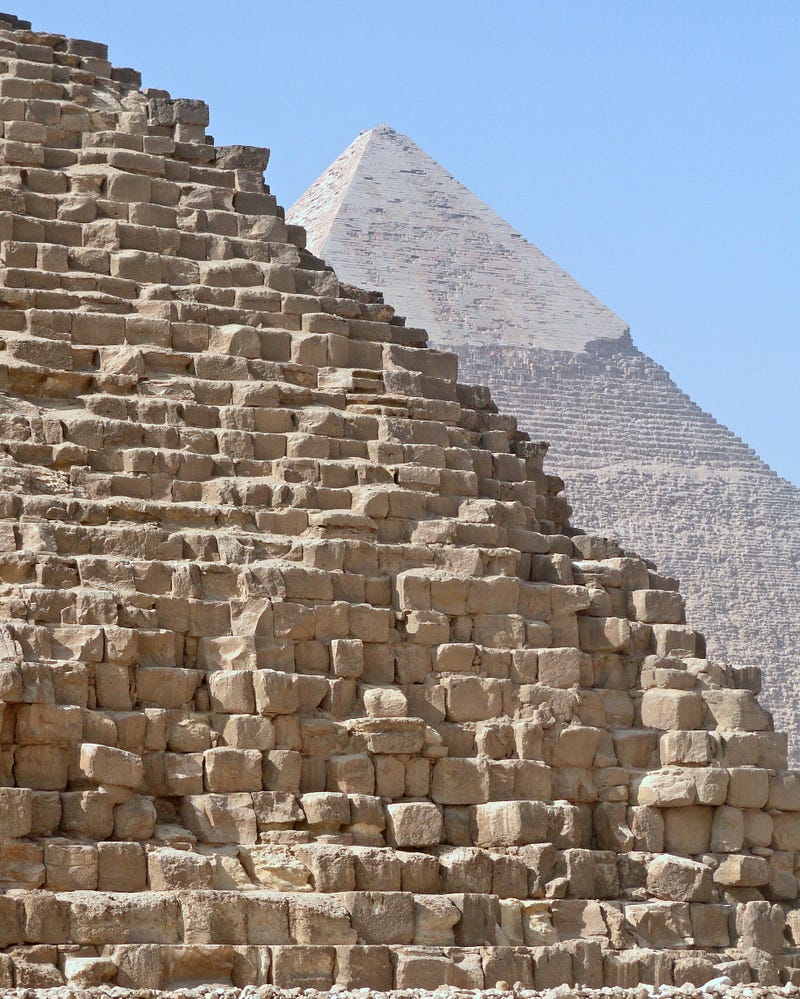
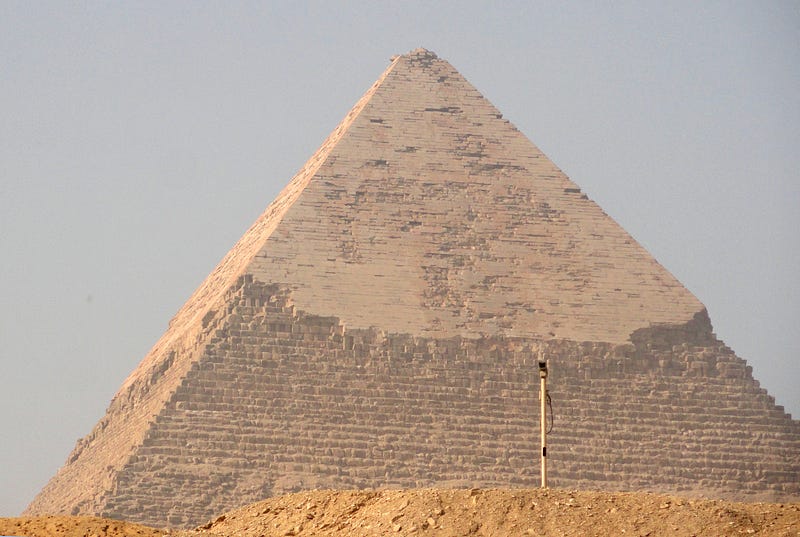
Khafre’s Pyramid with some limestone cladding still in place — author’s photos

Khafre’s pyramid is next to his father Khufu’s Great Pyramid. It was built on a raised platform, so while it looks bigger than his father’s, it was 137 meters, about nine meters shorter, when completed. He had planned to cover it in granite but died before it could be completed so just a small section at the bottom has the granite cladding.

Khafre was also responsible for ordering the construction of the mighty Sphinx to guard his pyramid. It’s believed the face of the Sphinx is actually Khafre’s face.
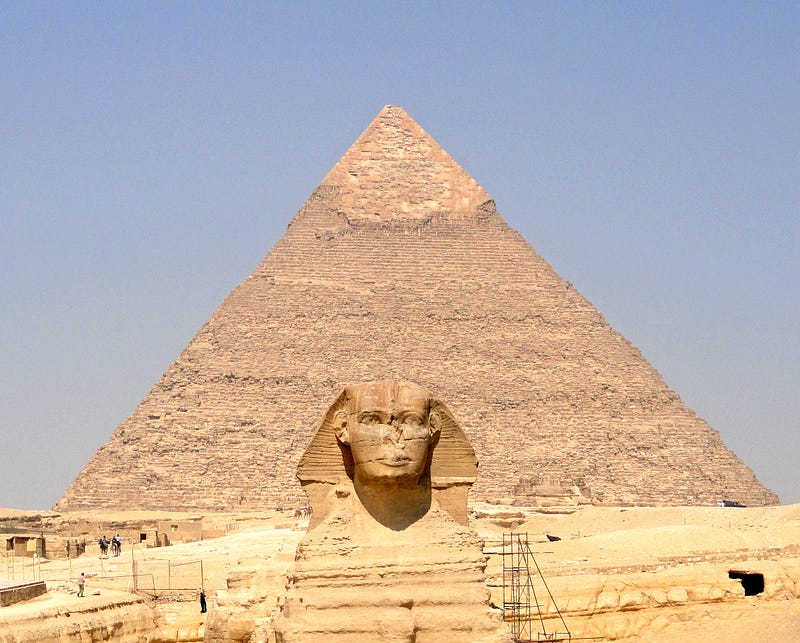
Sphynx and Khafre’s Pyramid — author’s photos

Because the city has built up around these magnificent monuments, the Sphinx now looks down onto a Pizza Hut and a KFC.
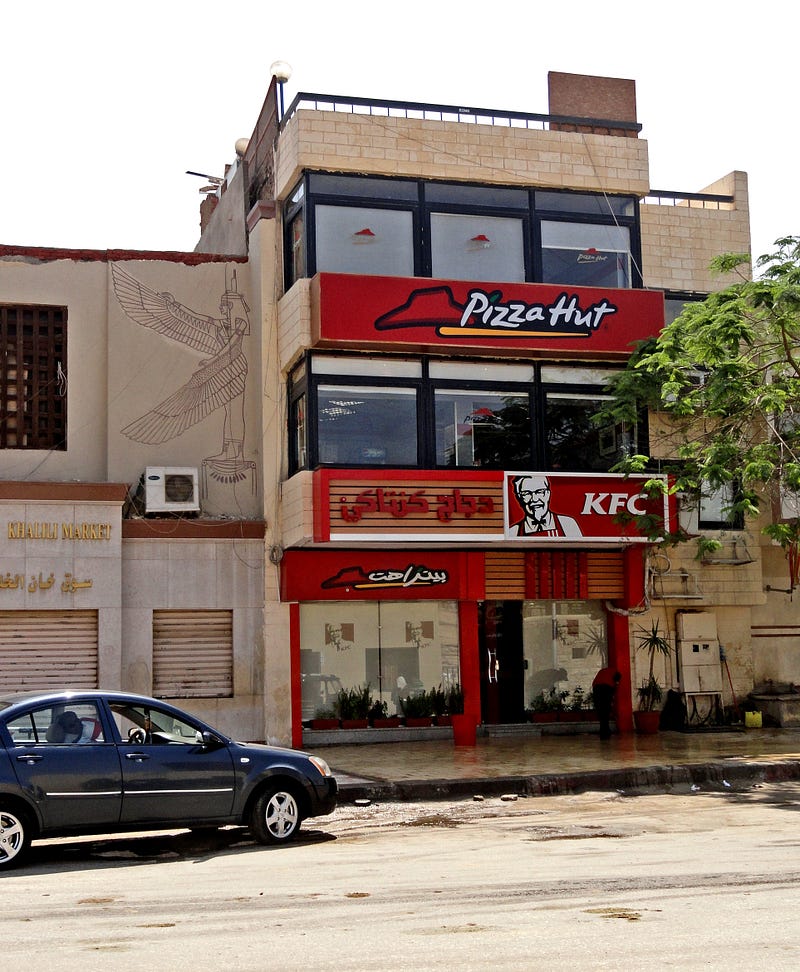
The view from the Sphynx — author’s photo

Next to each Pyramid is what appear to be piles of rocks, but in fact, are much smaller Pyramids for each of the king’s wives.
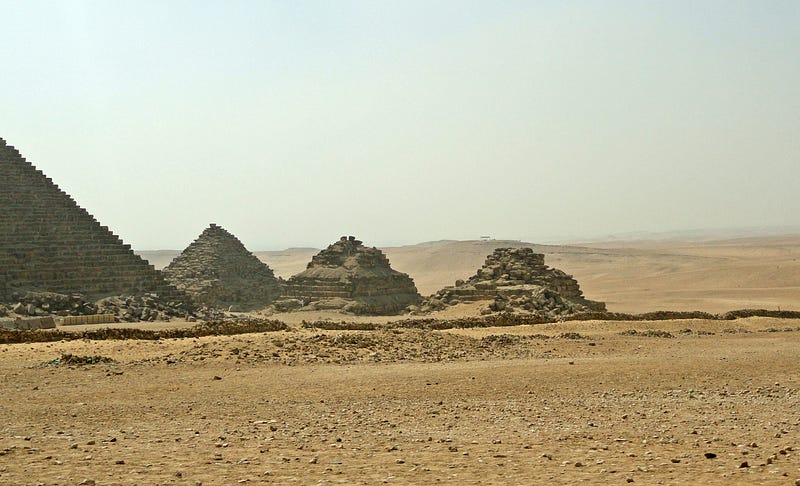
Pharoah’s Wives pyramids — author’s photos

It’s not difficult to imagine the herculean effort that went into constructing the pyramids. I could imagine thousands of men cutting the massive blocks of stone, then hauling them onto barges to float up the Nile to their final resting place, where they were dragged to the construction site and then hoisted up, one on top of the other to create this stairway to heaven, which the Egyptians called the Field of Reeds.

Nearby are the Pyramids of Saqqara, the largest burial site in Egypt. When I visited, 11 Pyramids had been excavated there. Another was subsequently uncovered nearby. Each contained several mummies, one wearing a golden mask encased in a brightly painted wooden sarcophagus.
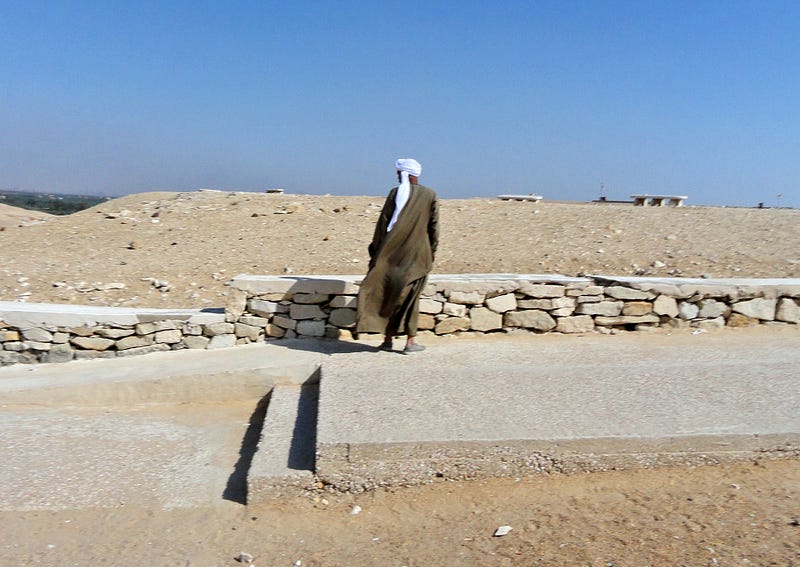
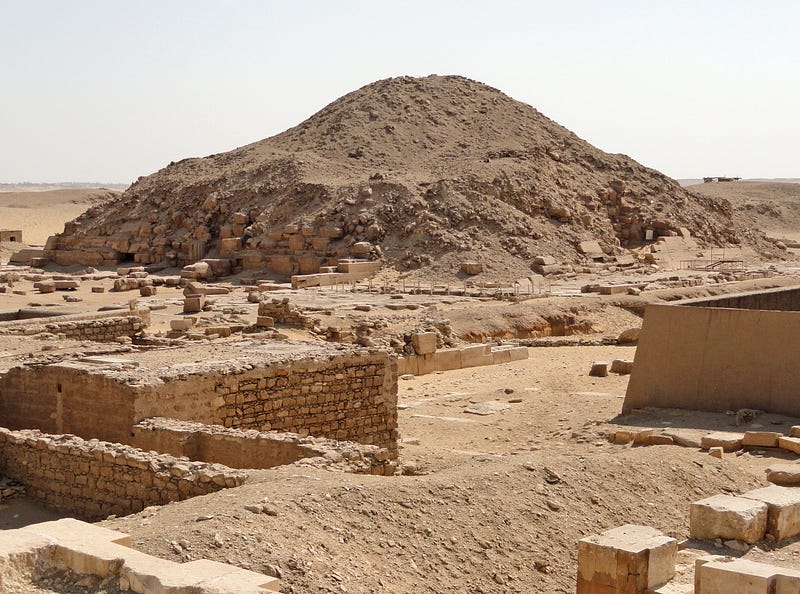
Saqqara site; excavation — author’s photos

The Step Pyramid was Egypt’s first pyramid, built for King Djoser (aka Zoser) in the 27th century BC. It has four sides and six steps, all encased in white limestone. It is the world’s oldest stone structure. Before this pyramid, royalty had been placed in tombs and buried under mud and brick mounds. But even with all that history, it’s not invincible. When I was there, scaffolding was set up around one side to shore up the crumbling stones.
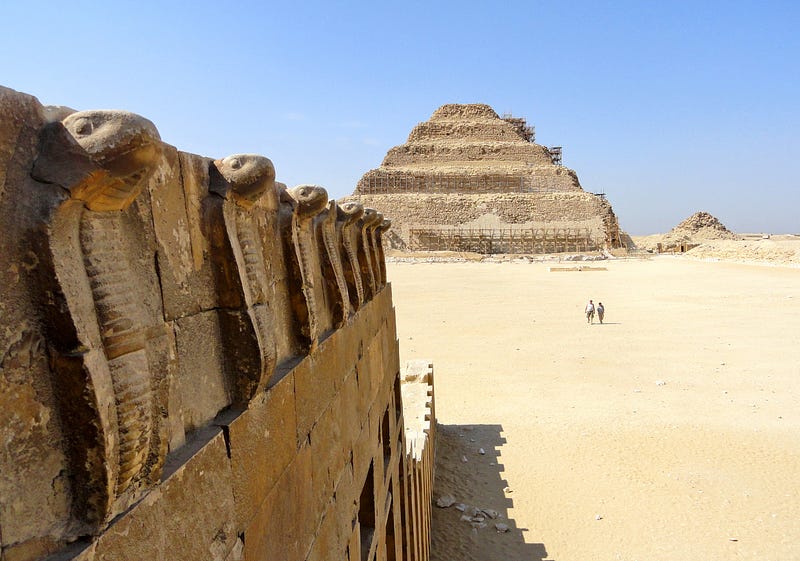
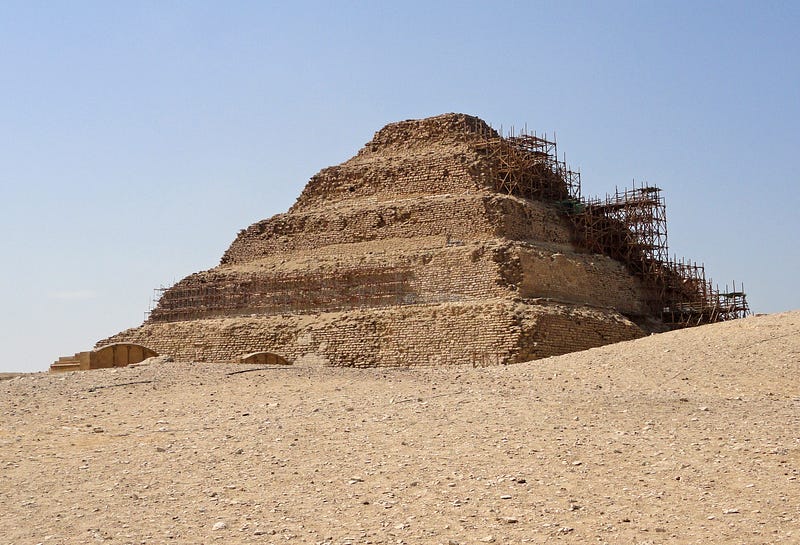
Cobra’s guard site of King Djoser’s pyramid, the oldest in Egypt — author’s photos

The entire Saqqara ancient burial grounds, on the site of the former capital Memphis, are massive and were surrounded by a wall, part of which still stands today. A colonnade of columns leading to a false door, allows the King’s spirit to enter and leave whenever he wants.
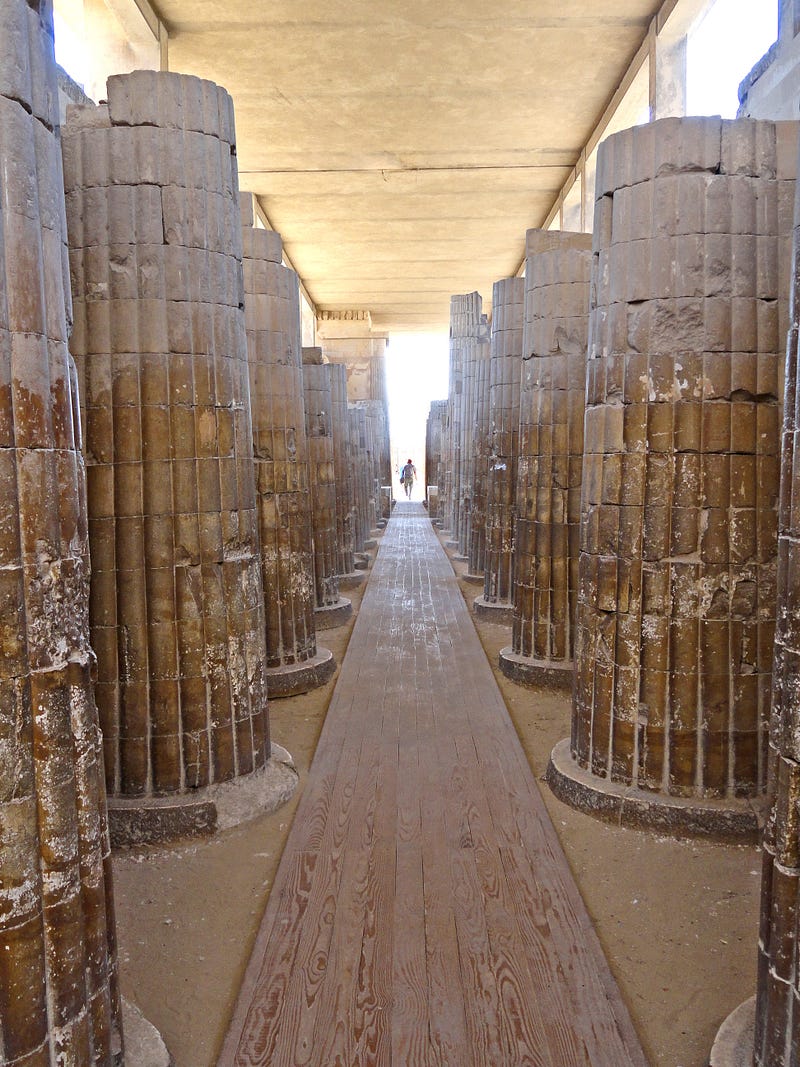
Saqqara Collonade — author’s photo
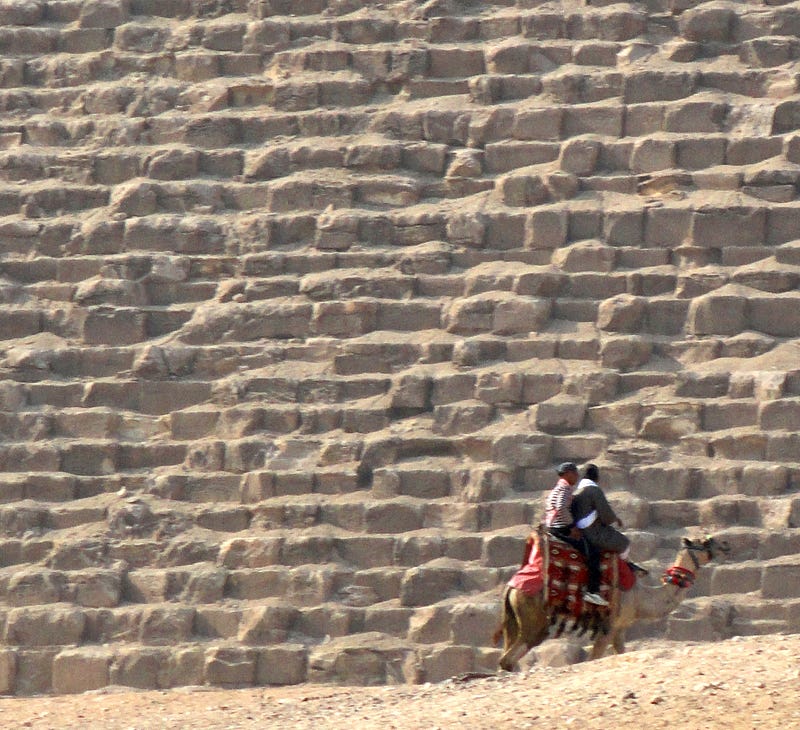
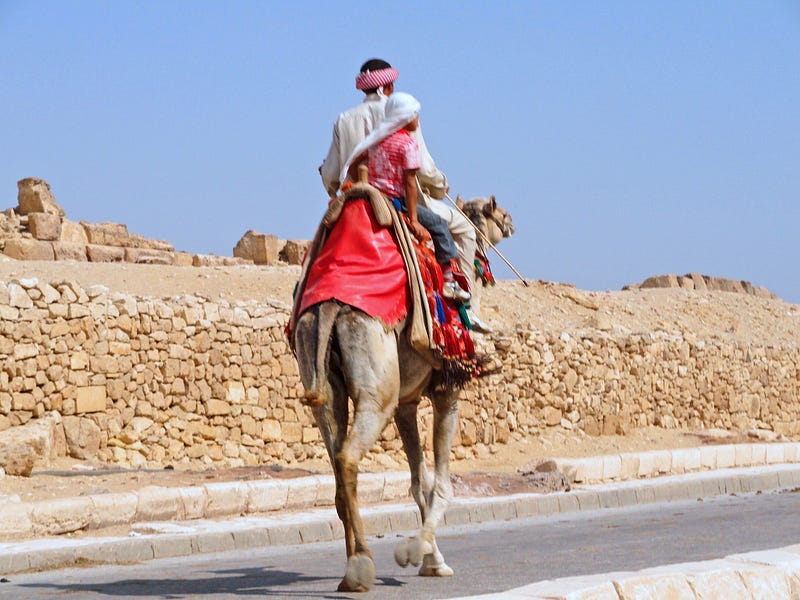
Father and son ride the camel home from work at the pyramids — author’s photo

For more on my visit to Egypt, check out my tour of the Black Desert and the White Desert with its alien landscape.

Thank you for reading.

Travel
Photography
Egypt
Pyramids Of Giza
Hatshepsut
Recommended from ReadMedium