THE WEB 3.0 STORY #004
Search Engine Companies Felt Threatened by Web 3.0 In The Early Days
They slowed down the adoption of Web 3.0. to provide an escape door for their own technologies.

Have you ever started to write something, look at all your notes, compare it with the industry's current state, and then become so frustrated that you somehow don't feel like writing the damn thing at all?
That's what happened to me with this article. I allowed my emotions to control my thinking. Never a wise thing to do.
I started from scratch a couple of times until I finally convinced myself I needed to ignore the corporate greed so evident in the notes. Focus on what is possible with Web 3.0 regardless of or despite search engines.
The two can co-exist. They are not even in the same space.
Shortly after I published my last article, Web 3.0 Is For Data, Not For The People, I received an email from someone reading the story. I will not mention his name as a sign of respect, but I appreciated the brief interaction.
He said a couple of things that confirmed my notes on Web 3.0 and how Google has dominated how we search on the web.
“Sir Tim Berners-Lee invented the World Wide Web; Google takes advantage of the technology, becoming a trillion-dollar business.“
“Netscape adds a secure layer and creates the first graphic browser; Amazon takes advantage of the technology, becoming a trillion-dollar business.“
“We are currently working on a solution that will impact what is called Web 3.0.; It will give back control of the data to the individual and provide a feedback loop.”
He calls this layer, The Private Engagement Layer, but it goes by a couple of other names. He earned a follow from me because whatever they are about to announce will be worth exploring.
Web 3.0 has never been about technology only. That part has been available for years. It's the combination of technology and data that gives us the power of Web 3.0.
Google started in 1998 as one of a couple of search engine companies. They weren't even the best one available at the time.
We help fund their growth by throwing cash at them for serving us the data they collected from us without our consent. They crawled the web for our data, and they did it in an ever-increasing clever way.
They are a business. They did what any other company does. They used their cash cow to finance their acquisition strategy to accelerate their growth.
They diversified, and now they are all over us. We had options, but those options were deliberately kept available to a small circle of people against the wish of that very same small circle of people. It is ironic but true.
That small circle of people has been trying to show us a different way, but their way was dismissed as myths. Not by them. You can take your guess by who.
The Technical Architecture Group of the Web Consortium has the following statement on its website.
The web should be a platform that helps people and provides a net positive social benefit… The web should empower an equitable, informed and interconnected society. It has been, and should continue to be designed to enable communication and knowledge-sharing for everyone. In the 30 years since development of the web began, it has become clear that the web platform can often be used in ways that subvert that mission. Furthermore, web technologies can be used to cause harm, which is not in keeping with the spirit of this social mission. The web should be a platform that helps people and provides a net positive social benefit. As we continue to evolve the web platform, we must therefore consider the ethical implications of our work. The web must be for good.
There is hope if we collectively act as ambassadors for the Open Data Cloud efforts.
The linked open data cloud.
One of the best examples is the Linked Open Data Cloud, a constantly updated visualization of connected data on the web.
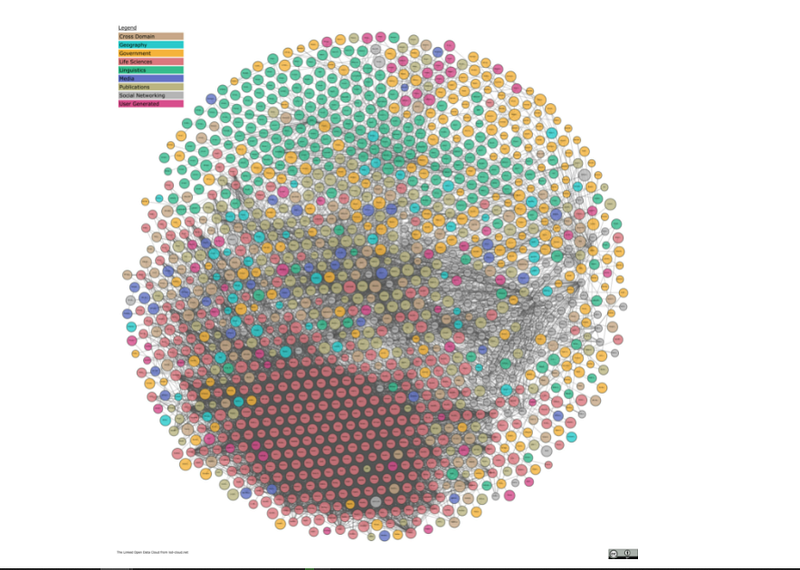
The red hive of connections is the sciences. The other major categories on the graph are cross-domain, geography, government, media, social networking, etc.
Before you click through, I should warn you it is not easy to navigate your way around that graph. That right there is both the problem and the opportunity.
There are not enough user-friendly tools to simplify the interface to such rich data. It is also evident from the graph that the science category shows a higher concentration of data.
There is not enough urgency to contribute to datasets like that, but it is slowly but surely changing.
Wikidata and its contribution to CODID-19 data.
The Coved-19 Wikidata Dashboard is currently available to countries across the globe.
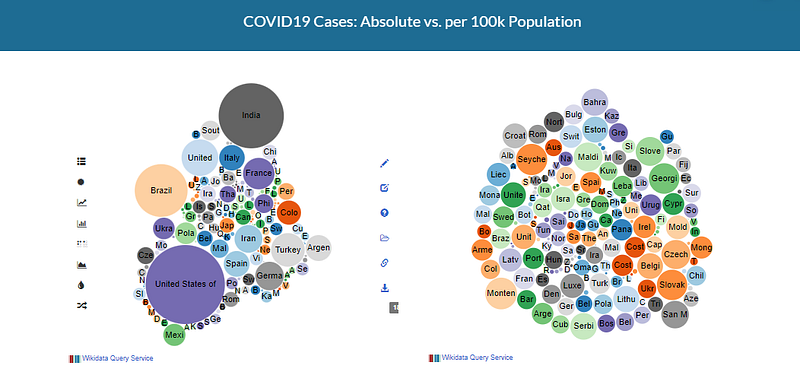
This site shows the true potential of Web 3.0. Any person, organization, or software system can contribute data to this site. Anybody can go to this site and display graphs on all the available data.
You can now go one step further and do this with data on your laptop or home computer.
Personal linked data clouds are possible now.
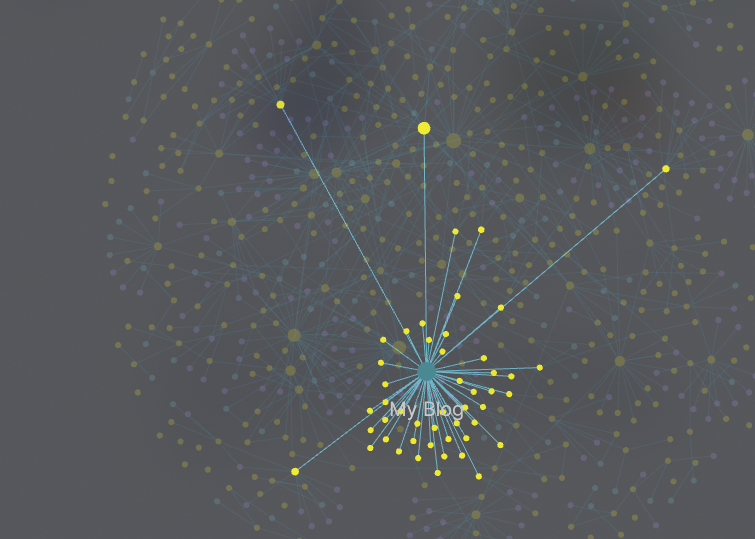
This is a screenshot of graph data from a product called Obsidian that I use for my PKM (Personal Knowledge Management). I am not promoting this product; there are lots like it available. I will merely use it to demonstrate what is possible with Web 3.0 technologies available for personal use.
I use this product for two main reasons. It embraces the concept that nobody should be storing all their data in some cloud. Everybody should be able to pull data from anywhere where such data is made available.
The screenshot shows how I zoomed into my blog articles with a snapshot knowledge graph view. The blue dot in the middle ( My Blog ) is the departure point for all knowledge link to my blog posts. The yellow dots connected to it show the blog posts in the major categories I am interested in. All other dots that are greyed out are notes that I captured in my PKM.
I did all that by simply using point and click. No super technical skills are required.
The powerful part of this is the use of URLs and especially URIs. Don't worry about the terminology. It's not important for now.
Since I know a bit about these two concepts and I know a bit about RDF formats in WEB 3.0. I can pull data from sites that provide RDF entry points. I now have a local copy of the data that belongs to me. I can do the same with my personal data provided by companies that offer a service to me. For example, data from my mobile service.
I will be able to pull down my health data from the health department very soon as soon as they can make it available via a public RDF entry point. All this data will be in my PKM and I can connect them in ways that make sense to me.
Not in ways dished up to me by some tech company.
We don't need the technology of giant corporations to access our data. The pioneers of the web have given us the technology. The data belong to us.
We should be demanding access to the data. One of the ways we can do that is by selecting ourselves as ambassadors for the Open Data movement.
If you enjoy reading stories like these and want to support other writers and me, consider signing up to become a Medium member. It's $5 a month, giving you unlimited access to stories on Medium. If you sign up using my link, I'll earn a small commission at no extra cost to you.