avatarSjoerd Nijland

Free AI web copilot to create summaries, insights and extended knowledge, download it at here

4339

Abstract

d="2368"><img src="https://cdn-images-1.readmedium.com/v2/resize:fit:800/1*e_yySpy5sNUuoVzRL0o-ZQ.png"><figcaption></figcaption></figure><p id="dd2a">Ugh. So is the Sprint Review a <i>formal</i> or <i>informal</i> meeting? Well, the answer is <i>both</i>. It is formally a Scrum Event, and ‘informal’ implies it is <i>informative</i> to others outside the Scrum Team (stakeholders) to <i>“elicit feedback and foster collaboration”</i>. Ha! silly silly Scrum Guide. I’m sure this is just Jeff’s and Ken’s sense of humor, messing with us through the masterful art of linguistic magic.</p><h1 id="f222">Meeting time</h1><p id="023b">Now, often people are concerned about the duration of the Scrum Events. <i>“Wow,”</i> they might say <i>“Scrum is meeting heavy”</i>.</p><p id="1314">It really isn’t though. It’s super lightweight. They are actually really helpful to minimise the need for meetings. It’s often the duration of the time-boxes which are a cause for concern to some. It is important to emphasize that that’s a <b>maximum</b> duration only. Aside from the Sprint itself, they have <b>no minimum </b>duration. They end, as soon as their purpose is achieved. What’s more, the time-box <b>may be shortened</b> to whatever length the team deems effective and efficient. It is a common practice set the time-boxes relative to the Sprint Duration. Seasoned Scrum Teams generally have shorter events as they’ve learned to make them more effective.</p><figure id="ab10"><img src="https://cdn-images-1.readmedium.com/v2/resize:fit:800/1*xWdNSdZugPoD2m0BjCzEpw.png"><figcaption></figcaption></figure><p id="c301">It’s common that, during the Sprint Retrospective event, teams work out how to further optimize the way the team executes the events.</p><p id="2ce4">A common case made by routined Scrum Teams against the Daily Scrum is that they argue that they are already aligned, as they often collaborate collectively during the day. That’s great! The Daily Scrum can thus serve to <i>inspect</i> if the team is indeed aligned on the progress towards the Sprint Goal. If so, the Daily Scrum ends in mere minutes. If they actually discover weren’t aligned though… they know what to do.</p><p id="ecc3">One could suggest a team to make their <i>other </i>meetings transparent on a board to the whole team.</p> <figure id="57f5"> <div> <div> <img class="ratio" src="http://placehold.it/16x9"> <iframe class="" src="https://cdn.embedly.com/widgets/media.html?src=https%3A%2F%2Fgiphy.com%2Fembed%2FSM6iuxDDFqH0Q%2Ftwitter%2Fiframe&amp;url=https%3A%2F%2Fgiphy.com%2Fgifs%2Fpainting-SM6iuxDDFqH0Q&amp;image=https%3A%2F%2Fmedia.giphy.com%2Fmedia%2FSM6iuxDDFqH0Q%2Fgiphy.gif&amp;key=a19fcc184b9711e1b4764040d3dc5c07&amp;type=text%2Fhtml&amp;schema=giphy" allowfullscreen="" frameborder="0" height="321" width="435"> </div> </div> </figure></iframe></div></div></figure><p id="5a17">One too could suggest marking the meetings that start and run late. Next, a team might make the outcome of those meetings visible too. As a result, it’s not uncommon for teams to work towards time-boxing those other meetings. They’ll perhaps try to reduce a time-box to <i>ten</i> or <i>fifteen</i> minutes rather than <i>thirty</i> or <i>sixty</i> minutes. They’ll too start to determine <i>upfront</i> what kind of actions or ‘first next steps’ they like to capture and align on. Last but not least, they’ll start to <i>cancel</i> meetings and <i>learn</i> that perhaps there already is a Scrum Event for that!</p> <figure id="9b64"> <div> <div> <img class="ratio" src="http://placehold.it/16x9"> <iframe class="" src="https://cdn.embedly.com/widgets/media.html?src=https%3A%2F%2Fwww.youtube.com%2Fembed%2FGp9agRq8S8c%3Ffeature%3Doembed&amp;url=http%3A%2F%2Fwww.youtube.com%2Fwatch%3Fv%3DGp9agRq8S8c&amp;image=https%3A%2F%2Fi.ytimg.com%2Fvi%2FGp9agRq8S8c%2Fhqdefault.jpg&amp;key=a19fcc184b9711e1b4764040d3dc5c07&amp;type=text%2Fhtml&amp;schema=youtube" allowfullscreen="" frameborder="0" height="480" width="854"> </div> </div> </figure></iframe></div></div></figure><h1 id="df78">Critical transparency</h1><p id="7773">These Scrum Events are critical milestones i

Options

n creating <a href="https://readmedium.com/empiricism-transparency-33adad8fbba2">transparency</a>. They create opportunities for individuals to <b><i>continuously align</i></b> so they develop a <b><i>shared understanding</i></b>. They are too used to continuously <i>inspect</i> what <i>actually</i> is, rather than working from <i>assumptions</i>.</p><p id="b107">One really shouldn’t cherry-pick Scrum Events. They <i>all</i> need to be in place. They are reinforcing.</p><blockquote id="bf73"><p>“Failure to include any of these events results in reduced transparency and is a lost opportunity to inspect and adapt.” <i>— The Scrum Guide</i></p></blockquote><p id="42bf">Your team isn’t Scrummin’ if it isn’t drummin’ all these events.</p><h1 id="18c0">Facilitation and attendance</h1><p id="5fbe">Now, the Scrum Master facilitates Scrum events <i>as requested or needed. </i>So this isn’t to say the Scrum Master should host, lead, coordinate all events all the time. He or she is however accountable for them. So whenever a team challenges the need (or the regularity) of the Scrum Events, the Scrum Master should work with them to making them more meaningful, effective, <b>and enjoyable</b>.</p><p id="6907">The Scrum Master is<b> not</b> a referee or police officer who is making sure everyone is attending the events.</p> <figure id="41d7"> <div> <div> <img class="ratio" src="http://placehold.it/16x9"> <iframe class="" src="https://cdn.embedly.com/widgets/media.html?src=https%3A%2F%2Fgiphy.com%2Fembed%2FNAGHyPgXWcSbu%2Ftwitter%2Fiframe&amp;url=https%3A%2F%2Fgiphy.com%2Fgifs%2Fdisney-aristocats-work-week-school-NAGHyPgXWcSbu&amp;image=https%3A%2F%2Fmedia.giphy.com%2Fmedia%2FNAGHyPgXWcSbu%2Fgiphy.gif&amp;key=a19fcc184b9711e1b4764040d3dc5c07&amp;type=text%2Fhtml&amp;schema=giphy" allowfullscreen="" frameborder="0" height="263" width="435"> </div> </div> </figure></iframe></div></div></figure><p id="2772">A Scrum Master can however make the impact of someone not having attended an event transparent, by bringing it up during the Sprint (Retrospective). What can be said if someone misses a Daily Scrum, during which the team is supposed to align on progress or possible impediments towards their collective Sprint Goal? Are Scrum’s values like commitment, openness, and respect demonstrated?</p><h1 id="c791">Alignment</h1><p id="6acf">In short, I like to see the frequent intervals for collaboration as a means to get a team to operate in sync, so they’ll be able to perform full swing, <b>in harmony</b>, like a seasoned band, or sports team.</p><figure id="ed27"><img src="https://cdn-images-1.readmedium.com/v2/resize:fit:800/1*g-v0VbgI6vQi9jURiXi4Og.png"><figcaption></figcaption></figure><h1 id="b57a">Next up</h1><p id="af8e">In the next episodes, I’ll deep-dive into the first of the four events within the Sprint: the Sprint Planning. For each Event I’ll try to put into my own words how they contribute to the pillars of empiricism. What’s the purpose and intended outcome? How could they be facilitated?</p><div id="70b8" class="link-block"> <a href="https://readmedium.com/the-sprint-planning-c24df3e09779"> <div> <div> <h2>The Sprint Planning</h2> <div><h3>Road to PSM III — Episode 17</h3></div> <div><p>medium.com</p></div> </div> <div> <div style="background-image: url(https://miro.readmedium.com/v2/resize:fit:320/1*5DipIdnZPmTamlHcDxiqXg.png)"></div> </div> </div> </a> </div><p id="f49f">Thanks for staying tuned. Please let me know if I was out of tune.</p><p id="4082">The Road to PSM III is being reformatted to <b>The Road to Mastery!</b> <a href="https://www.seriousscrum.com/r2m/down-the-rabbit-hole">Part I: Down the Rabbit Hole</a> is now available.</p><figure id="a703"><img src="https://cdn-images-1.readmedium.com/v2/resize:fit:800/1*qsg-zjcnz5A8B1xmBbdIfw.png"><figcaption><a href="https://readmedium.com/your-invitation-to-the-serious-scrum-slack-workspace-f424aeea4093?sk=e8334e6ee505a85ae6b9d2a1ce37219c">Do you want to write for Serious Scrum or seriously discuss Scrum?</a></figcaption></figure></article></body>

A deeper understanding on…

Scrum Events

Road to PSM III — Episode 16

A steady routine, centred around continuous improvement, breeds excellence. This regularity reduces complexity, promotes predictability and controls risk.

The language used by the Scrum Guide had my head spinning too at times; Scrum’s events are no exception. So, even a seemingly simple short definition on Scrum Events deserves a bit of a deep-dive too.

How many events?
So.. Scrum knows four events… or wait… five or… ehm…

I bet most organizations that say they Scrum, only have irregular ‘stand-ups’ and thus barely even apply just one of its essential get-togethers.

“Scrum prescribes four formal events for inspection and adaptation” — The Scrum Guide

It lists the following four formal events for inspection and adaptation:

  • Sprint Planning
  • Daily Scrum
  • Sprint Review
  • Sprint Retrospective

A bit confusingly perhaps, the Sprint is too considered an event in Scrum. It isn’t however considered part of the four formal events for inspection and adaptation, as these are contained within the Sprint event. Hm?

“Other than the Sprint itself, which is a container for all other events, each event in Scrum is a formal opportunity to inspect and adapt something.” — The Scrum Guide [highlight added]

So indeed, one could say there are five events total. The Sprint being listed as one of them in the section on Scrum Events. Ha! silly Scrum Guide.
What is an event in Scrum?

We’ve covered the Sprint, so in this episode I’ll focus on the four other events contained within, revolving around inspection and adaptation.

Scrum Events are collaborative sessions that

  • create regularity
  • minimize the need for meetings not defined in Scrum
  • are time-boxed with a maximum duration
  • can prevent waste in the process
  • are formal opportunities to inspect and adapt something
  • are specifically designed to enable critical transparency and inspection
  • promote interactions between individuals

Some will consider this cycle of events a process. The Scrum Guide refers to it as a Scrum process. That said, the Scrum Guide reads that “Scrum is not a process” [hint: it is more than that]. Personally I prefer to use the term routine, as I’ve experienced that process is often misinterpreted. It often sparks a debate on the first value of the Agile Software Manifesto: “Individuals and interactions over processes and tools”.

With Scrum, it is in fact this process that enables ‘individuals and interactions’. The Manifesto calls for regular events:

“At regular intervals, the team reflects on how to become more effective, then tunes and adjusts its behavior accordingly.” — The Agile Manifesto.

As the Manifesto uses the terms ‘reflects, tunes, adjusts’, in Scrum lingo, this would have read: “creates transparency, inspects and adapts”.

Formal / informal?

Now, the four events are specifically listed as formal events. However, the Sprint Review reads:

“This is an informal meeting” — The Scrum Guide
Ugh. So is the Sprint Review a formal or informal meeting? Well, the answer is both. It is formally a Scrum Event, and ‘informal’ implies it is informative to others outside the Scrum Team (stakeholders) to “elicit feedback and foster collaboration”. Ha! silly silly Scrum Guide. I’m sure this is just Jeff’s and Ken’s sense of humor, messing with us through the masterful art of linguistic magic.

Meeting time

Now, often people are concerned about the duration of the Scrum Events. “Wow,” they might say “Scrum is meeting heavy”.

It really isn’t though. It’s super lightweight. They are actually really helpful to minimise the need for meetings. It’s often the duration of the time-boxes which are a cause for concern to some. It is important to emphasize that that’s a maximum duration only. Aside from the Sprint itself, they have no minimum duration. They end, as soon as their purpose is achieved. What’s more, the time-box may be shortened to whatever length the team deems effective and efficient. It is a common practice set the time-boxes relative to the Sprint Duration. Seasoned Scrum Teams generally have shorter events as they’ve learned to make them more effective.
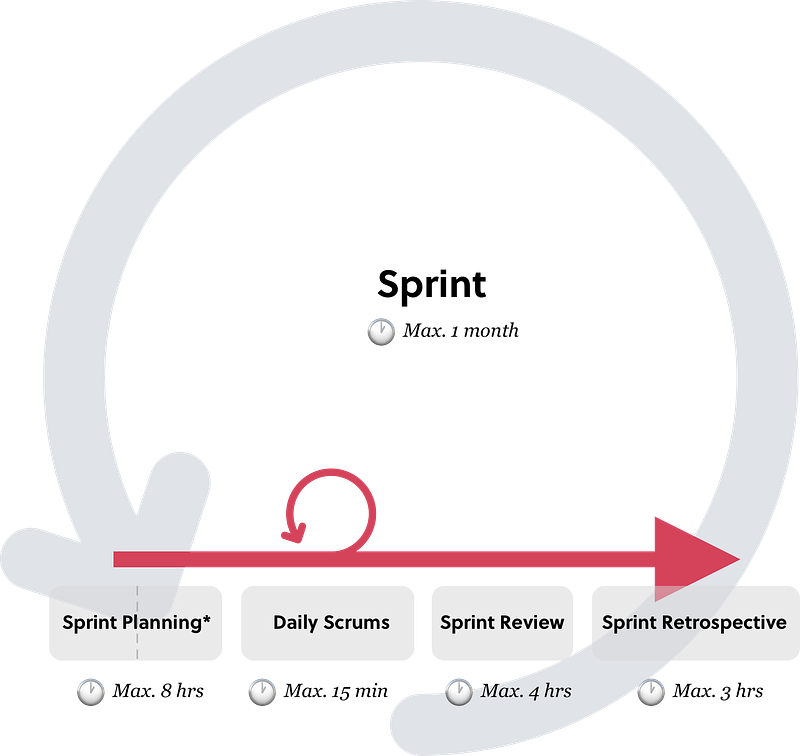
It’s common that, during the Sprint Retrospective event, teams work out how to further optimize the way the team executes the events.

A common case made by routined Scrum Teams against the Daily Scrum is that they argue that they are already aligned, as they often collaborate collectively during the day. That’s great! The Daily Scrum can thus serve to inspect if the team is indeed aligned on the progress towards the Sprint Goal. If so, the Daily Scrum ends in mere minutes. If they actually discover weren’t aligned though… they know what to do.

One could suggest a team to make their other meetings transparent on a board to the whole team.

One too could suggest marking the meetings that start and run late. Next, a team might make the outcome of those meetings visible too. As a result, it’s not uncommon for teams to work towards time-boxing those other meetings. They’ll perhaps try to reduce a time-box to ten or fifteen minutes rather than thirty or sixty minutes. They’ll too start to determine upfront what kind of actions or ‘first next steps’ they like to capture and align on. Last but not least, they’ll start to cancel meetings and learn that perhaps there already is a Scrum Event for that!

Critical transparency

These Scrum Events are critical milestones in creating transparency. They create opportunities for individuals to continuously align so they develop a shared understanding. They are too used to continuously inspect what actually is, rather than working from assumptions.

One really shouldn’t cherry-pick Scrum Events. They all need to be in place. They are reinforcing.

“Failure to include any of these events results in reduced transparency and is a lost opportunity to inspect and adapt.” — The Scrum Guide

Your team isn’t Scrummin’ if it isn’t drummin’ all these events.

Facilitation and attendance

Now, the Scrum Master facilitates Scrum events as requested or needed. So this isn’t to say the Scrum Master should host, lead, coordinate all events all the time. He or she is however accountable for them. So whenever a team challenges the need (or the regularity) of the Scrum Events, the Scrum Master should work with them to making them more meaningful, effective, and enjoyable.

The Scrum Master is not a referee or police officer who is making sure everyone is attending the events.

A Scrum Master can however make the impact of someone not having attended an event transparent, by bringing it up during the Sprint (Retrospective). What can be said if someone misses a Daily Scrum, during which the team is supposed to align on progress or possible impediments towards their collective Sprint Goal? Are Scrum’s values like commitment, openness, and respect demonstrated?

Alignment

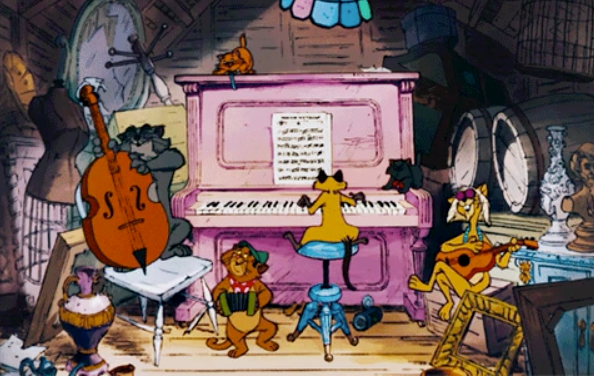
In short, I like to see the frequent intervals for collaboration as a means to get a team to operate in sync, so they’ll be able to perform full swing, in harmony, like a seasoned band, or sports team.
Next up

In the next episodes, I’ll deep-dive into the first of the four events within the Sprint: the Sprint Planning. For each Event I’ll try to put into my own words how they contribute to the pillars of empiricism. What’s the purpose and intended outcome? How could they be facilitated?

Thanks for staying tuned. Please let me know if I was out of tune.

The Road to PSM III is being reformatted to The Road to Mastery! Part I: Down the Rabbit Hole is now available.

Do you want to write for Serious Scrum or seriously discuss Scrum?
Agile
Scrum
Scrum Master
Serious Scrum
Road To Psmiii
Recommended from ReadMedium