
Screw Knowing What You Want to Be When You Grow Up
It’s not a fair question if you ask me.
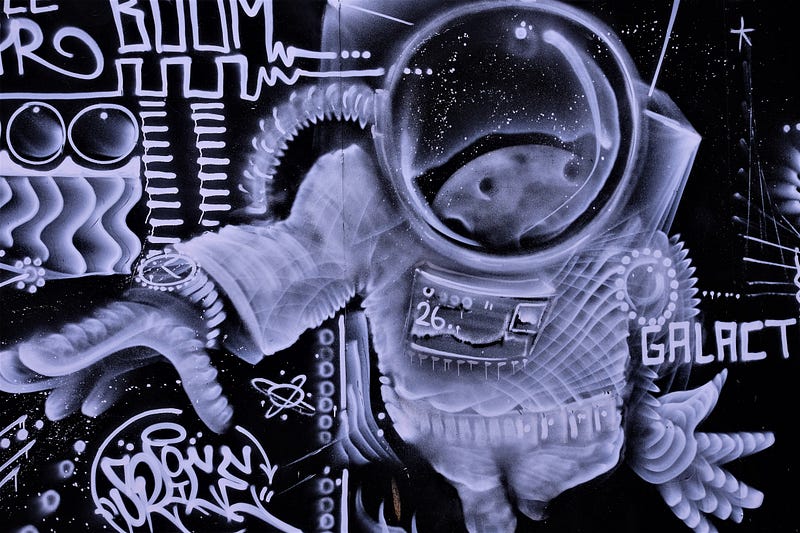
When I was in first grade two career options sounded appealing to me. I loved the idea of flying to the moon. I’d imagine myself in astronaut gear, eating astronaut food, blasting ahead into outer space.
The 1986 Challenger spaceship disaster occurred when I was in first grade. All seven passengers died less than two minutes after takeoff. One of them was the first teacher to be launched into space.
I remember watching the footage on the news and feeling terrified that I was witnessing footage of death, of humans like me exploding in midair. 34 years later, Netflix has released the documentary: Challenger: The Final Flight.
The closest I got was flying in airplanes and watching a rocket blast off when visiting Florida at age ten.
My second childhood career aspiration was being a garbage person. I don’t remember when or why this came to be a career dream. Looking back I think it had to do with the freedom of sailing through the air for most of the day and potentially driving a really big truck.
I am easily grossed out and concerned about contamination in a clinical OCD way. Really, I have clinical OCD. So, this dream did not last long except in my non-pungent imagination.
The closest I got to being a garbage person was working in a botanic garden. It took a lot of grit and strength to work that job. Gardeners are strong as hell.
We’d scoop wood mulch into Brute trashcans and lift them onto our Gators to drive out into the garden. My biceps looked awfully fine when I lifted Brutes on a regular basis.
It was the cleanest version I could imagine of my garbage person aspiration — I got to haul trash cans on a gator, driving through fresh air. That was pretty cool. That I was close to living out a childhood career dream is something I didn’t take for granted.
“What do you want to be when you grow up?” was not a question that inspired confidence in me.
I try not to ask it of my children, though it can be difficult, as I’m prone to curiosity. Knowing what they’d like to be when they grow up would be interesting, but I don’t want to box them into the idea of having to know what they want to be when they grow up. Or, into choosing only one thing they want to do when they grow up.
“Have the courage to follow your heart and intuition. They somehow already know what you truly want to become. Everything else is secondary.“
— Steve Jobs, Co-founder, Chairman, & CEO of Apple
College, Panic Attacks, and Cold Feet
“A person who never made a mistake never tried anything new.” — Albert Einstein, Theoretical Physicist
How many times can you change a major?
In 1996, I graduated high school a year early. It was easy at the time. I only had to take Junior English in the summer of 1995 and I was all set.
I scored barely high enough on my SATs to get into the University of Oklahoma. I didn’t have to take the ACT. I passed the Advanced Placement English test and didn’t have to take Freshman Composition I or II.
The university was large and overwhelming. I didn’t know anyone in my huge classes. My study habits were abysmal. I didn't know what I wanted to be when I grew up. Since I excelled in English, I decided to declare an education major. I soon realized I wasn’t interested in teaching philosophy and dropped the major.
My first semester GPA was a stark 1.0. Now, I was on academic probation and regretting my decision to graduate high school one year early.
The undergraduate years were rough. I racked up debt. I withdrew several times. I caught mononucleosis from the first guy I ever dated. I got really sick. My weight plummeted below 100 pounds. At 5'6" that is a scary low weight.
Later, I withdrew due to depression. In my 30s I realized that in college I’d been experiencing panic attacks and had an undiagnosed anxiety disorder.
I was stressed out. I didn’t know what I wanted to be when I grew up.
I switched my major more times than I can remember. Teaching. Art School. Sociology. Teaching. English. Journalism.
Eventually, I graduated with a BA in English, creative studies emphasis in poetry. The English department is where I found my sweet spot. I excelled at analyzing literature and writing creatively.
My GPA rose to above a 3.5. I was a unique success story.
But, I still didn’t know what I wanted to be when I grew up.
Navigating the 9–5
I took a year off of school and worked as a receptionist handling some accounts receivable stuff at a friend’s parents’ oil valve repair shop.
Sitting in an office chair indoors for 40 hours a week and answering the phone was not particularly stimulating.
I applied to graduate school.
This time, I thought I’ll be a professor when I grow up. Isn’t that what people do who don’t know what they want to do when they grow up? It was the only way to stay in school
… forever.
Feeling sure in Graduate School
At the University of Central Oklahoma, I earned my MA in English with creative studies emphasis in poetry. I got a teaching assistantship and discovered what it’s like to have students not that much younger than myself staring at me expectantly.
There was a bad review up for a long time on RateMyProffesors.com. A student from my English Research class gave me a negative review, saying I seemed like a former nerdy student who had been picked on and was “out for revenge.” What? I didn’t get the hot jalapeno? (Okay, it’s weird that there’s a hotness rating for professors). Just this harsh criticism. Ouch.
My Freshman composition writing students were nicer and we all seemed to enjoy that class more.
There was something similar in both classes — I was extremely anxious about teaching them.
Cold Feet
I kept writing and teaching. I made friends. We mostly all had our eyes set on Ph.D. programs. I applied to several and was accepted to a few.
After accepting a spot at Georgia State University, I got cold feet. David, my husband, and I went to look for housing and I knew in my heart that I couldn’t in good conscience wrack up more debt for a career I wasn’t sure about.
When I thought about myself in professorial shoes, I saw a miserable version of me. It turns out this was probably a good decision as academia wasn’t a cakewalk then and is an even more competitive and unsure career path now in 2020.
Two Degrees and Nowhere to Go
In 2007 David and I moved from Norman, Oklahoma to Tulsa, Oklahoma. He landed a good job at a design firm.
I landed in a solid sheet of depression and despair. Eventually, I was hired part-time as a youth library associate for a branch of the public library system.
Later that year we found out we were expecting our first child. I experienced paranoia, anxiety, and depression during pregnancy. Along with emotional difficulty, I felt physically ill for most of the pregnancy.
I put in my notice.
I still didn’t know what I wanted to be when I grew up.
As a Mom, I was still unsure of what to be when I grew up.
After having Jaden, I got a freelance writing gig as an Arts Experienced writer for a local free newspaper. The pay was low and I didn’t do it for long.
We had our second child, Cecilia, in 2010. For the next several years, I volunteered and gardened. I built up a set of skills I didn’t know would benefit my working world. These skills included horticultural knowledge, grant writing, volunteer coordinating, and editing.
In 2015 I got a job selling tickets in the Visitor Center at our local botanic garden. And, in 2017, I became a part-time gardener there.
Being a gardener was the closest I ever felt to having a “career”. And, my schooling had nothing to do with it.
At the end of 2019, I had a huge bout of depression and spiraled into a scary episode of clinical OCD, which I didn’t know I had at the time.
I also finally admitted to myself and my family that I’d been dealing with chronic pain for years. For decades. We began getting diagnoses and figuring out what was wrong.
In January, I resigned from my gardening job. My body couldn’t take the manual labor any longer.
By the end of February, I was healing physically and emotionally.
I realized I want to be a writer when I grow up.
It’s a good day for writing.
It took 41 years to realize that I want to be a writer when I grow up and give it a fair shot. I finished writing my memoir and submitted it to publishers. I began blogging on Medium. I got jobs freelance writing. It felt good. Really, really good.
Here’s the thing. I don’t know if the writing gig will be viable. I don’t know if it’s what I can be when I grow up. I don’t know if it’s a practical career aspiration. And, that’s okay. As Shanna Loga says, “I’m not throwing away my shot.”
Let’s rephrase the question, “What do you want to be when you grow up?”
Maybe your job journey has been linear. I’m guessing most people’s career paths in the 2020s are non-linear. We are changing jobs more than ever now. AI is taking place of human workers. The future of work is under scrutiny.
What happens next? I don’t know.
And, I don’t think it’s fair to ask the question, What do you want to be when you grow up?
Screw that question. Don’t answer it. Do what you have to do, but don’t box yourself in. It’s not realistic. Or practical. Or kind.
Let’s revise the question What do you want to be when you grow up? to a more open-ended version, such as What are your current interests? or What are you passionate about right now? or What skills do you want to build?
Explore. Keep an open mind. Try on different career paths if you can and choose what best fits at the time.
You and I haven’t gotten too old to ask ourselves these questions.
- Julia Child was 39 when she published her first cookbook and 51 she made her television debut.
- Samuel L. Jackson was 46 when he starred in Pulp Fiction while recovering from cocaine and heroin addiction.
- Charles Darwin published On The Origin of the Species at age 50.¹
“It’s never too late to be what you might have been.”
— George Elliot, Author
References
[1] Murphy Jr., Bill. Inc.com. March 24, 205. “14 Inspiring People Who Found Crazy Success Later in Life”. https://www.inc.com/bill-murphy-jr/14-inspiring-people-who-found-crazy-success-later-in-life.html


