
Screen Use Advice for Parents and Guardians during COVID 19
WHO gives Clear Remarks for Screen Use Advice for Parents and Guardians during COVID 19.
Excessive Screen Use and Gaming — WHO EMRO.

COVID 19 outbreak has proposed a significant impact on the lives of people all around the World. Peoples are protecting themselves from COVID 19 infectious diseases
. They stay at home to protect and to the spread of COVID 19. especially young people and children are intense situations in COVID 19.
As of 17 March most of the young people, students, and young teachers are at home because schools are closed due to COVID 19. They are involved in many online activities like they take online classes and perform many online activities on a virtual screen. Young people are at the vulnerable risk due to excessive screen time at that time of COVID 19. In this screen time, they may be involved in online screen gaming, online screen gambling, virtual study screens, online screen sexual content, and excessive use of videos, music on Netflix, and youtube screens.
But this is the responsibility of parents, guardians, and other social workers that they watch their children and limit their screen time at that time of COVID 19. Here we will discuss the impacts on children’s lifestyles due to excessive use of screens at that time of COVID 19.
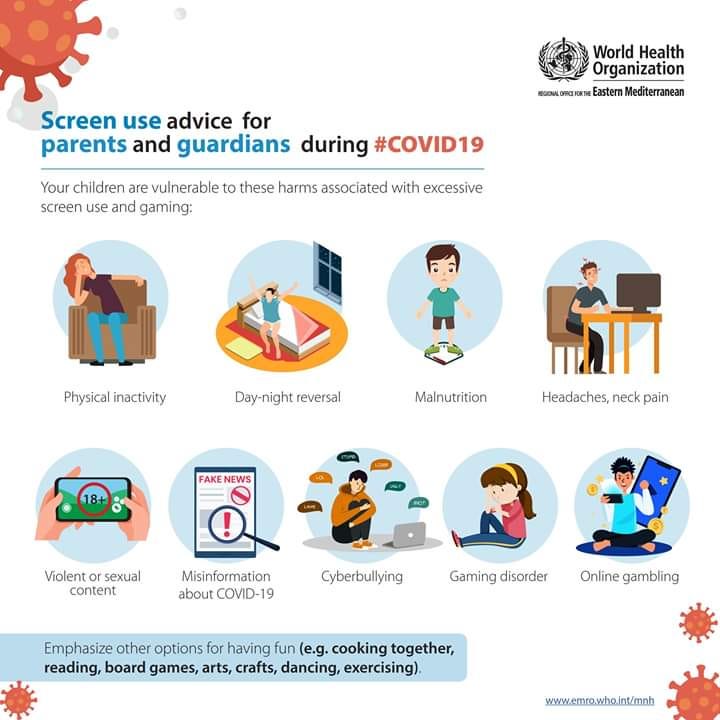
Health Risks of Excessive Screen Time or Gaming for Childrens:
According to WHO, health risks of excessive screen time or gaming for children can impact a vulnerably on them at that time of COVID 19.some of the risks are discussed:
1. It replaces healthy behaviors and habits such as physical activity and sleep and leads to harmful habits such as reduced sleep or day-night reversal, malnutrition, headaches, neck pain, etc. due to excess use of screens in COVID 19
2. It may lead to the development of gaming disorder and this is because of spending more time on virtual screens.
3. It can encourage migration to gamble as some games have gambling-like elements and this is also due to excessive use of screens.
Signs of excessive screen time or gaming for Children:
It is very important for parents that they should find the signs or symptoms due to excessive use of the screen on their children at that time of COVID 19. Some of the common signs due to excessive use of screens are given below
- Children forget to take their homework also they forget their studies due to excessive habit of screen usage.
- Children give less attention or time to their parents and other family members at home.
- They forget their proper time of eating, sleeping, and exercise.
- There is a significant change in their mood with time.
Parents and guardians advise their Children at that Time of COVID 19:
Parents advise their children at that time of COVID 19 to make a proper time table. Because children are at high risk of unhealthy conditions at that time of COVID 19. Parents save their children just by doing some strict behavior with them or even advise their children in very gentle manners. According to WHO some of them are given below:
1.empower children with knowledge and information about how to use the internet safely during the COVID-19 pandemic and beyond.
2.create a balance between online and offline screen activities.
3.set clear rules about screen time and how, when, and where children can use the Internet.
4.communicate the boundaries and rules clearly with children at that time of COVID 19
5.install the latest software updates and antivirus programs on the device(s) used by children, set the privacy settings to “high”, and activate parental control features especially for younger children to monitor their screen time.
6.encourage children to be active, including playing video games that require physical activity, where possible instead of screen time.
7.remind your children that watching television and doing an online activity is one option for passing the time and emphasize other options for having fun such as cooking together, reading, board games, arts and crafts, dancing, and exercising.
8.explain why limitations around screen time/online activities are being relaxed, that any additional screen time is temporary and normal routines will resume once isolation, quarantine, or COVID 19 lockdown ends.
9.educate children to be vigilant about cyber fraud and how to seek support when facing these issues due to the user screen.
10.maintain regular sleep routines for children and encourage healthy eating.
Cyberbullying:
Parents should advise their children about cyberbullying that how much is it dangerous due to screen usage and it happens on different platforms like apps, social media, and websites.
Blurring of lines between gaming and gambling due to Screen Usage:
Children are at risk that they may be involved in online gambling due to screen usage and they are not very well trained and they can easily become a victim of it. So it is the moral duty of their parents that the should advice their children daily that how the excessive use of screen become a danger of it at that time of COVID 19.
School authorities
School authorities should:
1.develop or review and update online safety guidelines to protect children enrolled in online homeschooling and communicate these guidelines with parents, guardians, and caregivers.
2.communicate online code of conduct with students, including policies and rules about cyberbullying, and address it immediately according to these rules.
3.maintain and promote online counseling services for students.
4.provide training for teachers about online counseling and how to detect signs of exposure to online threats and abusive or neglectful experiences at home.
Health and social care providers
Health and social care providers should:
1.disseminate information among families about the risk of excessive screen time or gaming and how to prevent it.
2.be vigilant about the possibility of excessive screen time or gaming during this period and include them in their assessments, particularly for children and adolescents.
3.include, whenever possible, online psychological support and counseling sessions for people with gaming and gambling disorders.
4.inform parents and caregivers about how to detect, respond and if necessary, report harmful online content, and provide them with information about available support.
Digital technology and gaming companies
Digital technology and gaming companies should:
1.ensure safety measures and parental control features are included in online activities and games.
2.develop gaming programs that engage young people in physical activity.


