
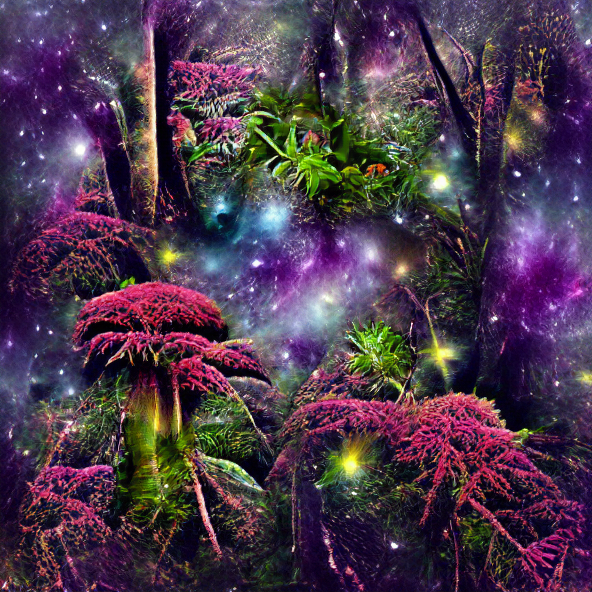
(Screen)shots of art generated by a “dreaming” “artificial intelligence” program -part 2
Where’s the limit of what can be considered art? This program painted its own pictures. It runs with predefined rules, but also uses random numbers and is guided by the inputs of the human user — here myself. Besides, you’ll see the pics have their own “style”, while at the same time they evoke some of the intentions and interests of the human user. What do you think? Could this somehow be considered art (I won’t be offended if you say no!). Send me your ideas and I will produce some of this “art” for you!!
(see part 1 here with 6 more paintings)
Artificial neural networks are complex mathematical models, encoded as computer programs, that intend to mimic how natural brains “learn” from experience and by trial and error. And in principle, they could potentially also become someday “creative”, “artistic”.
Although we are still extremely far from developing artificial brains (I think!) neural networks and the whole computer science field of “artificial intelligence” or “machine learning” has made outstanding progress in the last decade, creating software specialized for various tasks. And many of them perform their tasks better as well as or even better than humans. For example, by using state-of-the-art neural networks, Google recently developed the best protein structure predictor available to date (if you want to know more, see this, this, and this stories I wrote). Automated trading systems, self-driving cars, automated face-recognition systems, etc. etc… they all exploit this kind of “artificial intelligence” too.
With no more words for the moment, let me share with you these “pieces of art” created by a combination of so-called Generative Adversarial Networks, that “hallucinate” or “dream” kind-of-consistent images given a set of starting keywords and some random numbers. I didn’t write the computer program myself, but I guided the network to produce all these pics myself. You will in fact recognize elements that appear often in my stories.
Here are my best works, with some tentative names I’ve given them:
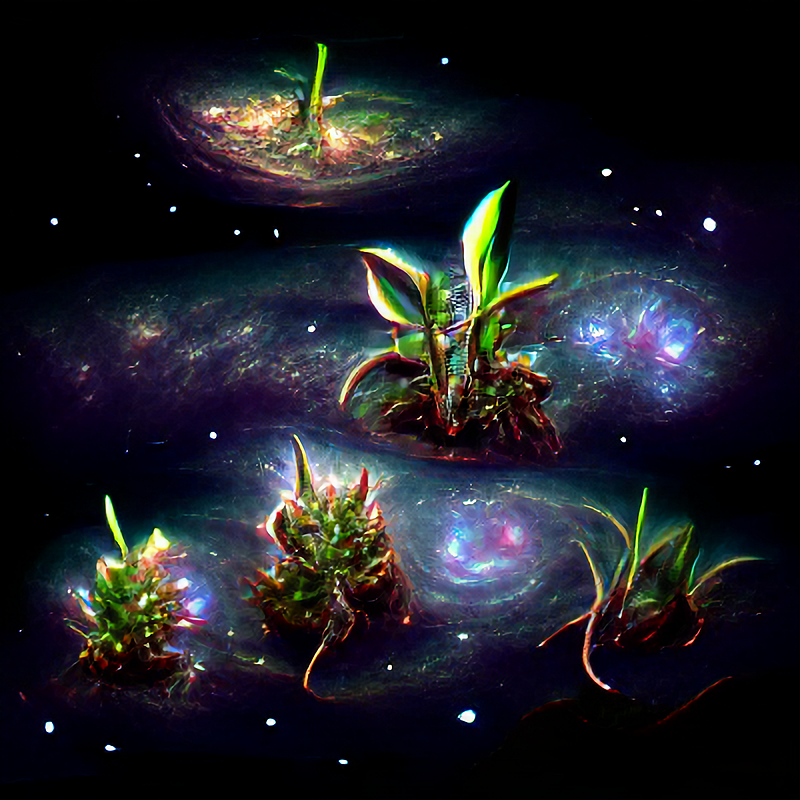
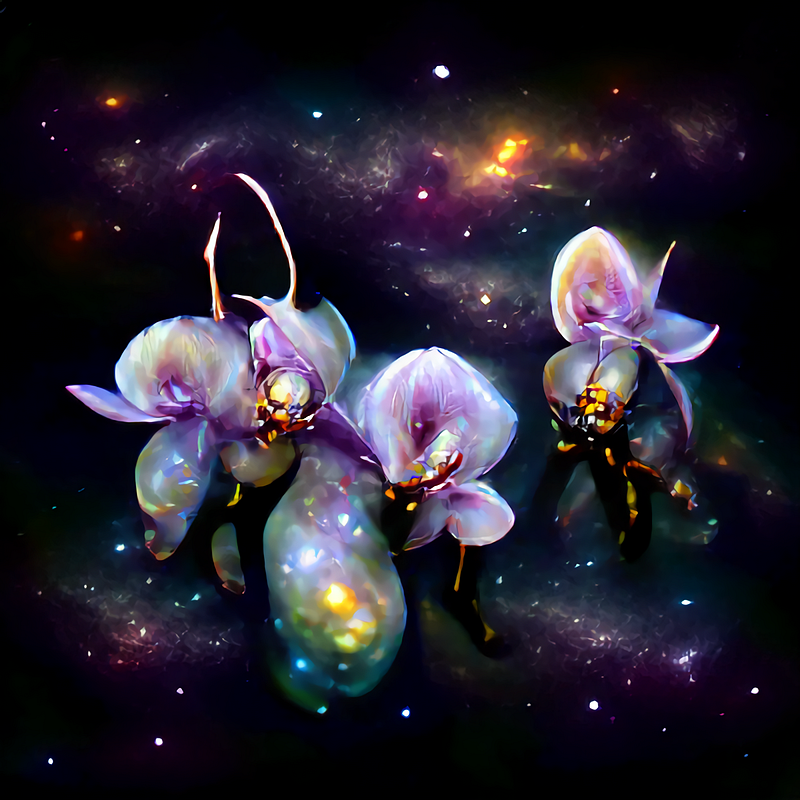
These first two clearly involved keywords like “universe” and “galaxy”:
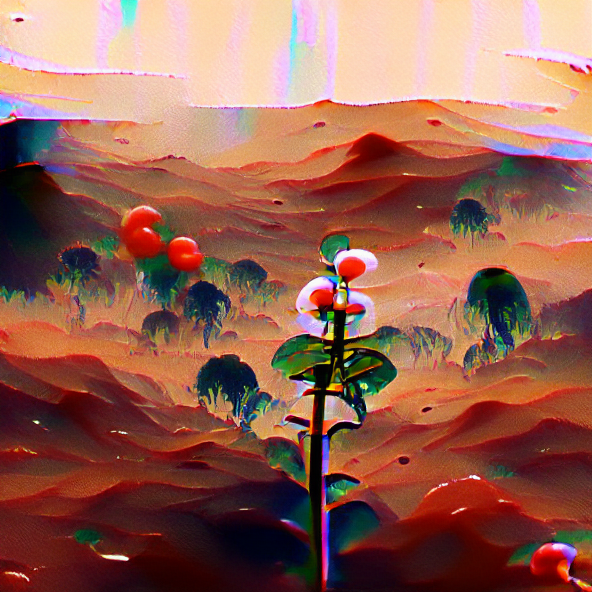
In these two I used “Mars” as one of the keywords. That’s patent in the pic on the left, but not in that on the right:
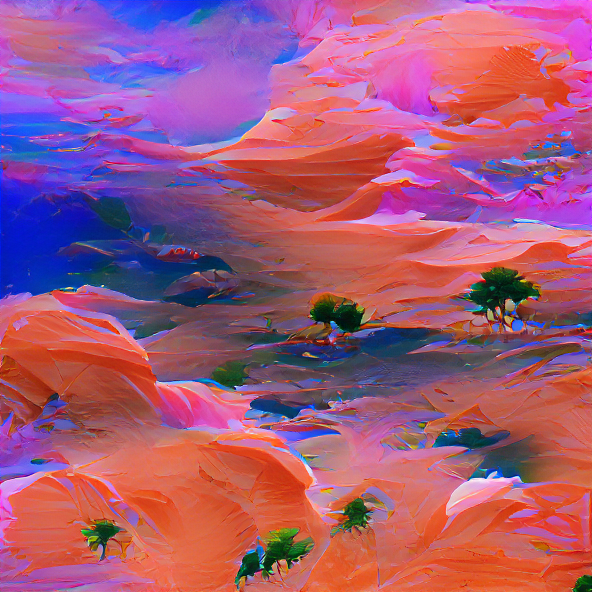
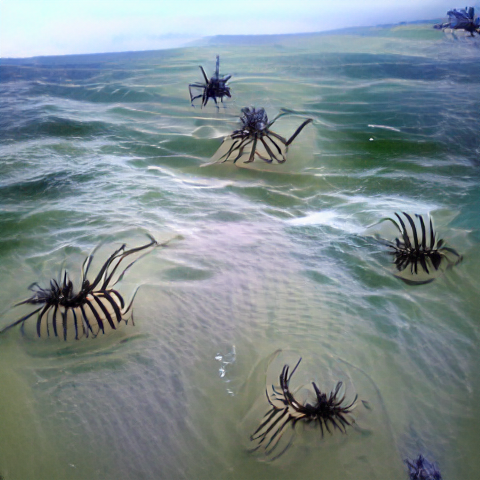
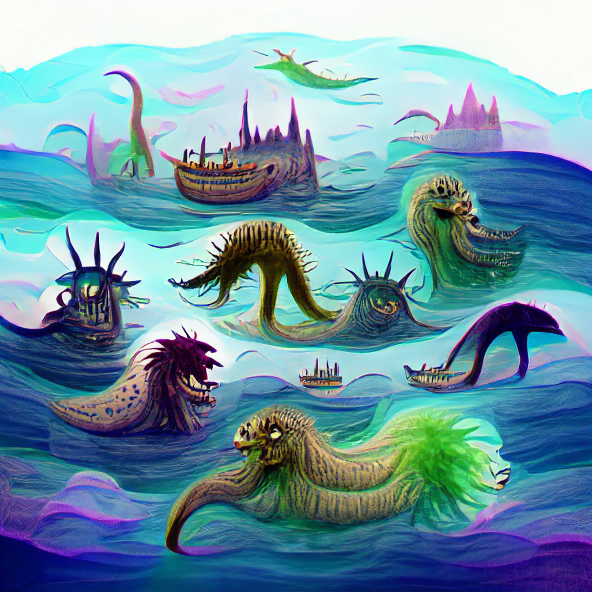
In these ones I played with keywords “water”, “sea”, “spiders”, and “monsters”:
Now tell me, which one did you like best? Do you consider any of them within the realm of art? What if all this were blah-blah and the pics had actually been drawn by a human?
Now tell me, which one did you like best? Do you consider any of them within the realm of art? What if all this were blah-blah and the pics had actually been drawn by a human?
And do you want me to run some tests for you? If so then leave in the comments small sets of keywords (no more than 5) that you’d like me to try. I will run them through the program and post the outputs in a subsequent story (if they make sense, often I have to try many different times with different random seeds and parameters to get meaningful pictures… otherwise they are way too abstract!!)
I am a nature, science, technology, programming, and DIY enthusiast. Biotechnologist and chemist, in the wet lab and in computers. I write about everything that lies within my broad sphere of interests. Check out my lists for more stories. Become a Medium member to access all stories by me and other writers, and subscribe to get my new stories by email (original affiliate links of the platform).


