
Scientists have discovered the reason why large animals are slower than smaller ones. It’s not about their mass
Scientists say large animals move much slower than small animals to avoid overheating their bodies. That’s the conclusion of an analysis of more than 500 species of creatures from around the world.
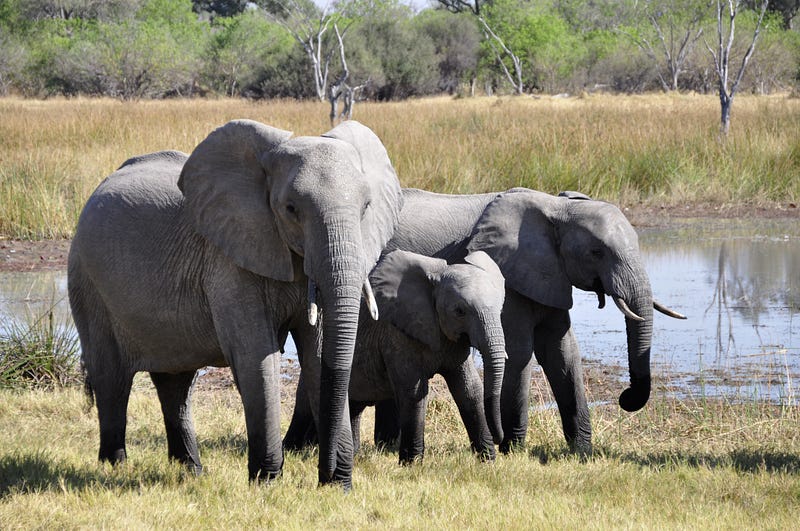
The fact that large animals move slower than their smaller counterparts is nothing revelatory. Although giant elephants can run (quite fast, by the way), they spend most of their time taking lazy walks. They seem to be in no hurry to go anywhere. The same is true of rhinos, hippos and giraffes. These species are not speed demons.
Large animals save energy
Until now, however, it was thought that the movement speed of large animals was largely determined by their weight. Now it turns out that this is not entirely the case. Researchers from the German Center for Biodiversity Research and Fridrich Schiller University in Jena have discovered that large individuals need to control their walking speed to avoid overheating. The researchers analyzed a total of 532 animal species.
Researchers say that this regularity mainly affects animals that weigh more than a ton. During long-distance migrations, they have difficulty maintaining adequate body temperature. This is why large creatures choose to reduce their speed, regardless of whether the animal walks, runs, swims or flies. These animals need much more time to get rid of the heat generated by muscle work.
This has to do with the geometry of the body. As an animal increases in size, its volume grows much faster than its body surface area. This means that the body contains more heat-generating tissues, which it must get rid of through the relatively small surface area of the skin, etc. Therefore, small animals freeze faster (they have a relatively large body surface through which heat “escapes”), while large animals are in danger of overheating.
Global warming is a global challenge
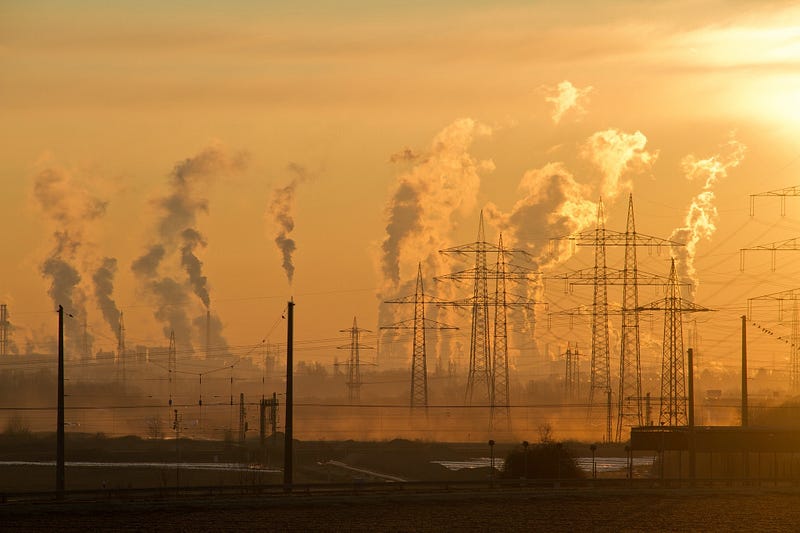
German scientists point to the most important aspect of this discovery — global warming. Scientists say that climate change could prove even more severe for the largest species.
“It is very possible that in the future larger animals will have to reduce their activity or will have to switch to a more nocturnal lifestyle”, according to Alexander Dyer, lead author of the study.
The researchers published the results of their work in the latest issue of the scientific journal PLOS Biology. The authors stress that movement is crucial not only for the survival of animals, but also for the preservation of biodiversity around the world.
“Although larger species should be able to travel greater distances, the analysis showed limited mobility for the largest animals”, the paper says.
“We created a model that suggests that the inability to dissipate metabolic heat leads to a decrease in speed. The larger the animal’s body mass, the greater the decrease,” the German researchers say. And they note that “this is why larger animals need to reduce their walking speed to avoid hyperthermia during long-distance migrations.”
The future of large and small animals
Prof. Dyer’s team collected data on species that ranged from insects to marine, terrestrial and flying animals. The study included only animals that live in the wild. The analysis was based on video recordings, radar and special tracking devices. The researchers say that during long distances, animals up to 1,000 kg (in the case of land and sea creatures) achieved a higher average speed. Above that weight, the speed of movement began to decrease.
The scientists also point out that their findings may prompt people to become even more involved in conservation.
“As a result of human activity, animals often lose their natural habitats. This further increases the distance they have to travel to reach a new food source. Large species, which are often already highly endangered, may be in particular danger”, the study authors say.
The researchers acknowledge that climate change and global warming could also affect the evolution of individual species. What’s more, the climate crisis is also a challenge for smaller animals. Two years ago, ornithologists studied 77 tropical bird species (a total of about 15,000 individuals) that live in the Amazon rainforest.
They found that over the past 40 years, as the average temperature increased, the mass of most species decreased regularly by about 2% every decade. The research was then published in the prestigious Science.
Source: PLOS Biology
Cool that you made it to the end of this article. I will be very pleased if you appreciate the effort of creating it and leave some claps here, or maybe even start following me. It would be nice if you also left a tip! Thank you!


