
Sci-Fi Simplicity
Sometimes, laziness gets us where we need to go.
Science fiction often characterizes worlds as though they were tiny regions within a country or as though they encompass a single biome in an ecosystem. Vulcans in Star Trek are all of a single culture, having separated from the Romulans at some point in the past to attain their own enlightenment, free of emotion. Romulan ale is seen as some delicacy, or perhaps a challenge, when on Earth, we have a drinks culture that can vary from town to town, country to country, and variations within the same brewery or refinery. It’s as though Romulus only has a single distillery and a singular drink from that distillery that it exports to the universe. Dune (Arrakis) is a desert planet, while Caladan is a temperate paradise all over the planet.
Many people have commented on this as absurd, lazy writing, or just a lack of imagination, but what if that’s how most of the universe is?
Look at the planets that we actually have in our Solar system. Of them, Earth is the only one with wildly different climatic areas. Venus is hot and thick everywhere. Mars is cold and dry everywhere. Yes, they are slightly warmer near the equator and slightly colder near the poles, and Venus has nights that are darker but not significantly cooler than the days. The Moon, Mercury, and all the asteroids are basically the same — airless, hot during the day, and cold at night. Further out, the story doesn’t change. The liquid water moons of Enceladus and Europa have nearly uniform climates all over.
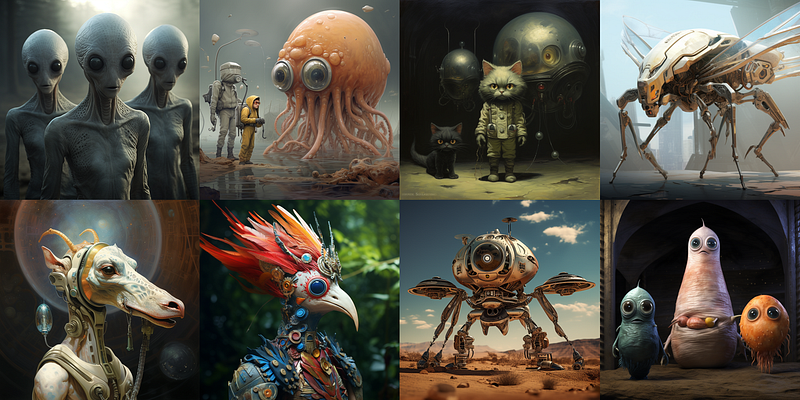
But let’s speculate about alien worlds for a moment. Larry Niven has, in my opinion, the most interesting aliens in science fiction, although Andy Weir could be an up-and-comer, and Niven’s other human worlds are all very interesting as well. There is a world on a Venus-like world that has a singular large plateau that is habitable, high up in the atmosphere, like living only in the Himalayas on Earth because down low, the air is too hot and thick for life. Thus, there is a uniform culture in that world because there isn’t enough room for it anymore. There is Jinx, a very oblong asteroid, with the long ends in near-vacuum and the equator too thick to breathe in, so there is again a very limited area where people (and Kzinti aliens) can live. The ‘crashlanders’ on Wemadeit live underground half of the year due to climatic extremes caused by a tilted planetary axis, and so have a uniform culture. Canyon is a Mars-like world where the only atmosphere thick enough to breathe is, you guessed it, in a deep canyon not dissimilar to Valles Marineris, which is several kilometers deep and significantly warmer than the rest of Mars. There is a world that is 98% covered by water, leaving such a small surface area that we have a uniform culture.
And then there is science, and we mustn’t forget about science. It is science fiction, after all. On the one hand, Earth is threatened with global warming and massive climate change, but on the other hand, our ability to control the climate is growing, too, although not as quickly. One need look no further than the deserts of Saudi Arabia sprouting up crops in a land that should never see a single bit of green. In the not-too-distant future, we will have the power to regulate sunlight and rainfall, and there is one climate that we will all settle on, more or less — a temperate, seasonal climate that only varies enough so that we can plant nearly anything we want to. Mild summers, mild winters. One global climate.
Aliens might do the same, but their preferred climate might be one that is not quite so mild by our standards. Perhaps they prefer open water or need a giant desert to grow giant worms in. It’s not entirely impossible that alien worlds will all have a uniform climate.

There is another aspect, however, and that is that as societies advance, they tend to become, well, boring. “American” movies — we talk about Hollywood as though it is a monolithic behemoth, when in reality, movies and films are shot all over America and even overseas by American studios, and all taste “American.” Languages are disappearing, and it is quite likely that we will all speak one language within maybe two hundred years, about the same time that we will be able to travel to other worlds if such a thing were ever to happen. Cultures are disappearing as well, being overwhelmed by the culture of the world, which is to say, monotony. Niven covered this excellently in the opening chapter of Ringworld, as the main character goes off in search of something different but can’t find it anywhere on Earth. There are McDonald’s everywhere.
Going back to Romulan Ale, the number of Whiskey distilleries on Earth is trending upward (I originally assumed the opposite), though, and if our society follows the model of Star Trek and not 1984, that trend should continue. People have an increased appreciation for something handmade in a world full of plastic. So perhaps it shouldn’t be just “Romulan Ale” but a specific brand from a specific region — unless Romulus is one of those planets with so little habitable land that there is only one distillery.
Perhaps in two or three centuries, the world will be monotonous, and all of the real cultural differences will have all but disappeared, only kept alive in a poor imitation by people who have little or no connection to the cultures that are lost. Organizations like the SCA can try, but they will never truly understand the life of a medieval knight, much less that of a peasant. Remembering the lyrics and melodies to a song is one thing, but remembering the emotion behind them is impossible. What we call “culture” today is increasingly just performative imitation. Shakespeare is an excellent example — the jokes and humor in his plays are so far lost to us that not only do we not get the humor, but we don’t even recognize it as a joke! Romeo and Juliet is a sex comedy!
I will live in thy heart, die in thy lap, and be buried in thy eyes; and moreover I will go with thee to thy uncle’s.
Except that “die” is a Victorian euphemism for an orgasm… It’s not romantic; it’s nearly pornographic, and the play is littered with such.
We strive to keep these cultures alive, but we have no idea what they meant to the people at the time, and, as an aging GenXer, I can see this even in the younger generation today. A process that used to take centuries now takes only a decade or two.
So perhaps the science fiction writers aren’t lazy; maybe they are right. Vulcans really are all of one culture. Alien worlds really are all of one climate.
If you enjoyed this playful little article, please consider supporting my work on BuyMeACoffee!