
The Scent of a Book
Time-travel with your nose in a book
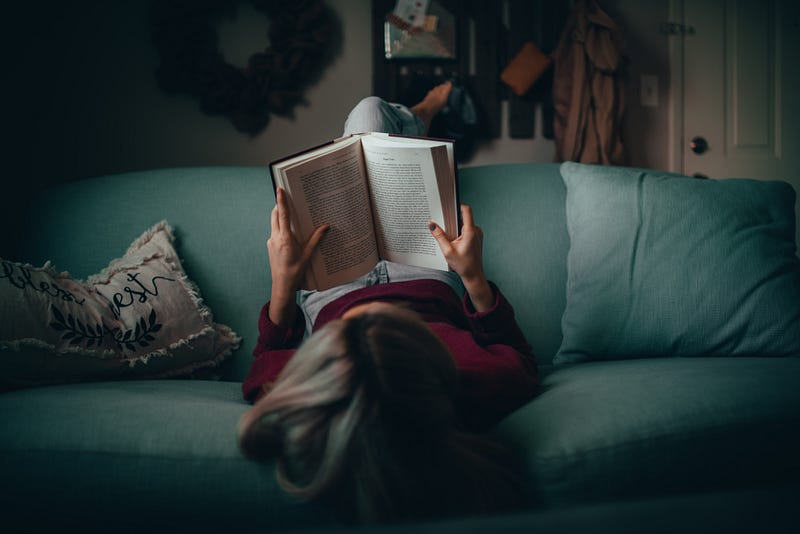
The other day I found my mom sneezing continuously. “Mama, is the scent of my shampoo too strong?”, I hollered as I sat watching TV with a towel wrapped around my hair.
“It’s the smell of the book I’m reading”, she replied. “Is it an old book?”, I asked, thinking perhaps it’s her dust allergies. “No, it’s the one I got the last time your father and I went to the bookstore”, she replied with another sneeze.
My mom went on saying that surely the chemicals used in books during their printing process are no good for the human body and how convenient it is that we can read on iPads and Kindle devices and… -a talk I half-listened to, for I had started a train of thought of my own.
I began wondering about the scientific and nostalgic charm of book smells that made them so intriguing to romantic souls like you and me (naturally I’m assuming you’re a fellow book sniffer) yet not as appealing to the others.
First, what is paper made of?
Paper is made by interweaving plant-based fibers. Wood pulp is commonly used as the main ingredient, although other materials are mixed in to meet particular standards. For instance, a significant amount of cotton is used to make scritta paper, a long-lasting, extra thin, and light-weight material used to make Bibles, encyclopedias, and dictionaries. Whereas, environmentally-conscious publishers like Barefoot Books make children’s books using pulp from recycled paper. Additional ingredients used to make paper such as dyes, bleach, and strengthening agents like gum and starch help achieve diverse textures, colors, and durability.
Why books smell the way they smell
According to an article published by McGill University, as the cellulose fibers in the pages of a book react to light, heat, and water, they release volatile organic compounds (VOCs) that we consequently perceive through smell. For example, VOCs like furfural and benzaldehyde release odors similar to that of almonds and vanilla, while earthy and floral scents coming from 2-ethyl hexanol might remind us of a walk in the woods.
By analyzing volatile organic compounds scientists can determine the age of a book, as well as where and how it was stored. Furthermore, the type of materials used to make a book cover- be it cardboard, leather, or parchment- may influence the rate at which its pages absorb and emit VOCs.
Books that smell like chocolate
In a research conducted at the Birmingham Museum and Art, visitors to the museum were asked to describe the smell of an unlabeled historic book. The majority of the participants associated the scent of the old book with that of chocolate and coffee. Coincidentally, researchers found that substances found in both coffee and chocolate contain many volatile compounds identical to those found in decaying paper.
A nostalgic journey through time
The sense of smell plays an effective role in memory recollection. Moreover, certain scents can act as a form of collective memory for a whole generation. For instance, the smell of scented markers and Playdough bring feelings of nostalgia to people born between 1930 and 1979. This said it makes sense both scientifically and imaginatively to acknowledge the scent of a book as a time transporting potion of a sort.
For me, a new book smells like the empty shelves of a grocery store. It’s a fresh yet industrialized aroma that takes me back to 2003. It was the year I spent sneaking into the local bookstore to read the newly released Harry Potter novel for free.
Jumping further back in time, when I leaf through paperbacks from the nineties I inhale a stuffy sweet odor like that of old mittens and itchy wooly sweaters It’s a comforting scent that reminds me of when I was in the first grade. The year was 1993. I had just learned of the existence of the school library and was smitten that such a thing as a library existed. I’d lay on my tummy next to my newborn baby brother and read him new stories every week. And every Wednesday morning on the bus ride to school, I would plan what books to borrow next.
I’d like to end this article by letting you in on a little secret. The next time you visit a secondhand bookstore, sniff the air for the smell of softwood lumber- the kind that small dogs and rodents would take pleasure gnawing on. Let your nostrils guide you through a treasure hunt. I guarantee you an encounter with forgotten gems: first editions, limited editions, and books out of publication.
Where have you time-traveled to by sticking your nose within the pages of a book?