
Scandal Fatigue: America After Impeachment
Andrew Yang warns Democrats: “stop being obsessed over impeachment” and other no-win games — Americans agree…
Eight of America’s 20 wealthiest counties surround Washington, D.C. The rest of Americans living between the coastal cities are dubbed “flyover country,” places where the needle isn’t moved by the political narratives of the day.
I happened to be on the road, moving through the Carolinas, West Virginia and Tennessee as three years of daily impeachment chatter was resulting in a December 18 House vote.
Dozens of us gathered in a sports bar where one of the big screens played the impeachment hearings and the rest played sports programming. The sound was off on all these shows while the room concentrated on a big game of Trivial Pursuit. I had to use my iPad to hear the sound.
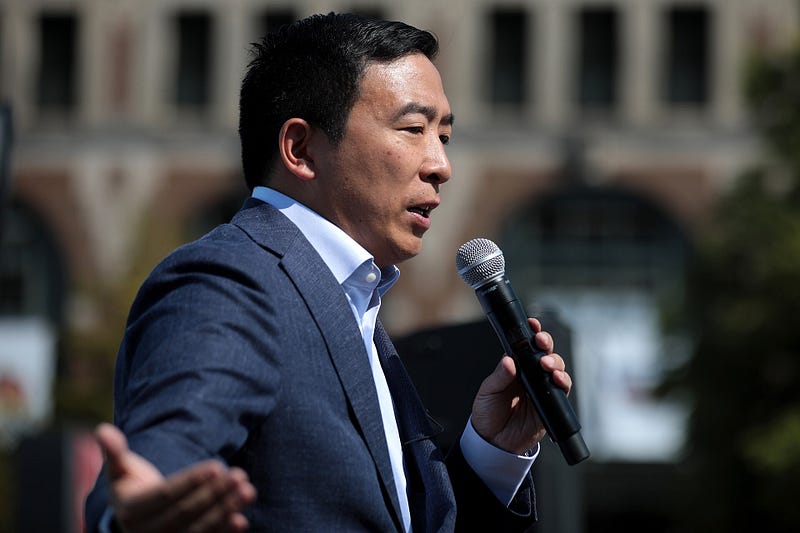
In the little noticed Democrat debate December 19, Andrew Yang warned: “What we have to do is we have to stop being obsessed over impeachment, which … strikes many Americans like a ball game where you know what the score is going to be. And start actually digging in and solving the problems that got Donald Trump elected in the first place.”
Focus groups had people of all political stripes giving Yang good marks for his impeachment comments during the debate.
Ninety days of intense wall-to-wall fixation on impeachment resulted in Donald Trump initially slipping three percentage points in the polls only to regain those numbers and add three more percentage points for a six point gain.
When I covered politics full-time, the excitement of the campaigns produced a “high” followed by a “Let-down” after the election but at least some things changed from the campaign. But what changes have the impeachment campaigns or scandal fixations produced?
Noah Feldman, one of the Democrat expert witnesses, says Trump can now legitimately argue he hasn’t been impeached because Speaker Nancy Pelosi didn’t send them to the Senate.
Pelosi is basically like a prosecutor who got a grand jury to indict her adversary who now says she doesn’t know whether to take the case to court.
5 reasons we tune out scandals
- Legitimacy. Republicans questioned the legitimacy of Bill Clinton (who never reached 50 percent of the vote) and Barack Obama (the birther questions) and Democrats questioned the legitimacy of both George W. Bush (remember the 2000 Florida recount?) and Donald Trump (the impeachment and Russia talk began before he was inaugurated).
- The Boy Who Cried Wolf. Starting on September 11, 2012, Republicans daily investigated Hillary Clinton, Barack Obama and questions about Benghazi. Trump was being investigated before he got elected. Daily we hear about “bombshells” implying someone has been caught. Little changes. We knew this would happen with the impeachment but the people kept chatteringbabout “what if?” over “what is.”
- Daily we hear the same talking points over and over — overwritten by a small group in D.C. who knows little about the concerns and lives of ordinary Americans outside the gated community power bubbles. Powerful narratives change conversations and connect with Americans.
- Corruption is considered so widespread and common that there is no shock value from the continuous “ this is really it, this time” coverage.
- The “stain of impeachment” the elites talk about forgets Bill Clinton was impeached and that impeachment was seldom mentioned in references to him and his circle. Within a year, his wife (an Illinois native from Arkansas) was elected to the U.S. Senate from New York before running two campaigns for president. Also within that same year of his “stain of impeachment”: Clinton’s vice president, Al Gore, won the popular vote and barely lost the closest presidential election in history.
If that “stain” didn’t slow down the Clintons why does anyone think it will slow down the Trumps? Not to mention, Alcee Hastings, the congressman who was impeached came back and helped manage the efforts to impeach Trump?


