
Scam Hounds: The Most Common Breed You’ve Never Heard Of
Is this breed honest? Are they loyal? Excuse me while I laugh.
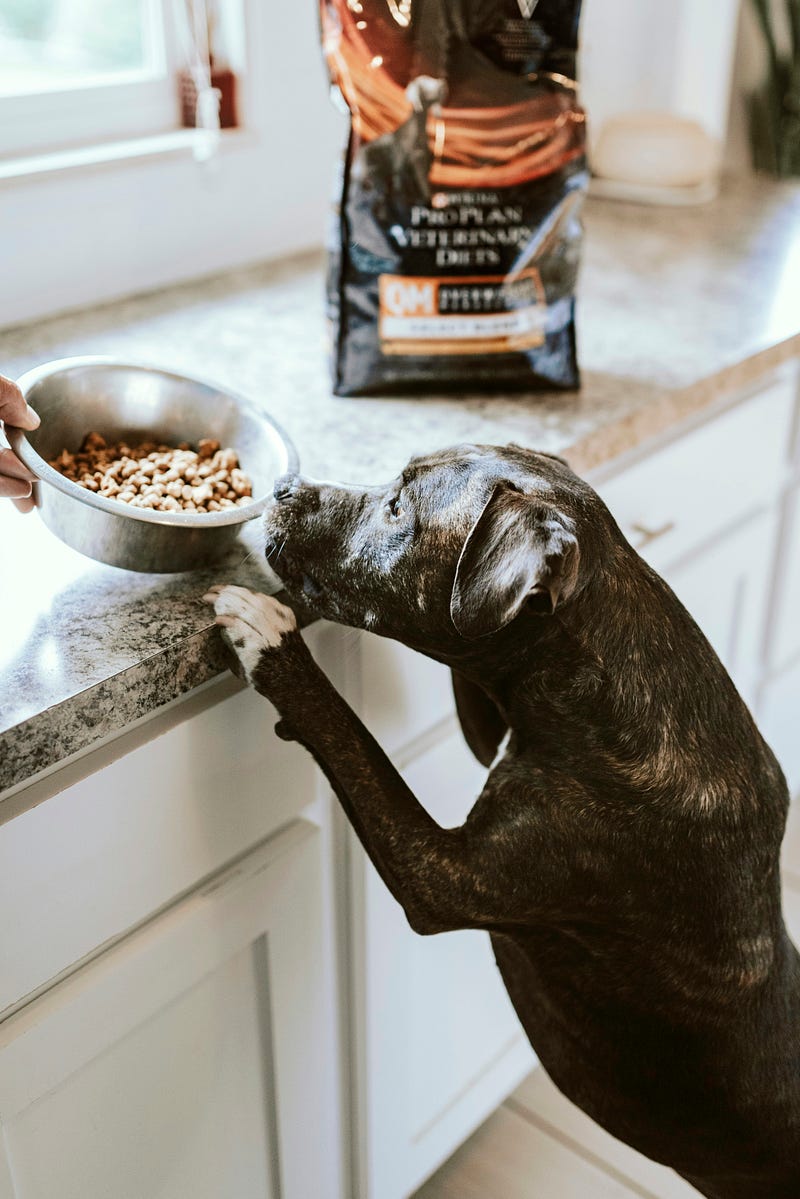
My husband Michael and I have a running joke about our two dogs. If someone asks about their breed, we’ll tell them when we adopted Mojo from the local shelter his card described him as a three-month old Australian Shepherd and Border Collie mix.
But Mooch on the other hand is a — wait for the dramatic pause — a “Show Dog.” A show dog, really? We’ll watch as the skeptical inquirer’s face lowers to take a closer look at the elderly, street-hardened, yellow-toothed hound.
Then, followed by an imaginary drum roll, we’ll laugh. Yes, he’s a show dog, alright — he just showed up! Which is true. One morning Mooch mysteriously appeared in our back yard — a tall brick and cedar fence with an electronic security gate. How he got back there, we’ll never know, but he’s been with us ever since.
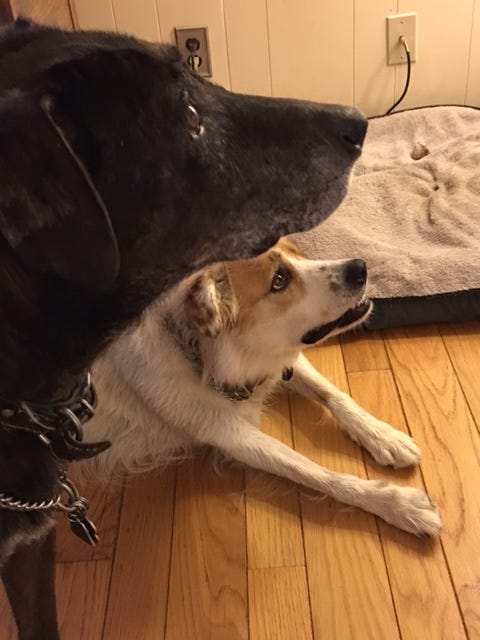
These days, however, when asked that same question I now confess to having a couple of full-blooded, AKC-registered Scam Hounds. Scam hounds, the person will exclaim! Why, I’ve never heard of that breed of dog. What do they typically look like?
Scam Hounds all look remarkably similar. In fact, Mojo and Mooch are exactly alike. Over the years the traits that characterize the genetic disposition of the scam hound have become more apparent, and have recently developed into full bloom.
A scam hound can make you believe almost anything, as they are the most manipulative breed in existence.
A scam hound will convince you they were not fed, not let out, or not given the proper amount of attention. They’ll convince you the mess on the floor was caused by the cat, or persuade you that your own spouse totally forgot to give them their afternoon treat.
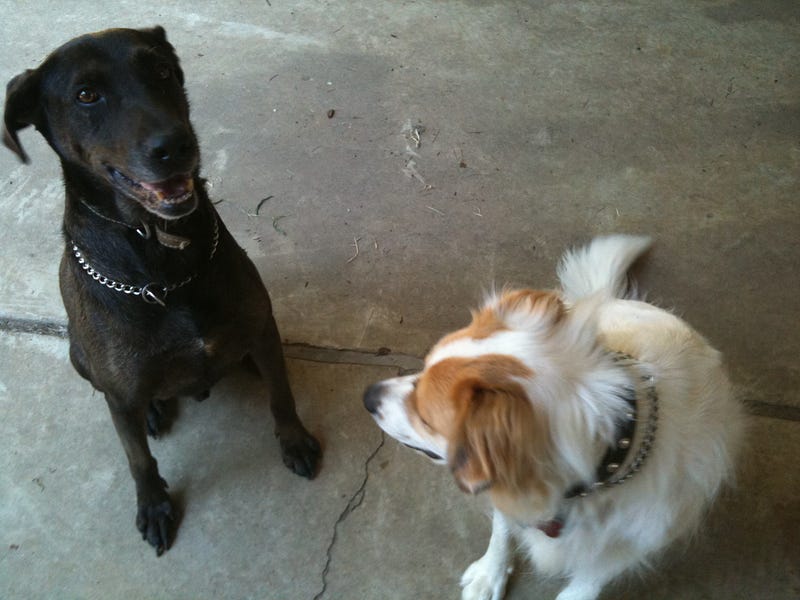
What? Did you already feed them, I’ll ask Michael? I thought you hadn’t from the way they were acting. Or, they’ll scam a cookie when just five minutes earlier one of us already delivered their “morning treat.”
Wait a minute…are you sure you just gave them their snacks? This goes on all the time. Day in and day out. A scam hound can assume the look and demeanor of a dog that’s been cheated out of what is rightly his.
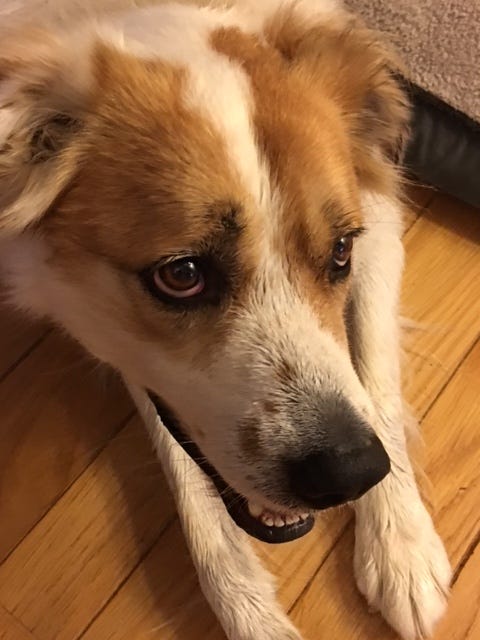
In the early afternoon after chasing squirrels and romping over the hosta bushes, these scam hounds will come running to the back door ready for a nap. They’ll file into the sun room and spread out in their designated bachelor-pad doggie dens. They’ll each get a cookie before their heads go down.
They usually crash there for a couple of hours before going back out, where they’ll spend the rest of day frolicking around the yard, engaged in recreational barking, and warding off vagrant chipmunks.
But over time the ritual began to change. Instead of sinking right into his disco nap, Mojo has begun to whine and bark. We’ve never been able to put a finger on the source of his agitation.
And nothing, it seems, will calm him except an additional cookie. Mooch is in on to game too but he lets Mojo negotiate the deal. In the end we inevitably give up an extra treat to each dog.
A few times Moe has tried to push the envelop by reenacting the same scenario. But this was met with such a vehement rejection, he wisely retreated. Scam me once, you’ll end up with a cookie. Scam me twice, and we may just throw away the whole bag.
I can’t say I’m proud we’ve let these two con artists outsmart us into giving in to their demands, but it does seem to make life a little easier. After all, how bad is it to give into those little guys? What’s a few extra munchies asks the devil perched on my left shoulder?
It’s a slippery slope, the angel on the right whispers. Everything you learned from the canine good citizen training camp is going straight down the drain.
Lessons Learned
No lessons have been learned. Although Michael and I are somewhat conflicted about our too-frequent capitulation, I have a feeling we’re going to have to get this scam hound situation under control sooner than later. Somehow, someway.
I should add, there is one bit of new knowledge I’ve obtained. Dogs are very adept at scamming each other, too. Although I’ve not noticed Mojo or Mooch engaged in such behavior, Marianne Heberlein, a behaviorist at the University of Zurich in Switzerland, has seen it in her own pups.
She saw that her dogs could easily trick each other. One dog would pretend that something interesting was happening in the garden. The other — who was occupying a coveted napping spot — would get up to go see what was going on. This afforded the opportunity for the manipulating dog to then retreat and steal the sleeping spot from the other.
Dogs are so much smarter than we typically give them credit for. If you’ve got a scam hound, I’d love to hear about it.
© 2024 Deborah Camp. All rights reserved.
Thank you for your time and attention.