
Saying goodbye to a watermelon
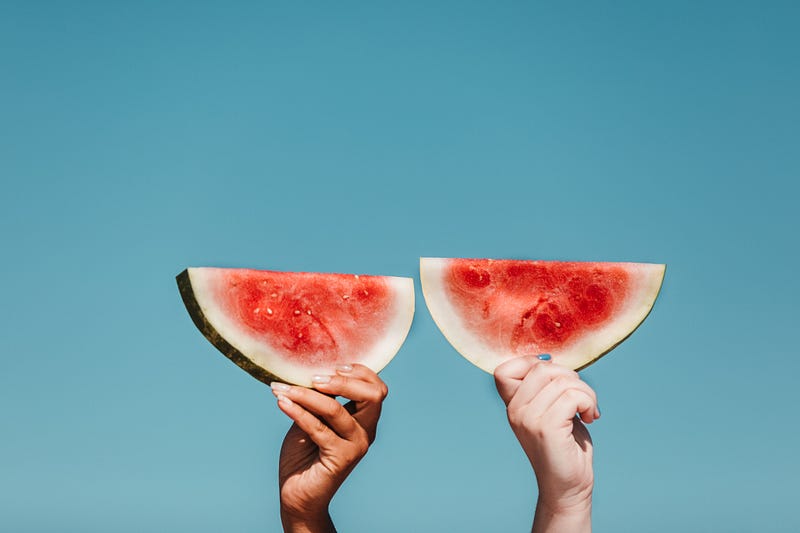
When I walk into the grocery store first thing I notice are the watermelons. Even though they are such a big fruit, they are hidden in the corner behind the onions as if trying to be discreet.
Growing up in Greece, we were always taught that choosing a watermelon is an art one needs to master. You need to pick it up and knock on it to see if it sounds fresh. When I was young I always thought knocking on a watermelon was such a silly thing to do. You weren’t knocking somewhere expecting an answer and I could barely lift one.
But my father would always tell me ῾παιδί μου, μη γελάς. Πως θα μάθεις να διαλέγεις το σωστό καρπούζι῾? (“my child do not laugh. How will you learn how to choose the right watermelon?”) as if this was a life skill I needed to get ahead in the world.
Once we found the one that sounded like what I imagined the depth of the ocean sounds like, we would have to carry it all the way up the hill in my aunts village of Kymi.
Summers in Greece are too hot to be doing anything other than curling your toes in the sand and taking long naps on the beach, let alone dragging a watermelon up the hill. However at a young age we learned that watermelon means that summer is officially here and for us summer is the Mecca of seasons.
In the August evenings, I couldn’t wait to see the platter of watermelon after dinner. It was always accompanied by feta cheese which apparently a feta proponent said is the perfect match and oddly enough it is. The time we sat down and ate watermelon signified the ending to a good day.
You see, it’s not just a fruit. It symbolizes that you can finally enjoy the view of the sea from the balcony, the crisp summer breeze and the stories you will learn from your grandparents.
Sometimes, my γιαγιά (my grandma) having mastered this life skill early on, would say “ δεν διαλέξατε καλό, είναι κούφιο’, (“you did not choose a good one, it's hollow sounding”) but that never mattered to me. I would always eat it because the coldness of it on my tongue would cool me down and the seeds- though people would spit them out- were always crunchy and added to the excitement of such a simple pleasure.
As I stand at the supermarket today in a big American city, I contemplate about choosing a watermelon. Will it be the same if I pick the juiciest one? Will it matter if it’s too white around the edges? Should I knock on it and hear what it sounds like?
To me, watermelon was summer nights under the endless sky where I stargazed hours on end, a way of cooling down on the beach under the scorching sun and sweaty afternoons uphill.
As I sit there I decide to leave it. Carrying a watermelon uphill now will not bring me home to the summer dinners. It may taste good but without hearing my γιαγιά comment on it as she cuts it open- whether it’s juicy enough or there are many seeds to crunch down on, will not matter.
So I wait. Watermelon season will come again and I will be like the child on the summer balcony enjoying my cheese and fruit feeling like the fanciest person in the village. Not a care in the world. Just the thought that on that August day, life was how it was supposed to be- warm, relaxed and chill, just like the watermelon I was taught to choose.
“I was happy, I knew that. While experiencing happiness, we have difficulty in being conscious of it. Only when the happiness is past and we look back on it do we suddenly realize — sometimes with astonishment — how happy we had been.”- Nikos Kazantzakis


