
Art
Say Hello to Susan Kare, the Bob Ross of Macintosh Design
A tiny tribute to a creative icon — and icon creator
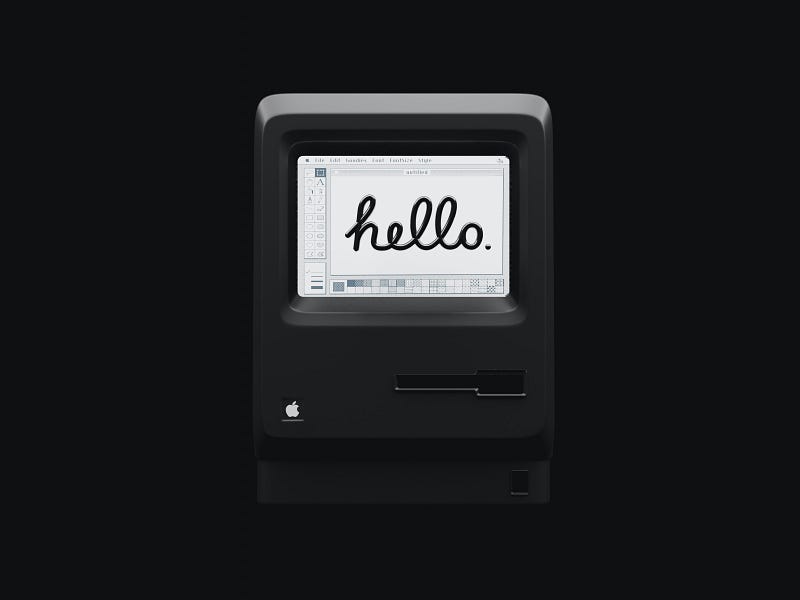
Did you know that in the early 1980s, an artist and designer named Susan Kare came up with a set of icons and fonts that built the unique and easily recognizable visual imagery that helped make Macintosh computers a familiar brand?
With experience in hands-on arts like sculpting and needlepoint, she created many of these — yes, iconic — designs by hand, filling notebooks of graph paper printed with the tiniest boxes she could find. Each box represented a pixel that she could translate onto images on the computer screen that would have a hand-drawn feeling and look natural to people who might have felt hesitant using computers.
If you’ve used a Mac or even seen a reference to one on TV or in a book, you know her work. Kare brought us everything from the pixelated bomb that could only mean trouble— to the smiling Mac that would appear when you booted up your computer. She designed the fonts I remember using to type school projects when my parents finally relented and let us get a Macintosh LC.
Her work has been added to world-famous art collections, such as the Museum of Modern Art which has one of her original notebooks and several sketches. And she’s been celebrated by institutions like the Smithsonian and the American Institute of Graphic Arts.
If you have three minutes, check out AIGA’s short video on her career, which points out that along with her work with Apple, you’ll also recognize her playing card designs from the early Windows versions of Solitaire.
Though I’ve used Apple computers since my classmates and I took turns playing text-based games on the one Apple II in the library in elementary school, I only discovered the contributions of Susan Kare the other night when YouTube’s algorithm suggested that I watch a video of a TV interview from 1984 in which Kare demonstrates how to use an early Macintosh computer.
Her walkthrough focuses on the friendliness and ease of the Mac’s design, such that a person who has never used a computer before can sit down and be guided by the icons of the graphical interface to figure out how to complete tasks like type a document or create a drawing.
Her approach to the computer is so calm and inviting, in fact, that it has over 230,000 views on a YouTube channel that curates content that people can watch in order to relax. The channel has titled the video as “Unintentional ASMR 💾 Relaxing Retro Macintosh Demonstration (1984),” and they’ve put the interview on a loop so that you can listen a few times as pleasant background noise, like you might drift off to the words of Bob Ross describing his painted landscapes.
Whether or not you experience the “tingling” feeling commonly described in definitions of ASMR (autonomous sensory meridian response), I hope you enjoy the way Kare could make computers sound fun and easy to use in a time when they still felt out of reach to many people.
Personally, it inspires me to think about the ways she drew upon her knowledge and experiences in analog forms of visual art to create digital art that is both functional and lighthearted.
Sometimes getting to know more details about the person behind a design makes it all the more delightful to look at, use, and appreciate. I’m grateful that YouTube introduced me to this artist and her work. She’s still busy creating, by the way, and she sells prints of her work online.
P.S. I know this is a very bare bones introduction to Susan Kare’s creative work. I’m interested to learn more about her, and I wanted to share some of what I’ve found so far as I thought others might want to learn more, too.


