
SUSTAINABILITY AND MONEY
Saving Money vs. Saving the Planet
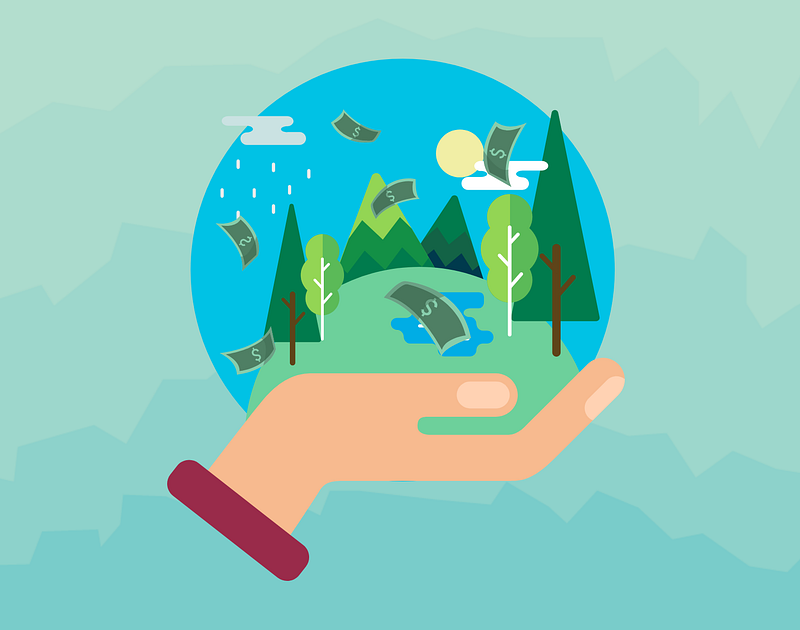
The world is turning green.
Everyday we see more businesses touting environmentally friendly practices and governments enacting environmentally conscious legislation.
This is a great achievement, one that’s been a long time coming. But, how does this upswing in sustainable action intersect with the money-conscious consumers of the world?
In many ways, spending less money and living a more sustainable lifestyle are synonymous; both derive value from reducing resources and squeezing every possible iota of use from what we have. But, like an iceberg, there’s always more than meets the eye.
Some aspects go hand in hand
The most in-your-face observation here is that spending less = consuming less; if you’re looking to save money the first thing you do is reduce and reuse, which are also the first two of the Three R’s of the Environment.
Aside from the basics of simply consuming less overall, there are a few other key ways that frugality and sustainability work in tandem.
Homemade goods
Making your own consumables is a great way to save money and the planet.
- Learning to cook and eating in. It not only reduces cost per meal but also minimizes plastics from takeout containers, cutlery, etc.
- Making your own cleaning products. It keeps your body, wallet, and planet healthier.
- Handcrafted greeting cards. Recycle some of that paper you have sitting around and put your crafting hat on. This keeps costs down while providing a creative outlet.
- Body scrubs. Reuse your old coffee grounds or create a honey and sugar mixture to buff away your money woes while singing ABBA’s “Money, Money, Money” in the shower.
Energy Efficient Products
While energy efficient products like washing machines, dishwashers, LED lightbulbs, and more may come with higher up-front costs, in the long run you end up saving. Using less water or energy to do equal work is something your wallet and the planet will thank you for.
Alternative transportation
Cars are expensive. From the initial purchase price and recurring costs like gas, maintenance, and insurance, the bills add up quickly. Luckily, alternative measures like biking, walking, or taking public transit are not only better for you but also for the earth.

Other aspects just don’t add up
As good as something may seem, we all know the world doesn’t exist in black and white. Here are some of the “shades of grey” to consider.
Mass produced goods
According to The Economist, “Factory Asia” produces nearly half of the world’s goods. China alone manufactures nearly 25% of goods on the market, growing from just 3% in 1990.
These mass produced products have low costs, but usually come at the expense of quality and the environment.
A study conducted by researchers from Harvard University, the University of Maryland, and the University of California found that products produced in China come with significantly higher carbon dioxide emissions than the same products made elsewhere. These findings are attributed to the country’s antiquated technologies and reliance on coal power.
While the dominance of “Factory Asia” means goods made elsewhere are harder to come by, it’s important to consider the environmental impact of your purchases — even though choosing more environmentally friendly manufacturing process usually comes with a heftier price tag. My article on The Phrase That Changed How I Spend Money goes into more detail on how to decide what to splurge on.
Travel
While walking and cycling are both cheaper and more environmentally conscious than other forms of transportation, cheaper flights come at an environmental cost.
Consider you want to take a trip to Italy, and you do the research and find that buying multiple connecting flights is significantly easier on your wallet than purchasing a direct, non-stop ticket.
While this may look good on paper, the damage it does to the Earth is astounding.
A study conducted by researchers at the University of Texas and the University of North Carolina looked at the routes between ten of the most populated metropolitan areas of the United States and 13 popular tourist destinations.
They found, on average, the difference between connecting flights and non-stop travel was approximately 100kg of carbon dioxide per person — that’s the equivalent of charging nearly 13,000 smartphones! So if you want to do the planet a favour, bite the bullet and save some time by traveling non-stop.

Externalities
Externalities are side effects of industrial activities that are not reflected in the price of the good. In other words, externalities are the rarely thought about negative consequences of low-cost purchases. The token example is the pollution produced as a result of manufacturing processes. But the issue of pollution is two-fold as it can lead to health problems like decreased lung capacity or even cancer.
These are important factors to consider. While they may not be as tangible as the cash sitting in your purse, they have significant environmental — and personal — consequences.
When all is said and done, it certainly is possible to be both frugal and environmentally friendly, but, like an iceberg, there are many factors at play under the surface.
Taking these points into consideration, you can go forth and save two kinds of green and feel good about it.


