
Save the Sea Lions
Where’s Waldo?
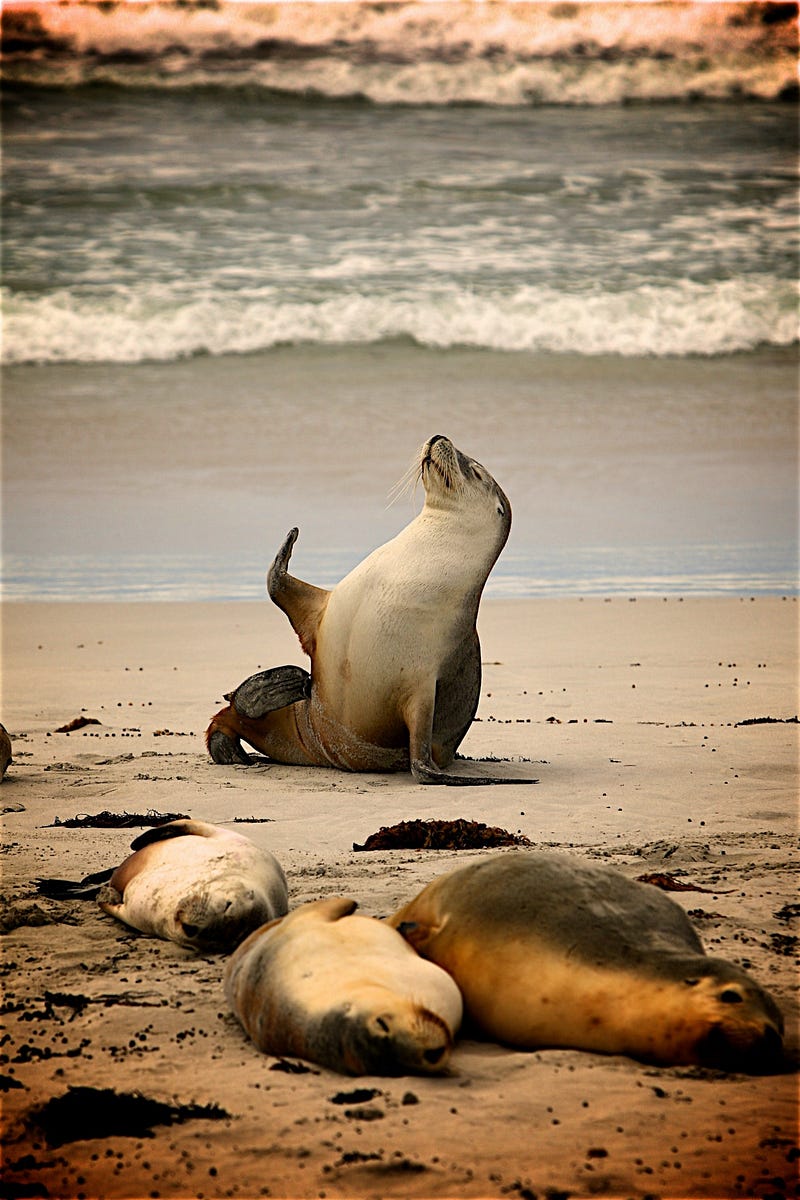
I love sea lions. I befriended one of them a few years ago when surfing Sunset Beach. For some reason, a sea lion liked hanging out with me and my surfboard and enjoyed going underneath me and bopping its head on my board.
Whenever I took a wave, so did it.
We shared a love of the ocean. I named him Waldo; he called me “Arrf,” something he said when his head popped out of the water. For two weeks, Waldo and I surfed the same spot. Then one day, Waldo didn’t show up. I waited and surfed the exact same spot in front of the staircase — no Show.
Sea lions need the ocean to survive; I (we) do, too, in many ways. The ocean’s ecosystem extends over 72% of the planet, and sentient life and creatures depend on it for healthy sustenance. We rely on the ocean for food, medicine, trade, transportation, etc. Human health is intricately connected to a thriving sea.
So, I am quite alarmed that dozens of female sea lions have fallen sick from an increased algae bloom, red tide, and domoic acid poisoning and beached themselves on Ventura beaches in Southern California.
Increased Phytoplankton bloom produces Red Tides, tiny algae with red pigment (dinoflagellates), which is why the ocean appears red — hence the name. Red Tides are a sea lion and surfer’s worse nightmare.
Why? Phytoplankton (microscopic marine algae) produces oxygen and Neurotoxins — toxins harmful to nerve tissue. When phytoplankton burgeons and takes over large areas of the ocean, sea lions and other mammals (like you and me) are subject to toxins that attack our central nervous system.
I’ve surfed during a Red Tide, also known as a Harmful algae Bloom (HAB), and have gotten pretty sick with mostly irritation to my eyes, ears, skin, and throat. A few of my surfer friends claim it causes asthmatic reactions.
Red Tides (HABs) have increased due to global warming and have sadly gotten worse, causing morbidity and mortality in a variety of sea life: fish, seabirds, whales, dolphins, porpoises, seals, sea lions, sea otters, walruses, and yes, humans.
According to the Channel Islands Marine and Wildlife Institute, domoic acid poisoning causes disorientation, unresponsiveness, muscle spasms, seizures, immobility, and an inability to move out of the water.
So what do you do if you see a beached sea lion?
- Stay 50 feet away from a mammal in distress.
- Call Channel Islands Marine & Wildlife Institute at 805–567–1505 or the Marine & Wildlife Rescue institute in your location.
The ocean is a source of life for all earth’s inhabitants, making all life on earth possible in a delicate web of co-existence. When an imbalance negatively impacts one species in the ecosystem, it affects the entire chain of existence. Humanity’s relationship with the ocean is inextricably complex. As a surfer and ocean lover, I’m concerned that we have neglected our commitment to marine conservation and protection.
More Info:
- Harmful Algal Bloom Forecasting System, National Oceanic and Atmospheric Administration (NOAA)
- The Harmful Algae Page, Woods Hole Oceanographic Institution
- Harmful Algae Digital Library, National Sea Grant Library
- https://seasave.org/lack-of-information/
What I’m reading:


