
Saudia Arabia, Part 3 of 5
Riyadh to Jeddah
In case you missed Part 2, here is a link to it:
Tuesday
Using Heather’s recommendation to hire Tariq as my guide, I met him at 8:30 at the nearest traffic circle in the DQ. We headed straight to the area of town where the Masmaq Fort is. I didn’t recognize anything nearby.
The plan was that Tariq was going to accompany me to the fort, then drive me to the National Museum, and then take me back to the DQ. When I asked him how much that would cost, he replied, “Don’t worry.”
Hmmmmm. “Don’t worry” is not a price. I told him that I would feel better about the whole arrangement if I knew in advance what the price was going to be. We settled on a price in which he added up the one-way trip in the morning, the trip to the museum, and then the trip back in the afternoon.
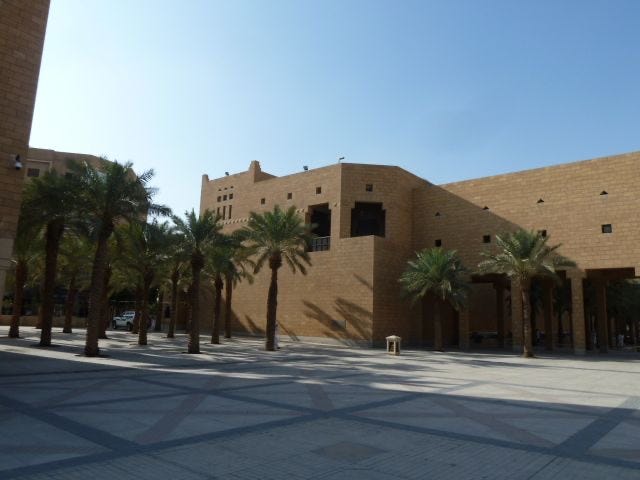
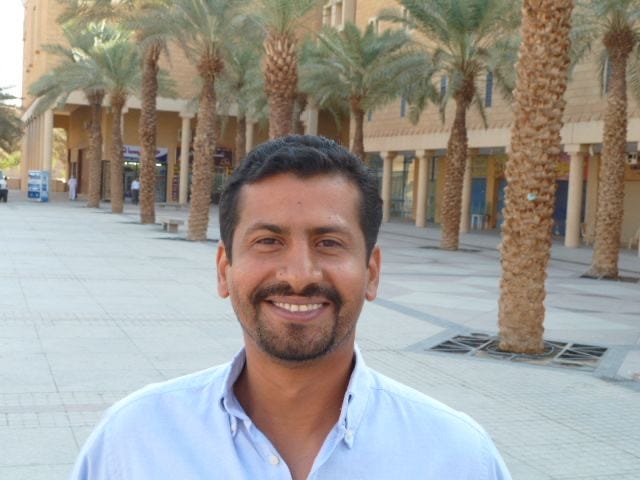
Once we got out of the fort, Tariq got a call from one of his regular customers who needed him right away. So off he went. But before he left, I asked him to write down “National Museum” in Arabic so that I could show it to a driver and get there with somebody else.
After walking around a little bit, I asked another driver if he knew where the National Museum was, and he said he did. But we were not driving for more than a few minutes when he called over another taxi driver, showed that driver my paper, and tried to get advice on how to go.
So he didn’t know after all!
This happened no fewer than three more times — stopping other people, showing the paper, and getting a new direction, driving a few blocks until he had to consult somebody else. The last one we spoke to was a Filipino guy who spoke good English and had the insignia of the U. S. Embassy on his jacket. When we followed that guy’s instructions, we ended up at a place where we had already been, but the driver didn’t even know that it was the place we were looking for.
As I approached the National Museum, I saw a Westerner leaving the building and asked him if men could enter. He told me not yet, but that we could get in soon.
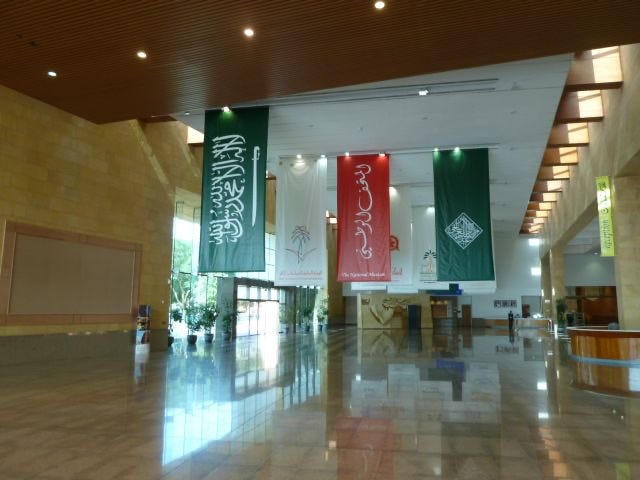
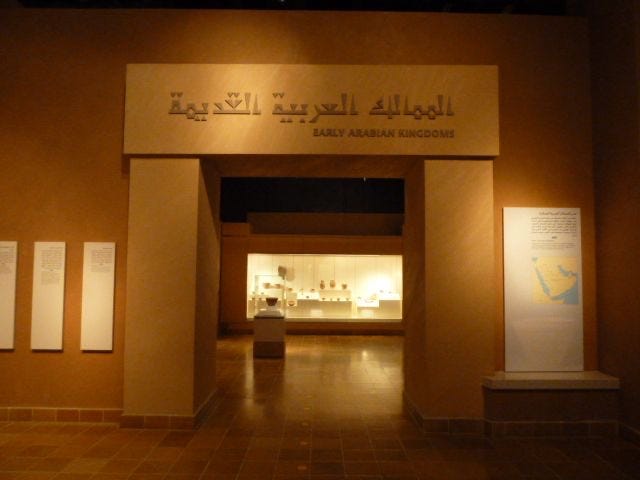
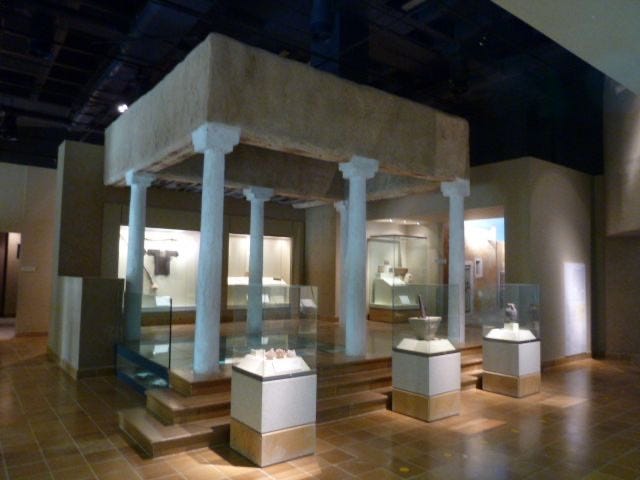
I entered the building and spoke to the receptionist who showed me a chart indicating that the hours for women and school groups today were from 9:00 to noon. Then the “evening” hours were from 12:30 to 21:30; that was the time when men could visit on Tuesday.
The guy told me that he thought the women would be out by 11:30 and I should check in with him then. So I asked if that meant that I could stay only for thirty minutes, since it appeared that if there were no visiting hours between noon and 16:30, then the building must be closed then. He said I could stay. Very confusing!
Tariq called me after I had walked around the grounds a little bit, and I brought the phone to the reception desk to be sure that I had understood what the guy had told me. Yes, that was right: even though noon to 16:30 were not part of the stated hours, if I were already in, I could stay.
The museum was amazing. The exhibitions were extremely well displayed, showing a vast amount of artifacts from the region as well as explaining the history of Islam and the Saudi peninsula.
After walking around a while I headed back to the area near the fort. On my way, I noted that most — but not all — of the shops were closed. There seems to be a middle-of-the-day siesta closure thing going on here, but I can’t find anyone who can explain it to me.
In my wandering, I came upon the place where I had been yesterday. I took some photos to show Tariq, so he could tell me the name of the place.
I called Tariq and he came to pick me up. When I showed him the photos, he had no idea of the name of the place where I had been, though it was adjacent to the fort. He then drove me to the DQ. It had been a nice day.
Wednesday
I was out of the house to use my computer at a local coffee shop when my hosts returned from Dubai.
Once I was back at their house, we mostly chatted and stayed there for a few hours. They looked online to find a place for dinner and located a Chinese restaurant in one of the shopping malls.
Looking at one of the local maps, Terry tried to find an efficient way to get where we needed to go. It is quite a challenge here, as many of the main roads are outfitted with planted medians that go on for long stretches and are impossible to traverse. This means the inability to make left turns onto many streets, which necessitates making right turns, traveling for a long distance to the next traffic light, and then making a U-turn to go back where you need to go.
While driving around, I was privy to some of the atrocious local driving habits. As I understand it, there are many unlicensed drivers, which may explain some of the driving.
They pay little attention to the traffic lanes as demarcated on the roads. In slow traffic, it is not unusual to see five rows of cars squeezing themselves among the four lanes. In faster traffic, it is common to see a driver navigating his car partly in each of two lanes. They speed like demons. They change lanes without signaling. When they pass, they leave very little room between their cars and the ones that they are passing. Many times, I thought we were going to be hit by cars passing.
It’s probably the most fearful I have ever been while I was a passenger in a car. This is stuff I had not even noticed while I was a passenger in the minibusses and large cars while I was in Dhahran. But it became quite evident here in Riyadh. I have never driven in a foreign country, and if I ever were to try doing so, this would not be the place to give it a try.
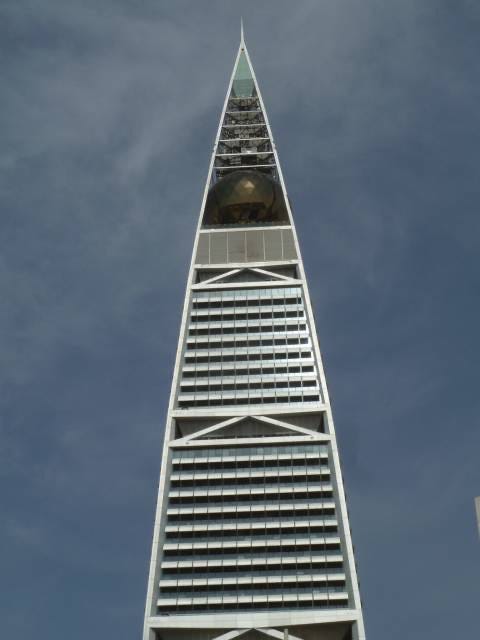
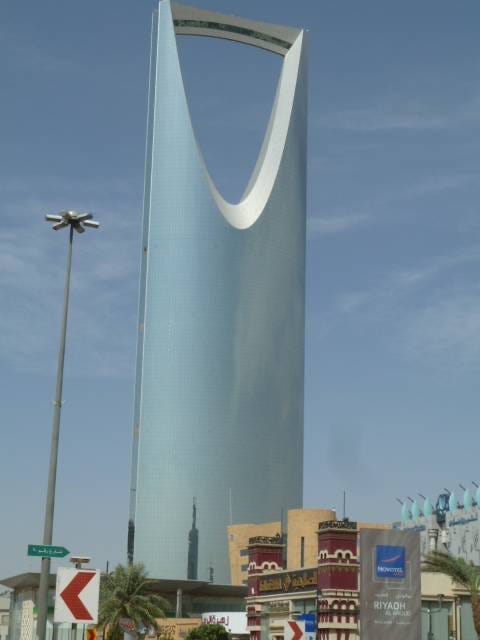
As we rode around, my hosts offered some other insight into the local culture. It has been evident that there are not very many Saudis in the marketplace working with customers. Many of them, according to what I was told, have a sense of entitlement to a well-paying job. They do not work in physical labor, manufacturing, or maintenance. Many of them do, however, own property and franchises.
Many Saudis make their living in a more passive way, by collecting rents and franchise fees. Only Saudis can own the franchises of foreign companies that do business in Saudi Arabia. So for the people to get ownership of the many stores and restaurants (Applebee’s Chili’s, Burger King, etc.), they get rich by collecting the fees paid by the companies that come in here.
It was easy to get lost among the streets here, but they had a map and we eventually found the way to the restaurant. In the evening, we headed there and had a delightful dinner in a beautiful environment — with charming people, I must add!
After dinner, we went for a walk in the neighborhood near the mall. My phone battery was running low, and then pooped out. Otherwise, I would have loved to have a photo of the Turkey Barber Shop. I love the image that conjures.
On the way back to the house, there were several bursts of lightning, and then it started to rain. Good thing the rain waited for us to finish our walk and return to the car.
Onward from Riyadh to Jeddah
Thursday, 29 November 2012
I woke to more rain and probably the coldest day I have experienced here so far: probably in the low sixties (F).
My host was exceedingly kind in offering to drive me to the King Khaled International Airport on the outskirts of Riyadh.
As we neared the airport, I could see by the signage that there were some features that made this airport different from all of the other ones I had ever visited. First of all, in addition to the expected domestic and international terminals, there were signs pointing to the airport mosque, which was large, attractive, and took a prominent place in the scheme of things.
One might expect a mosque at an airport in a Muslim country. The other building that I had never seen at an airport was the Royal Terminal. This is dedicated to the exclusive use of the Saudi Royal Family, which, according to my host, has more than a thousand princes among them.
There was a baggage scanner at the entry of the domestic terminal. I didn’t see the baggage drop-off point, so I proceeded through the next security checkpoint. Once I was through there, I realized that I had cleared security and could have boarded the plane with my carry-on luggage, despite the fact that it had all sorts of sharp objects (Swiss Army knife, etc.) that would have been disallowed elsewhere.
I could have continued to board, but decided to check the bag, which meant going outside the secured area and then re-entering with only my backpack. That was easy.
As I strolled around, I could see that there were several men attired in garb that I had never seen before. It looked like they were wearing two white chenille bedspreads, on the order of those that my grandmothers used to have. One was wrapped around their waists, and the other around their shoulders. I can’t vouch for what was underneath the lower wrap, but the upper one was loose on many of these guys and it was obvious that they had no T-shirt or anything else to cover their torsos.
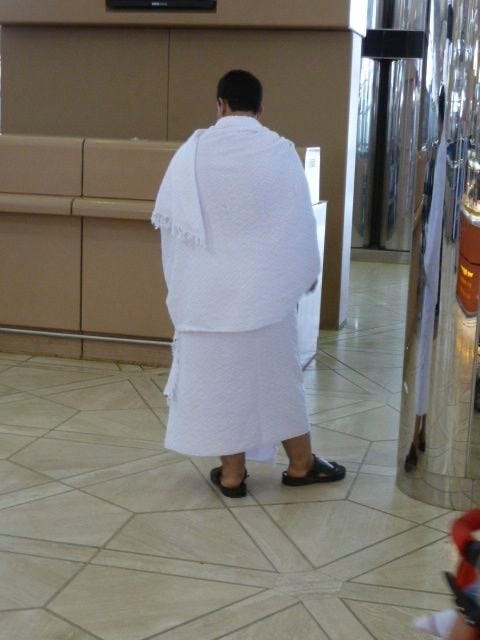
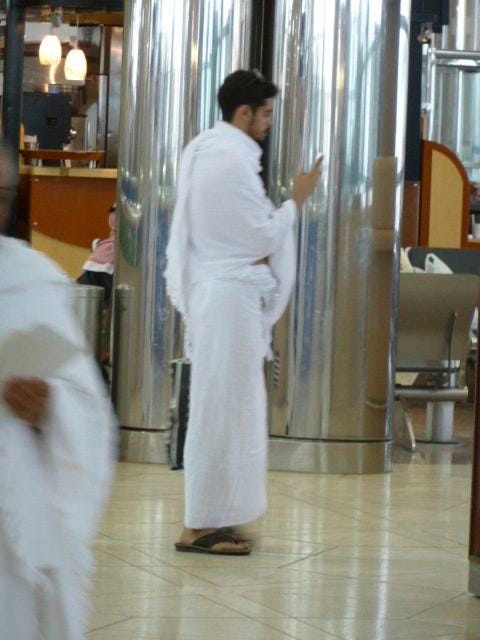
My destination, the King Abdulaziz Airport in Jeddah, is the closest one to the holy cities of Madina and Makkah (Makkah being the most prevalent local transliteration of what Westerners usually spell as Mecca).
These gentlemen were attired for a visit to Makkah in order to make a pilgrimage known as Umrah. From what I could gather, Umrah is a somewhat abbreviated version of a Hajj, which is a requirement for all Muslims who have the means to do so once in their lifetimes.
Though the thoroughly modern airport was equipped with jetways for boarding and disembarking, the passengers for our flight were transported to our plane, waaaaaay out on the tarmac, by bus.
The airport and the plane itself were two places where the segregation of men and women seemed not to be apparent, with the exception of the women’s screening area at the security checkpoint.
I was flying Saudia Airlines, which is part of the international Skyteam association of airlines, so I was confident that they would be operating within all the usual international procedures. There were a few small surprises, however:
First of all, after the televised procedures concerning the use of seat belts, oxygen masks, and evacuation slides, there was one final announcement and visual: “The following is a prayer that the Prophet Mohammed (peace be upon him) used to pray before traveling.” This was followed by a prayer that was intoned in a deep and reverent voice.
The second surprise was this announcement in English (after the Arabic version): “Dearest flight attendants, please be seated for takeoff.” I can’t say that I have ever heard a captain call the flight attendants “dearest” before.
The third one was the appearance of a meal service on this flight of only one hour and forty-five minutes duration. I didn’t expect that, so I never made a request for a vegetarian or vegan meal. There was a vegetarian option of pasta.
On the entire almost-full flight, I saw only one Western man and one Western woman.
They made a recorded announcement as we flew over Makkah, for the benefit of all passengers heading there for Hajj or Umrah.