
Saturday Afternoons at the Women’s Prison
Planting seeds of hope
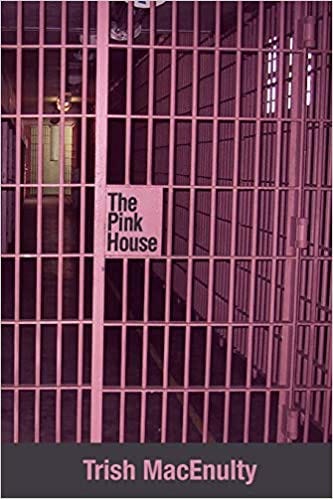
It’s 1:35 on a wet thundery Saturday afternoon, and I am standing between two razor wire-topped chain link fences, waiting, waiting as usual to get in. This is the last meeting I will have with this group of women, whom I’ve been meeting every Saturday and Thursday for the past three months. I always have to wait — sometimes twenty minutes, sometimes forty. Today may be even longer because it’s raining and the yard is closed. Even though the yard is closed, they tell me “my” inmates will be allowed to come up.
I’m eager to see them and get my little dose of joy. I’ve been coming out here for the past 13 weeks to facilitate a drama program. Last week we had our performance for the rest of the compound and a few outside guests, but I wanted to come out one more time to give us a sense of closure. We’ve been through a lot.
I started out with 21 women. Some of them dropped out early; they weren’t really interested. One woman was transferred, another released, and a third wound up in lock-up because a knife was stolen from the kitchen. The guards locked up all the butchers, expecting someone to fess up or snitch. (I don’t know if they ever found out who took it.) By the end of the program, I had twelve women to work with. Twelve warriors. Twelve talented, energetic women.
Everybody who knows me knows that I come out here. It’s my “thing.” Even my seven-year-old daughter thinks it’s normal that on Saturdays her mom goes to the prison. The reason I come is simple. It’s because almost twenty years earlier I was in a women’s prison for robbing drugstores, and writing is the thing that saved me. When I was offered the chance to create arts programs for this prison, I jumped at it. We’ve done poetry, art, and now drama.
Thunder grumbles, rain drizzles. I don’t even know if the women are expecting me today. It’s difficult to communicate with them from the outside. No phone calls allowed. I can see blue sky in the distance, but a thick duffel bag of blue gray cloud sits on top of the prison. I’m trying not to take the weather personally.
When people hear that I go to the prison, they’re instantly curious. What are the women like, they want to know. What are they in for? They’re like anyone, I answer. And I don’t know what they’re in for. I don’t care.
Today I really wanted to have some sort of celebration — maybe a cake from the kitchen or a bag of cookies. But the administration was adamant. No, they said. The rules are arbitrary and harsh. There’s a yellow line down the roadway inside, and women are only allowed to walk on one side. We’re not allowed to hug. I tried to bring in some drinking glasses for the performance, but the C.O. said, “Oh no. They could break one of these and slice your neck.” I wanted to slice his neck.
Finally! The door clangs open and I’m allowed inside. I hustle down the road to the room where we always meet and there they stand, waiting for me — twelve warriors. We go inside the room, and while there are no guards to watch us, I hug each one of them: Jan, the amazing artist in the group; Billie, who attends every program and assists me with everything; Daphne, bipolar and brilliant; Tamala, who brings her pain and humor to every session; Deborah, a sweet Jewish girl from South Florida, whose terrifying voice when she played Death scared the bejeesus out of us, and the others.
After our initial and somewhat giddy reunion, we wonder what to do. The performance is done in spite of all the obstacles thrown in our way so we don’t have that to work on.
“Let’s sit down and write,” I say. I’ve still got a few tricks up my sleeve. And so that’s what we do for the next hour and a half. I provide the prompts, and then we write about our feelings and about what’s going on in our lives. We also share what we’ve written. One woman worries about her mother, another is excited about possibly getting sent to work release, another is mad about something her boyfriend said in a letter, I’m worried about my sick cat. Through our writing, we connect with each other, and for a moment, we’re just women, sharing our lives.
When I leave the clouds are gone. Sunlight sparkles on the wet roads. Crepe myrtles wave in the breeze as I drive past. I’m refreshed, happy, and also heartbroken that I have to leave them there in a place where they’re not even allowed to hug someone while I know in a few more miles my daughter will be waiting for me with her arms wide open.
CODA: I wrote this back in the 1990s when I was actively involved in Florida’s prison arts programs. When my family and I left the state, I wasn’t in a position to continue the work. But seeds were planted. That seven-year-old girl who watched her mother go to the prison every week now works for a wonderful non-profit organization dedicated to helping incarcerated and formerly incarcerated people. Of course, I take all the credit— LOL.