
Roleplaying Games | World of Darkness
Lucifer was Following Orders: Retrospecting ‘Days of Fire’
They’re not making a ‘Demon: The Fallen’ show, but they should
A few days ago Paradox Interactive announced it would give Hollywood another shot at the World of Darkness. The previous attempt to bring WoD to the masses was Kindred: The Embraced in the 90s. It wasn’t great, and the star of the show died in a motorcycle accident so a revival wasn’t likely.
Vampire: The Masquerade will probably be the focus of any new TV show or movie, but vampires have been done to death! Starting with Demon: The Fallen would be WAY more interesting, if only because watching Conservatives shit themselves is fun.
In Hollywood terms, Demon: The Fallen is The Prophecy meets American Gods. Demons had been in the background of the World of Darkness since the early days, but they were rare and ill-defined. Demon wasn’t the first RPG about demons. Kult and In Nomine existed in the same wheelhouse, and Nobilis to a less literal extent. But Demon: The Fallen had the added bonus of living alongside Vampire and Werewolf and Wraith. White Wolf had mastered the art of making all this crazy lore super-cool. The best example of this is Days of Fire.
Days of Fire is an in-universe “epic poem”, published as a prop book. White Wolf was notorious for these, and printed about a dozen of them for the various World of Darkness games. The Book of Nod and The Fragile Path toyed with re-imagining Christian stories, but Days of Fire looks straight-up devil-worship-y to the average parent still in the grip of the Satanic Panic.
The conceit is that the book is a new translation of an ancient Greek text called ‘Dias Ignis’. The two introductions, by the publisher and the translator, lay groundwork for some of the game’s metaplot, which is continued in the last section. White Wolf was big on in-universe lore, and Days of Fire lays it on thick. Like most of White Wolf’s prop books, the art and presentation is utterly delicious.
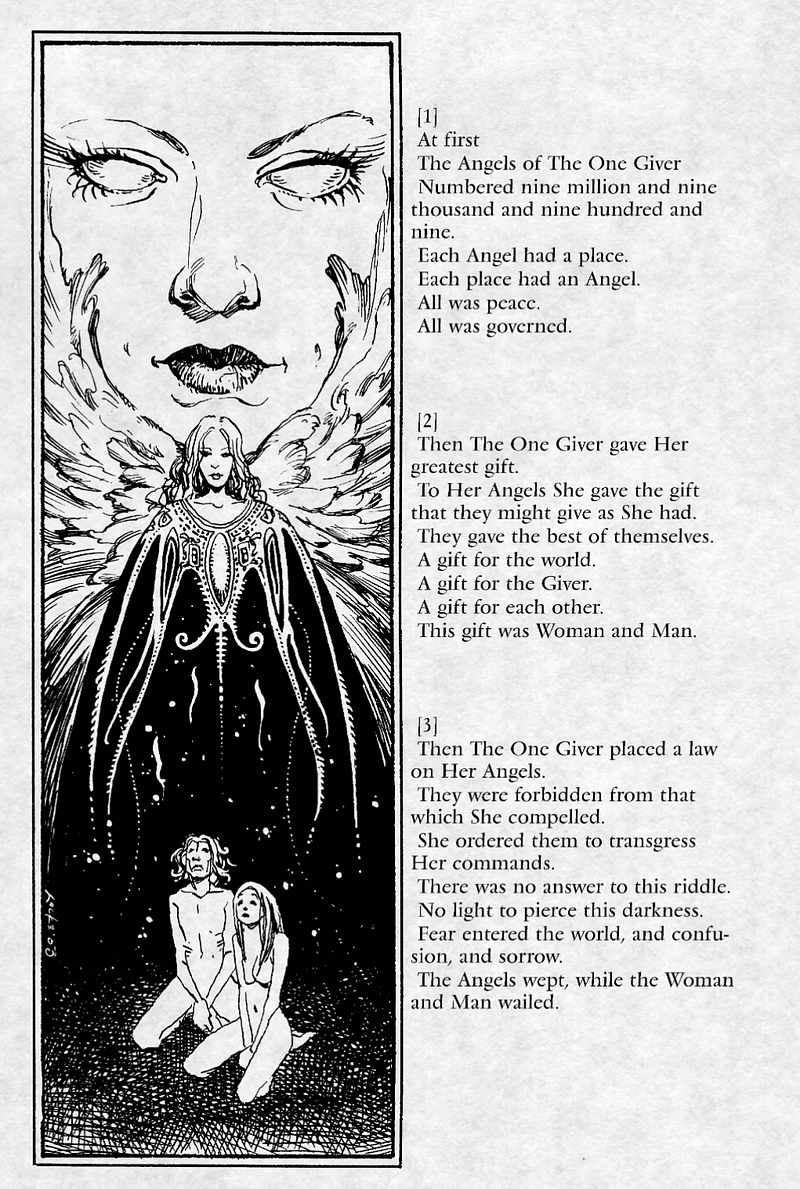
Days of Fire has 7 sections. In the first section, The Springtime of the World, “The One Giver” is presented as female. Above is the most clear depiction of “God” in the whole book. All knowing. All powerful. All present. All generous.
It’s this ultimate fairy godmother that creates Adam and Eve. The section is only three pages and explains almost nothing besides that this is when Lucifer’s rebellion begins. It also explains that it was The One Giver that ordered Lucifer to rebel in the first place. “Mysterious ways” indeed.
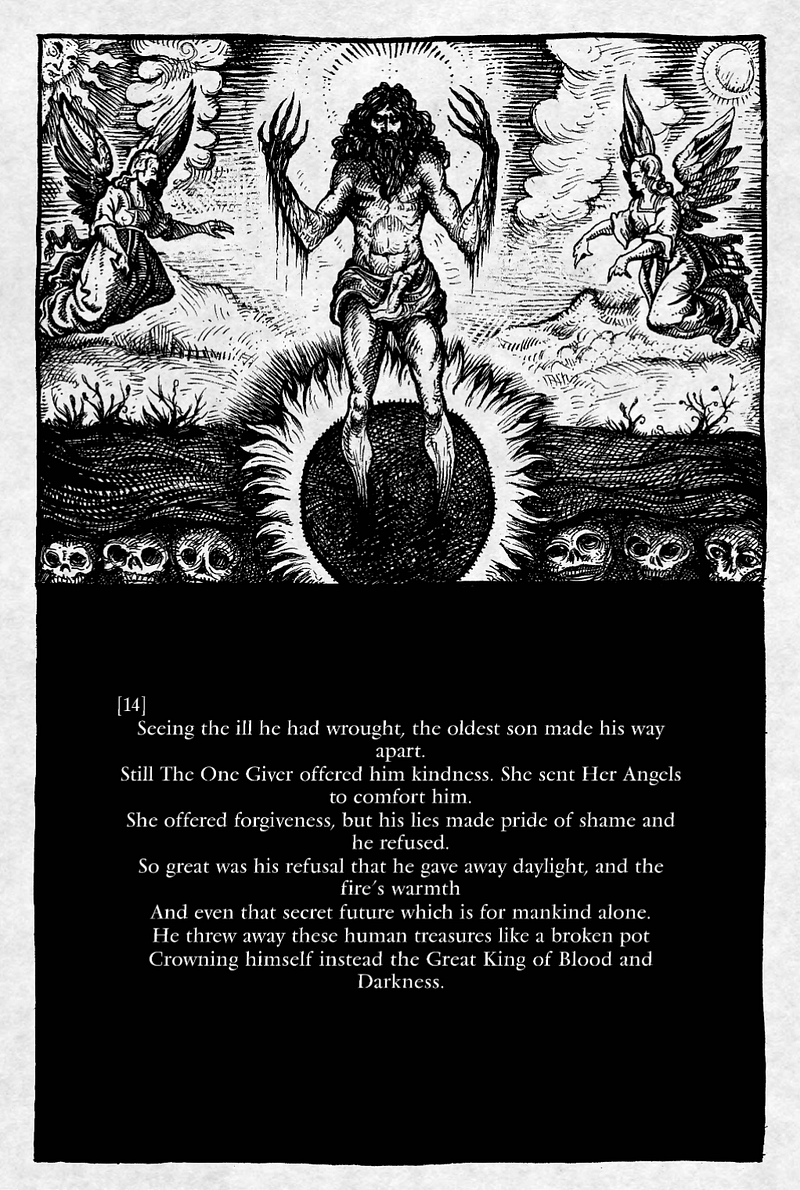
Some of the illustrations hearken back to The Book of Nod. Caine, great granddaddy of all vampires, was similarly drawn as heavily bearded, like a unkempt version of Jesus. It’s in The Summertime of the World that he gets his big scene.
At this point the war between the rebels and the loyalists was still kinda ceremonial. There was chaos as the rebels dug in and built cities to protect their humans, but death was still unknown. No one had even thought about actually killing anyone. It’s possible they didn’t know what killing was.
Enter Caine. He, along with Adam and Eve, stayed loyal. Caine’s sacrifice of Able to The One Giver was the first murder. But God rejected the sacrifice. Then Caine rejected God. Then Caine spoke out against God to the rest of Man. The rebel angels learned how to kill and lie from all this. Things went very downhill from there.
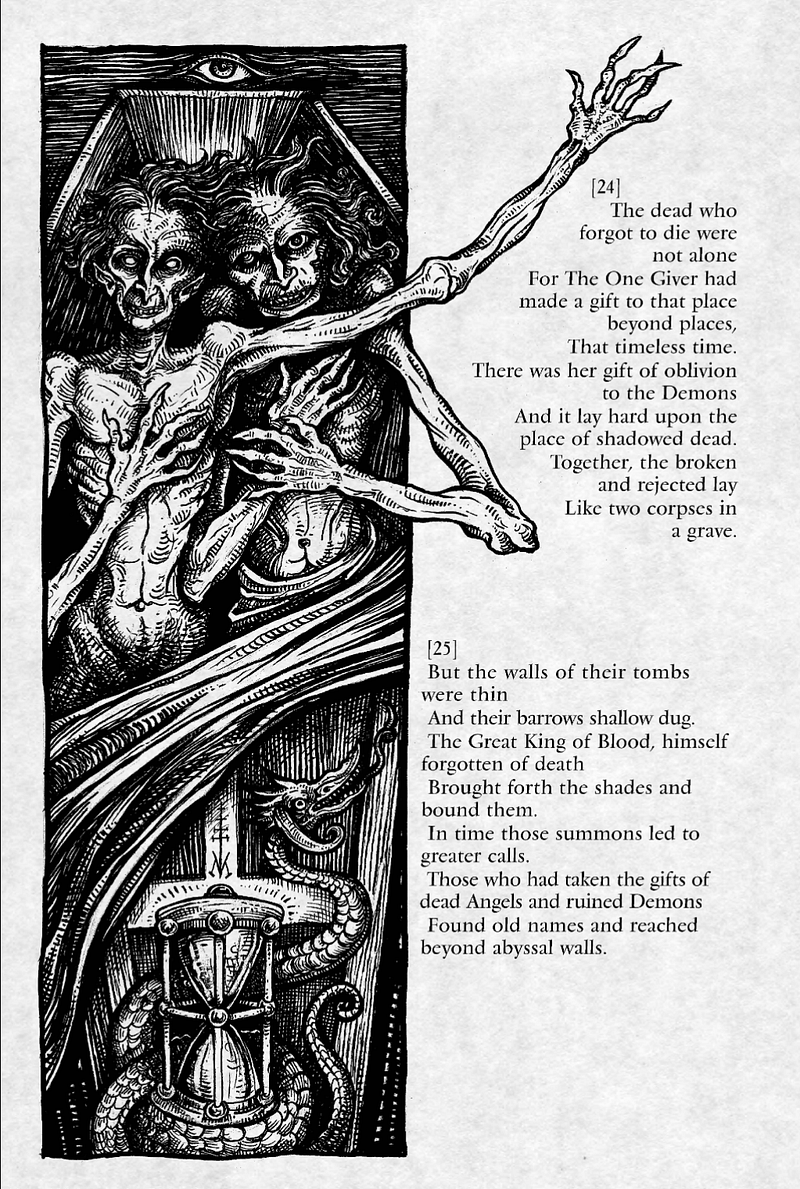
The Autumn of the World shows the world’s descent into more of a shitshow. By now the story takes place within ancient recorded history and mentions recognizable people and continents. But for gamers the lore becomes more of a puzzle. All the supernatural denizens of the World of Darkness are eluded to. Mages, werewolves, mummies, changelings, and more are all hinted at. It’s left to lore junkies to figure out exactly what the text means for their favorite monsters.
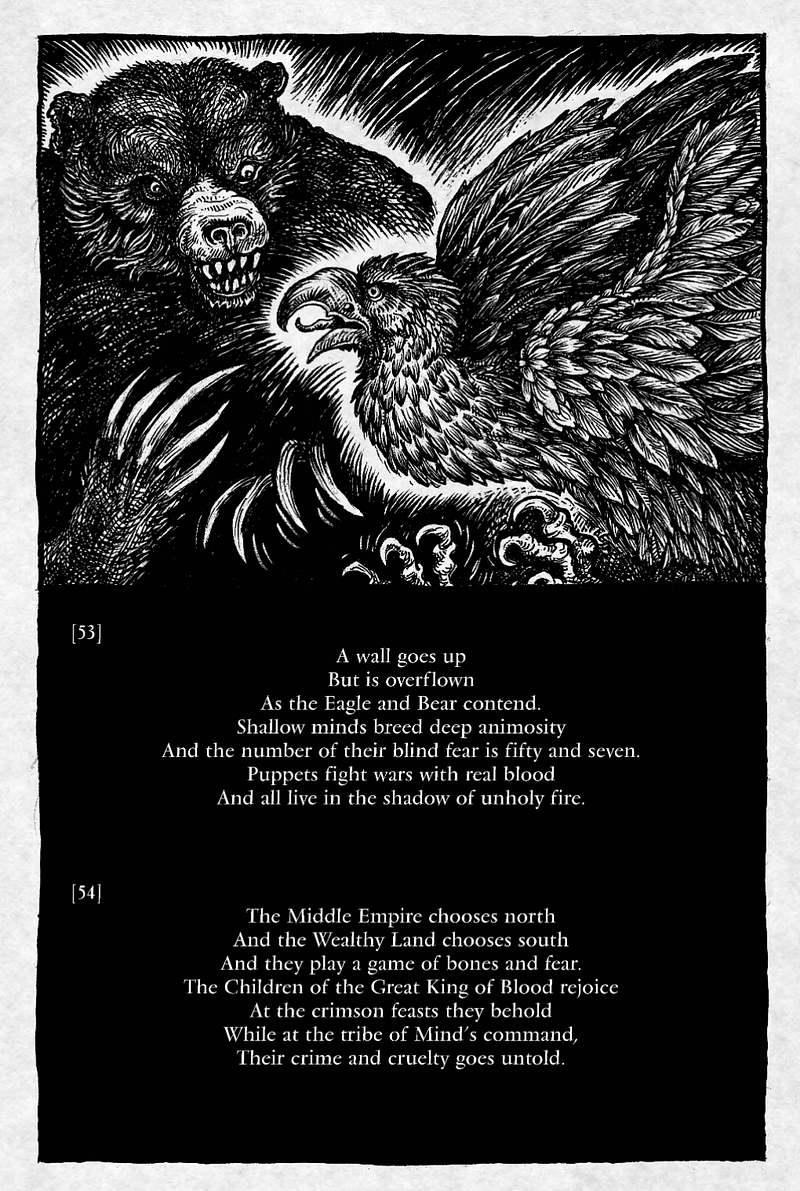
The Winter of the World depicts what is clearly recent history. Multiple crises, from the Cold War to Climate Change, are hinted at in the poetry. The whole section is full of violent imagery and Easter Eggs for dedicated lore buffs. Like everything else White Wolf did at the time, they did not pull punches. The text and artwork depicts an ugly world getting uglier by the day.
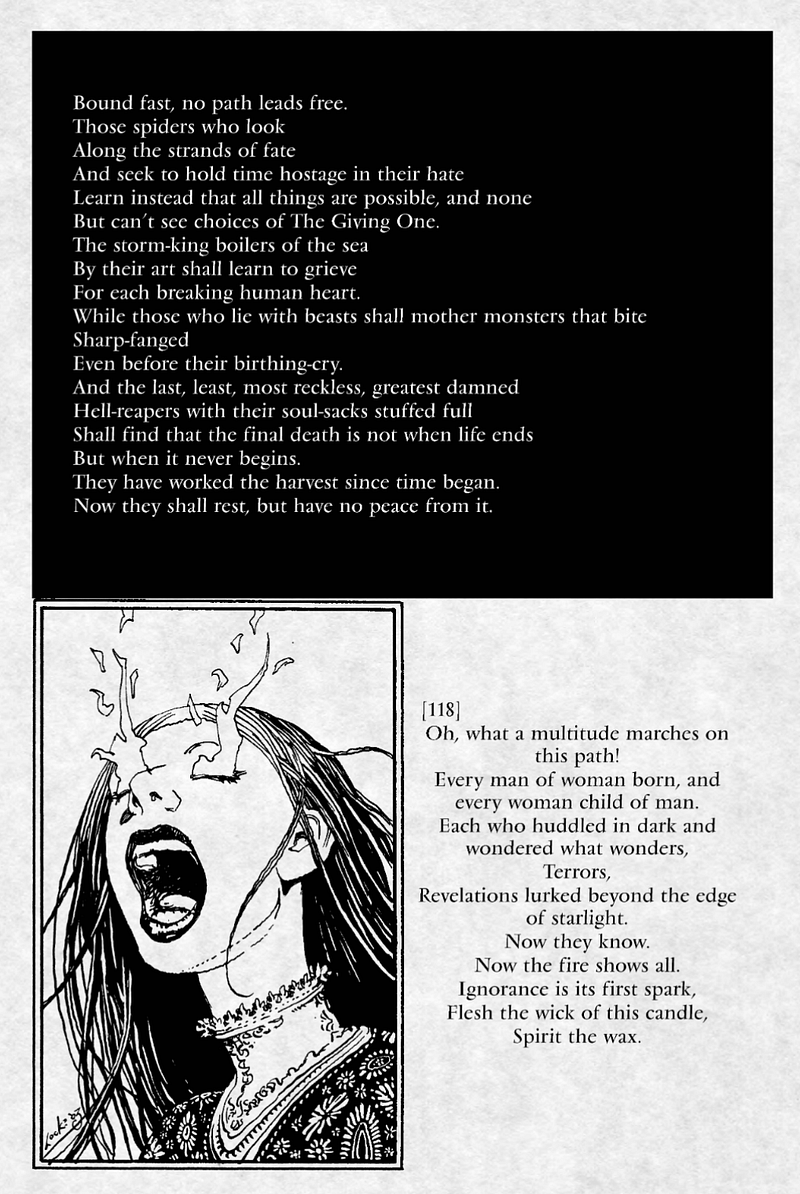
Three Paths Through the Burning Forest is very different. The Springtime, Summertime, Autumn, and Winter of the World are about the past. This section foretells all the doom and gloom Man has to look forward to. The text continues to be cryptic but it becomes obvious the various monsters will get their due.
The only “heroes” in the story might be the Imbued hunters. The text suggests that more, maybe all, of mankind will be imbued with the power to fight the horrors. It also suggests that the only salvation is to “burn”. What that means is anyone’s guess.
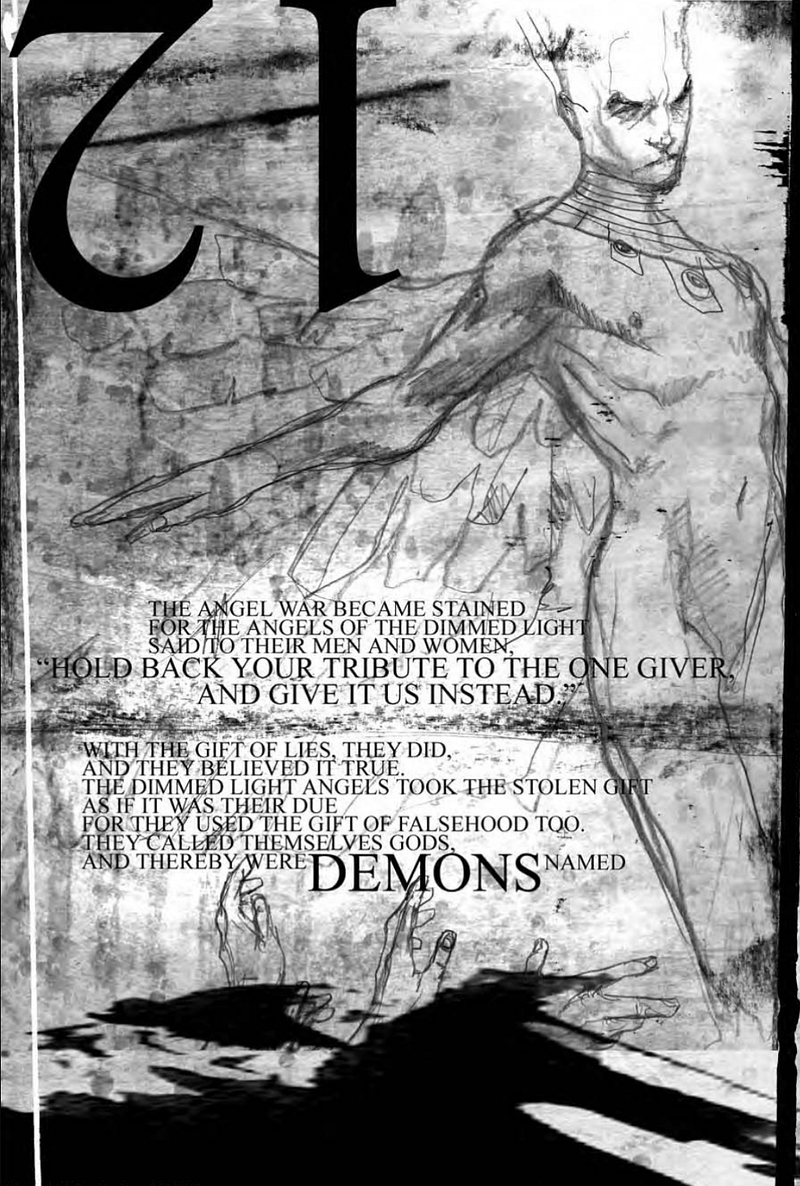
Time Catches Fire isn’t part of the conjectural text. It’s a series of paintings inspired by a previous translation of ‘Dias Ignis’. The introduction to the section is written by the artist, who says there were violent protests at both of his showings. Again, the whole presentation is suitably grim and very White Wolf.
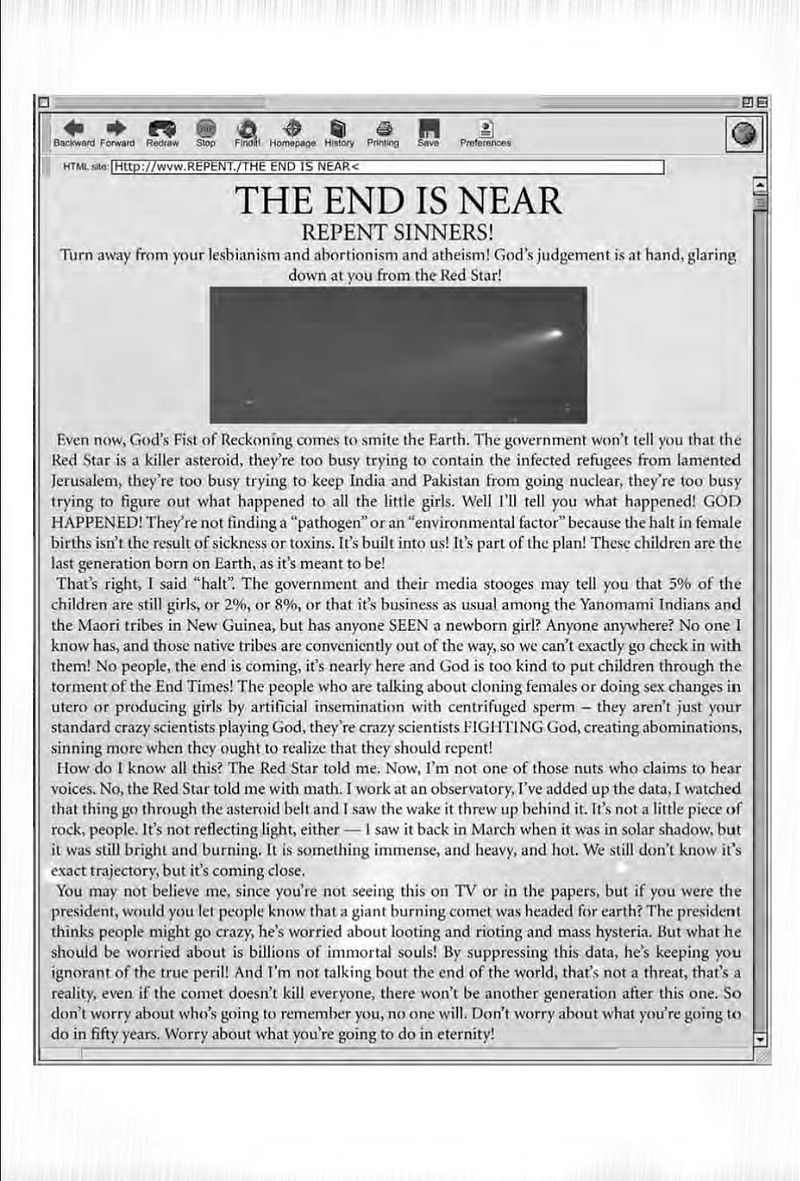
The book ends with The Miller Dossier. It’s full of newspaper clippings and emails and letters and webpages, all pointing toward supernatural events that are happening during the Time of Judgement, the official ending of the World of Darkness. The above page is from a religious nut’s website. The post is about the Red Star, a portent that appears in the metaplots of Werewolf and Demon and Mage. They all have different names for it, but it means bad news for everyone regardless of what they call it.
Days of Fire was published three months before White Wolf originally brought the World of Darkness to a close. Demon: The Fallen’s three possible endings are spelled out in World of Darkness: Time of Judgment, along with the other game lines that didn’t merit their own book. Any of those endings work with what Days of Fire sets up. Of course WoD was eventually resurrected, but I do not feel like going there.
I was a devout Werewolf: The Apocalypse fan, but Demon has grown on me over the years. I’m a sucker for a story about rebellion. Defying an omnipotent and omniscient tyrant you can never overthrow seems foolish on its face. Then again, defying an irresponsibly condescending tyrant with seemingly arbitrary rules would be inevitable.


