TRAVEL — VIETNAM
Sapa — Land of the Terraces: Unravelling the Threads of Tourism
An example of how tourism is good and bad
As I prepared to board the night train to Lao Cai, a sense of apprehension crept over me. An unfriendly encounter in Hanoi, where I was assaulted by a pushy hostess at my hotel in the Old Quarter, had left my confidence in solo travel wavering. If she represented the people of the north, then they were a hard-nosed lot, driven by the relentless pursuit of money.
The hostess cornered me in hotel reception and pinned me against its sticky yellowing wall, coercing me into spending $120 on a 3-night trip to Sapa. This was back in 2012, but I knew even back then I was paying over the going rate. Reluctantly, I handed over my credit card. I just wanted to get the hell out of there.
At the railway station, a line of blue and white train carriages ran along the track – its faded colours wore the scars of countless journeys it had traversed. Amid the chaos were backpackers in a desperate bed treasure hunt. The only way to tell these rolling abodes apart was the subtle ‘T’ and ‘L’ letters discreetly marked on the carriages – just simple characters yet the silent judges of my fate.
Despite the hefty splurge, I was not granted the luxury of the sleeper carriages marked ‘T’. I’m guessing ‘T’ for ‘Tourist’, or ‘Terrific’, or even ‘Tease’?
It dawned on me that the Hostess with the Mostess (sarcasm intended in italics), had not aimed for repeat business, and I should have anticipated this in the first place.

I walked enviously past the plush ‘T’ compartments, where white bedding and a delicate flower on each pillow promised a good night’s sleep, then begrudgingly settled into my designated ‘L’ carriage.
Though not a bad arrangement, I learnt that the ‘L’ must have stood for ‘Limited’ and apparently ‘L’ for ‘Local’. It transpired my 5 roommates were all Vietnamese men, none of whom spoke a word of English.
Within the carriage, the air mingled with the mustiness of age and the distinct aroma of instant noodles. Dim lights cast a feeble glow on worn-out melamine walls, their mock-wood yellowed with age and bleached in spots where countless bodies had left their mark through friction.
Throughout the next nine hours, my lodging was confined to a cramped 6-person berth, with my bunk inconveniently perched at the top tier – great!
Climbing past the 1st bunk, I met the culprit of the instant noodles. He briefly looked up as I passed, then continued slurping away. Moving higher to the 2nd bunk, another man was reclining with his bare foot propped on one of the ladder rungs. He greeted my polite request to move them with a grunt. Uttering something in Vietnamese to his companions, they erupted into laughter.
I wanted to run out of there, escape to the tantalising ‘T’ carriages, but I retreated up to my bunk. Clutching my belongings tightly, I locked myself in beneath the protective shield of the complimentary fleece blanket, positioning my backpack as an additional barrier.
As the engine roared to life, the generosity of the blankets became painfully clear when an equally generous rush of cold air hissed from the vents. Burrowing myself further into my cocoon, I braced myself for an uncomfortable journey to Lao Cai.
In the darkening light, one by one, my roommates succumbed to sleep, their snores harmonising with the rhythmic clacking of wheels on tracks. The sounds were hypnotic, but I fought sleep, too anxious to surrender to it. Every time the train pulled into a station, I shot up, my head banging on the ceiling, awakening the men.
“Lao Cai?” I asked each time, and each time they groaned and gestured at me to be quiet.
Somehow, somewhere along the route, I had fallen asleep. From the depths of my dreams, a voice echoed, “Lao Cai… Lao Cai!”
I opened one eye, greeted by the persistence of one of the Vietnamese men. He pointed toward the window, where dawn was breaking into a new day.
In my semi-conscious haze, a Summit Hotel representative snapped me into focus. He waved a sign enthusiastically, hollering, “Summit Hotel! Summit hotel here!”
I followed him, joining a mob of fellow backpackers, and we hopped onto one of the many minibuses that would whisk us away to Sapa – Vietnam’s ‘Queen of the Mountains,’ tucked in the remote Northwest near Mount Fansipan, standing tall at 3,143 metres.
While Sapa’s spectacular landscapes were the obvious draw, the countryside also beckoned with its mysterious tribes, adorned in the billowing red headdresses of the Red Dzao and the indigos of the H’Mong tribes. As we neared the Summit Hotel the two tribes punctuated the verdant landscape with their flourishes of colour.
The hotel hummed with the energy of newcomers. It felt like a Disneyland for adults, and we were on the brink of boarding a ride, ready to immerse ourselves into a different helping of Vietnam.
Eager as I was to explore this mystical land, our hostess recommended we shower, and fuel up on an abundant breakfast of carbs. There was no rest for the wicked here; a three-hour trek was on today’s agenda, and tomorrow promised a five-hour hike. Sleep would have to wait.
Breakfast over, our hostess organised us into groups of six, methodically calling out names like we were back in school. It was a task she seemed to have mastered, hinting at the notion that Sapa might be a tourist trap!
In my group, a newlywed German couple were absorbed in their own little world, paying little attention to the rest of us throughout the entire trip. The remaining members, all female travellers like me, were immersed in solo travel, setting aside our laptops to satiate our wanderlust.
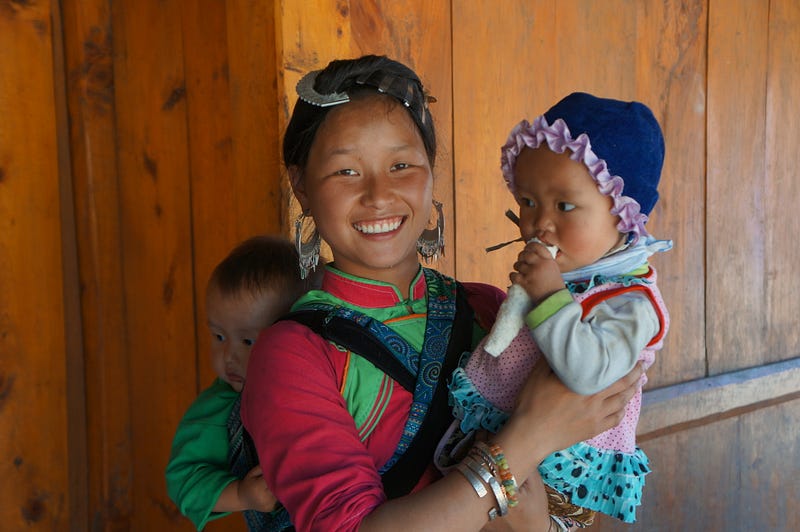
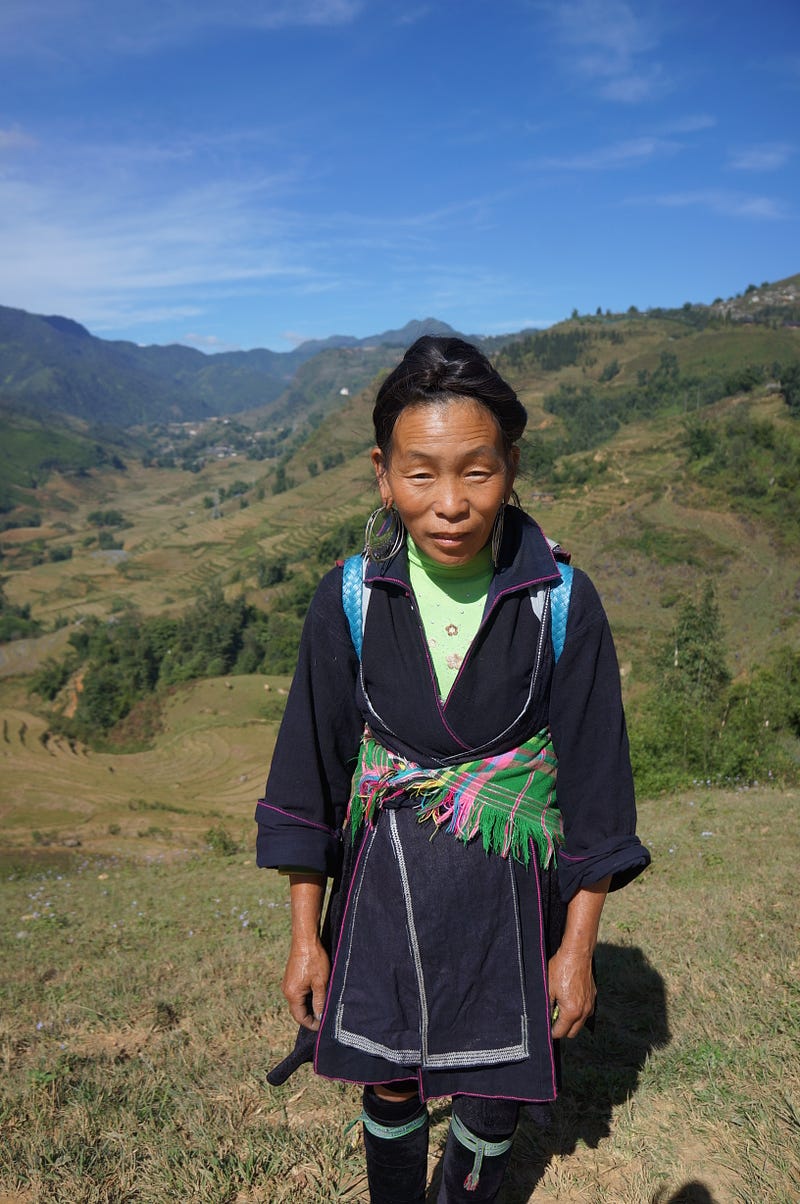
Assembled into our group, we were introduced to our guide Ving for the next two days. She was adorned in the distinctive dress of the H’Mong tribe: an indigo-dyed dress embellished with delicately hand-embroidered bands on her arms and waist. Despite the heat, she wore what resembled leg warmers, tightly wrapped with an embroidered, matching ribbon around her legs. Her fingertips bore the indigo stains, a testament to the purple dye from the indigo plant, used by the H’Mong people to colour their clothes in their respective tribal hues. Around her neck, she wore a silver necklace in the shape of a crescent moon, an accessory she informed me was only worn by married women. Despite being only 18 years old, she already had a baby, and an air of wisdom beyond her years surrounded her.
Driven by ambition, strength, and a resolute commitment to provide for her family, she had taken it upon herself to learn English at a young age, paving the way for her role as a guide. In these parts, she explained, opportunities were limited, and tourism was the only viable career path.
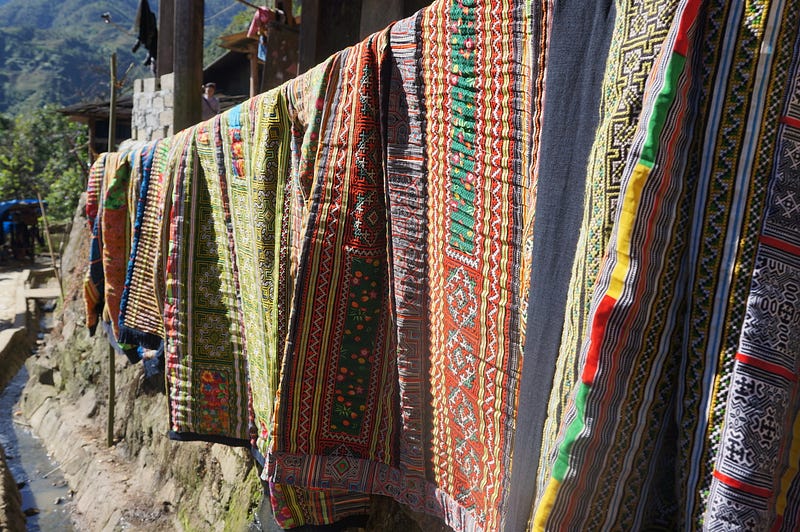
Passing through the rather unremarkable main town, we reached Cat Cat village. Rows of huts marked the beginning of what I can generously describe as a theme park!
As soon as we stepped into the village, H’Mong women swarmed us from all directions, like I was suddenly in a zombie movie. An army of arms thrusting embroidered satchels, pencil cases, bracelets, and textiles under our noses. Amid the chaos, a tiny girl, no older than 10, squeezed in, attempting to tie brightly coloured offerings of stitched bracelets on my wrist. “Buy from meeee?” she pleaded. “Please buy from meeee?”
I caved into her desperation and bought enough to divert the relentless hordes. To my dismay, it only hyped up their enthusiasm. Escaping the bustling crowd, we continued our trek, but a few of the women tagged along uninvited — one for each of us.
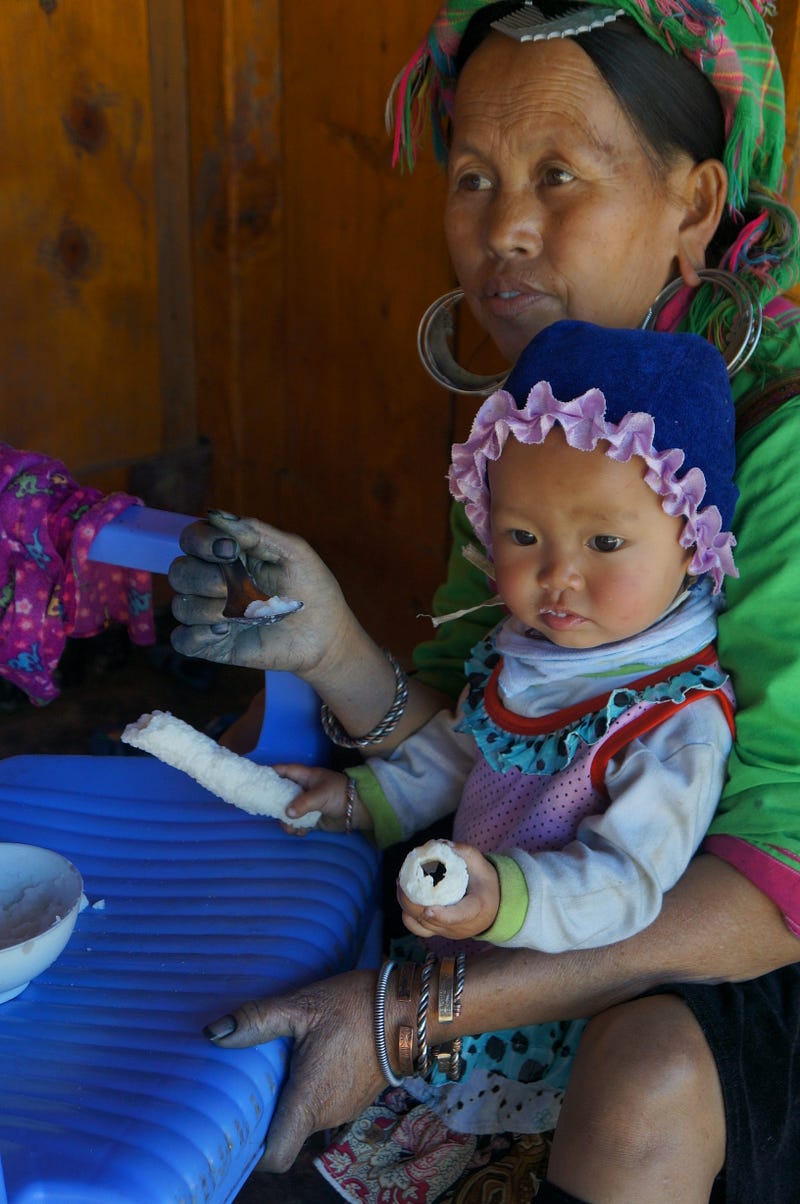
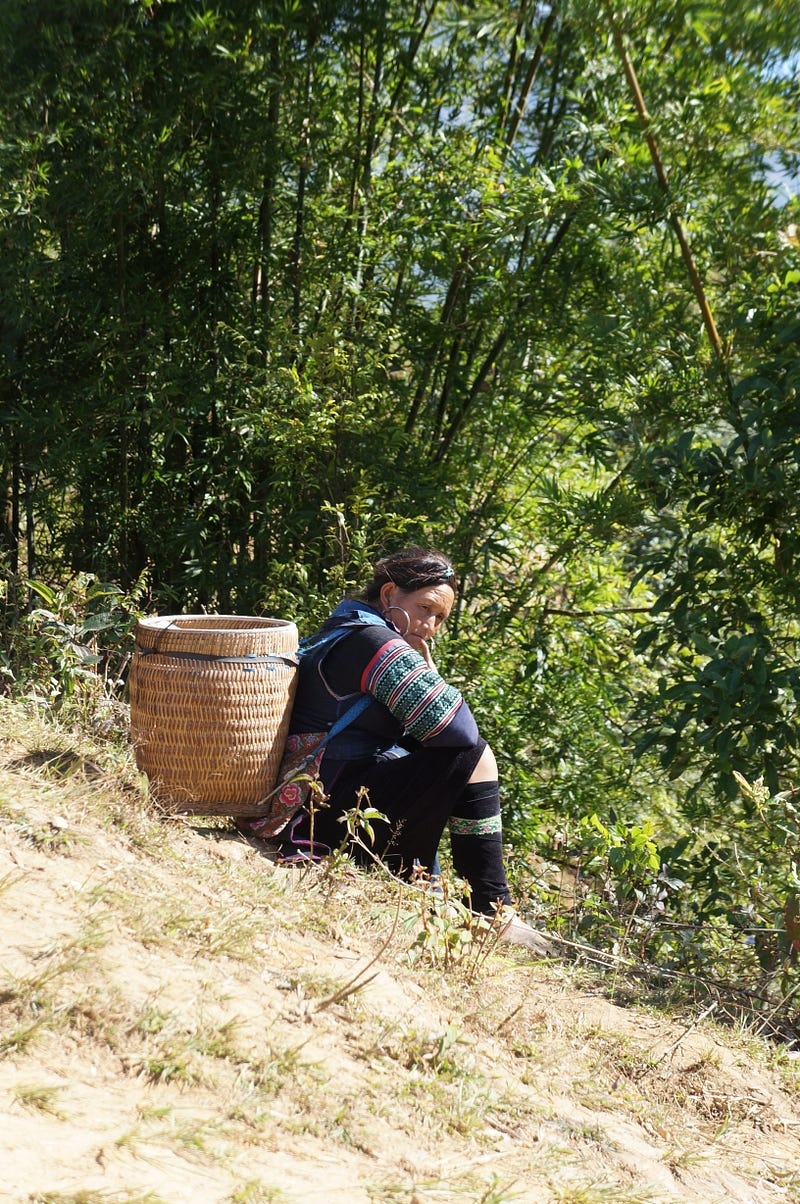
My designated shadow, a frail, thin woman with sun-weathered, leathery skin, carried a big basket on her back – it was so loaded she had to lean forward to prevent herself from toppling over. Glued to me like a Siamese twin, she insisted on extending a helping hand every time we ascended and descended the sloping terrain.
She bombarded me with questions – “What your name?” “Where you from?” “How old you are?” “How many brother and sister you have?” “Are you marry?”
At this point the scenery unfolded into breathtaking cascading rice terraces resembling a humongous, green-tiered wedding cake. Despite my yearning for a peaceful trek to enjoy the picturesque scene, my companion persisted in her determination to make a sale, thrusting a knitted monkey in my face.
“You buy?” she insisted.
Attempting to momentarily quieten her, I bought the knitted monkey, but she wasn’t done yet. She was now pulling out an embroidered belt from her bottomless Mary Poppins sack.
Negotiating a deal, I agreed to buy the belt on the condition that she would leave me alone. To my relief, she agreed to the terms, and that was the last I saw of her.
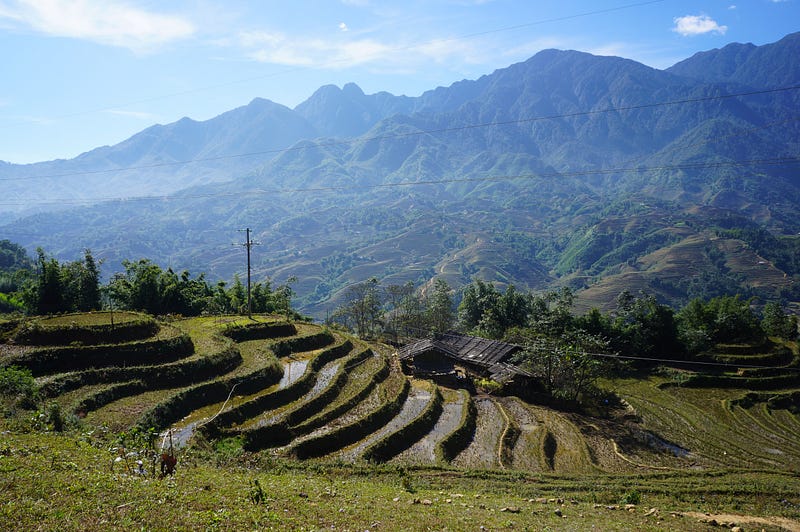
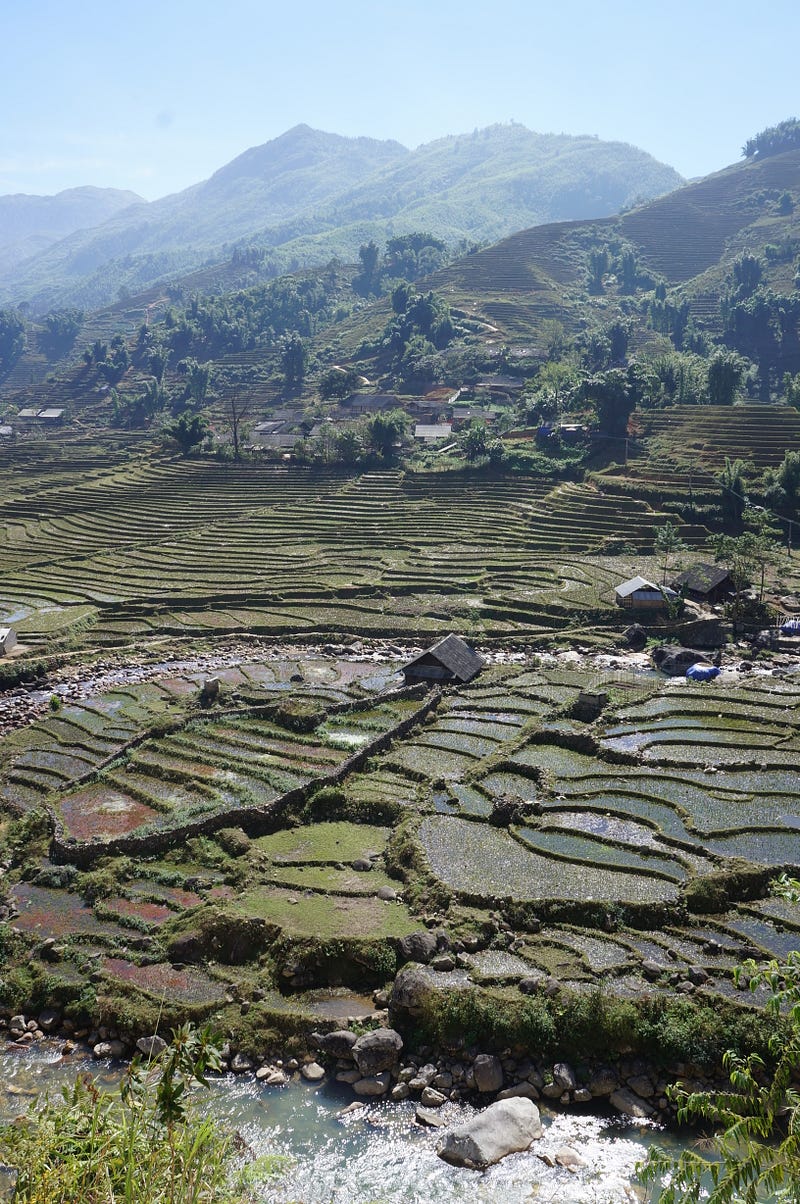
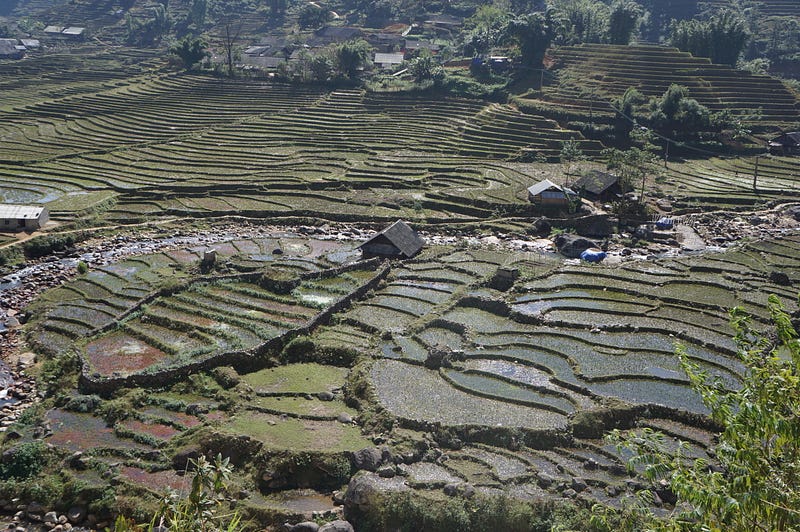
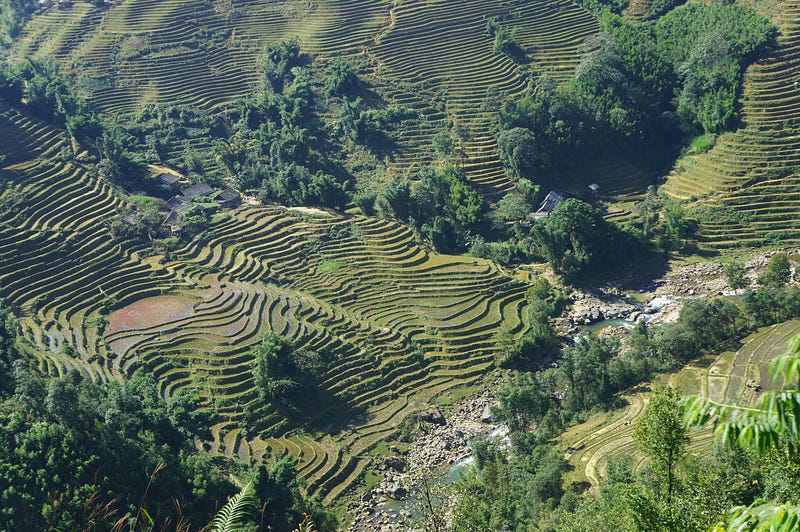
Testing our balance on the muddy ridges of the rice terraces after heavy rain, we concentrated intently on each step, determined to avoid tumbling into the waterlogged harvest below. Amid the struggle to stay focused on our steps, the temptation to lift our eyes from the muddy terrain was irresistible. Each basin formed a perfect arc, repeating hundredfold as it ascended into the heavens. Standing mid-ridge felt like being in the clouds, gazing over the plunging valley with miles of lush verdant rice fields stretching below.
Taking a break from our trek, we arrived at a small village and refuelled with more carbs at a local restaurant. The atmosphere buzzed with fellow tourists, and the tempting aroma of fried meat and noodles filled the air.
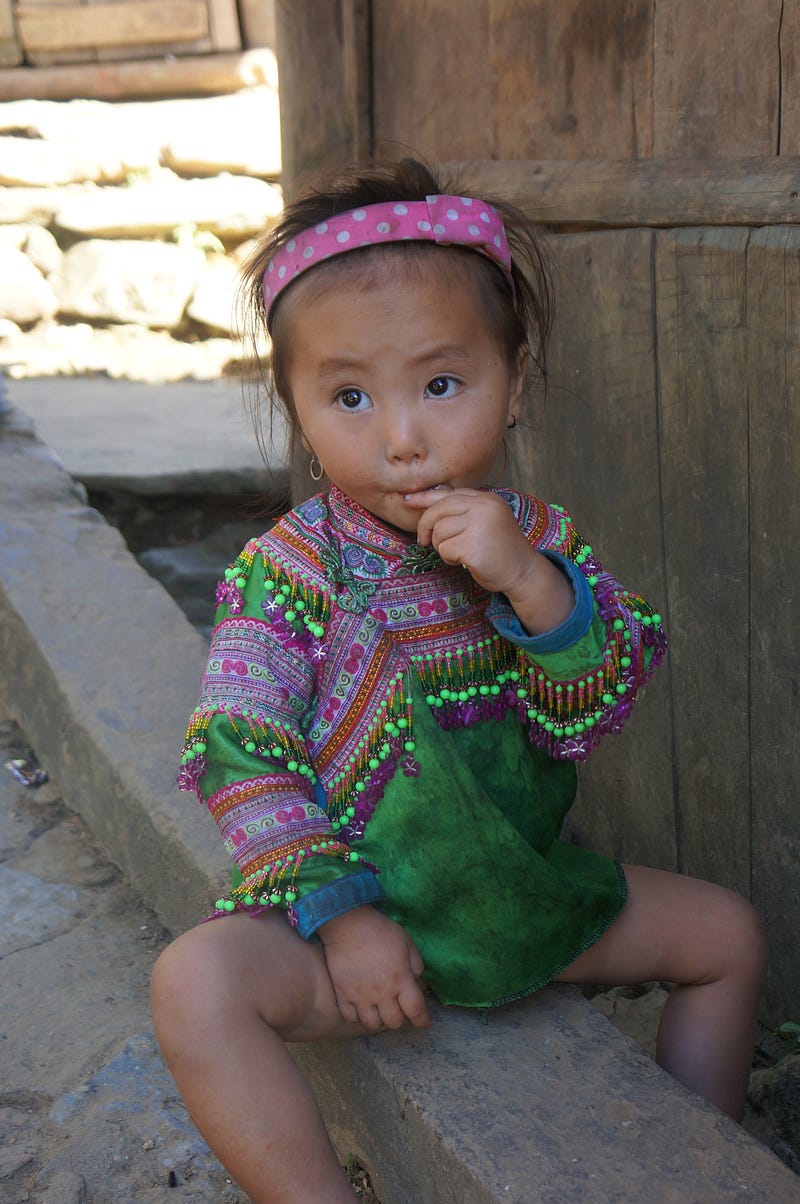
Even before we settled into our seats, an adorable girl, around 8 years old, with a little grubby, moon face and sad eyes joined us at our table. Despite her affection, I refrained from getting too close — her nose had a noticeable dollop of snot making its way to her mouth, and her hair was so tangled into a nest; it looked like an inviting refuge for fleas.
I thought she was just being friendly or curious, but she suddenly whipped out a handful of threaded bracelets and arranged them on the table with the finesse of a travelling salesperson.
In no time, a group of more children, at least half a dozen, hurried in. The room echoed with their high-pitched voices, all pleading, “Buy from me? Buy from me, pleeeeease!”
It struck me that these children should have been in school, but Ving explained that during the tourist season, they often supported their parents by becoming makeshift entrepreneurs. Like many Sapa Tribes, they led a hand-to-mouth existence, and their evening meals depended on their daily earnings.
Upon learning this, I ended up buying enough threaded bracelets to cover my entire arm!
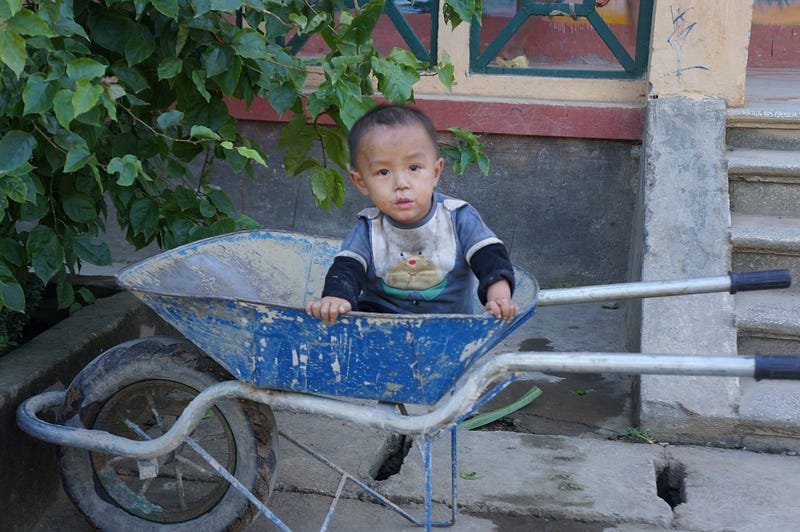
As my Sapa journey neared its conclusion, I grappled with conflicting thoughts. A sense of guilt washed over me as I walked past a toddler dumped in a wheelbarrow. His face was grimy from tears and snot. He’d been left – god knows for how long – while his mother worked the tourists.
Our role as tourists has unintentionally created a negative impact on the tribes. The people, driven by the need for survival, had embraced tourism to the detriment of their children and at the risk of losing the essence that made Sapa a worthwhile destination.
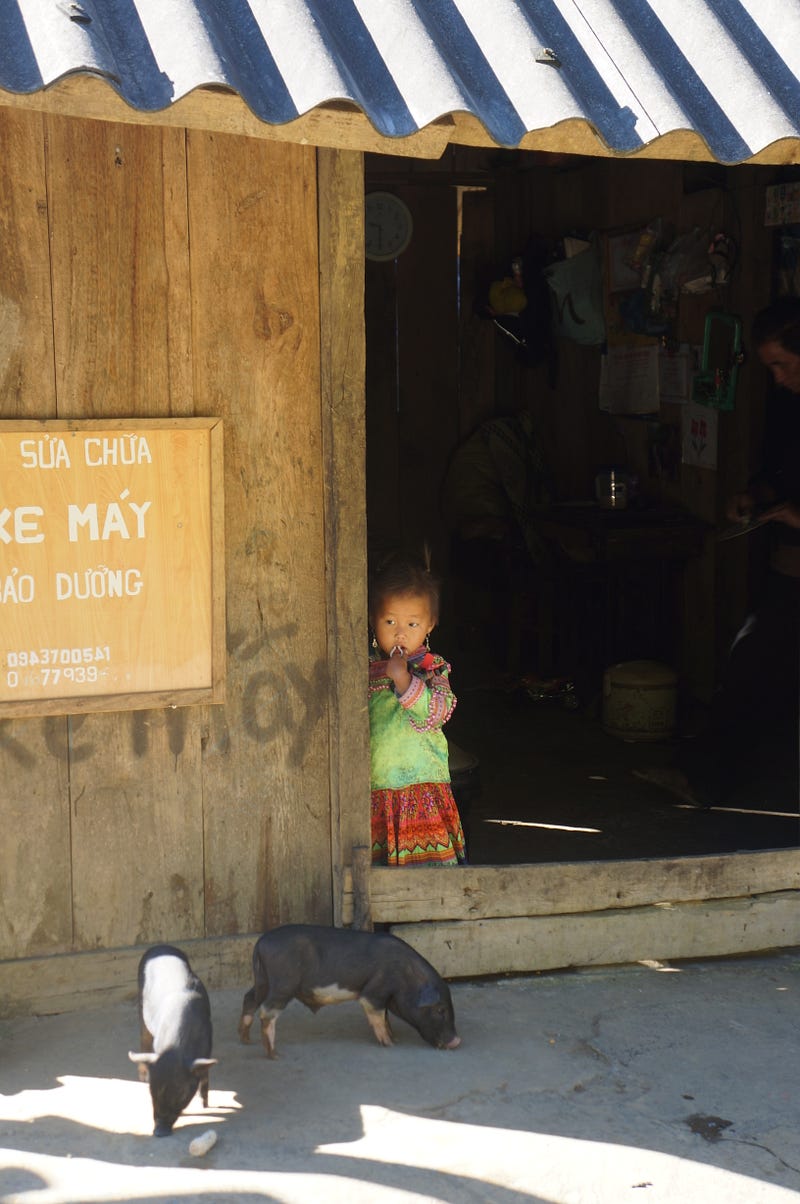
A little girl, around five years old, caught my eye. Her shy smile tugged at my emotions. She smiled shyly from a nearby doorway and asked in rehearsed words, “Hello, what your name?”
I felt sad for her — would she break free from this place, pursuing education and opportunities beyond the mountains, or would her destiny be confined to selling trinkets to tourists like me, her voice echoing, “Buy from meeeeee!”