
Sanitizer tunnel is an effective corona-virus killer

Despite the abundance of effective sanitizing solutions, COVID-19 has proven to be incredibly resilient against all efforts to curb its spread. There are many reasons for this, from its asymptomatic occurrence in some persons to the difficulty of maintaining safe behaviors on a large scale. In this light, a disinfection tunnel for COVID-19 may be a viable solution as efficient sanitizing equipment as well as a part of a larger public health strategy.
Disinfection Tunnel Working Principle
A sanitation tunnel (also referred to as a decontamination passage) is a comprehensive disinfection solution that incorporates several components with the goal of curbing the spread of virus infections. The main one is the containment with nozzles that spread the disinfectant on the objects inside it. To maximize the coverage and avoid leaving traces on objects’ surfaces, the disinfectant is dispersed into a fine mist referred to as dry fog.
In addition to atomized liquids, the disinfection can be performed using UV lamps and ozone generators. On top of that, some tunnel models have auxiliary means of decontamination such as hand sanitizers. Finally, advanced models can be equipped with mask recognition sensors and other detectors that ensure compliance with prevention measures. In most cases, the tunnel’s operation will be automated and would require little intervention from human operators aside from maintenance.
Disinfection Solutions: An Overview
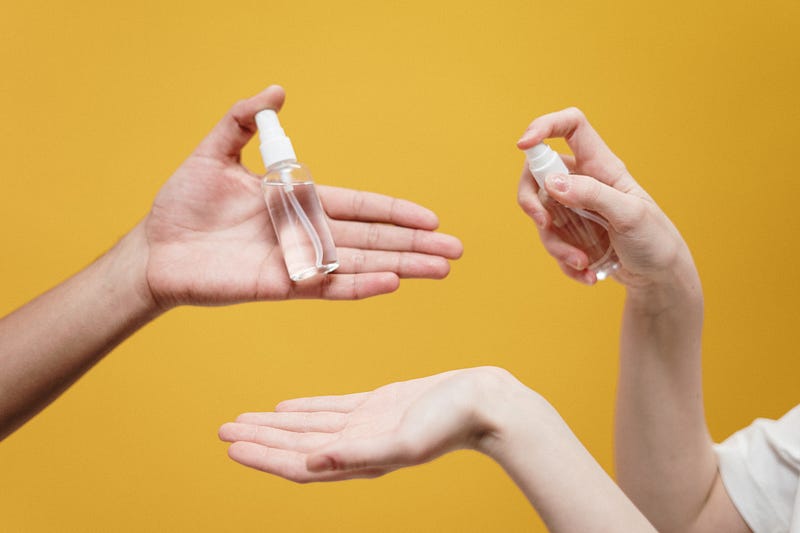
To establish the effectiveness of disinfection tunnels, the most appropriate place to start is the efficacy of their main line of defense — the disinfectant. Currently, when deciding on the solution to use in their product, disinfection tunnel for COVID 19 manufacturer can choose from several options:
- Hypochlorous acid
- Ethanol/isopropyl alcohol
- Hydrogen peroxide
- Sodium hypochlorite
All of these substances are used for disinfection and have a certain degree of efficiency against microorganisms. Most of them are also proven to be effective against COVID-19. However, not all of them are suitable for fogging. Some are known irritants and would lead to undesirable consequences when used on humans. Others, like sodium hypochlorite, actually pose a serious health hazard to humans, which is why they are currently discouraged for use in sanitation tunnels.
In addition, some of the solutions can actually pose a risk to the surfaces of objects due to their corrosive properties. While it does not affect their effectiveness against viruses, it does render them unsuitable for application in most of the industries. Fortunately, some of the solutions, like hypochlorous acid, are both safe for human applications and do not leave any trace on surfaces, making them both effective and acceptable for a broad variety of use cases.
Decontamination Tunnel: COVID-19 Effectiveness
It is important to note that disinfection tunnel effectiveness as a prevention measure is not limited to its ability to kill viruses. According to the CDC, stopping the spread of COVID-19 involves four aspects:
- Cleaning and disinfection
- Hand washing
- Respiratory etiquette
- Social distancing
Only the first two of these measures involve the sanitizing agent. However, a disinfection tunnel for COVID-19 can also contribute to the development of safe behaviors, thus promoting the third aspect.
As already mentioned, many models are outfitted with mask detection sensors. When a person approaches the unit, it scans the face for the presence of PPE. If no mask is detected, the tunnel issues a warning (either an alarm for the staff or a reminder for the person in question). This is particularly important because while the disinfection kills all the viruses on the surface, it does not eradicate their presence in sick individuals, which still pose a health risk to others. In this light, the tunnel is not only a virus killer but also a prevention measure.
The same applies to temperature measurement. COVID-19 may develop unnoticed in as much as one in five cases, which may pose a considerable threat to public health. Timely detection of such cases might be a decisive factor in stopping the spread of the pandemic, especially in public spaces and crowded events. From this perspective, having an automated solution integrated with the disinfection system that also controls access to the premises has clear benefits for long-term safety.

Sanitizer Tunnel: COVID-19 Areas of Application
The majority of disinfection tunnel information is focused on human-related applications, which is understandable — after all, COVID-19 is a respiratory disease. Nevertheless, businesses, especially those dealing with goods, also need to decontaminate large volumes of physical objects. The same applies to organizations that handle large volumes of equipment or personal belongings, such as:
- Airports
- Hospitals
- Schools
- Hotels
- Warehouses
- Delivery services
This task might be challenging for two reasons. First, high traffic of goods creates considerable time restrictions, forcing them to seek efficient methods with a high throughput or face a drop in performance. Second, many objects will be difficult to sanitize, either due to their shape, size, or texture.
A disinfection tunnel offers a solution to both of the problems. On the one hand, the fogging allows to evenly spread the sanitation solution on the object’s surface. In fact, the low sedimentation speed ensures the penetration into the smallest crevices for thorough disinfection. On the other hand, its continuous operation allows treating large volumes of goods in a short time span, making it suitable for use cases where time is of concern. In other words, it is both effective and efficient at COVID-19 prevention.
Wrapping Up
Disinfection tunnels combine several sanitation solutions to maximize performance, ranging from atomized disinfectants to UV lamps to hand washers. On top of that, they use several preventive measures like mask detection and body temperature measurements to ensure comprehensive protection in public settings. At the same time, they can be used to treat large volumes of goods in a short time span. In other words, they are effective at eliminating infection from the surfaces and contribute to safe behaviors, making them a feasible solution for stopping the spread of the pandemic.