
Samuel Beckett Absurd Existentialist or Portrayer of Humanities Unsaid Desires?
Bearing Witness to one’s own Existence
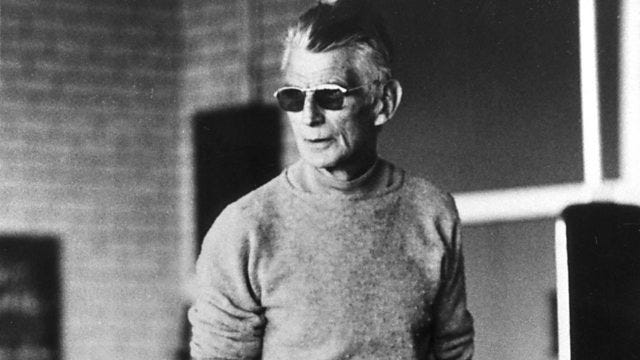
Samuel Beckett’s non-verbal tendencies are fundamental to his creative vision. In a period where man sought to find new methods of understanding the world, Beckett’s poetically structured drama served as a metaphor concerning the nature of human existence.
In order to begin to understand Beckett’s work, we need to look at the context that surrounded his writing. Beckett emerged into a world torn apart by War, where man wondered at the meaning of life after the horrors and atrocities of Auschwitz, Nagasaki and Hiroshima.
The Existentialist artist believed that art was not about teaching, but about bearing witness to one’s own existence, art’s purpose was to merely be; therefore existence was purely to exist. (Carlson, 1993, 415)
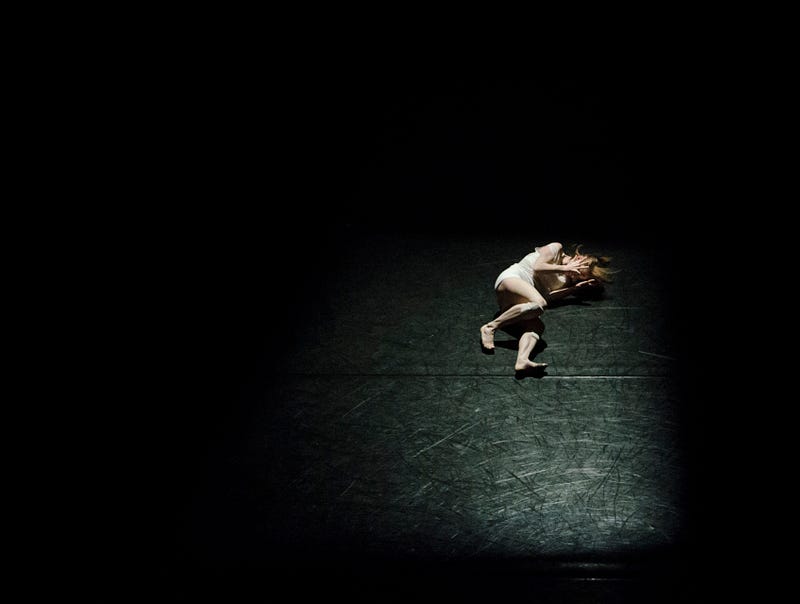
Beckett belonged to a group of dramatists given the name ‘Theatre of the Absurd’ a smart literary slogan that a number of writers including Martin Esslin, academic scholar and professor of drama, used to classify the new style of drama. They believed that the world was disordered and beyond logical rationalisation and therefore, man had to do something significant to make his life have meaning. Beckett’s plays focused on death’s domination of one’s thoughts and how man is controlled by unsaid desires. He used new techniques to portray this, such as static or repetitive motion, exposed action and often limited or recurring dialogue (Worthen, 2002, 533).
However, many would argue that Beckett’s work is far more complex and this categorisation fails to recognise the inimitably individual ‘voice’ that Beckett brings to the world of drama. By its very nature the term ‘absurd’ calls to mind an inconsistency with reason, common sense or logic. This view can be deemed as superficial and instead requires a deeper understanding of Beckett’s internal monologue.
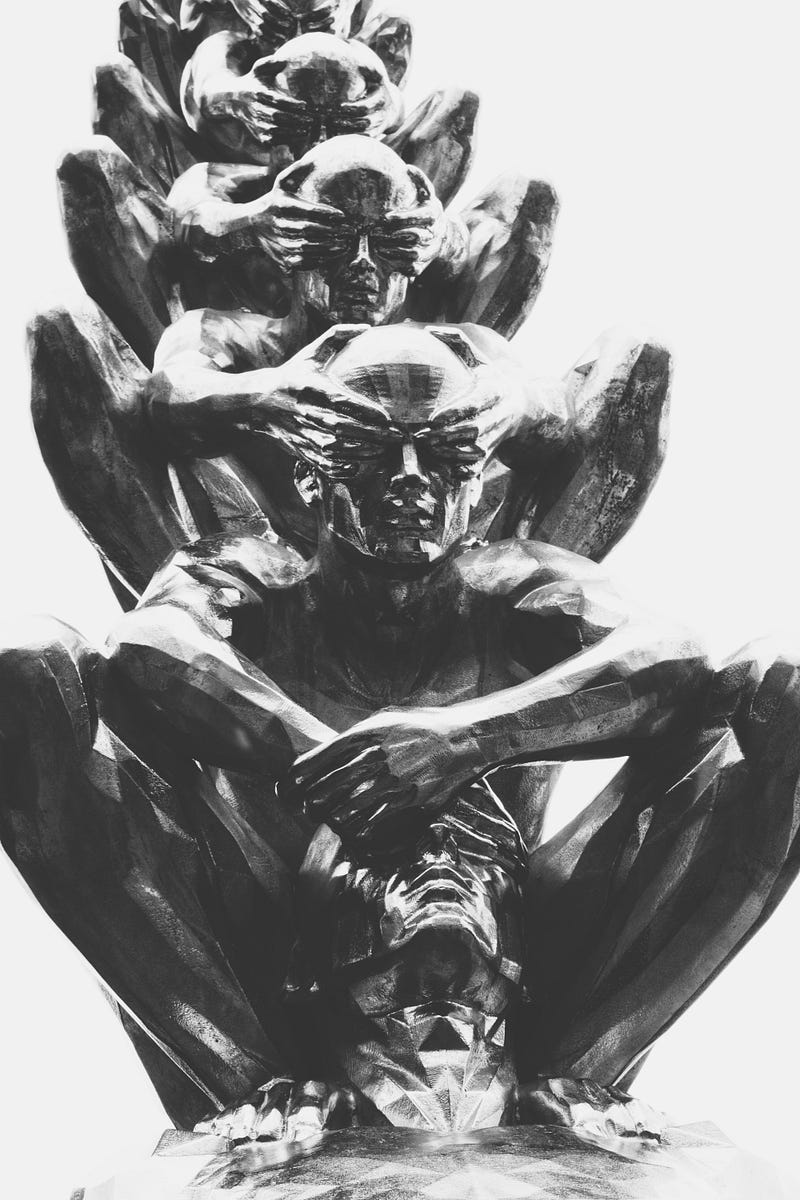
This said it would take a highly skilled and well read audience to receive Beckett’s work openly and allow the internal voice to speak to them. It is for this reason that his work tends to become a staged academic performance where his ‘scholarly puzzles’ can be studied and unravelled and through this very study, his unarticulated words and the meaning behind them become evident. (Lukehart, 2008, [online])
Beckett’s mission is to guide us through the spheres of human consciousness toward a space that shelters the night. Where each Voice, in a spectrum of solitudes, becomes an echo of our own. In this time and place, each is his own representative of all humankind. Words find their true resonance, and the confusion of opposites find harmony. Beckett’s task is simply to turn us away, briefly, from all the contrived voices, full of heat and fury, that speak the fundamental babble of denial and distraction. From there he delivers us Destiny.
Lukehart, 2008, online
So to answer is Samuel Beckett an absurd existentialist or portrayer of humanities unsaid desires? Really depends on how you choose to ‘read’ his plays and probably your own internal monologue. What is true is, he has left experts in the field on an endless search for the meaning within his plays, if indeed this was ever even his intention.
Article written by Drama Llama | Educator | Writer | Academic | Consultant