
Sampling Honey in Lima, Peru
The colors and flavors of Peruvian honey
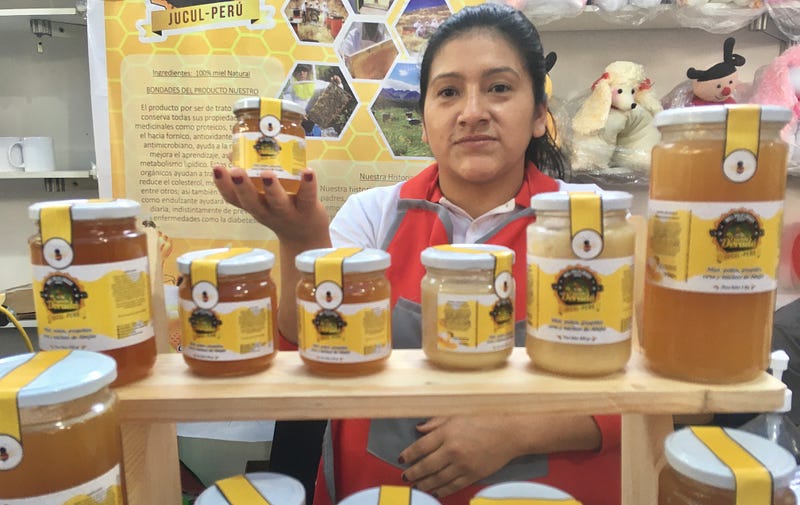
After a few months in Europe, my partner and I have globe-trotted back to our home base in Lima, Peru.
We live near Parque Kennedy. The park is a central landmark in Miraflores, the city’s most touristic district. If you’ve visited Peru, there’s a good chance you’ve walked through Parque Kennedy.

Nearly every weekend, the park hosts an expo for goods and crafts. Many of the vendors at these events travel a long way for the chance to sell their goods to Lima’s residents and tourists. I buy all of my gifts for friends and family from these markets.
This weekend, there was a honey expo.
Since I first came to Peru, I’ve been impressed by the variety of honey that’s produced here, as well as the importance of honey as a locally-produced good in small communities. But this was my first time seeing a large group of honey vendors presenting their goods in one place.
Purchasing raw honey from small-scale producers reveals what a diverse product honey can be.
What’s known as “regular honey” is a pasteurized product. Unlike milk pasteurization, this process isn’t necessary for food safety purposes with honey. Rather, the purpose of honey pasteurization is primarily to kill naturally occurring yeast. Killing the yeast helps to create a smoother, more uniform product that won’t quickly ferment or crystallize.
Pasteurization also affects flavor. As a result, from one manufacturer to the next, regular honey tends to look and taste similar.
Raw honey presents a much greater variety.
Check out these colors:
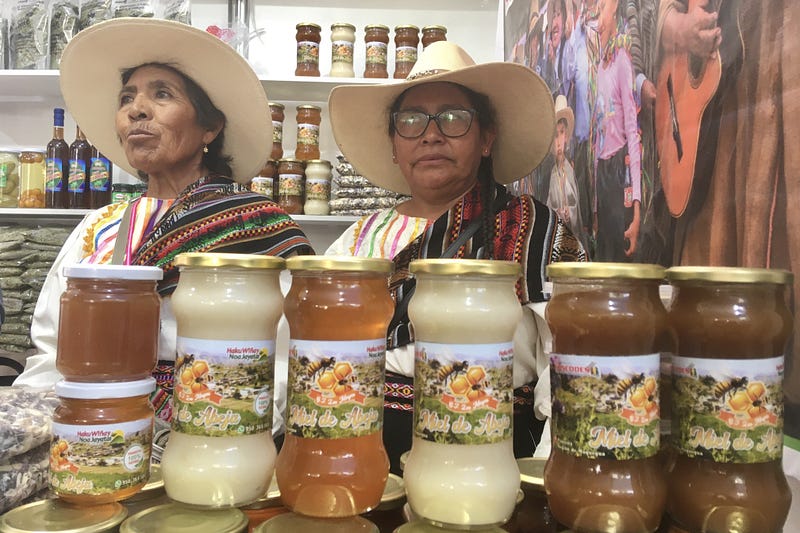
Different nectar sources make different types of honey. Thus, a honey market is like a showcase for a variety of regions, ecosystems, and flowers.
Some of the honey we saw (and sampled) was white and stiff like coconut oil, others were thin and yellow, smooth and amber, or thick and dark.
The range of flavors is just as surprising. I’m the type to roll my eyes when I hear someone talking about chocolate notes in their coffee or hints of citrus in their beer. But the flavors in these honey products aren’t subtle, they’re distinct. Some have a tangy orange flavor, some are super sweet. Others are rich and caramel-like.
The vendors were all eager to tell us about the different local flowers that their bees use to create their special blend.
This wasn’t our first time buying multiple honey jars in one day. I never thought I’d be collecting honey, but here we are:
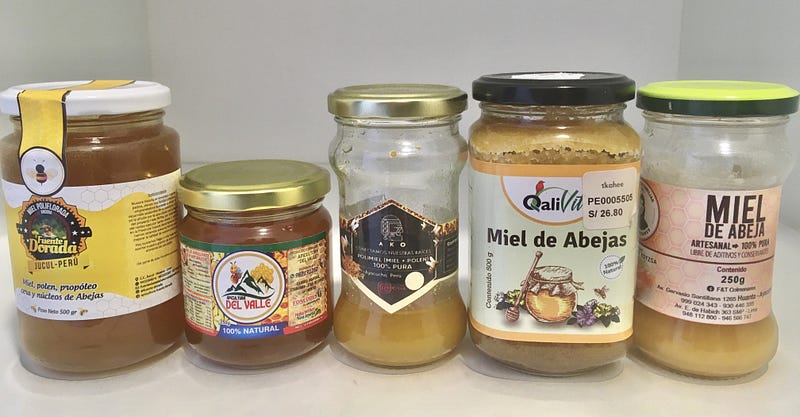
Even though we now have more honey than we need, we like to support the vendors who come from all over the country to share something special from their communities.
Writing this, I was reminded of this sweet read by Claire Elizabeth Levesque:


