
Sam Bankman-Fried gets 25 years: Where will he serve his sentence?
The Gravity of Justice: Dissecting the Sam Bankman-Fried Sentencing
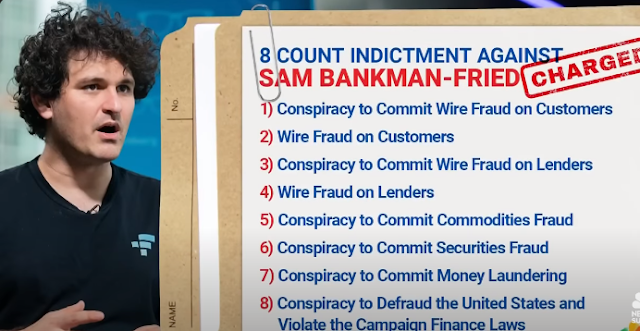
In a courtroom far removed from the labyrinths of cryptocurrency algorithms and the enigmatic movements of digital wealth, Sam Bankman-Fried, the once-celebrated pioneer of the crypto exchange FTX, encounters the stark reality of his actions. This comes not as an abstract loss on a computer screen but as a tangible forfeiture of his next 25 years to the federal prison system.
The Collapse of a Crypto Empire
Bankman-Fried’s precipitous fall from grace wasn’t simply the tale of a business gone bankrupt; it was a judicial declaration of fraudulent intent. On two counts of wire fraud and five counts of conspiracy, he stood guilty. The parallels drawn with Enron speak volumes, suggesting not just corporate collapse but a systemic deceit that shook investor confidence to its core.
When FTX and its sister hedge fund, Alameda Research, imploded under the weight of large-scale withdrawals, it wasn’t merely a liquidity issue; billions of dollars of customer assets were squandered, propelling Bankman-Fried’s indictment. In the backdrop of such financial cataclysm, public scrutiny demanded a just and proportionate response.
Full Article 👇
The Sentencing: Beyond the Courtroom
U.S. District Judge Lewis Kaplan’s sentencing reflects more than an end to a court proceeding; it symbolizes the broader accountability demanded in the burgeoning field of cryptocurrency. His injunction that Bankman-Fried be housed in a medium security facility parses out the critical balance between punishment and protection.
The Duality of Justice
In recommending such measures, Judge Kaplan acknowledges the non-violent nature of Bankman-Fried’s crime but also elevates the importance of the defendant’s personal safety. The notoriety Bankman-Fried has gained, coupled with his autism and accompanying social challenges, renders him particularly susceptible to threats within the more severe maximum-security terrain.
Proximity and Penal Policy
Furthermore, Judge Kaplan’s suggestion that the Bureau of Prisons (BOP) situate Bankman-Fried as close to San Francisco as practical underscores a penal philosophy where proximity to family has clout in the conversation on incarceration policies. For the defendant’s parents, both respected law professors, the geographical consideration translates into a semblance of solace amid the tribulation.
A Glimpse Into the Bureau of Prisons’ Conundrums
The BOP’s silent contemplation over Bankman-Fried’s penitentiary future is not without its complexities. This conundrum is not centered solely around the defendant, but sprawls across considerations such as security needs, medical and programming requirements, and safety measures warranting undivided attention.
Deciphering the Designation Possibilities
With Kaplan’s counsel, two likely contenders emerge in the federal prison system’s canvas in Northern California — FCI Herlong and FCI Mendota. As medium security institutions with accompanying satellite camps for minimum-security, they operate as potential quarters for Bankman-Fried to abide by his sentence while remaining under the aegis of federal jurisdiction.
The Public Forum and Judicial Transparency
In an era punctuated by increasing calls for transparency, the public forum may find solace in the candor of Judge Kaplan’s directives and BOP’s statements. Yet, understandably, justice cloaks certain specifics in confidentiality, with re-designation and transfers preserved as institutional prerogatives, shaped by unfolding assessments.
The Inescapable Verdict: Sentencing as a Social Commentary
Bankman-Fried’s sentencing extends beyond the individual; it places the financial guardianship and ethical conduct within the crypto sphere under the juridical microscope.
Ruminations on Regulatory Lacunae
Interspersed within this narrative is a broader discourse on potential echelons of monitoring inadequacies that allowed such fiscal transgressions to mushroom. Patrick Hillman’s remark that Bankman-Fried’s fraudulent escapades should have been unearthed sooner amplifies this rumination, challenging both industry and oversight agencies to intrepidly enhance detection systems.
A Mosaic of Loss and Learning
The sentence thus weaves through both loss and learning — the hardship meted out to those defrauded, subjugated to the sudden evaporation of their digital holdings, and the knowledge that henceforth, the crypto domain might tread with greater caution, cognizant of the stern gaze of justice.
The Road Ahead: Foresight in Fintech Fortitude
The essence of this high-profile case transcends its headline gravitas, seeding a narrative on the future. As the landscape of finance evolves with each blockchain innovation and each cryptocurrency advent, so does the imperative of legal frameworks adept at safeguarding investor interests and fostering a climate of resilient transparency.
Prospects of Change in the Crypto Climate
The Bankman-Fried conviction nudges not only toward introspection within the crypto community but also toward broader regulatory evolution. It dovetails with an emergent philosophy where finance and technology must be anchored by trust, a beacon that guides each transaction and trade.
Unveiling the Verdict: An Opinion on Justice Served
The sentencing of Sam Bankman-Fried, while closing a chapter on his adjudicative journey, concurrently opens a volume on the ongoing scrutiny of financial ethics in the digital age. It’s a poignant reminder — whether in code or in currency, integrity remains the cornerstone of commerce and the true currency of trust.
As a figure whose trajectory has careened from the zeniths of Silicon Valley to the nadirs of a numbered cell, Bankman-Fried embodies the multifaceted discourse on corporate responsibility, public accountability, and the integrity that must underpin the digital financial renaissance. Justice, in its measured deliberation, has spoken — casting a long shadow on the Silicon promenades and Wall Street avenues alike.
Originally published at https://cryptojackass.blogspot.com on March 29, 2024.


