
Saltwater & Steel
How China has dominated Global Shipbuilding — and why that might be about to change…
As the world’s attention is captivated by the potential threat posed by China’s technological and digital advancements, particularly in the fields of AI, quantum computing, and synthetic biology, there is another rapidly progressing process that deserves equal consideration. A process has the potential to create formidable hard power assets that extend far beyond mere threats.
While the West grapples with strategies to delay China’s ascension as a global digital superpower, China is quietly and steadily bolstering its hard-asset-creating capabilities, most notably in shipbuilding.
This sector, often eclipsed in theoretical discussions focussing on microprocessors and future-tech, represents a crucial pillar of China’s economic and strategic blueprint.
The World’s Drydock
According to 2022 data recently released by the Chinese Ministry of Industry and Information Technology (MIIT), China maintained its position as the leading global shipbuilder, achieving significant progress in the production of high-end ship models. The country was the dominant player in three primary indicators, producing 47.3 percent of the world’s shipbuilding output, procuring 55.2 percent of new orders, and accounting for 49 percent of held orders.
This marked the 13th consecutive year that Chinese ship manufacturers held the largest share of the global market, with six Chinese companies ranking among the world’s top 10 shipbuilding enterprises.
According to early data from MIIT, the first quarter of 2023 shows a similar trend. From January to June, there was a significant increase in volume, reaching over 21.13 million tons (a 14.2% YoY increase). The volume of orders on hand by the end of June also saw a substantial year-on-year growth of 20.5%, totalling 123.77 million tons. Notably, 92.8% of these orders were for export. In a China facing slowdowns on multiple fronts, and a collapse in the Renminbi — Shipbuilders represent an area of stellar growth.
Over the last few decades, as China cemented its position as the primary global shipbuilder, three major shipbuilding clusters initially emerged, in the Yangtze River Delta, Bohai Rim, and Pearl River Delta regions. Chinese shipbuilders graduated from large bulk to producing some of the worlds most technologically complex vessels, including the LNG (liquefied natural gas) tankers — which require complex tanking systems that maintain the gas at a continuous -160 degrees Celsius.
This is of interest as LNG tankers are increasingly gaining recognition as pivotal assets vital to the global transition towards greener energy.
Given that natural gas, when compared to coal or oil, produces significantly lower greenhouse gas emissions, making it a more environmentally friendly choice for electricity generation and the intermittent nature of renewable power sources, such as solar and wind — there is an absolute need for stable and flexible backup energy resources to ensure uninterrupted power supply, which is where natural gas come in. It can quickly ramp up to full generation capacity, providing a dependable backup for times when renewable sources are unable to meet demand.
LNG tankers are expected to play an ever more vital role in transporting this gas across vast distances, connecting gas-rich regions with areas that need it the most, and even in a less globalised world, the need to move energy is unlikely to decline.
Thus, the technological advancements achieved by China’s shipbuilding industry, particularly in the construction of advanced LNG tankers, are of considerable strategic importance in the green energy transition and thus China’s dominance in their construction could potentially become a bottleneck concern.
However, China’s shipbuilding expertise now extends well beyond LNG tankers to include everything from super-tankers (the construction of which showcases the technical sophistication and efficiency of Chinese shipyards), to aquaculture vessels to research vessels.
The PLAN
The People’s Liberation Army Navy (PLAN) has arguably been the greatest beneficiary of China’s new shipbuilding prowess. This dramatic growth in capacity and technical sophistication has facilitated the rapid modernization and expansion of PLAN. From advanced destroyers and frigates to state-of-the-art nuclear submarines and aircraft carriers, Chinese yards are churning out warships at an alarming rate. In so doing, significantly enhancing PLAN’s operational capabilities.
In terms of sheer size, China has now surpassed the United States, boasting approximately 340 ships as part of the PLAN, a figure that supersedes the roughly 300 vessels present in the US Navy.
Of course, size doesn’t tell the whole story. Despite China’s numerical superiority, many experts note that the US still maintains a decisive advantage in key metrics such as tonnage and firepower. Both factors that are critical in determining the true strength of a navy, reflecting both the offensive and defensive capabilities of its fleet.
When it comes to tonnage — arguably the most important metric in naval strength — the United States still holds a significant edge. the US’ warships are generally much bigger and more capable than their Chinese comparators. A recent assessment from the Centre for International Maritime Security estimated that the US Navy has more than twice the tonnage of the Chinese Navy, with the Chinese Navy’s total tonnage standing at under two million tons, while the US Navy tips the scales at over 4.5 million tons.
When it comes to sheer firepower, the United States also surpasses China. According to Forbes, US ships carry more than double the number of missiles compared to China’s ships. Specifically, the US fleet possesses an estimated 10,500 ship- or submarine-launched offensive missiles, while the People’s Liberation Army Navy (PLAN) has approximately 4,168 offensive missiles. Although, due to China’s aggressive investment in modernizing its fleet and enhancing its shipbuilding capacity these comparative advantages are unlikely to hold in perpetuity.
China is rapidly closing the gap in terms of tonnage, with an accelerated shipbuilding program which will certainly increase its total tonnage in the coming years. In terms of firepower, China is also aggressively investing in missile technology, with a focus on developing longer-range and more advanced missile systems that could potentially rival the US’s missile capacity.
No longer a hidden Dragon
Displays of Chinese naval power are becoming more obvious. In April 2023 the Chinese aircraft carrier battle group, led by the Shandong, sailed through the Bashi Channel to a point approximately 400 kilometres east of Taiwan. There it conducted approximately eighty J-15 fighter sorties simulating air strikes on the island.
The Shandong, the second aircraft carrier in China’s fleet and the first built entirely domestically, is a potent symbol of China’s growing maritime prowess, however it is part of a pattern — indeed by 2024, China expects that its third aircraft carrier, the Fujian will enter service. This carrier will be the first in China’s fleet to be equipped with catapults for launching aircraft — an advancement that will both increase strike range and allow for the carriage of heavier ordnance loads.
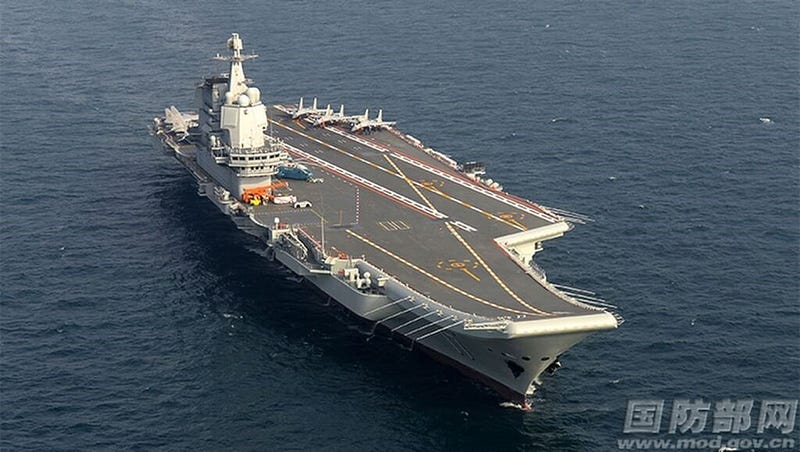
Given the size and impressive lines of the Shandong, observers could be perhaps forgiven for missing the Chaganhu, a Type 901 at-sea-replenishment ship, which was present alongside the carrier during it’s forays around Taiwan. However, that ship reveals perhaps more about China’s intent than even the warship did.
Large and impressive vessels such as the Shandong, like all conventionally-powered naval vessels, are constrained by the fuel in their bunkers and the munitions in their magazines. Thus is where the more subtle yet equally important progress that the PLAN has made in it’s support craft fleet has been pivotal.
Underway replenishment ships, are absolutely integral to maintaining combat operations for extended periods. Designed to transfer fuel, munitions, and stores at sea, these support ships are crucial for operations far from friendly naval bases, especially during combat situations. China’s development of such an immense fleet of them is a potent early indicator of it’s deadly serious intent.
Regional Concerns
This surge in naval power has provided China with an increasingly potent tool to assert its geopolitical interests, particularly in the disputed waters of the South China Sea. The strategic significance cannot be understated, both to the balance of naval power in the region and potentially beyond.
Regional concerns have been acutely heightened by the recent release of a new “standard” map of the South China Sea by China’s Ministry of Natural Resources, evoking strong reactions from its neighbours.
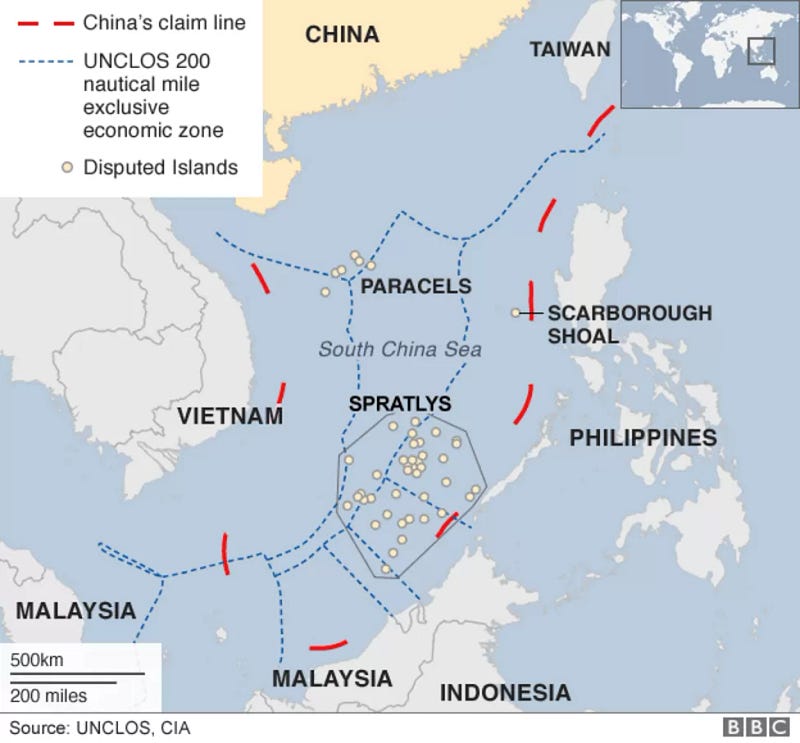
Unveiled on August 28, the map showcases a dashed line encompassing vast regions of the South China Sea, including a new dash east of Taiwan. This addendum has triggered inquiries regarding whether this signifies an alteration in China’s territorial claims. Inquiries that have been so far, unanswered.
China’s historic claims over the South China Sea follow a complex trajectory, marked by intermittent oversight and ineptitude. The first relevant territorial assertion by China was made through a map in February 1948, which included a “U-shaped line” encircling the South China Sea. This map was part of the ‘Atlas of Administrative Areas of the Republic of China’ and aimed to represent the Republic of China’s (ROC) claims to the islands in the South China Sea. The line was originally conceived during a meeting held within the ROC Ministry of the Interior on September 25, 1946, where a sketch map was agreed upon to define the scope of the islands to be included.
The complexity of this issue extends beyond the scope of this article, and whilst the demarcation outlining China’s claims in the South China Sea has not undergone substantial transformation since its inception in 1948, the fundamental basis of these claims seems just as unfathomable today as they were in the immediate post-war period.
Military Shipyards
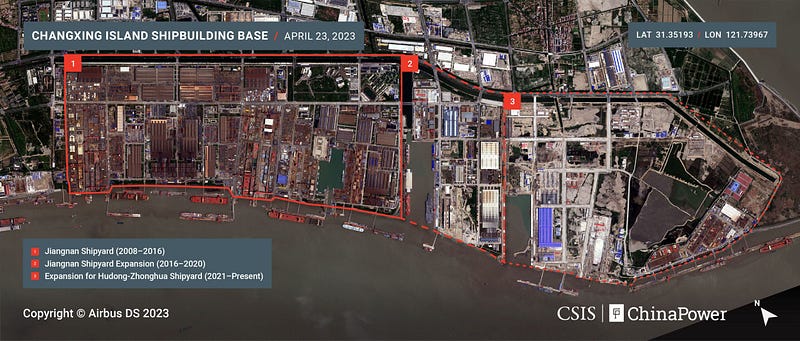
For over a decade, Changxing Island has been one of the keystones of China’s shipbuilding prowess, housing the Jiangnan Shipyard, a cornerstone of the nation’s naval advancement.
This shipyard has been the birthplace to some of PLAN’s most sophisticated warships, including China’s third aircraft carrier and a significant portion of its fleet of Type 055 and Type 052 destroyers.
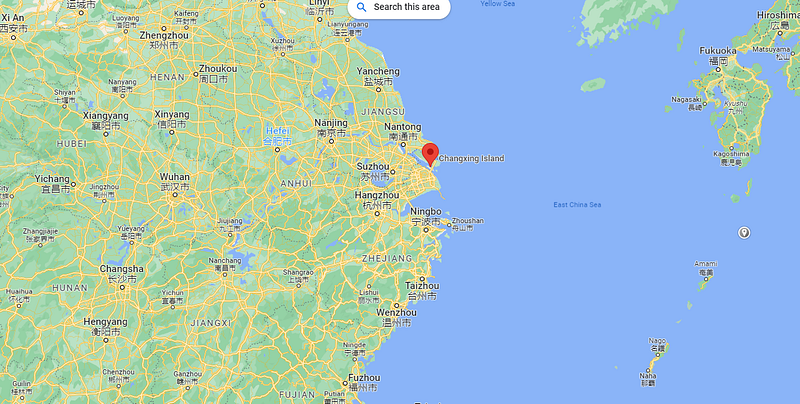
Changxing Island’s transformation into a shipbuilding base started almost twenty years ago. In 2005, an ambitious project began to relocate Jiangnan Shipyard from its current location in central Shanghai to a new site at the southern end of Changxing Island. The completion of the move was announced in 2008 by the state-owned China State Shipbuilding Corporation (CSSC), which owns Jiangnan Shipyard, and it was celebrated as “phase one” of the CSSC Changxing Island Shipbuilding Base. The scale of Jiangnan’s new facilities was immense, covering an area of 5.6 square kilometers and including approximately 1.1 million square meters of ship construction facilities. The project reportedly cost RMB 16 billion, equivalent to about $2.3 billion in 2008.
However, this was just the beginning for the reimagined Jiangnan Shipyard. From 2016 to 2020, the shipyard underwent nearly one-third expansion. The new section featured a large man-made basin, new fabrication halls, and a fabrication and assembly area where initial stages of the construction of the third aircraft carrier took place.
Phase two of CSSC’s transformation of Changxing Island is currently in progress following it’s ground-breaking ceremony on January 4th 2021. This phase will engender the relocation of another critical shipyard, Hudong-Zhonghua, from central Shanghai to the vicinity directly adjacent to Jiangnan.
Hudong-Zhonghua is renowned for producing several of the PLAN’s largest surface combatants, which include three Type 075 amphibious assault vessels and eight Type 071 amphibious transport dock ships. In addition, this shipyard is responsible for the construction of numerous Type 054 frigates for both the PLAN and the Pakistan navy.
The 2nd phase’s execution is planned in two stages. The first stage spans approximately 2.1 square km and includes the construction of a new dry dock dedicated to assembling large vessels, as well as a novel basin where vessels will be moored and outfitted. The subsequent step is anticipated to introduce more fabrication and assembly facilities to the shipyard, further enhancing its production capabilities.
Recent reports shed light on the accelerated pace of construction at the new dry dock, with workers laying the foundation in October 2022. Satellite imagery obtained on April 23, 2023 by CSIS’s ChinaPower Institute, illustrates the substantial progress made since then. The new dry dock, with its clear outlines, measures roughly 650 meters in length and 94 meters in width. This measurement slightly surpasses the area of the largest dry dock in Jiangnan Shipyard’s main area.
Striking advancements have also been made on dredging the new basin. Satellite images from January depict the basin largely filled with earth. However, by April, the basin was almost completely inundated with water. This new basin, measuring approximately 760 meters by 280 meters, is about three-quarters the size of the expansive main basin added to Jiangnan in previous years, which spans 930 meters by 300 meters.
Upon completion, the new facilities are expected to incorporate cutting-edge technologies, including 5G network connectivity, big data management, and robotic welding. The overarching objective is to transform the relocated Hudong-Zhonghua into a “digital shipbuilding enterprise,” showcasing capabilities in automated manufacturing and intelligent design. This technological integration is anticipated to significantly enhance the productivity and efficiency of the shipyard, described by some as a new global industry benchmark.
The majority of major military shipbuilding is already occurring at this location. Jiangnan Shipyard, Hudong-Zhonghua and Dalian Shipbuilding Industry Company (DSIC) collectively form the backbone of China’s naval construction capabilities, producing warships, aircraft carriers, and submarines for the People’s Liberation Army Navy (PLAN).
If one was so inclined, iterative satellite imagery of the site can provide a stark visualization of the rapid development of China’s PLAN (*as well as better estimates of force projection capabilities). In fact, estimates of the time frame required by the PLAN for efforts such as a possible invasion of Taiwan are best calculated by comparative imaging techniques focussing on hard asset development like those on Changxing.
The continual expansion of these shipyards, particularly evidenced by the fast-paced development at Jiangnan, underscores China’s intent to maintain, and increase, its naval production capacity.
Reshoring vs. Friendshoring
In the ever-worsening and globally tense trade environment between the US and China, volatility and uncertainty is escalating. This precarious risk to corporate horizons is compelling many ship buyers to broaden their views and to begin scouting for alternative sources.
Some are considering shipbuilding industries in countries like South Korea, Japan, and even emerging players in Southeast Asia. These nations, with their technological prowess and competitive pricing, serve as viable alternatives to China.
Yet, amid the search for alternative shipbuilding solutions, many business and political leaders in the West are longing nostalgically for a return to the shipbuilders of old — such as those of Europe and Britain. They argue that revitalizing the shipbuilding sectors in these regions could serve a dual purpose: boosting domestic economies, while simultaneously diminishing dependence on Chinese shipbuilding expertise. This sentiment is not without foundation, as European and British shipbuilders boast a rich maritime heritage underpinned by invaluable technical know-how and innovative design capabilities. However, the question remains whether these regions can effectively compete with the cost effectiveness and scale of production offered by their Asian counterparts.
Indeed, the challenge of regenerating the European shipbuilding industry is a daunting one. Germany, being one of the last bastions of this industry in the region, still maintains several shipyards. However, these operate on a significantly smaller scale compared to Chinese counterparts. In the United States, the shipbuilding industry has largely transitioned from construction to repair and maintenance work.
If even a portion of the shipbuilding orders currently directed to China were to be rerouted to European or American companies, a significant expansion of existing facilities would be required before these orders could even be attempted. Such an expansion would presents a significant logistical and financial challenge.
Shipyards would need to invest in new infrastructure, machinery, and workforce training to handle the increased demand. Furthermore, policies and regulations concerning environmental impact, labour laws, and industry standards would need to be reassessed and potentially reformed to facilitate this shift — something that is unlikely based on the green-shift many European economies are attempting to complete.
Furthermore, the competitive landscape of the global shipbuilding industry has shifted dramatically. It is no longer solely a question of capacity but also of cost-effectiveness and rapid technological innovation — areas where China, South Korea, and Japan currently lead.
Realistically, it appears that a short-term diversion of shipbuilding orders away from China to the West is a far-fetched proposition. The time, capital outlay, and regulatory shifts required to significantly expand Western shipbuilding capacities are simply too immense to be achieved in the short run. Consequently, if shipbuilding orders were to transition away from China in the near future, it is more plausible they would be redirected towards South Korea or Japan. These nations already possess large-scale, cost-effective shipbuilding industries, equipped with advanced technology and skilled labour. Thus, they are more readily prepared to absorb additional demand and offer a competitive alternative to China in the global shipbuilding sector.
This aligns with the accelerating ‘Friendshoring’ trend, with both South Korea and Japan being robust U.S. allies and stable democracies.
Looking ahead
China’s ever-increasing share of the global shipbuilding market represents a significant strategic concern for Western countries. Their dominance raises questions around control of critical supply chains, potential monopolistic behaviours, and the shaping of global trade routes and maritime norms, quite apart from their potential military threat.
Given the strategic and economic implications, it remains to be seen what, if any, coordinated response will be mustered by the West. While unilateral measures could potentially curb China’s influence, a more effective approach might involve a collective response that strengthens alternative centers of shipbuilding capacity, encourages technological innovation, and fosters greater cooperation among allies. Yet, the feasibility and effectiveness of such measures are subject to significant uncertainties and complexities. Therefore, while the strategic concerns posed by China’s shipbuilding dominance are clear, the path towards addressing these issues remains shrouded in complexity.