JAPANESE CUSTOMS AND TRADITIONS
Sakura — The Fleeting Beauty of Japan’s Cherry Blossoms
More than just pretty flowers
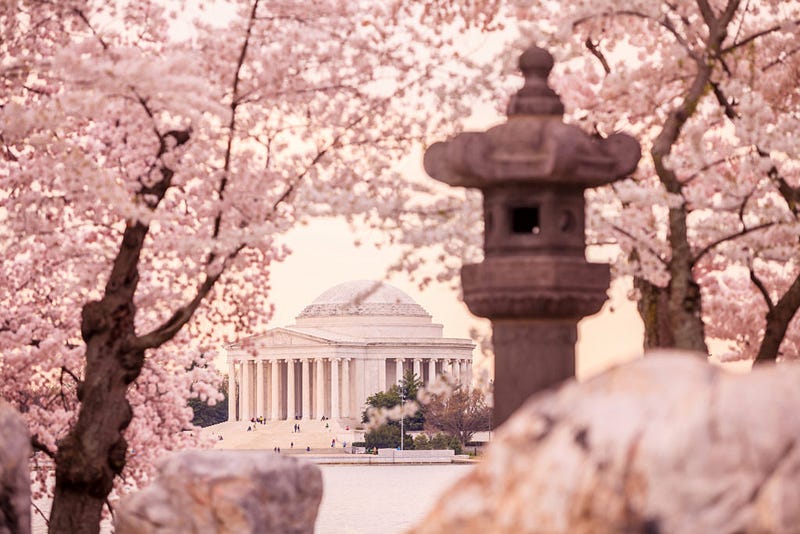
I grew up in northern Virginia. Each spring, my mother would wax poetic about the cherry blossoms that bloomed along the Potomac River and Tidal Basin in nearby Washington, DC. She would load me into the car, drive the short distance to the city, and slowly motor past the hundreds of trees. My mother obviously appreciated the blossoms more than I did.
They’re just flowers, I remember thinking.
Many years and thousands of miles from my childhood, I have come to appreciate that cherry blossoms are far more than just pretty flowers.
Sakura, Japanese Cherry Blossoms
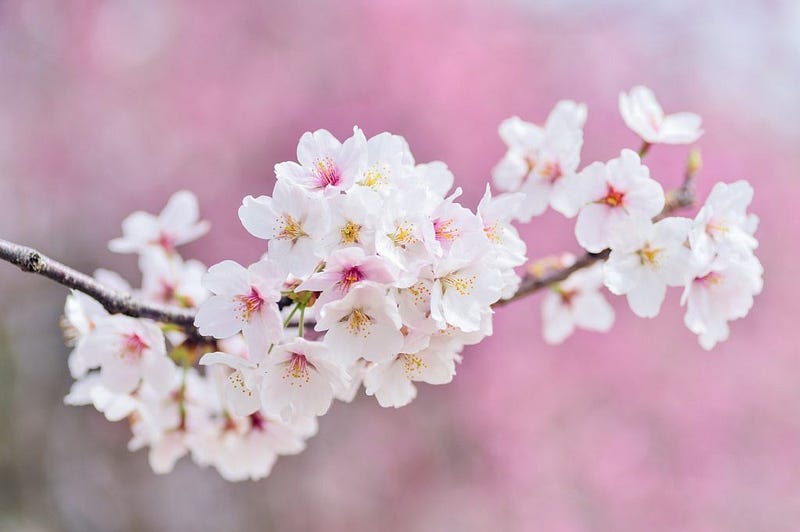
For the centuries that Japan used the lunar calendar, until 1872, Sakura bloomed just after the start of the new year, signifying new beginnings. Farmers considered the first blossoms a sign to ready their fields for another year of planting and harvesting.
Today in Japan, the arrival of sakura still marks beginnings. The blossoms appear at the end of one school year and the start of the next, and at the time when people start new jobs or transfer from one workplace to another.
Sakura season is a time for sadness at partings and a time to celebrate new beginnings.
The Impermanence of Life
For Japanese, sakura evoke feelings of both joy and pathos. Because the blossoms appear for so short a time and then gracefully fall like snow, they have long been a symbol of the impermanence of life.
Mono no aware is an expression, born over 1,000 years ago, that refers to a feeling of awe and appreciation for the transience of things, of life, and of love. The delicate sakura blossoms are all the more cherished because of the brief time we can see them each year.
Hanami — Cherry Blossom Viewing
Perhaps because of the deep awareness of the fleeting beauty of sakura, there has long been a tradition of hanami, or flower viewing. The aristocracy of the Heian Era (794–1185) would trek up to the mountains outside of Kyoto to reflect on the sublime splendor of the cherry blossoms and write poetry — the very first flower viewing parties.
When the great Heian poets wrote of “flowers,” they were inevitably referring to sakura. The Buddhist priest and poet, Saigyō, wrote in his anthology, 山家集, Sankashū:
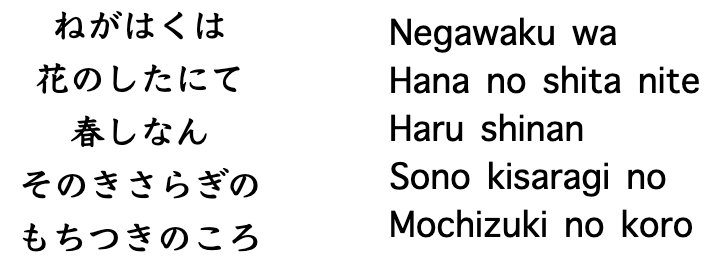
Oh, to die
beneath the blossoms
in spring
under a full moon
in the second month.
Saigyō’s prayer must have been heard, as he died on the 16th day of the second month, 1190, at a temple, under a full moon, and, one imagines, under gently falling cherry blossom petals.
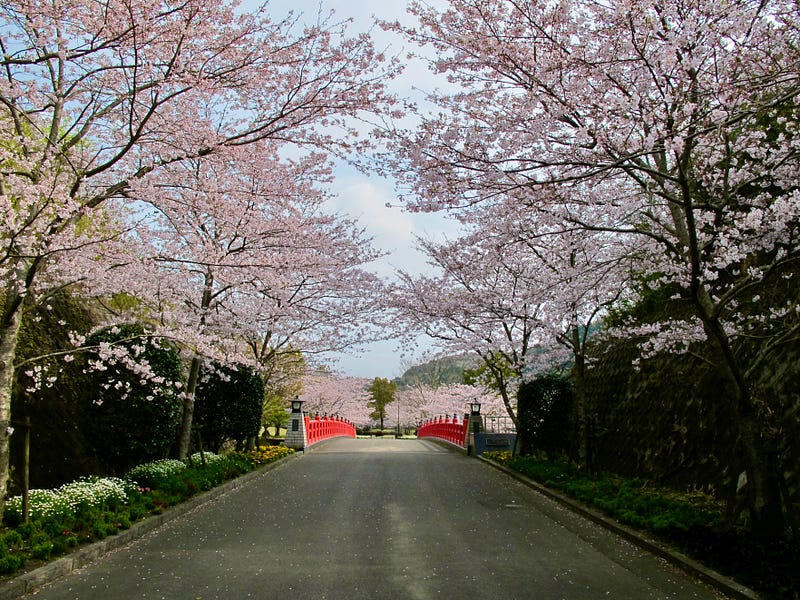
From the 17th century, not just aristocrats, but common people flocked to gaze upon the sakura blossoms, much like today.
When the sakura are blooming, friends, families, and coworkers make a point of spending time sitting under the trees, admiring the delicate blossoms, while eating, drinking, and making merry.
There can be competition for choice spots under the cherry blossoms in the big cities. It’s not unusual to see people staking out their territories by laying down blue tarps early in the morning to ensure they get the place they want for their evening party. But in the smaller cities, this is not such a problem.
One doesn’t necessarily need to seek out the “best place” for viewing sakura, as the trees line most rivers in cities and towns and they have pride of place in many parks. What you do need to find out is when the trees will blossom.
Sakura Forecast
So that everyone is aware of the best time to view sakura, weather forecasters in Japan provide maps with predictions on when the blossoms will open, and when the trees will be in full bloom.
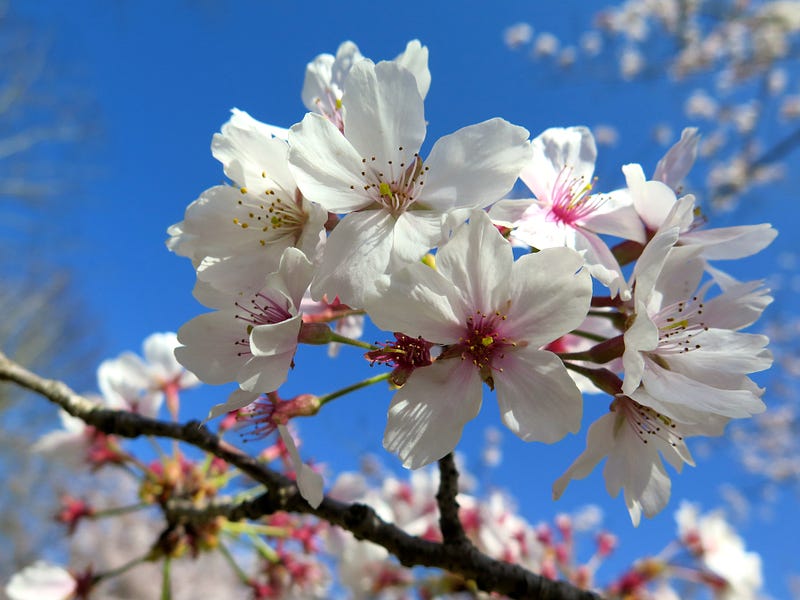
It is no surprise that the trees generally begin to bloom in the south, and the “sakura front” slowly moves to the north, ending in Hokkaido, where the trees can bloom as late as May.
Sakura and Music
Just as sakura have been a theme throughout Japanese poetry, so are they in song. The most famous traditional song about cherry blossoms is called, “Sakura, Sakura.” It is perhaps not what one would expect of a springtime song, but its haunting melody beautifully depicts the pathos felt when viewing the ephemeral and delicate blossoms.
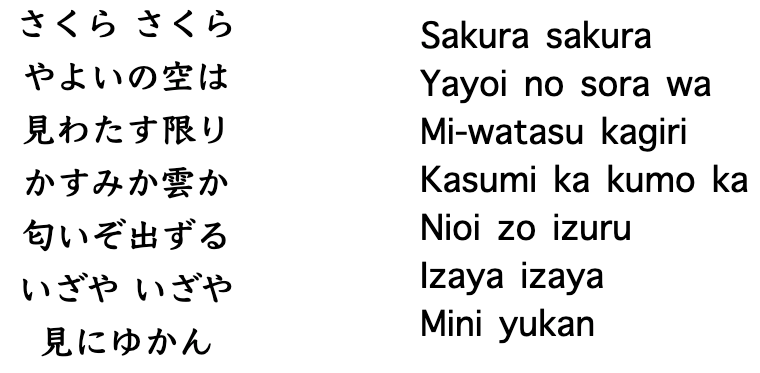
Cherry blossoms, cherry blossoms, In the spring sky As far as one can see. Are they mist, or are they clouds? Fragrance fills the air. Come now, come now, Let us go and see.
Japan has no national flower, but if it were to have one, it would surely be the cherry blossom.
Translation of Saigyō’s poem and “Sakura, Sakura” by me.
If you want to join Medium to get access to all content, I’d be glad if you used my referral link below. Doing so gives me a small commission at no extra cost to you. My sincere thanks to those who have!