
Sadness & Depression: Ain’t What They Used to Be
One Man’s Story
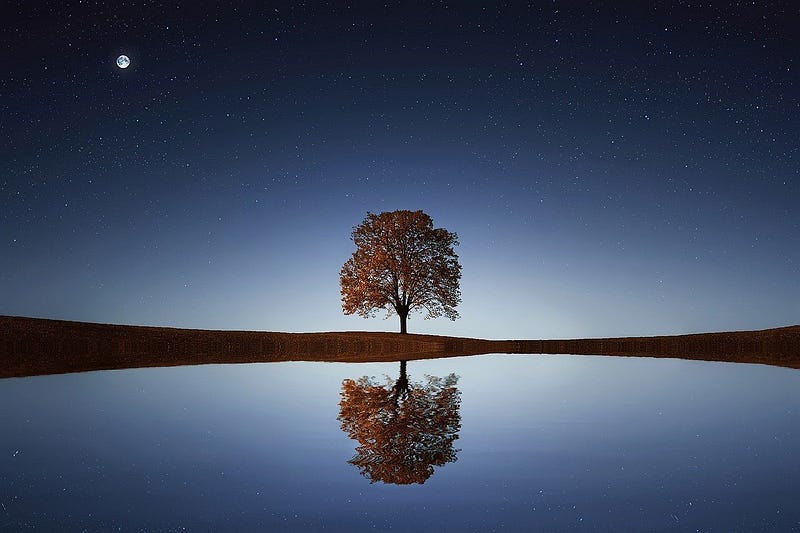
I am prone to sadness. That moment when the emotions of the world, distilled down to a few words or sounds, breach my defenses and leave me weak-kneed and near tears. And then just as swiftly, the mists move off and the world returns to its chaotic pace and I feel reassured.
My first memories of sadness were around the age of one. I was standing in my crib, eyeing my surrounding and wondering why every perspective was all wrong. I was too small. Nothing — not the walls, or furniture, or even the people, were where they were supposed to be. Everything had changed and I was upset that no one had told me.
And then it passed. My smile returned. As did the normal rhythms of the universe. The clanging of old truck suspensions, horns blaring and the neighbors whispering outside my window. I was home.
SADNESS
If one becomes an expert by experiencing something over and over again, then I am, by most measures, a Pro at this.
Sadness, I believe, follows the same principle that air conditioners rely on. They don’t introduce coldness into a hot room, they extract heat from the air within it, thus lowering the temperature and changing one’s perspective.
Sadness is not the introduction of any emotion into a person’s mind or heart, but the loss of something, whether real or imagined. The sudden departure of a person, ideal, treasured item or the notion that one would be loved forever.
One moment it’s there, a reminder of everything grand about life. And the next, gone. In mind or body or both.
We’ve all argued. Said words we regretted. Then watched helplessly as they changed the outlook of everything and everyone around us. The faces changed. Smiles vanished, replaced by scowls or furrowed lines of warning.
Anger often precedes sadness. Like a scythe cutting down everything in its way. It’s an emotion without foresight, without the ability to reflect or remember. Like a squall on the ocean, it’s there, often without warning; snarls and lashes out and then disappears into the distance. Somewhat embarrassed by the mess it just created.
There are many emotions that bring about sadness, I’ve dealt with them all.
DEALING vs. FEELING
When I entered my teen years I was without a father. He left one evening in the parking lot of a nearby restaurant. Fell to the ground, never to rise again. The solitary male in my life that looked like me, cared and seemed on the verge of actually getting to know me, left without warning or advice.
My first reaction was to be bathe in emotions. 37 different kinds washed over me again and again and somehow, I was supposed to make sense of all of it.
While I watched an endless stream of visitors and well-wishers come to see my mom, to weep along with her, I gently slipped out of orbit, never to return.
From that intense, frightening and in retrospect, liberating week, I became detached. From my world. From context and everything that was supposes to provide perspective to a child.
Over the years I went from feeling emotions in a somewhat organized fashion; like taxis coming and going at the airport, staying for a while and then leaving. To a continuous stream of feelings. Like standing at a solitary point in a river and sensing them slide past. Endlessly touching and splashing and insisting that they be felt.
That changes a person. As glorious as it might feel to be alive and sense the world around you, feelings are not designed to be with you 24/7.
As the years added on and the distance between me and reality grew further apart, I suffered what I now call emotional fatigue.
Every moment of anger and despair, fear and exhilaration experienced, not just by me, but by anyone within range was measured and recorded and stored away for future handling, because I was hopelessly backlogged in the processing department and was living life by moving as quickly through it as I could.
If I got through a day without being touched by life, really touched in any meaningful way, then the backlog of emotions wasn’t added to and I had a chance to catch up. To recall the conversation from last Monday that confused me and now was starting to make a little sense.
I discovered that it was better to Deal with emotions rather than Feel all of them. Dealing was businesslike. You saw one, said hello, asked it to sit down and explain why it was there. Throw a question or two at it and then kindly asked it to leave. Clean, simple and with less wear and tear on the psyche.
Whereas experiencing emotions, actually feeling them rip through the filament, careening about like a mad go cart, was painful. Beautiful at times, in the way love poems and romantic comedies make you feel, but potentially devastating, when they crept in, snuggled up against the soreness that life imposed on you in its passing, and demanded to be solved.
DRUGS vs. REALITY
Reality is what’s there. Like an image of Trump on every other square inch of media real estate, scowling and smirking and acting like a known associate of Wile E. Coyote. It’s what you can touch and feel and experience, whether in single file or all at once.
Drugs alter the reception of reality. Makes the reds less glaring. The sounds less brittle and grating. Turns a Jackson Pollack mash of colors into a more soothing Salvador Dali print.
And while it slows down the march of time and gives one the illusion that things are finally getting under control, it’s just that, an illusion. In truth, reality is just being jammed up into a corner of your mind, stuffed there, like last year’s Christmas decorations into the closet. Pushed and made to look smaller and less imposing, but it’s still all there.
And when the drugs wear off, when the soothing colors return to sharp edged black and white, realty rushes back in, like a spigot snapping off in your hand, as the sudden pressure knocks you down.
Oh, we get back up and find more drugs and shift things around a bit in the closet, so more of it can fit, but it’s a process without conclusion.
In the end there is only deception. Fake News coming from the inner corridors of the mind stating that things are under control. Not really.
DEPRESSION
I’m not expert on the subject of depression. Just a frequent flyer back in the day, who unwittingly wandered into it one morning, felt an awkward weight being placed upon me, like grandma’s old woolen blanket, and wondered where the exit was.
Depression for me, was the intersection of feelings & drugs & reality, weaving their way through my life, like a caravan of drunk drivers.
It was never something that I saw in front of me. Like a limb breaking off a tree in a wind storm. Or a scoop of ice cream slipping off the top of a kid’s cone.
It was the colors I instinctively reached for to color the world around me. I didn’t notice all the grays and dark browns entering my palette. Failed to see the absence of blues and greens. The world became a perpetual Autumn experience. Leaves falling over and over again. Chilled winds blowing in from the north. Winter approaching again and again.
And reality? It became a fluid concept. Happy became something to eat. Or a shoe that stopped hurting. Loneliness was a pair of socks, or an old T-shirt. You could take it off anytime you wanted, but it sort of felt good when it was on.
THE LAST TEEN YEAR
My last teen year entered the books in the summer of 1972. No fanfare. No balloons. Just a brief look into the rear-view mirror of life, to see how the last year had gone.
Pitifully, I have to say. I had just completed my one full year of junior college, that had felt more like 8 months locked in the men’s room at the YMCA. Futility 1 — Accomplishments 0.
Brooklyn had ceased to be a city. A home. It became, instead, a point from which to view everything else that was going on. Like a balcony on the 25th floor of an apartment high rise, with a glorious view of the 25th floor of the high rise right next to it.
Views blurred together. Moments bumping into one another, like Driver’s Ed students on a Tuesday morning. Nothing changed and I, the supposed proprietor of this particular life, appeared to be asleep at the wheel.
THE MORNING IT ALL CHANGED
I stepped onto the 69th Street bus, heading towards 5th Avenue and decided to stay standing. I was somewhat tall, so had to tilt my head down a little to see out the front windshield.
At the people walking along the sidewalks. Baby carriages being pushed. The elderly with their canes and heads pointing toward the pavement.
But the weather was still cool, the sky was blue with a few puffs of white clouds dotted here and there. I smiled. Not sure why. I just did. Then it came to me.
Like a cartoon head lifting slowly out of the mists and looking about, I realized I was no longer stoned.
The fuzzy-headed, stuffed with steel wool feeling was gone. My eyes were engaged with what was in front of me and not what I preferred to see.
Reality was in focus for the first time in two years and I wasn’t what I would call happy; I just wasn’t what I would call sad. I was different.
It was a new beginning of sorts. Again, no fanfare or balloons. But that was fine. It would have been awkward to have my first moment of sobriety in two years being celebrated like a graduation. That I was aware of what was happening as it happened was celebration enough.
I was on my way. Where exactly, was still up in the air. But that would soon enough be sorted out.
Was I still depressed? Yes, I was. But if you view depression in a literal sense, a depression in the earth; a hole that one slides into, then my head was no longer below the edge — I was now able to see clear of it.
IS DEPRESSION ALWAYS FROM WITHIN?
I also came to realize, and this did take a while, that depression was a reaction. To the world, to our place within it. To people, who came and went with their inclinations to be a friend, or to slash and burn their way through our lives.
If we find the world around us changing and becoming more frightening, not filled with ghosts and boogiemen but with real people being evil or unkind, isn’t it more understandable that we react to it by matching it emotionally?
Sometimes I believe we get depressed not because we cannot cope with reality, but because REALITY has ceased being an aid to our survival and in real terms is actively pursuing a countervailing path.
Look at 2020. At the Pandemic. At leaders running their respective governments, like contestants in a three-legged race. At the high rates of unemployment, and impending foreclosures. So, if someone’s response to all these external factors was to become a little depressed — is it not totally understandable?
Would it be completely unreasonable for some to say, that being depressed by an overwhelmingly depressing external situation or environment, is really a rational response to it? Not clinical perhaps, but our way of coping with — too much.
TAKEAWAYS
1. Talk. I didn’t. Not for years. And the lack of flow, in and out, prevented the vestiges of old ideas and misplaced anxiety from being washed away. Find a friend, a stranger or someone who does this for a living and talk. Let the dialogue flow.
2. Stop judging. The easiest thing in the world is being that damn Monday Morning Quarterback, with all the answers. Who saw everything clearly, 24 hours after it happened. Emotions are pieces of life and how we react to it, breaking off and floating to the surface. Reminding us that we’re human and feel.
3. Stuck in a depression may be a literal translation of where we are at. In a hole, dug by ourselves or others, unable to see clear of it. Change and step up. Sometimes the world around us gets ugly and we become hyper-aware of it. Consciously look away and focus on something pleasant. Do it again. Make it a habit. Because focusing on the negative began in the same way.
4. Breathe. Breathing intentionally slows everything down. Gives us a chance to break free of the currents whirling around us. Life is a trillion eddies, bubbling and churning and creating works of art that look like people and friends and places. Take time to notice them.
5. Think less. See more, note the difference.
Joe Luca is writer and editor for ILLUMINATION and a published author and writer of children’s stories, short fiction, non-fiction articles, screenplays and poetry. Publications include Child’s Life, Children’s Playmate and others. There are some other articles below — have a read. And thank you for stopping by.
Thank you for stopping by.
Paul Myers MBA Caroline de Braganza Selma Karen Madej George J. Ziogas Trista Ainsworth Michele Till Agnes Louis Agnes Laurens Tree Langdon, CPA, CGA Kathryn A. LeRoy, Ph.D. Dr Mehmet Yildiz Desiree Driesenaar


