
Sad Story Of Ham The Chimpanzee That Went To Space
Is he a hero or a victim of the 20th Century Space Race
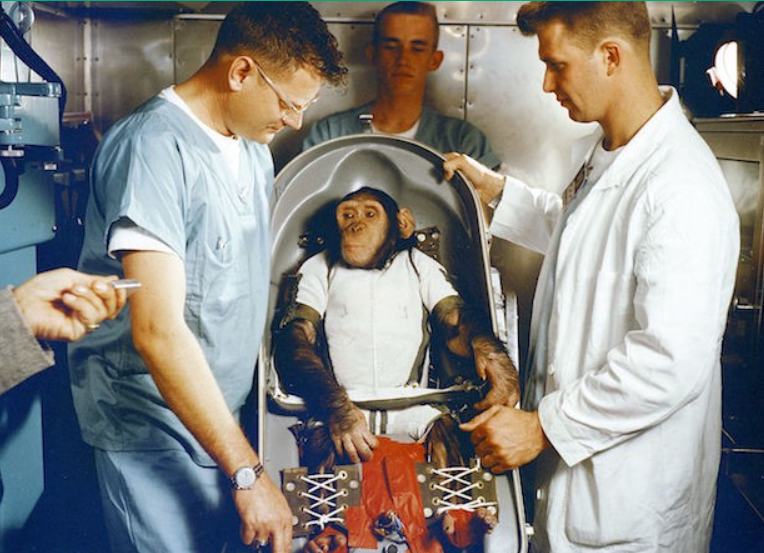
Ham, the Astrochimp, was a 3-year-old chimpanzee when he rocketed into space on January 31, 1961, in the U.S. space program’s Mercury Redstone Rocket.
Ham was the first great ape that was sent to the space: where no man has gone before.
Born in July 1957 in French Cameroon, ‘Ham,’ also known as ‘Subject — 65,’ inside the laboratory, was one of the 40 chimpanzee candidates captured and brought from native forests of Africa to Holloman Air Force Base in New Mexico.
There is something inevitable when capturing a baby from a group of chimpanzees. According to reports, Ham would have seen his mother being killed in front of him.
This was not a voluntary mission for ham; he was an unwilling recruit. Ham was trained inside a cramped capsule using electric shocks to teach him to operate the control panels.
Among all the 40 chimps, Ham became the leading chimp. Only he and one more chimpanzee were selected to be astrochimps.
After being selected, on January 31, 1961, scientists secured Ham’s position at Project Mercury to be sent inside a capsule.
What Happened During The Mission
In space, the pressure inside the capsule partially decreased. But Ham had his spacesuit to prevent harm from pressure drops inside the capsule during the suborbital flight.
Computers on Earth monitored All of the movements and signs of Ham using sensors. According to NASA, his lever pushing skills in flight only had a half a second latency than on Earth.
Ham had a spaceflight of 16 minutes and 39 seconds.
Even though everything was pre-planned, not everything went smoothly. During the descent of Ham’s capsule, several technical problems occurred. These problems caused the capsule to overheat and lurch into the Atlantic ocean.
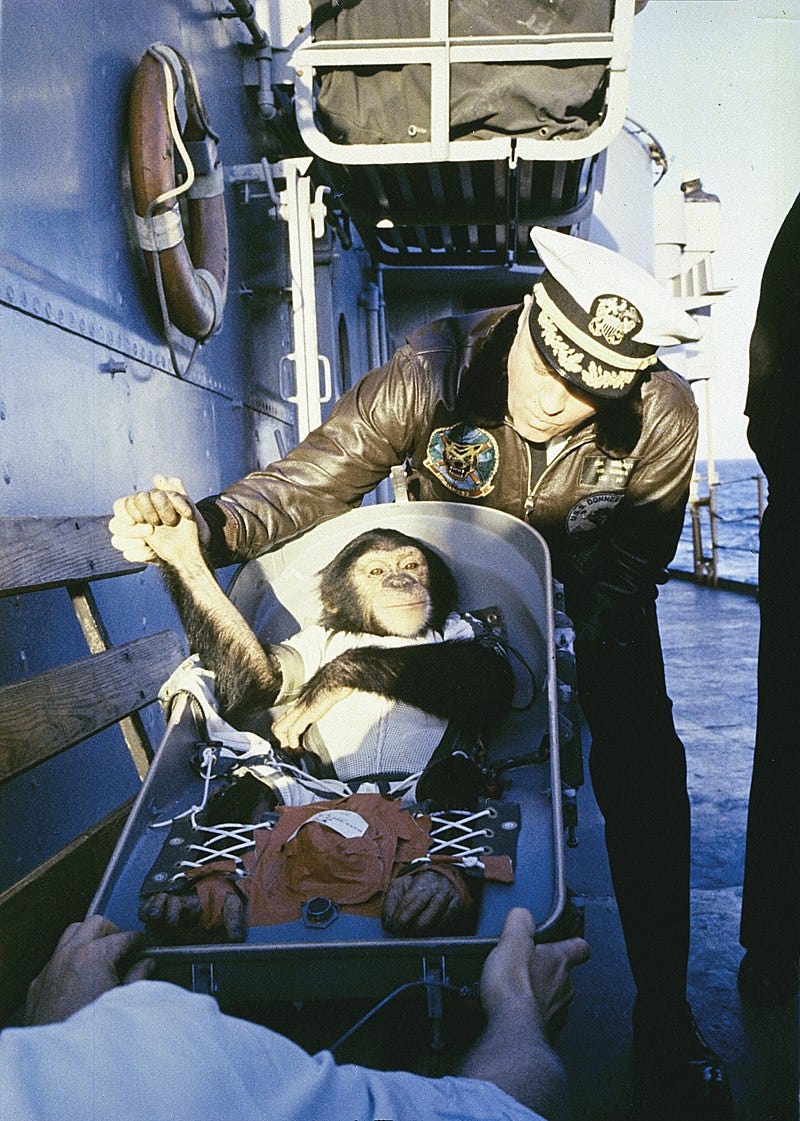
Ham’s capsule splashed down 60 miles away from the recovery ship. ‘Luckily,’ he only had a bruised nose as a physical injury. He was rescued while water was seeping into his chamber.
Later Life
Until his arrival on the Earth, Ham was called ‘Subject — 65". He was only renamed ‘Ham’ after rescuing. ‘Ham’ is an acronym for ‘Holloman Aerospace Medical Center’ — the laboratory's name that trained Subject — 65.
Nobody wanted the death of a ‘named’ chimp to be published in media, generating a bad reputation among the general public.
After the rescue and being brought back to the laboratory, the fantastic news about the hero has to be spread worldwide.
Photographs have to be taken with Ham inside his capsule. But, nobody could make Ham re-enter his capsule. So, even though he was fully aware he got an electric shock when Ham refused, he was terrified.
According to an article posted in The Guardian, Ham was officially retired on April 5, 1963, and was transferred to Washington D.C. National Zoo, where he lived alone in captivity until he was transferred to North Carolina Zoo to join a small group of chimps.
He died three years later.
Ham died at the age of 26 — living only half the average expected life for a captive chimpanzee
Hero or a Victim
Ham is one of the animals unwittingly enrolled in experiments and portrayed as a hero by NASA.
After successfully completing the project, NASA released edited video footage of Ham being calm inside the capsule. But this was a demonstration designed to show to the press.
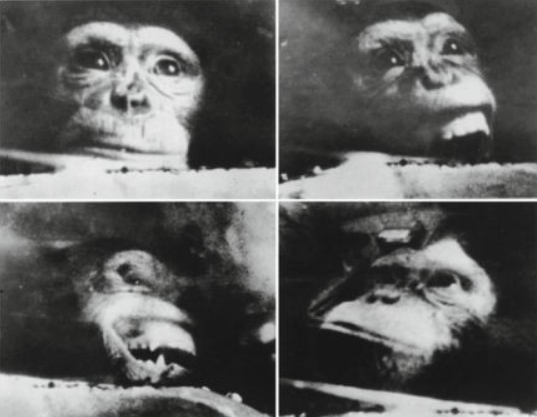
Ironically not included on the NASA website, the unedited video footage reveals the distressed Ham at around 2.12.
“I have never seen such terror on a chimp’s face”
Dr. Jane Godall, a primatologist, spoke about the ‘smiling picture of happy Ham.’
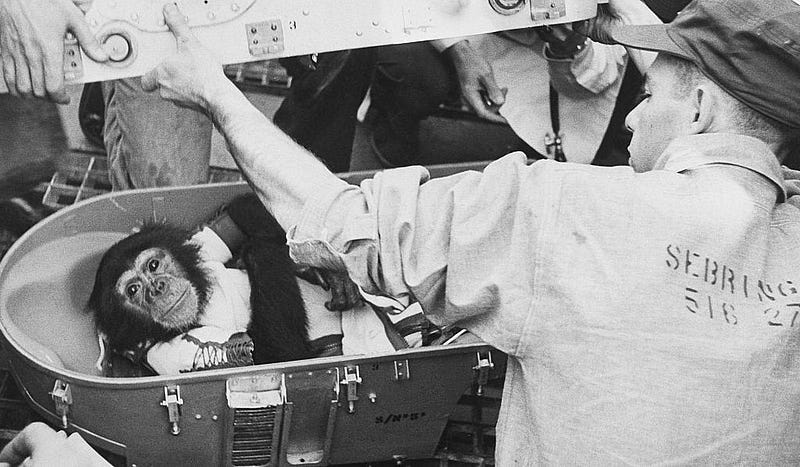
The mass media that covered the NASA event rarely noticed the pain behind the ‘smile of Ham.’
According to the press, Ham was a hero — the first great ape sent to the space: where no man had gone before.. later ‘retired’ from his duty.
Still, underneath all of that, there is a living creature whose life was stolen, morally neglected for the sake of science, and abandoned.
Support my writing by becoming a Medium member today and unlock an unlimited number of premium articles on Medium.


#/media/File:Ham_Retreival_GPN-2000-001004.jpg)