
Sacred Syllables and Modern Linguistics
An uneasy match…
Central to just about every current definition of language, in linguistics and its many offshoots, is that language is a system of arbitrary (or conventional) symbols used to communicate within a group. In other words, language is a descriptive overlay that doesn’t directly relate to experience of the world. You only know what the words mean if you are part of the group that speaks the language.
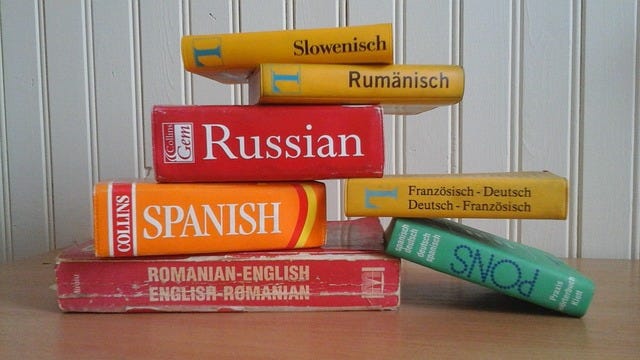
For example, those of us using English sit on a chair, while those speaking Spanish sit on a silla, and Portuguese folks put their butts on a cadeira. It becomes obvious that the word cannot have much to do with the object, since it’s a different word in each language.
Even when you think you have a consistent pattern, it winds up going wrong at some point. In English, we say ‘no’, as they do in Spanish and Italian, French ‘non’, Portuguese ‘não’, and moving outside of the sphere of Romance language there’s German ‘nein’ and Russian ‘nyet’. Alas, Greek disrupts the pattern, as ‘neh’ means yes.
Note that these examples don’t require us to go beyond European languages — if we look to more diverse languages, the arbitrariness of language becomes even more obvious.
Children who grow up bilingual have an advantage in that they learn this fact early and so tend to have better metalinguistic skills than monolingual kids — they recognize that words do not inhere in things and so begin to be able to treat words like objects. That’s very helpful when learning to read, among other things.
It’s not just at the level of semantics (vocabulary) that there is variation. We see it also in phonetics, the way people produce the sounds of a language. Thus, in much of America, people get a cup of coffee (k-ah-fee) while here in the New York area we have “k-aw-fee”.
Even the simple personal subject pronoun “I” will be produced differently with the various dialects and accents of English, usually produced as a blend (diphthong) /ai/ or “ah-ee”, but in New England the pronunciation is closer to “ah” with minimal blending. That’s partly because the sound is produced lower in the mouth, in what phoneticians call a lower vowel space (since the place of articulation isn’t exact).
On The Other Hand…
Open the Upanishads and another perspective presents itself. In Hinduism, there is a belief in the power of syllables in themselves. That is, the actual sound produced has meaning — and that meaning is not arbitrary at all.
We can start with Om, which is the sound of creation, literally. The syllable is broken into three parts, the initial “ah”, the middle “u” (ooo) and the final “m”. The Mandukya Upanishad tell us that the initial sound corresponds to waking consciousness, the middle to dreaming consciousness, and the last to deep sleep. The silence between Om and Om is the fourth and highest state.
There’s no arbitrariness here. In fact, Paramahansa Yogananda tells us that other holy words, like “amen” are distortions of the original syllable Om. Thus the sound itself has meaning and power.
In Tibetan Buddhism, the protector deity of wealth, Vaishravana, is said to “arise from the syllable vai”. Again, the sound generates the reality, in this case a deity. No arbitrariness in that.
Mantras are an example of sounds that have power in themselves. Mantras can be as short as a single syllable, like Om or Hum, or they can be rather long, as in the 100 syllable mantra of Vajrasattva. In either case, it is the sounds themselves that have value, so you’d be better off learning the original mantra instead of a translation: Om mani padme hum is presumed to work better than “Om is the jewel in the center of the lotus” (and no wonder the original works best, as I’ve read a number of different translations of that short mantra).
Yes, But…
We don’t have to go far to start to see some inconsistencies with the folks who are assuming that the power is in the sound itself. For example, while Tibetans and Hindus both identify chakras within the body, the seed syllables that they use for each chakra are often different. In Tibetan, the throat chakra’s sound is ‘Ah’, but the Indian system uses ‘Hahm’. Different.
The Indo-Tibetan folks aren’t the only ones who see sacred value in the sounds themselves. Judaic scholarship, for example, and particularly Kabbalah, assigns meaning to sounds and even letters. As with Sanskrit, exact pronunciation is demanded when reading sacred texts in Hebrew. Of course, Sanskrit and Hebrew are fundamentally different languages, coming from different language groups, and the sacred words are not the same in both languages.
Yogananda’s degeneration hypothesis to explain what he sees as variations on Om is interesting, although the assumption that the original sounds and words came from Proto-Indo-European doesn’t help to explain differences with non-Indo-European languages any more than the Tower of Babel explains why there are so many different languages.
Sound Effects…
The role of language in creating our reality is a big topic. For the present, I want to suggest that perhaps there is something to the idea that sounds have a value — as long as we accept that the value is not tied to any specific semantic meaning.
In other words, it may well be that speech sounds, both individual phones and syllables, produce vibrations that have a direct effect. That effect may be on the human body (our nervous system, auric fields, etc.) and it may also have an effect on the non-human environment. The nature of the sound and its effects may originate outside of human speech, too, as may well be the case with the syllable Om.
Words appear to be arbitrary, just as contemporary linguists say. The sound structure of words don’t relate to specific objects, as I’ve shown above. Yet sound — vibration — is another story. It is a component of language that may operate both above and below the semantic level: a thought we’ll explore in another article.