S*x, Finances, Mindset, and Healing
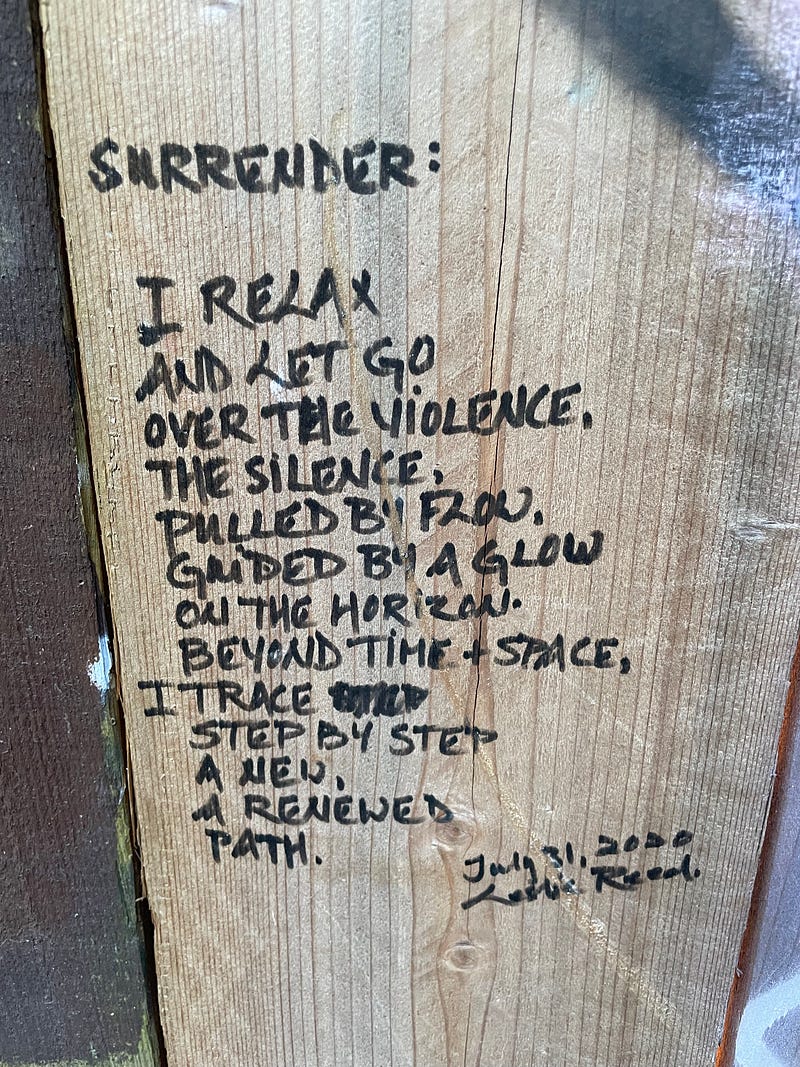
(Photo by author, at Codornices Park, California)
After years of having hidden parts of you, your moonlighting work and ways of living that you aren’t proud of (repeatedly drinking to excess as a habitual release/fuel for NYC-style nightlife madness), you realize that those hidden parts speak to your core, truest, most vulnerable parts. You learn to soothe and squelch the desire to drink by developing a more regular practice and relationship with cannabis and mushrooms. You feel liberated, empowered, finally hooked in, healing, powerful, humming full of health and purring with gratitude.
You are embarrassed you led this more destructive, unenlightened life for so many years, yet you are also so grateful for how fully wildly and freely you were able to live. There are many lessons you wish you’d learned earlier but for which you still feel tremendously grateful to even have learned.
Yet just as these earth medicines, these ancient, ancestral technologies, have been crucial for my healing, so too have my finances. Only with greater financial freedom have I been more free to center my healing, more free to live beyond a scarcity mindset and in a haze of being in survival mode. Greater financial freedom has also helped me live my lifestyle on a day-to-day basis more in alignment with myself and my natural rhythms.
The irony is that I was so trapped in a destructive mindset and destructive behaviors in my 20’s that I couldn’t imagine the possibility of such wealth and didn’t take responsibility to make it a goal. Wealthy, me? Never. I was an artistic type, a rebel, a degen, a SWer. The idea that I’d ever be able to own a home was unfathomable to me.
As a SWer, I was also systematically denied a sense of being able to ever become financially secure. Because much of my income wasn’t legal, I spent it, on rent and other necessities but also excessively on clothing and partying.
I did try to squirrel money away into savings, but there was also a really electric “Easy come, easy go” energy in my life that matched NYC’s amped-up vibe. So I found frugality in some ways (biking and using public transport rather than owning a car, cooking many of my meals at home, and living with roommates), and l told myself this allowed me not have to worry about budgeting otherwise. I didn’t think twice about how much money I regularly spent on partying and drinking, seeing music shows, traveling, and retail shopping binges. I’d always have to work, I figured, so why not?
I couldn’t ever fathom not having to work, and the stock market, I thought, did not pertain to me or my way of living. I thought investing was more what other people did, that it stemmed from greed and excessive fixation on money. As long as I could cover my cost of living and still contribute money to savings, I figured I was fine.
For years I continued in this vein until, thanks to a financial advisor at my bank who reached out regarding the significant sum of money sitting in my savings account, I finally began to at least get some money invested. But I didn’t think it really warranted my attention. There were also more pressing aspects of my life at the time; I saw freedom as more important than money. I thought of concerning myself with the stock market as tedious and didn’t think I needed to bother.
Yet with age, greater responsibilities, and higher bills come the more clear-eyed importance of finances on freedom.
It makes sense that I, as a middle child highly traumatized by my childhood, pursued the unconventional path that I had. Tremendously self-conscious because of neglect, perceived poverty, poor socialization, an unkempt, awkward appearance, an autoimmune condition, and other childhood traumas, it is no surprise that I floundered professionally and overall in my life. I struggled with poor self-perception and finding direction or growth for years. I thought I could “pass” as attractive and capitalize on my looks and education and do SW as a way to forego a grueling career path and long hours with rigid scheduling.
I had numerous romantic relationships that stagnated, only to end abruptly simply because I didn’t see myself as worthy and didn’t know how to communicate my past or my hidden professional life. I never in my 20s or 30s even really told any serious partner that I did SW. I felt I could hide such a profound part of my life, yet I’ve come to learn that we communicate with each other energetically, and energy never lies. My reticence to open up with boyfriends and partners, about SW but also about my past and my deeper musings, always ended up pushing relationships to their end. I was different, I wanted what other people had but also couldn’t envision how that could be possible for someone like myself.
When I stumbled into a rent-stabilized apartment in my late 20’s, I fought in a years-long battle for the rent-stabilized status. I clung to the affordable housing as my path to giving me the freedom to abstain from a conventional life and the freedom from worrying too much about finances. Yet I’ve learned the hard way the danger of banking entirely on one thing. For various reasons, I had to leave my beloved rent-stabilized home, and my life has been episodically topsy turvy ever since. I haven’t since lived in one home for longer than around a year.
Yet, because of leaving my rent-stabilized home, I now had a small windfall from the buy-out I’d received, and I was able to stop hustling so hard financially. I learned the importance of the stock market and began fixating on it, while also finally continuing to grow more in my healing journey. Money can play a part in changing one’s mindset and improving one’s quality of life. It isn’t everything, and often it takes something deeper than money (in my case, it took psilocybin mushrooms) to make the dramatic changes to mindset, behaviors, and lifestyle needed to live a more purposeful, meaningful, healthy life in alignment with one’s inner self. It still took time for my sense of purpose to be clarified, but finally I had more space to make the changes I wanted.
I never had much money for much of my life because I didn’t see myself as worthy or capable of wealth. I pursued work in a stigmatized field and splintered myself in a way to take what I saw as the most feasible path for me. That was my lot, I thought, and so I pursued it. As a woman who struggles with the mechanized work schedule, especially when it conflicts with my time of month, my auto-immune issues, and now with the responsibilities of being a single parent, SW enabled me to live and work more freely. Yet the way I engaged with it also caused me to lack a way to be totally authentic and whole; I had different personas I didn’t know how to reconcile. I managed to work in education consistently and hold some other odd jobs, but I lacked ambition or drive, relying on the income supplements my regular clients provided and the below-market rent to maintain my lifestyle.
Motherhood and the move out of my rent-stabilized apartment jolted me out of these destructive ways of thinking and living. Now, without regular clients any longer, with more assets but also higher bills, I’ve been forced to confront myself and what I really want to do with my life. And that is healing work.
Healing work doesn’t necessarily require large sums of money or being in a place of wealth. There are many forms and modalities for healing. Healing can help clarify for you where you want to be while also making you more content with and grateful for where you are at now. It can help give you perspective, seeing life away from your ego and yourself in the present space-time environment, as well as to grant you expanded vision for the possibilities in your life.
So, to those seeking to heal — an ongoing path that can entail facing and releasing many traumas — it takes dedication and courage. It is an iterative process that demands intentionality, authenticity, and bravery. Healing entails investing in yourself, and it is not wrong to be honest that financial health is one aspect of self-care. But fixating on finances is not healthy either; it is only part of the picture.