S is for Slug
Slime and snails and things that leave trails
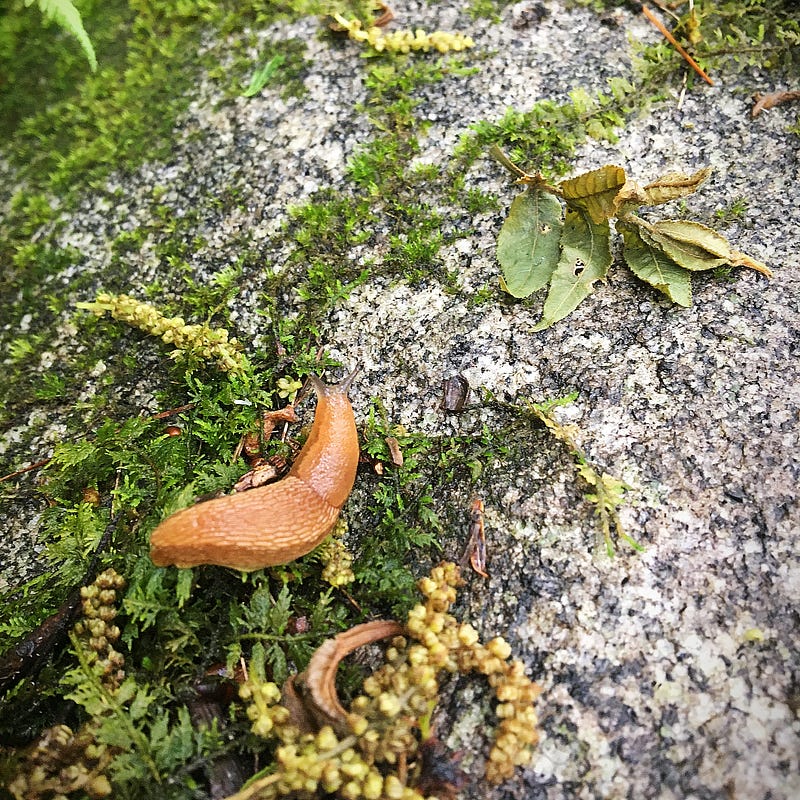
There is a section of trail in a local forest that we call Slug City. We proceed along this narrow route with great caution, each calling out “slug!” every few feet to warn the others — none of us wants to step on a slug.
Truthfully, we try not to step on anything other than dirt, roots, and leaves. We dodge mushrooms, insects, flowers, and so on. We are not fast and cannot rightfully call ourselves “hikers:” we are wanderers.
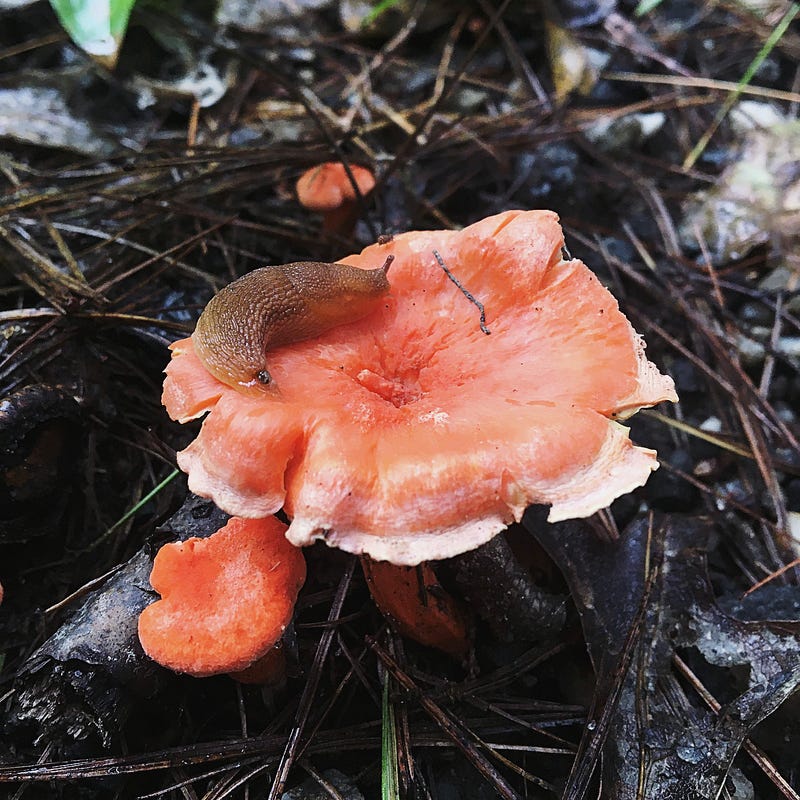
In addition to sparing many small and slimy friends with our slow and careful strides, this also gives us a chance to look at them. To meet them.
When I encounter a slug on a mushroom, it honestly makes me giddy — two of my favorite things.
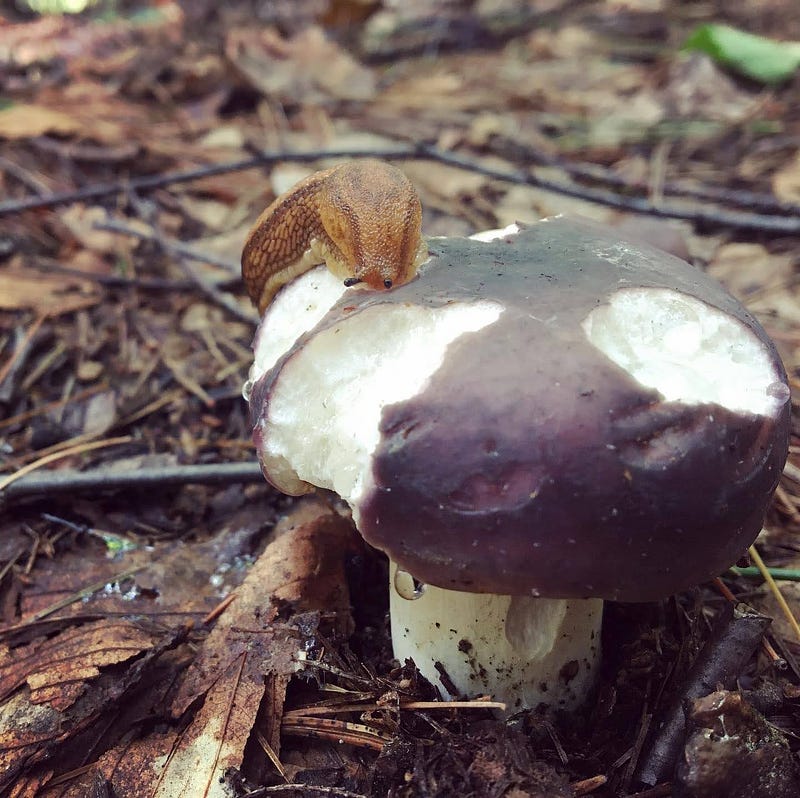
For the most part, my family tends to alert each other to the presence of slugs whether or not they’re in our path. We’ll go out of our way to check out an interesting slug specimen.
Because they need to keep moist and not too hot, they’re easiest to spot on wet, mild days.
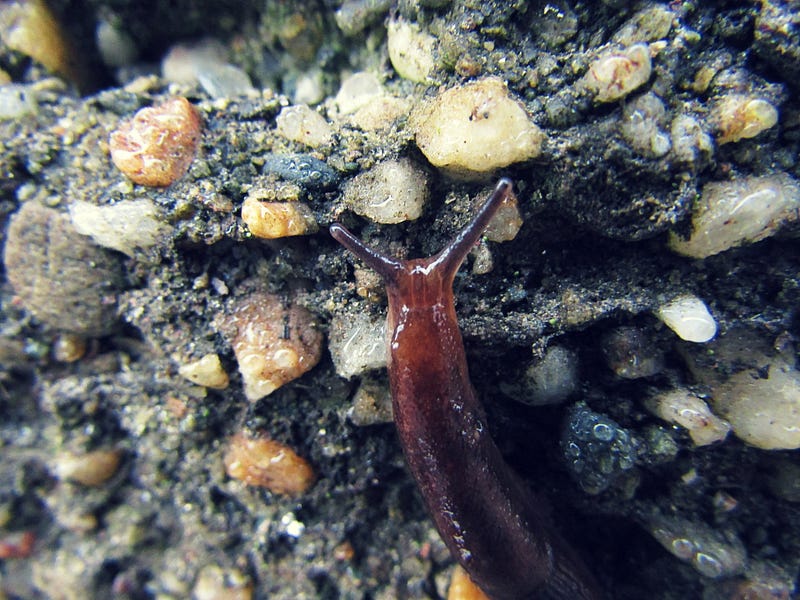
Slugs are mollusks, just like snails. Both are adorable for more or less the same reason (it’s the eyestalks). I could watch a slug (or a snail) move its eyes around for a good long while.
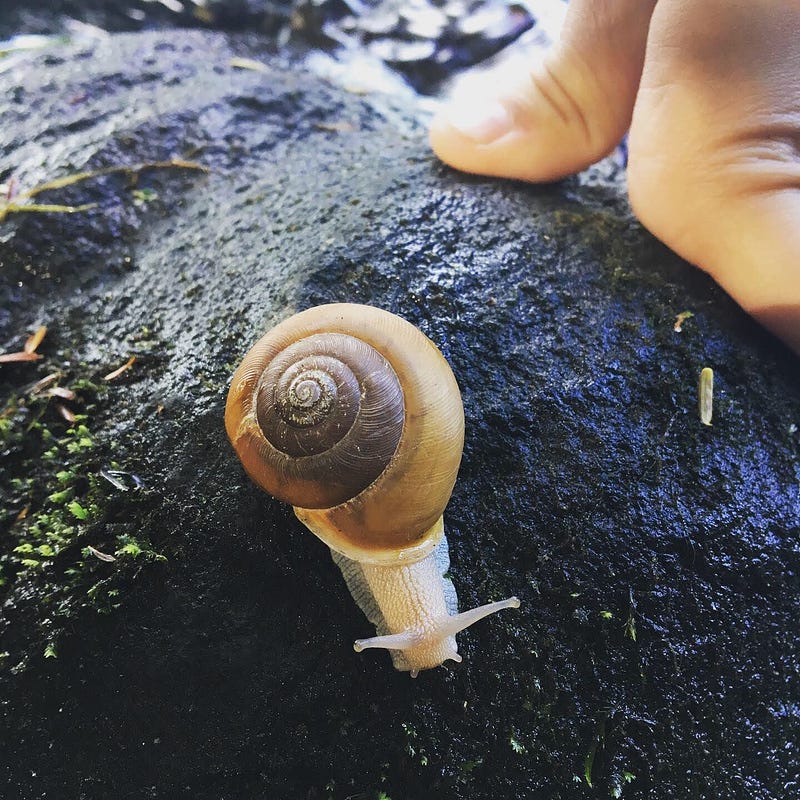
Here are 5 fun facts about slugs:
- Slugs lay eggs, which can survive for years unhatched, waiting for the right conditions;
- They can fertilize their own eggs because they are hermaphrodites (meaning they have both male and female sex organs);
- Slugs can live for up to six years — older slugs are usually female;
- The largest slug in the world is a species called Limax cinereoniger, which can grow up to 20cm (almost 8in);
- Medical scientists are investigating the sticky, flexible slug slime for possible use repairing damaged tissue.
How do you feel about slugs? Do you look out for them when walking? Do slimy things give you the creeps? If you care to share, let me know in the comments.
Personally, I have such eyestalk envy, there might be a slug Halloween costume in my future.
Join me on Medium: