
UNAPOLOGETIC BLACK OP-ED
Ryan Gainer Would Still Be Alive if Not For Police Assumptions
Not every citizen is capable of immediate compliance.
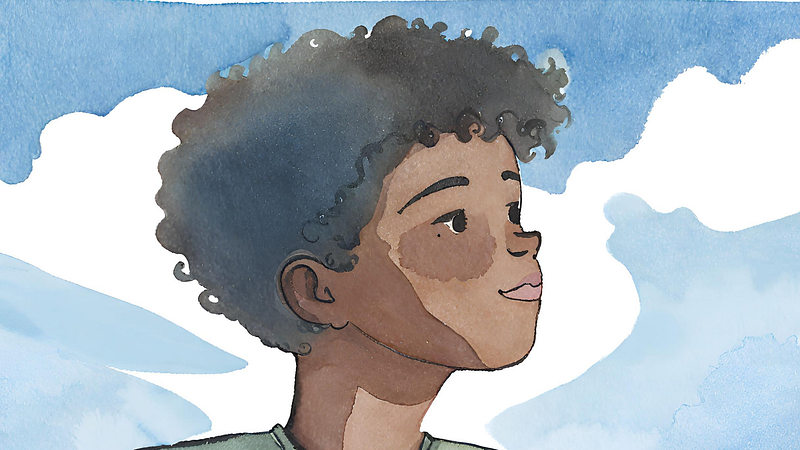
In America, the constant drumbeat of conformity is stifling for Black people, who are too often deprived of any grace for their differences. The fact that law enforcement fatally shot Ryan Gainer, a 15-year-old autistic Black teenager, while he was holding a gardening tool last Saturday is further evidence of this notion. According to DeWitt Lacy, the family’s lawyer, the incident began when he reacted poorly to parents insisting he complete household chores before playing video games or listening to music. While any teenager would put up a little resistance, some autistic people experience heightened emotions. It’s common for children diagnosed with autism, a neurological disorder, to throw “tantrums, hitting or injure themselves or others, yelling, social withdrawal, or even extreme silliness.”
According to a portion of a 911 call obtained by a San Bernadino County Sheriff’s Department dispatcher, the family said Ryan had broken glass and physically hit his sister. This behavior, though harmful, is consistent with someone having an autistic episode, a time when some struggle with emotional regulation. According to the LA Times, Lacy noted that “by the time deputies responded to the 911 call at the Gainer home on Iroquois Road, Ryan’s father had helped the teen calm down.” Sadly, officers did not seem aware of this at all. When they saw Ryan holding a hula hoe, a gardening tool, they assumed the worst and fatally shot him. While the department released body cam footage that showed Gainer standing in front of an officer, they edited the video to remove the actual instance where one or more officers fatally shot Ryan. So far, the department has refused to release the full bodycam footage despite the family’s demand for full transparency. In true blue-wall form, they’ve also kept the names of the officers involved under lock and key. No one has been arrested for their involvement in Gainer’s death.
When police give orders, they expect citizens to comply quickly, to put their hands on their heads, behind their backs, or on the dashboard, or to reach for paperwork, or not reach for paperwork. And, of course, behind every demand is an implicit threat that if someone fails to follow their orders quickly, they may lose their life or liberty. Officers expect, no matter who the person is and the circumstances, that they’ll be able to comply. Nevertheless, this is an ableist assumption. Not every citizen is physically or mentally capable of immediate compliance.
Demanding conformity from a population that can’t is cruel, but killing them for their neurodivergence is a tragedy.
If you demand that a paralyzed man stand up, I guarantee you he won’t be able to, and the same can be said about someone demanding a neurodivergent person quickly comply with orders. And speaking loudly and pointing a gun at someone certainly wouldn’t make de-escalation any easier for someone struggling with emotional regulation. In a culture that demands blanket compliance, there’s no grace extended to Black people who are neurodivergent. To be clear, autism is a developmental neurological disorder, not a mental disorder, but both groups may be more likely to struggle with emotional regulation. This is why autistic people face some of the same discrimination from law enforcement as those diagnosed with severe mental illnesses.
For instance, in August of 2019, police officers stopped a 23-year-old Black man, Elijah McClain, in Colorado and accused him of acting suspiciously. After officers restrained him and threatened to sick a dog on him, he vomited, apologized to the officers, and told them he was struggling to breathe. Paramedics arrived and injected the young man with a heavy dose of ketamine; he died three days later. No law enforcement officers were held accountable, but the two paramedics were convicted of negligent homicide. While Elijah was a violin player, an animal lover, and a massage therapist, his autism made him a target for police, who refused to see his differentness as benign.
A report conducted by the Treatment Advocacy Center found that 1 in 4 fatal law enforcement encounters in America involve someone with a severe mental illness. Police officers are not required to receive the same training as mental health care professionals, and as a result, they often respond violently to citizens’ neurodivergent behavior. By definition, you would expect the behavior of people diagnosed with a mental illness or those born with developmental neurological disorders to vary. And yet, policing policies have a dehumanizing effect by refusing to acknowledge that human behavior naturally varies and that this variance isn’t always deviant, dangerous, or criminal.
“Individuals with developmental disabilities, such as autism spectrum disorder, are 7 times more likely to come in contact with police than those without disabilities. So, the study highlights the need for improved police ability to recognize ASD behaviors and respond appropriately to reduce the chance of escalation,” Sandra Larson, a Boston journalist, noted in Health City. Demanding conformity from a population that can’t is cruel, but killing them for their neurodivergence is a tragedy. It’s clear that Ryan’s family called the police because they needed help managing his autistic episode, to prevent him from hurting himself or someone else, to help him feel better, and to ease the tensions in the home. Sadly, the police are not equipped to provide these social services, nor have they ever been. Indeed, in this circumstance, they caused demonstrable harm to this family, killing a young Black teenager who dreamed of becoming an engineer.
When police characterize someone as noncompliant, are they considering whether this person is mentally capable of compliance, or are they simply a hammer, treating every problem like a nail? The case of Ryan Gainer shows why many Black parents distrust the police to help with domestic issues. In a 2018 YouGov survey, the majority of Black Americans reported feeling very unsafe or somewhat unsafe during police interactions. We often see officers escalating the stress and tension rather than rendering aid in black communities. While officers will typically deny that the race of someone impacted their decision to fatally shoot someone, Black Americans are almost three times as likely to die from a police shooting. There are only two ways to analyze this data, and that’s to either endorse stereotypes that characterize Black citizens as more violent or acknowledge that many police officers are engaged in racially prejudicial patterns of behavior.
Why couldn’t police officers see Ryan Gainer as someone who needed help instead of a threat? Could it be that his race and his dark complexion played a role alongside his neurodivergence? Indeed, Ryan Gainer may still be here today if not for the assumptions officers made that day. Had they spoken to his father, they would have learned he calmed down before they arrived, understood they were no longer needed, got back in their cars, and drove away. If officers didn’t see Black teenagers as inherently dangerous, they wouldn’t assume that fatal force was necessary. Now, the black community is demanding accountability, and as usual, the police department is dragging its heels.
🌹Learn more about the author here.