Russia’s Obsession With Ukraine
A Historical Perspective
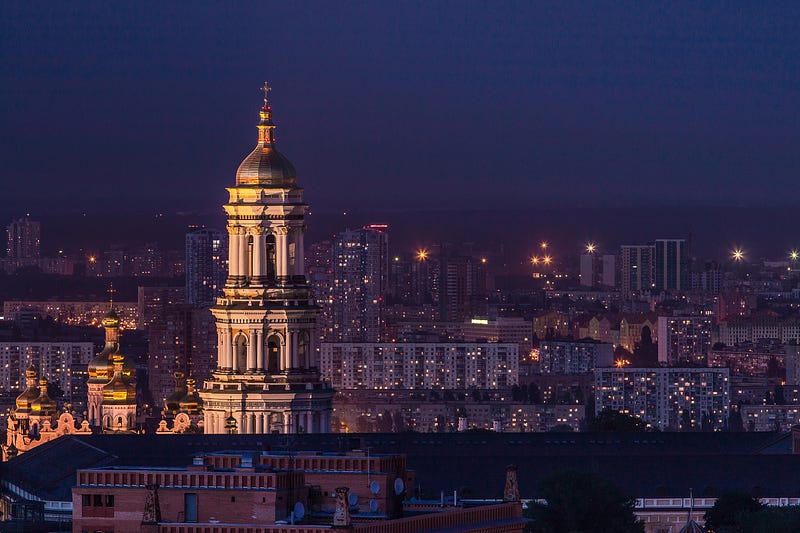
Russia has invaded Ukraine with all its military might. More than a hundred thousand troops were on the Russia-Ukrainian border, ready to attack for the past year. US and Western intelligence for the past few weeks were warning the country and the entire World that Russian troops were in attack positions and waiting for a surprise attack anytime.
On 22nd February 2022, Russia recognises the independence of two autonomous provinces in the East, while on 24th, Russian President Putin gives the final command for the attack early in the morning. This article will not dive into what is happening in Ukraine or Russia right now, but why this conflict arose and searching for the answer embedded in the history.
Russia and Ukraine share the same history and perhaps the exact origin. Both are part of the same Slavic identity, spanning Eastern Europe. Ukraine was never a separate entity except for a brief period (1917–21) before the formation of the USSR. Even though it had good territorial power, it was always subordinate to Russia and Russian identity. From 1991, Ukraine has had an existence as an independent Republic. This is a problem right now Ukraine is facing. Its existence as a sovereign country is at a question.
Kiev or Kyiv is one of the oldest cities and a city that was born even before Moscow was founded.
Ukraine became an independent Republic in 1991 post the break up of the USSR. Ukraine is the second-largest country in Continental Europe. Even during the Soviet Union, there were cultural exchanges between the Russian and Ukrainian people. Ukraine as a whole is home to many Russians and vice versa.
Nationalism
Ukrainian nationalism has been an essential point of contention inside and in the region. Ukraine has been caught in the two spheres of nationalism- Monist nationalism and Pluralist nationalism. Monists argue the need for Ukrainian identity to be the uniting force of Ukraine as a nation-state. At the same time, Pluralists believe that Ukraine is for all, both Ukrainian people and non-Ukrainians, especially for the Russian minority. Like any other country, these two ideas have been home to majority-minority tension.
Russia believes that its influence in the ex-USSR nation will reduce if Ukraine goes its way. This is also related to most Russian leaders still like these countries to be their client states. Apart from political reasons, Russia wishes to be the default protector of the Russian people in Ukraine. So, Russia always likes Pluralist nationalism to triumph in Ukraine and not the idea of an Independent Ukrainian Nation.
Cold War End
This is the most crucial part of history to understand how this conflict has shaped in the past two decades. Cold War, as everyone knows, ended post the collapse of the USSR. There was an asymmetric end, with Western Bloc triumph over the Eastern Bloc. So, the Cold War between the NATO and Warsaw Pact ultimately ended with Warsaw Pact breaking up.
North Atlantic Treaty Organisation (NATO) which came up during the cold war, continues to be an essential part of the World Order post-Cold War. This asymmetric end has been irritating Russia for a long time. An organisation that, to a military and security organisation born to curb the USSR’s expansion, continues to thrive even without the existence of the USSR. This was part of America’s Truman Doctrine, which aimed to reduce Communism across the globe.
Germany got reunified and took a stance that it would give enough space for Russia post-cold war and NATO would not expand. NATO has expanded multifold with Estonia, Latvia, Lithuania, Romania, Poland, Hungary, Czech Republic, and Slovakia, joining even after no specific external threat. All Baltic states made a friendship treaty and later joined NATO as they believed that Russia was threatening their stability and was a threat to peace and security.
Although Russia is a bully with neighbouring countries, joining NATO is unacceptable even if those respective countries have to vouch for their security. Mikhail Gorbachev believed that there was no real threat of NATO expansionism, although that wasn’t acceptable to him and the nation of Russia.
Ukraine and Belarus are the only two countries left between NATO and Russia, thus acting as a massive buffer. On the one hand, Belarus is a Russian puppet; Meanwhile, Ukraine has been trying to hedge between the West and Russia. This includes Ukraine's ambitions of joining NATO and bringing NATO to its border with Russia.
Ukraine also gave up its Nuclear stockpile post its independence and signed the NPT in turn support from Russia.
Russian Identity issue
This issue is a subset of Greater Ukrainian nationalism but needs a special mention. For a long time, Ukraine has been stuck in a problem of identifying itself as part of Russia or projecting itself as totally a different entity fighting for its survival.
If Ukraine deserves to be an independent entity, it is tough to decouple its existing Russian relations. Ukraine has been engaged with deep economic overlap with Russia for a long time. A lot of Russian companies operate in Ukraine. It is also an important agricultural hub of Europe, while Russia is a large food importer. Russian industries are dependent on many raw materials from Ukraine, while it is also a large recipient of Russia’s Oil and Gas. This, for a long time, prevented itself from warming up to the west.
Now, when it has warmed up to the west trying to balance, this has upset Russia very much, which considered Ukraine and Russia inseparable entities.
European Conflict
The idea of what is European conflict can be attributed to another question- What is Europe? Is it a geographical entity or a picture, or something else? If it is a geographical entity, what is part of it, and who decides it. There is a contest between two distinct ideas of What is Europe?
The first idea is a transatlantic idea of Europe, which aligns with imagining Europe closely associated with its earlier colonies, the US and Canada, which have values. Europe believes and supports the American value system. Europe has a lot of cross-influence by American hegemony. This is what we know as Western Europe. The land of democracy, liberalism, human rights, freedom etc.
The second idea lies in believing that Europe is the melting pot of all the countries in the area. There is no single value system that dominates. This includes Eastern Europe as well as Russia. This will consist of multiple socio-political systems, a more significant role of religion, a mix of democratic, authoritarian and different types of governance systems, and illiberal countries.
Russia identifies itself as a European even though its geography spans across entire Eurasia. But, Western Europe, ever since the Cold War experience, has been hesitant in accepting Russia as part of Europe and even considering Russia as one amongst them. For them, Russia’s recent move to authoritarianism, including support for dictators across the globe, human rights violations etc., is unacceptable.
US interference in continental Europe is also a big problem for Russia. The US has been fixing the world order in Europe, giving space for none. For Russia, it is not welcome. Like the US the Americas, Russia would love to be a significant player for the region in and around Europe. Currently, which is not at all possible.
Even in the NATO expansion, we can see that Europe has villainized Russia as the biggest enemy, and there is no way for Russia if at all to stand by NATO and perhaps even join NATO or EU in future. Russia, with its model of democracy, can never get recognition. This means Western nations have their standards, and those who can’t comply will be All these have made Russia isolated and unilateral actions not only on its borders but also elsewhere.
Geopolitics
Russia considers itself to be a Great power. At least it wants to assert its presence. Even now, we can see Russia trying to project its Hard Power not only in its borders but also elsewhere, whether it be Syria, Afghanistan, Libya, etc. Russia has been angered by the recent unilateral actions the Western powers or NATO took in these respective countries. When Russia takes a particular step, it is deemed an “Aggression” or “Breach of Sovereignty”.
This problem is also related to Russia’s inability to exercise the R2P doctrine even if Western Nations have pursued it for a long time. Libya and Syria, which happened in the most recent decade, was perhaps the red line for Russia to step up its game and stay relevant.
Ukraine is a strategically important region. It is surrounded by the Black Sea, with the Crimean Peninsula being the central part of Ukraine’s strategic outpost. Russia believes that it is the leader of the Black Sea and needs an upper hand in the region. Other countries in the Black Sea include Turkey, Bulgaria and Georgia. Bulgaria and Turkey are NATO members. This has put Russia on the backfoot and fear cornered in the Black Sea. This can worsen if Ukraine also decides to be part of NATO. Russia’s interest in the Black Sea is a reason for keeping Ukraine at bay.
Post-2012, Ukraine discovered Shale gas in its territory and Petroleum and Natural gas it has been producing. For all the wrong reasons, Ukraine became another place for the US vs Russia proxy war.
Putinism
Vladimir Putin, the Russian President, has never failed to brand himself in any conflict where Russia is present. He is now the President for life. He has been like an authoritarian leader who would like to project himself to support democracy and its values. Within a few years, he has built a cult around himself in the international community. Russia’s democratic credentials are now at the question.
He has deviated from the path of earlier leaders and made everything he wants as what Russia aspires to be. This also reflects in the country's policies and how he wants to be different from Stalin or Lenin, or Yeltsin.
NATO expansion is something that Vladimir Putin has a lot to worry about, and that has been the cornerstone of his foreign and defence policy. His Presidency has been home to many controversies and issues, both domestic and international. Today, much of our conflict can be attributed to Vladimir Putin, his views, policies, and actions. (I call as Putinism)
Crimean Crisis (2014-)
Crimea has been the most critical turning point in Ukraine-Russia relations in the past two decades. It is one of the most recent disputed regions in the world. (Covered in the previous article). Crimea is a peninsula located in the Black Sea. Crimea was under Russian control for a long time.
Crimea historically was strategically essential to Russian Empire for a long time. Crimean War was fought between 1853–56 between the Ottoman and the Russian Empires. The Ottomans were supported by Sardinia and Piedmont of Italy, British and the French. The war ended with Ottoman Victory and the Treaty of Paris, which reduced Russian naval power in the Black Sea. This meant that the empire also lost its control in the region and weakened it further.
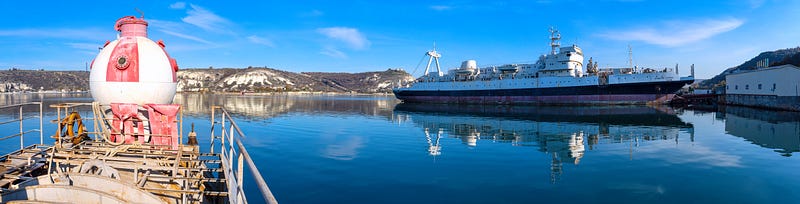
In 1954 February, Crimea was added to Ukraine when it was part of the USSR. This was aimed to warm up the people to people contact between Russians and Ukrainians. When the USSR collapsed in 1991, Crimea chose to join the Republic of Ukraine and was provided with autonomous provincial status.
Crimea had close ties with Russia. There are official reports of rebel support and separatism favouring Russia. There have been Russian military bases in the province which have supported Russian Navy in the Black Sea. In 2014, post the Maidan protests and the downfall of the Russian puppet in Kyiv, Russia quickly duped its military bases with Russian soldiers and rebels.
Later, with Simferopol Airport's take over and after that, the port of Sevastapol, Russia annexes Crimea under its control. Russia justified this by claiming that it wanted to protect the interests of separatists and ordinary people wanting to join Russia. What did Russia aim through this?
This was like planned revenge by Russia, punishing regime change in Ukraine while at the same time fulfilling Russia’s security needs of the day by gaining a strategically important territory. Now, Russia can balance the US fleet stationed in Naples, Italy. The annexation was also planned right after the Sochi 2014 Winter Olympics games to avoid a diplomatic backlash. Since then on 2
What did Russia lose? Russia lost its face in the International community. Everything was a repeat of what he had done in Georgia in 2008. Russia officially became the aggressor, and US and EU got a reason to attack Russia with sanctions. Many Russian companies were banned and forced Western companies hard to deal with Russian companies. Crimea’s water is supplied from mainland Ukraine, which will not be provided.
Russia also got a lot of hatred and anger in Ukraine through this move. This has further forced the country to polarise towards the west, the opposite of Russia's. This was reflected in internal politics as well.
This Crimean episode of the Toss-up of Budapest Memorandum, Helsinki Accords and Treaty of Friendship. Now, Russia can punish Ukraine once more for supporting US and EU and also threatened another round of invasion if Russia’s conditions weren't met. In the UN General Assembly session that followed, over 100 nations supported the US-led Resolution, where 11 close states to Russia opposed it and over 58 states abstained from it.
How the World Sees it
With the end of the cold war, it was quite obvious that western dominance in deciding the world order will continue. For the third world, Ukraine is to be given autonomy to decide which side it wants to be on, while at the same time, it would be fine for the world to look into the fact that Russia has the right even not to follow whatever the West is trying to impose.
Crimean annexation is not something many of the nations wanted to see, it is clear by the UN GA resolution mentioned above. But, support for Russia and Putin as the President has been sliding ever since then. Russian intervention in Syria, Libya, Georgia, Azerbaijan, Armenia shows how many countries are turning out to be part of a massive geopolitical proxy war that is hurting the third world.
Ukraine’s overdependence and over-trust in Russia may be a reason as the rest of the world want to see. In the United States, policy on Russia is something that is important for any administration. Having a minor conflict with Russia was always in the interest of the war lobby. This idea was equally accepted by both far-right and far-left.
With the strategic partnership, China is backing Russia everywhere. Ukraine will be a different case altogether for China. It not only needs to look into its geo-economics at the same time avoid any domestic problems. Even the latest speech supporting Ukrainian Sovereignty by the spokesperson and also evading itself from questions show China’s hesitancy in giving Russia a proper green signal. China also knows that this will create more problems in Taiwan, Hong Kong and elsewhere.
Present Conflict (2015-)
What is happening today is due to tons of smaller events that we have discussed. Although, the major crisis and the spontaneous progress of the events have been happening due to a few circumstances. In 2019, the current Present of Ukraine, Volodymyr Zelensky, won a landslide election in the conflict-ridden country. He has always been a vocal critic of Russia and its intervention.
Russia hates this person interested in closely working with the west. Russia under Putin believes that Ukraine would soon join NATO and the EU. This would put Russia on the verge of conflict and endanger its borders. This is not what Russia wants at all costs. Russia also opposes any regime change in the neighbouring state of Belarus, which has the only dictator in Europe.
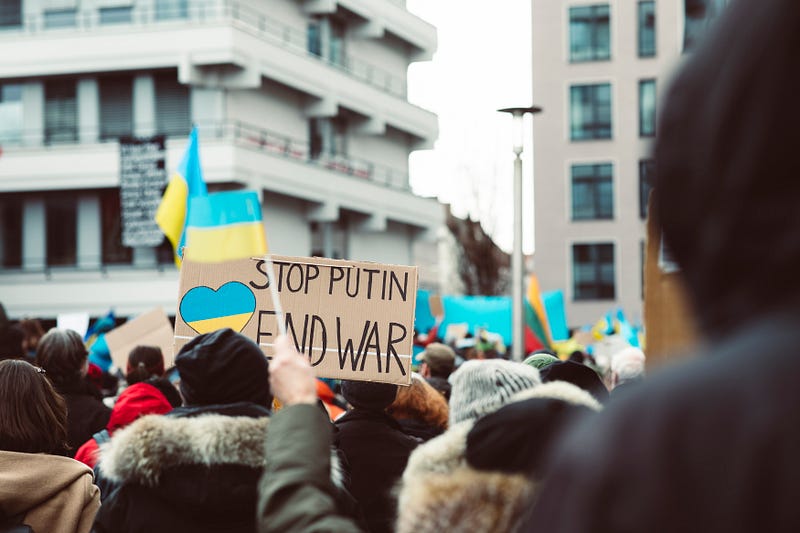
Since 2014, Russia has constantly been interfering in the Eastern part of Ukraine, also known as the Donbas region, a resource-rich and industrial hub. It houses two autonomous provinces with Pro-Russian governments, namely Luhansk and Donetsk. In the same year, these rebels shot down MH17 aircraft moving from Amsterdam to Kuala Lampur. This was another red line for the west against Russia’s support for separatism.
Minsk Agreement was signed in 2015 for a ceasefire in the Donbas region which Russia has once again violated recently.
Post-Crimean annexation, Ukraine received International sympathy and support, including military supplies, enough to anger Moscow. Since then, Russia has been trying for a regime change. Now, we can see that even during Vladimir Putin's objective has been straightforward. Stop the expansion of NATO regime change in Ukraine and install a puppet govt. Kyiv has been the main aim of Russia’s present intervention and invasion of Ukraine.
It is exactly 8 years after the Crimean annexation, on the same day, that Russia started its field working to annex Ukraine.
This is why for the past two years, Russia has been uncomfortable and has been getting troops ready for combat in Ukraine. Putin’s nostalgia for a united Russia and subordinate Kyiv has been the major push on the soft power front. In his speech, he criticised USSR founding fathers Lenin and Stalin for giving independent space for Ukraine. However, he misses that different parts of Ukraine have been controlled by other neighbouring countries and not just Russia.
This included Russian propaganda of distorted history and an idea of a frustrated Russian minority in Ukraine that wants to reunite with Russia. This idea of Russia is not just restricted to Ukraine, but also Belarus, Georgia, Moldova, etc. The justification is the united Russia argument for building another USSR or the new Soviet Union under Vladimir Putin.
Russia believes it hasn't crossed any boundaries through interfering in Ukraine. At the same time, it is an indication for the world nations that Russia will decide Ukraines’ world affairs and Europe’s world order. This is equally a type of warning to NATO. Any alterations in the status quo cannot be changed without Russia’s permission. It also wants its puppet regime to be in Ukraine and is not shy about taking it to the world community.
At the same time, Russia doesn't care much about the methods or the type of approach. It also included activating the nuclear front, which happened for the first time post-cold war.
Conclusion
It is tough to pinpoint a specific reason for the most recent war. It is a significant conflict that has been in the making for years. Today as we speak, we need to avoid the fight that is being fought on past events because ordinary people in both Ukraine and Russia are suffering. Putin is safe in Moscow, most of the European leaders are safe and Joe Biden is safe. It is the soldiers and civilians in Ukraine that are battling it out dying.
I am ending with the extract of a speech by Putin in 2014 on how he and Russia see the entire issue, which sums up my long article.
We clearly had no right to abandon the residents of Crimea, we could not allow our access to the Black Sea to be significantly limited, we will not allow NATO forces to eventually come to the land of Crimea and Sevastopol, the land of Russian Military glory and cardinally change the balance of forces in the Black Sea area. This would mean giving up practically everything that Russia had fought for since the times of Peter the Great or maybe even earlier- historians should know.
References
Sakwa, R. (2015). Frontline Ukraine: Crisis in the Borderlands. I.B. Tauris.
Join Medium through my referral link, which will give you access to tons of articles.


