
Russian Tank Casualties in Ukraine Hit Dire Milestone!
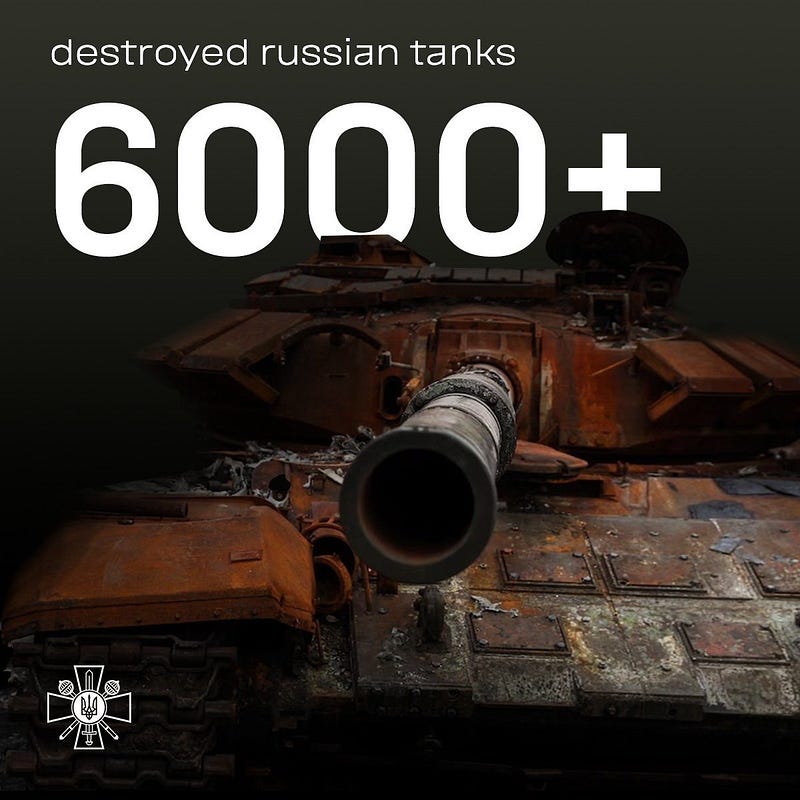
Recent reports indicate that Russia’s forces in Ukraine have suffered the loss of over 6,000 tanks, a number that not only highlights the severe attrition of Moscow’s armored capabilities but also reflects the unyielding resilience of Ukrainian defenses. As reported by Kyiv’s military, the Russian losses amount to 6,002 main battle tanks since the onset of the conflict in February 2022. This figure, while subject to the fog of war and the inherent difficulties in accurately tracking such losses, is nonetheless a stark indication of the war’s brutality and the heavy toll it has exacted on Russian military equipment. The London-based International Institute for Strategic Studies corroborates this view, noting significant losses to Russian military power, particularly in its armored fighting vehicles.
The depletion of Russia’s tank fleet is not just a matter of numbers; it’s a reflection of deeper strategic and operational missteps. Military experts point to Russia’s early errors in organization, planning, and execution, compounded by poor training and low morale among its forces. This situation led to the rapid depletion of Russia’s most experienced tank crews in the initial weeks of the war, leaving behind a force ill-equipped in terms of both personnel and materiel.
Complicating matters for Russia is the reported necessity to replenish its modern tank losses with older, less effective models. The deployment of outdated tanks such as the T-55, which are markedly inferior to their more modern counterparts, reveals the depth of the crisis facing the Russian armored corps. The move to utilize these older models, including employing them as vehicle-borne improvised explosive devices, speaks volumes about the desperate situation Moscow finds itself in.
A quick heads-up: Medium’s been tweaking its algorithms and it’s getting trickier for my stories to land in your feed. So, if you enjoy my work, please make some noise! Hit that clap button, light up the highlights, or drop a comment. Every interaction helps keep the stories flowing. Thanks for your support!
The revelation of Russia’s tank casualties provides a window into the broader context of the conflict. In contrast to Russia’s dwindling tank numbers and the resort to outdated models, Ukraine has been bolstering its armored capabilities with Western support. The influx of Western-made tanks, including the formidable Leopards, Challenger 2s, and M1 Abrams, has not only offset losses but also provided a qualitative edge to Ukrainian forces.
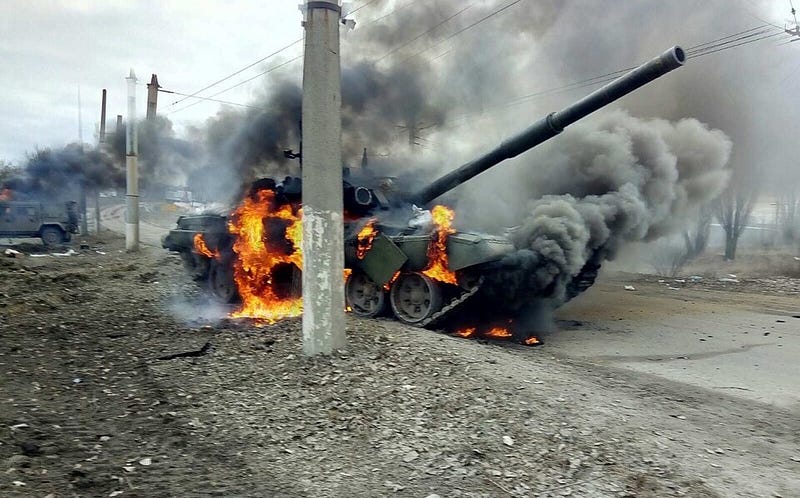
The contrast between the fates of Russian and Ukrainian armored forces is stark. While Russia scrambles to offset its losses with antiquated models, Ukraine’s augmentation with Western tanks signifies a strategic shift in the conflict. This dynamic is not just about equipment but also about the broader support and morale that these advanced weapons systems bring to Ukrainian troops.
The strategic implications of these tank losses for Russia are profound. In military theory, as espoused in classic military manuals, the loss of a significant portion of a nation’s tank fleet signals not just a tactical setback but also a strategic blunder. It points to a failure in understanding the principles of war, notably those of mass, economy of force, and most critically, security. The sheer scale of the losses suggests a disregard for these principles, culminating in a situation where Russia’s ability to project power through its armored divisions is severely compromised.
Moreover, the losses underscore the effectiveness of Ukrainian defense strategies. Drawing from a deep well of determination and bolstered by international support, Ukraine has managed to not only withstand the Russian onslaught but also inflict significant damage on a key component of Russia’s military might. This accomplishment is a testament to Ukraine’s tactical acumen and its effective use of anti-tank weapons, many of which have been supplied by Western allies.
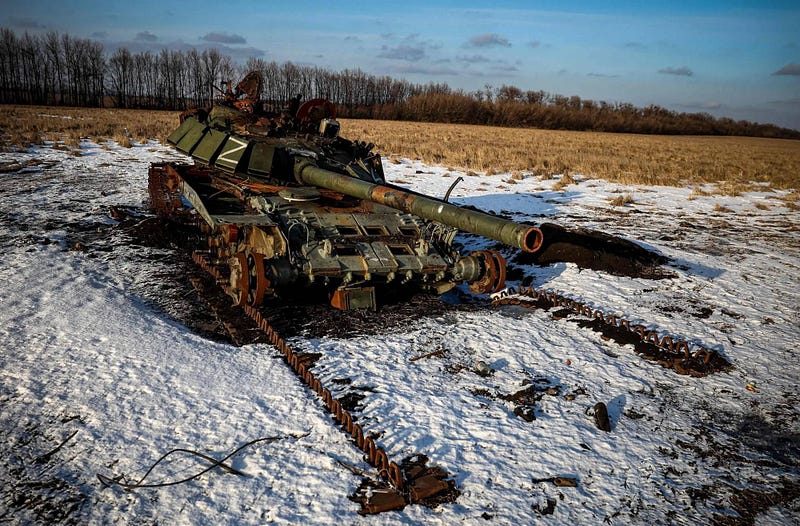
However, the war is far from a one-sided affair. The Ukrainian side, while bolstered by Western tanks and equipment, still faces a formidable adversary. Russia’s numerical superiority and willingness to sustain heavy losses speak to a resolve that cannot be underestimated. The conflict, therefore, continues to grind on, with neither side able to secure a decisive advantage.
The loss of over 6,000 Russian tanks emerges not just as a statistic but as a symbol of the enduring and evolving nature of this conflict. This figure, while indicative of Ukraine’s tenacity and strategic ingenuity, also underscores the relentless attrition and the complexities of modern warfare. In this environment, the traditional metrics of military strength are constantly being re-evaluated against the backdrop of dynamic battlefield conditions and shifting alliances.
The Russian military, traditionally revered for its armored capabilities, finds itself at a critical juncture. The depletion of its tank fleet raises questions about its long-term strategy and its ability to sustain operations under such heavy losses. This situation also highlights the importance of logistics, maintenance, and adaptability in modern warfare – elements that are often overshadowed by the more immediate aspects of combat but are crucial for sustained military effectiveness.
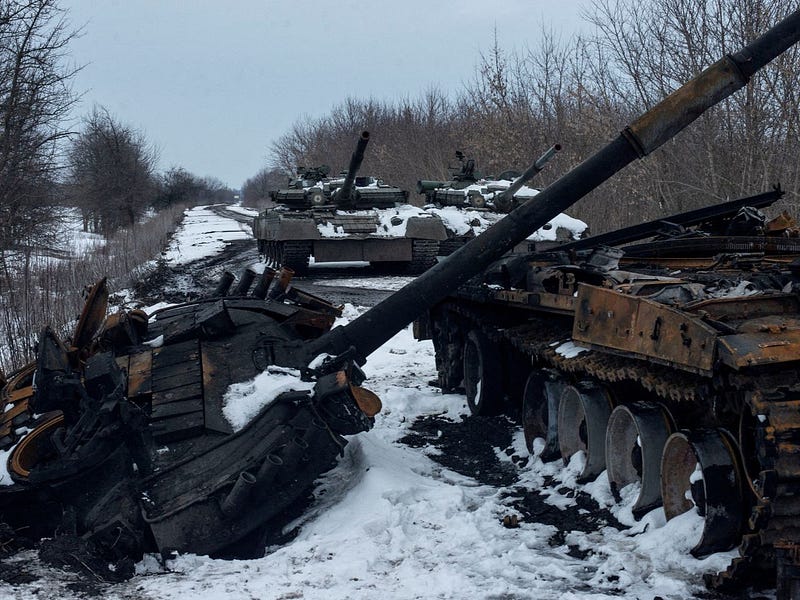
On the Ukrainian side, the infusion of Western tanks and military equipment signifies more than just a boost in firepower. It represents a deepening of ties with Western allies, a commitment to Ukrainian sovereignty, and a belief in the cause for which Ukraine is fighting. This support has not only been instrumental in leveling the playing field but also in bolstering the morale of Ukrainian forces, who see this as a validation of their struggle and a sign of hope amidst the relentless brutality of war.
The ongoing conflict in Ukraine, characterized by these massive tank losses and the shifting dynamics of military engagement, serves as a stark reminder of the cost of war. It is a conflict that has not only reshaped the geopolitical landscape but has also left an indelible mark on the lives of millions. As the world watches this struggle unfold, the lessons drawn from it will undoubtedly shape military strategies and international relations for years to come.
In conclusion, the story of Russian tank casualties in Ukraine is more than a tale of military hardware; it is a narrative about resilience, strategy, and the unyielding spirit of a nation fighting for its survival. It’s a reminder to us all of the sacrifices made in the name of sovereignty and the enduring importance of supporting those who fight for their freedom.
I invite readers to engage in this ongoing conversation. Your insights, thoughts, and perspectives are valuable in understanding the multifaceted nature of this conflict. So, feel free to share your views, clap for this article if you found it informative, and join the discussion through your comments.