
Military
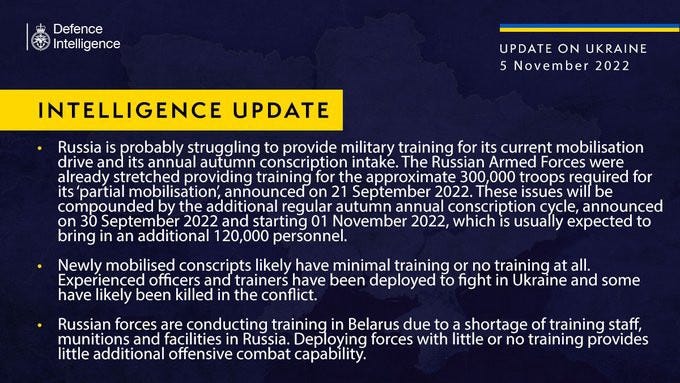
Russian Forces: Training Neglected — Plenty of Conscripts, No Time
It seems that Western forces are better at schooling their warriors than Russia and China whose approach has always been to throw bodies at the problem, reflecting the fundamental philosophical difference between the political systems
The State is more important than the individual. That’s the communist dictum when applied both to society and to warfare.
Throw bodies at the problem.
Stalin did it in World War 2 and now Putin is doing it again in Ukraine. Russia mobilised 300,000 men in the late summer/autumn of 2022 and sent them to the front line to soak up Ukrainian ammunition.
Arguably, Putin had no choice if his ‘special military operation’ was to succeed. He had to plug the gaps, throw bodies forward. They were ill trained (if at all), very poorly equipped and became mincemeat or deserters.
But that approach has been shown to be a failure.
The ‘West’ on the other hand generally values the individual and seeks to train and equip each individual to have a reasonable and publicly acceptable chance of survival. They are volunteers.
Training instills discipline, capability and responsiveness. And good training multiplies force strength to deal with all the bodies that Communists throw forward. Yes, and Fascists like Putin too.
Is China learning about training?
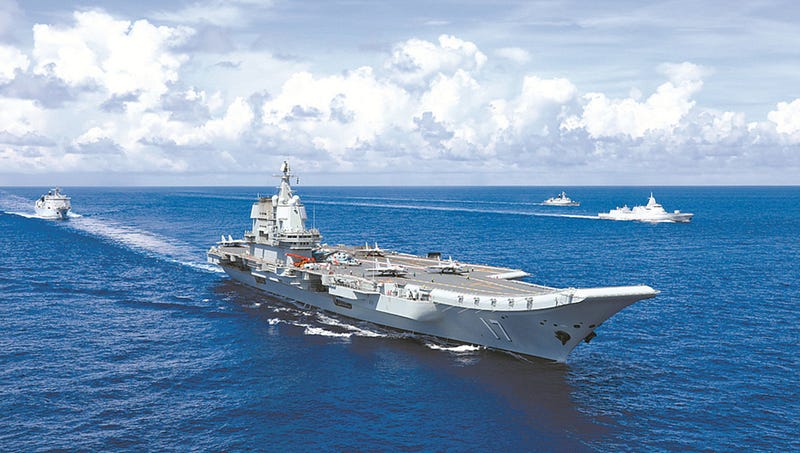
China now has two operational aircraft carriers and they have recently been undergoing extensive exercises in the South China Sea and in the Pacific. You cannot operate an aircraft carrier effectively (and still maintain force credibility ) without incessant training and drills. Running an effective carrier fleet is probably more difficult than putting a man or woman into orbit.
Increasingly complex technical weapons systems require high skill levels if they are to be effective — or full autonomy to eliminate the human element. Fully autonomous lethal weapons systems are ‘illegal’ (except mines). But. lacking autonomy, you have to have well-trained and capable people. Idiots are no longer acceptable.
Yes, I believe that China is learning and no longer sees throwing bodies forward as the solution to any military problem. They have a hi-tech focus and they mean to make it work. But if it doesn’t…
The Russian training problem
Throughout and after the Cold War Russia has always had a strong focus on technology in their armed forces and it has worked well for them in Chechnya and Syria. But in Ukraine the technology has met its match. Additionally, the reliability and operational readiness of equipment has been found severely wanting and it’s getting worse as they are forced to dig deeper into their mothballed equipment.
That’s capped with huge ineffectiveness in their communications, command and control systems (C3).
So Russia has been forced to rely increasingly on boots on the ground.
All the intel is pointing (as of early Jan 2023) to a major Russian mobilisation of maybe 500,000 people to be drawn from urban areas.
Text: ❗️Ukrainian intelligence predicts the start of additional mobilization in Russia on January 15. Up to half a million Russians will be mobilized, a draft decree already exists. This time the mobilization will take place in large Russian cities such as Moscow and St. Petersburg.
Given that the previous mobilisation was an organisational disaster, how will Russia be able to train and equip another 500,000 conscripts in 2023?
Russian infantry training
I did some research on Russian infantry training.
Typically, basic training for Russian infantry soldiers lasts for about 6 to 8 months, and it usually includes both classroom instruction and field training exercises. During this time, soldiers are taught the basics of military operations, tactics, weapons handling, and other skills that are necessary for them to perform their duties effectively.
Sounds good, no surprises, but that’s just the basic stuff.
The training program for Russian troops also includes political education and ideological indoctrination, which seeks to instill soldiers with a strong sense of national pride and loyalty to the Russian state. This is achieved through a combination of classroom instruction and other activities, such as military parades and patriotic events. And invasions.
That’s all very well. 6–8 months. Surely, there’s no way that Russia can sustain the present levels of operational intensity and absorb the losses of men and materiel while they take half a year to train 500,000 people. They would have to stretch it out into intake batches.
Or not — and lose people at a huge rate.
Typically, a Russian motorized rifle division has around 10,000–12,000 troops. 500,000 men equates to about 50 divisions. Yes, some will be airforce and naval conscripts but I’m talking generally here.
And what about training the specialisms — and here I’m thinking about equipment maintenance with Russia clearly under pressure to keep tanks, trucks, IFVs and other weapons systems operational?
And where on earth will Russia find the instructors and the officers?
Or is Putin and his advisers looking at a slow drip-feed of death, a rolling carpet of corpses through 2023?
Training should be a continuous process
Weapons systems change, troops are trained in new skills and how to operate across a range of combat scenarios. C3 systems are exercised.
Training is continuous in a professional army/air force/navy.
One of the main differences between NATO and Russian military training is the emphasis placed on political education and ideological indoctrination.
In Russian military training, political education and ideological indoctrination is a major component. It’s probably a hard political sell and much easier to use the Russian National Guard (Putin’s elite) to shoot deserters.
The National Guard — Rosgvardiya — is the internal military force of Russia, comprising an independent agency that reports directly to the President of Russia Vladimir Putin.
In contrast, NATO member countries typically do not include political education as a formal part of their military training programs, and focus mainly on the technical and tactical aspects of military operations. However, pride in one’s nation and reverence for the flag (and maybe monarch) are part of everyday ceremony and certainly not neglected in NATO countries.
Another difference between NATO and Russian training is the duration of basic training. In general, NATO basic training is shorter compared to the Russian training (up to 8 months). The training in NATO countries may be shorter but the soldiers will continue to receive training and education throughout their career in the military. Continuing professional development, as the phrase goes.
The more technical the weaponry, the longer the training:
About 100 Ukrainian soldiers arrived in Oklahoma to receive training on Patriot air defense systems.
The Pentagon has developed an accelerated training program for them. It is estimated to take several months (the standard one lasts from 6 months to a year). Telegram Live Ukraine Media
I cannot see any way that Russia can handle the training of 50 divisions in a time-frame that’s going to prevent Ukraine recovering its annexed land.
But later? Putin has said it will be a long war. Will he see the end of it?
A cynical view
Perhaps Putin is seeing the expenditure of another 500,000 people in Ukraine as a way of ensuring that his population comes into line behind him, to get the Ukraine war over with as quickly as possible and end the pain. It’s a perverse logic if it’s logical at all.
When it comes to Russia training 500,000 unwilling conscripts, swimming pools and deep-ends come to mind.
Phil Ochs sung about US troops training in Vietnam. Although he never served in the military, it’s a salutary piece.
‘Well, training is a word we use
Nice word to have in case we lose”.
Author’s note: The concept, structure, style and creative content in this story are all my own and I hope that is obvious to a reader. I do not employ third party writers. However, I do occasionally use an AI assistant to research and present small sections of factual content and data. All facts are checked where possible and sources quoted.
About me: If you follow me I guarantee variety in your inbox with some unusual perspectives! I write on a wide range of topics including humor, tech, space, geopolitics and travel, together with daily news events and the minutiae of my daily life living on a boat. Yes, I really do live on a boat (some readers don’t believe that). I also write about…
…continuing professional development
If you appreciate stories like these and want to support other writers and me, consider signing up to become a Medium member. It’s only $5 a month, giving you unlimited access to incredible stories on Medium. If you sign up using my link below, I’ll earn a small commission at no extra cost to you.
Or maybe just buy me a coffee? and tell me what you liked reading (or not)…


