
Ukraine War
Russia: Tobol Jamming Starlink Over Ukraine
They’d have to wouldn’t they, but would they physically attack the satellites?
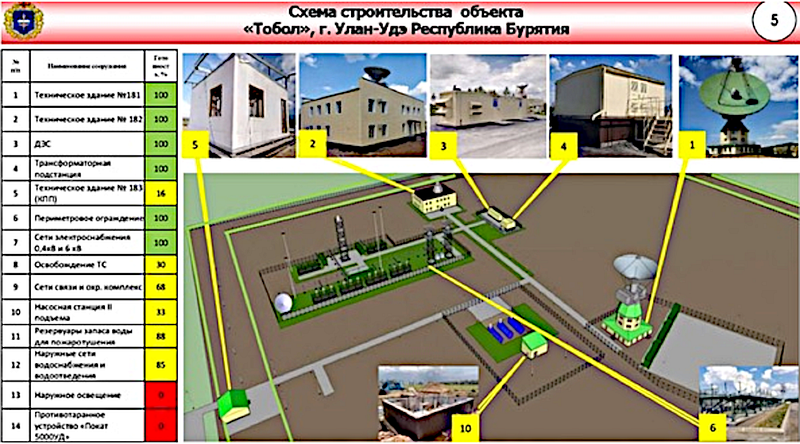
According to a recent story in the Washington Post, Russia is trying to disrupt the access of the Ukraine Armed Forces to the Starlink satellite network. Moscow has been experimenting with its Tobol electronic warfare systems for months. Russian Armed Forces sought to disrupt Starlink data transmission in Ukraine.
The document, among a cache of sensitive materials leaked online through the messaging platform Discord, dates to March and does not indicate whether any of Russia’s tests have been successful. But the intelligence finding is striking nonetheless as it appears to affirm what observers had only hypothesized previously: that a program ostensibly designed to protect the Kremlin’s satellites can be employed instead to attack those used by its adversaries.
SpaceX, the firm that owns Starlink, declined to comment. Last spring, Musk briefly addressed the Kremlin’s attempts to target the technology, writing on Twitter in May that while Starlink had demonstrated its resilience against such “jamming & hacking” attempts, the Russians appeared to be intensifying their efforts.
The Pentagon did not address questions about the leaked assessment. “These systems constitute an important layer in Ukraine’s communications network,” said Maj. Charlie Dietz, a Defense Department spokesman. The department’s focus, he added, “remains on getting the Ukrainians the satellite capabilities they need.” — Washington Post
The information came to light in the documents leaked on the Discord platform by the young US traitor whose name I will not mention here.
The Starlink satellite constellation is owned by SpaceX which, as far as I know is a US corporation owned in turn by Elon Musk.
So, although Putin is at war with Ukraine and trying to disrupt their communications, he is interfering with US satellite transmissions.
But there is a huge historic precedent of signals (and broadcast) ‘jamming’ not being an act of war. It’s being going on almost since radio was invented.
But if the Russian Armed Forces are unable successfully to jam Starlink, then would they physically attack it?
It’s a grey area.
Reuters recently reported that:
“Quasi-civilian infrastructure may be a legitimate target for a retaliatory strike,” senior foreign ministry official Konstantin Vorontsov told the United Nations, reiterating Moscow’s position that Western civilian and commercial satellites helping Ukrainian’s war effort was “an extremely dangerous trend.”
No country has yet carried out a strike against an enemy’s satellite (laser, grabber arm, ground-launched missile, kinetic attack or blinding cloak). Such an act during the war in Ukraine could sharply escalate tensions between Russia and the United States.
“This threat has brought us to a brink that we’ve never been to before,” said Michelle Hanlon, co-director of the University of Mississippi School of Law’s Air and Space Law program told Reuters. “There’s always been a sense that this could happen, but never has somebody actually said that they might do that out loud.” — Reuters
Under the laws of armed conflict (paywall), a Russian strike on a private U.S. company’s satellite could be seen as an act of war to which the U.S. could respond.
While some might argue that a Russian anti-satellite strike would violate the 1967 Outer Space Treaty — specifically the ban on placing weapons of mass destruction in space — legal experts say the issue is debatable. The Liability Convention of 1972, to which Russia is a signatory, requires countries to financially compensate for any damage caused by its space objects. Yes, sue the Kremlin.
Other countries which have conducted anti-satellite missile tests (such as Russia used) are the United States — which last demonstrated an anti-satellite weapon in 2008 — China, and India.
White House spokesman John Kirby has said that any attack on U.S. infrastructure would be met with a response but declined to elaborate further — no surprises there.
So, what is Tobol?
According to a report released this month by Secure World Foundation (a privately funded group focused on space security and sustainability), analysts have identified at least seven Tobol complexes in Russia, all of which are located next to facilities used to track satellites.
Some of the sites are headquarters for mobile jammers, analysts said.
A key project in Russia’s EW programme, TOBOLis designated 14Ts227, with a project infrastructure code of 8282. The following Tobol sites are mentioned (source: The Space Review):
- 8282/1: near Shcholkovo (Moscow region) (NIP-14) (military unit 26178)
- 8282/3: near Ulan-Ude (Republic of Buryatiya) (NIP-13) (military unit 14129)
- 8282/4: near Ussuriysk (Primorskiy region) NIP-15) (military unit 14038)
- 8282/5: near Yeniseisk (Siberia) (NIP-4) (military unit 14058)
- 8282/6: near Pionerskiy (Kaliningrad region) (military unit 92626)
- 8282/7: near Armavir (Krasnodar region) (no known NIP number) (military unit 20608)
Technical principles
The technical approach of Tobol jamming is believed to disrupt the timing signals of the satellites.
Zen, a Russian publication, quoted Ukrainian journalist Konstantin Ryzhenko as saying that the Russian jamming did not impact the transmission of data between the Starlink satellites or the ground terminals in any way.
“(Rather, it targeted) the GPS module responsible for the synchronized operation of the terminal and spacecraft. The suppression is carried out on the terminals and not the satellites,” the report said.
“While Starlink appears to be immune to EW [electronic warfare] at satellite frequencies, it has GPS in its structure, which is unfortunately vulnerable to electronic interference. If the GPS signal is jammed, Starlink cannot register, and even after successful registration, its speed is reduced until the connection is completely lost,” Ryzhenko explained.
This has confirmed earlier analyses by researcher Bart Hendrickx, who concluded in a November 2020 report that the Tobol works through ‘downlink jamming,’ where it targets the signals from the satellite to the ground terminals or receiving stations. — Eurasian Times
The SWF report states that Tobol was introduced to defend Russian satellites from jamming, but it now appears to have been repurposed for offensive jamming of other satellites.
Tobol’s chief designer has co-authored several papers and patents related to the protection of satellites from electronic attack. One such patent describes an array of ground-based antennas that would be used to pick up and jam unauthorized signals sent to satellites relayed via satellites to the ground. In another scenario, unauthorized signals downlinked from a satellite to the ground would be identified by monitoring stations, following which the tropospheric stations would transmit jamming signals that would reach receivers after being reflected off the troposphere and cancel out the effects of the unauthorized signals. (source: The Space Review)
Tobol effectiveness
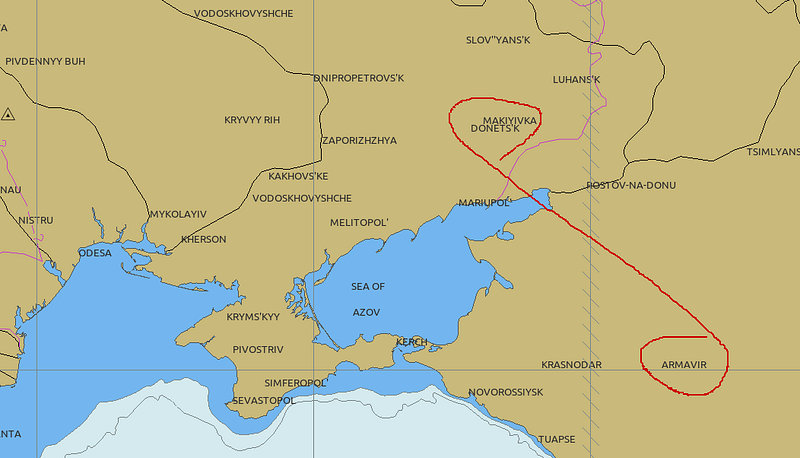
The Washington Post identifies Bakhmut in Ukraine’s eastern Donetsk region as the area where interference/jamming signals were directed. Quoted in the context of the fight for Bakhmut for another Washington Post story, Ukrainian commander Colonel Pavlo Palisa in the besieged city too noted an effective Russian EW. (Eurasian Times ibid.)
“Our enemy is using jamming really successfully,” he said, referring to measures blocking GPS signal access.
I note that there is a Tobol site reported (see above) as 8282/7: near Armavir (Krasnodar region) (no known NIP number) (military unit 20608), just 200 mls away from Donestsk across the Sea of Azov.
Conclusion
What I don’t know is how Tobol works — is it an ‘area denial’ EM capability or just directed at specific satellites? What is it’s ‘capacity’?
It’s almost a ‘hidden war’, but its effects are profound.
The Ukraine Armed Forces have a huge reliance on GPS technology as a force multiplier. The Russians have GPS (Glonass) and many more men (numbers falling rapidly). Disruption of Starlink would have a serious effect on UAF capabilities.
But there is a potential force multiplier for the Ukraine in this context, as I recently wrote:
A cloud of thousands of interconnected satellites encircling Earth has been championed by the U.S. military as being resilient to potential anti-satellite attacks that could only target a small portion of the network without fully disabling it, in the same way that DARPA conceived the original design of what we now know of as the internet.
“It complicates the calculus for the enemy,” Lieutenant General Philip Garrant, the U.S. Space Force’s deputy chief of strategy and operations, told Reuters in a recent interview. “If there’s lots of satellites, they don’t know which one to target.”
SpaceX’s Starlink network currently consists of roughly 3,000 satellites (aiming for 42,000), and there are also several dozen commercial U.S. imagery satellites eyeing Russia and Ukraine.
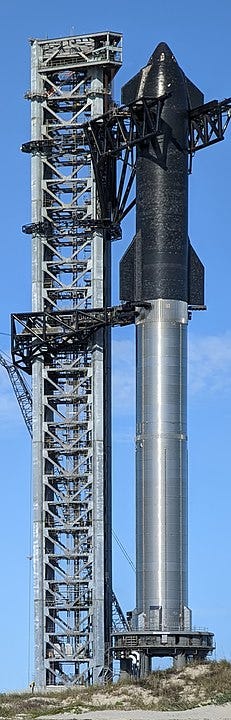
That will take time to achieve, especially as Musk is griping about the cost to him of supporting Ukraine (reasonably so, I think), and of course the recent failure of the 150 ton payload Starship heavy lifter capable of launching many hundreds of Starlink satellites in one go.
About me: If you follow me I guarantee variety in your inbox with some unusual perspectives! I write on a wide range of topics including humor, tech, space, geopolitics and travel, together with daily news events and the minutiae of my daily life living on a boat. Yes, I really do live on a boat (some readers don’t believe that). I also write about…
…jamming sessions and Starship
If you appreciate stories like these and want to support me and other writers, please consider signing up to become a Medium member. It’s only $5 a month, giving you unlimited access to incredible stories on Medium. If you sign up using my link below, I’ll earn a small commission at no extra cost to you.
https://james-marinero.medium.com/membership
Or maybe just buy me a coffee? and tell me what you liked reading (or not)…

James Marinero’s novels are available at his Gumroad bookstore. Also at Amazon and Apple


