
Running While Fasting — I Fasted For 30 Days & Ran For 45 Minutes (Almost) Every Day
In the first few days, I kept on gaining weight. I was surprised by that. What was I doing wrong? The answer was pretty simple (and dumb).

This year, I set myself a (fairly) challenging goal. I’d fast for 30 days and run (as an exercise) every day.
During Ramadan every year, I (like most other Muslims) fast for 30 days. The fast starts before dawn and ends at sunset. Usually, these thirty days are quite physically challenging (especially during the last 10 days).
Staying without food & water for 13–14 hours every day is not exactly easy. You obviously get hungry. But guess what! Hunger is something you can tolerate. But thirst and fatigue creep up and can become less bearable.
Also, usually at work, you’d take coffee breaks, have a chat near the water cooler, and catch up with colleagues over lunch. That doesn’t happen at all during Ramadan.
So, in a way, you can feel that time moves slower. It slows down even more during the last hour before breaking fast. Thirst & tiredness also increases during that hour.
Despite all that, I wanted to challenge myself this year. I took up running in recent months as an exercise. While I am still getting used to it, I love the way it makes me feel afterward. I didn’t want to stop my progress & wanted to continue during Ramadan.
And here’s how it went.
How I Continued Running While Fasting
I chose the last hour of fasting because even if I feel too thirsty, I would be able to somehow hold off till the iftar (breaking fast) time. Iftar time was around 6:15. I’d go out to run at 5:10, do some warm-up and then run for 45 minutes.
I used a treadmill and ran slower than I usually would. As I’d be in the 13th hour of fast when I’d go running, it was important to listen to my body while I was running.
The key elements that made running while fasting possible
- Day one was key in setting the mood. I was very careful while running and felt quite good when I finished. But, I made the mistake of not cooling down properly. I had a muscle pull when I was coming back home.
- Hydration was one of the most important elements. From dusk to dawn, it was a race to get hydrated. Even after that muscle pull, I didn’t have to skip a day as I drank over 3 liters of water that evening (and did some stretching).
- Cooling down was another mandatory aspect. Every day, I’d have to cool down quicker than I usually do. After running, I’d cool down fully and then hit the showers. Only after that, I’d start having iftar. Hitting the showers or eating without cooling down can be dangerous.
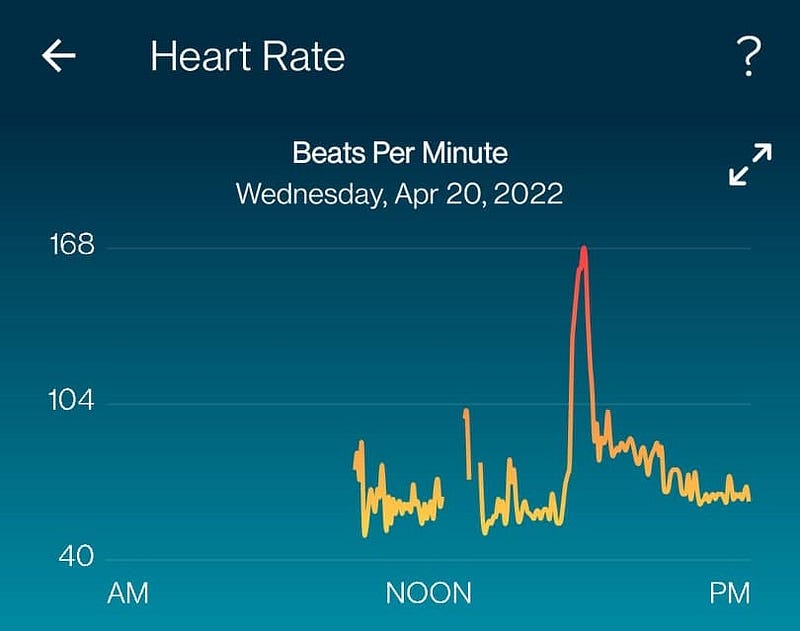
- I was also quite flexible with my speed. Some days, I felt good and continued with my usual pace. For the others, I slowed down to ensure I could continue. But with the slower speed, my heart rate would go up quite a bit.
The Results of Running While Fasting
Weight loss or gain?
You’d expect that after fasting for 13–14 hours, you will lose weight as easily as Apple users lose their AirPods. And you’re adding 45 minutes of running to it, that’d create a large calorie deficit.
That wasn’t quite true for me.
In the first few days, I kept on gaining weight. I was surprised by that. What was I doing wrong? The answer was pretty simple (and dumb). I moved from a protein-rich diet to a traditional iftar (which is more carb-heavy). My body just had to handle different types of macro and more calories.
Once I fixed my diet, I started seeing results. By the end of the month, I lost ~2.6 KG in weight. That’s not a lot. But with traditional iftar and late-night pre-fast meal (suhoor), I wasn’t helping my body in losing weight.
Surprising muscle gain & toned body
I gained roughly ~1 kg in muscle, according to my smart scale. That’s quite good in my view as I wasn’t expecting that at all.
More interestingly, my body started looking better in the mirror. My face also lost some weight.
The energy level in the last ten days
Usually, during the last 10 days, I have felt extra tired.
But this year, I felt much more energized. My body was tapping into energy reserves or using the food better. Whatever it was, I didn’t feel sluggish. That was a huge boost for me.
Final Thoughts With A Word of Caution
Having said all of these, if you want to try this, exercise some caution.
I became a regular runner last year. That was what gave me confidence. If you are not into running, then don’t start during Ramadan. At least don’t start before you break your fast. The same is true for any other type of exercise.
One of my motivations was to continue my momentum so that I don’t have to start again after this month. If you haven’t been exercising, then you don’t have that obligation. Take it slow. Even if you want to run, start with smaller durations, see how you feel, and then adjust accordingly.
And if you don’t feel like running while fasting, it’s not a problem at all. Do it when you’re back to your regular schedule. It’s your body. You must listen to it to keep it healthy.
Read more: