Running From Choquequirao to Machu Picchu
You never know when you’ll get the chance to go on the adventure of a lifetime
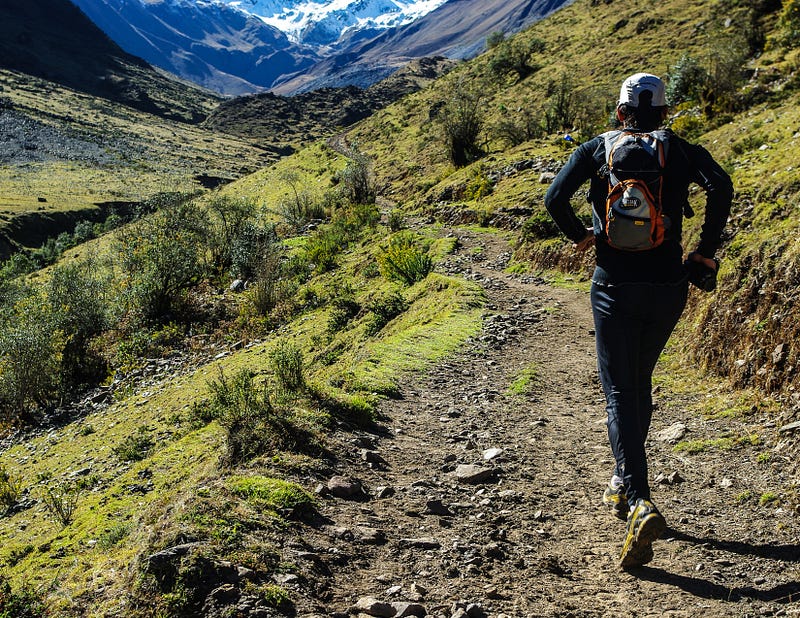
One of the reasons that it’s important to do a marathon or two every year is that it keeps you in a general state of fitness. Sometimes tremendous opportunities fall into your lap and you don’t want to miss out because you’re not physically up to the task. When my adventure came, even with a couple marathons in my legs, the demands were almost more than I could handle.
Running with Olympians
Back in 2011, Peru’s first winter Olympian, Roberto Carcelen invited me to come along on an expedition on the Inca Trail. Roberto and fellow Olympian Martin Koukal were planning on running from the historical site of Choquequirao to Machu Picchu to train for the Sochi Olympics.
I’d heard about the legendary site of Choquequirao which was rumored to be nearly as spectacular as Machu Picchu. The chief advantage of Choquequirao is that, unlike Machu Picchu, almost nobody goes there. This is because Choquequriao is inaccessible from roads and requires a 20 mile hike. Roberto’s route added an additional level of difficulty by pushing through to Machu Picchu, and would go through terrain primarily known only to the locals and the Incas.
The journey would take about 7 days, and the trail went over multiple mountain passes, some as high as 16,000 feet in elevation. It was going to be difficult. Naturally, I jumped at the chance.
The last great adventure
In my 20s, I used to do a lot of traveling, and I often ended up in some crazy places. Back in 2006, I bought a ticket to Caracas, Venezuela just because the US government issued a warning that Americans shouldn’t go there.
I’d been living in Peru since 2001, splitting my time between teaching, writing, translating, and editing jobs. Peru is a wonderful country with plenty to explore, and every year one of my friends back home would come and visit so I could take them on a tour of Machu Picchu.
I got married in 2009, and that marked the beginning of a new kind of adventure. In 2010 that adventure got even more exciting with the arrival of my first daughter. In some ways, it seems like you become a father overnight, and even if you are dedicated to the idea, it takes your brain a little while to catch up. My daughter was 1 when I did this Inca trail run, and it represents the last time I have been away from my family for more than one night.
Editor and journalist
I’d been working as an editor for a web page called Living in Peru. I’d come across a story of Roberto Carcelen and I thought it was amazing that a Peruvian would compete as a cross-country skier in the 2010 Vancouver Olympics.
I’m originally from Wisconsin and I’m a cross-country skier myself. In fact, I’ve written a book about America’s largest ski race: The American Birkebeiner. As I read about Roberto, it occurred to me that I was maybe the only person in the country who knew what cross-country skiing was.
I got in touch with Roberto and published an interview on Living in Peru. El Comercio, the largest local paper, saw the article and ran a full page spread on Roberto shortly thereafter. Roberto called me up and told me how proud he was that his mother got to read about him in the paper. From that point on, I could do no wrong in Robert’s eyes.
Martin Koukal
At the time, Roberto ran an adventure company called Inca Runners. The Inca Trail is largely known throughout the world, but the path that most travelers navigate goes from Cusco to Machu Picchu. The route from Choquequirao to Machu Picchu is much longer and covers much more difficult terrain.
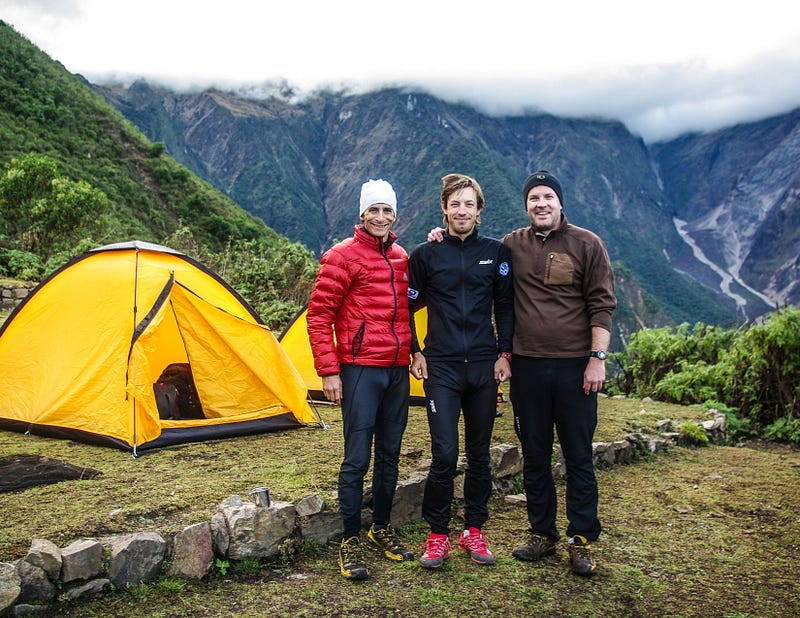
Roberto generally put a group together consisting of himself, another world cup skier, and various tourists. The purpose of our trip was to be promotional, and the only participants would be myself, Roberto, and a former world champion from the Czech Republic named Martin Koukal.
Roberto introduced me to Martin Koukal at a restaurant in Lima, and I think he was the most intense person I’ve ever met. Like most elite cross-country skiers, Martin was as thin and as quick as a whip, but he carried himself with extreme confidence. In addition to his world championship gold, Martin had also won two bronze medals at the Olympics.
Cachora
We flew into Cusco, and after a few days to acclimate to the elevation, we headed off to Cachora. Cachora is a small town which has the potential to develop into the next great tourist destination in Peru.
We spent a night in a rickety house that seemed to have been built from one inch diameter saplings. Guinea pigs were free to run around the dirt floor. In Peru, Guinea pigs are a culinary delicacy. The locals skin them, pop them on a stick, and cover the bodies with local herbs prior to a slow roast. The meat is actually quite good.
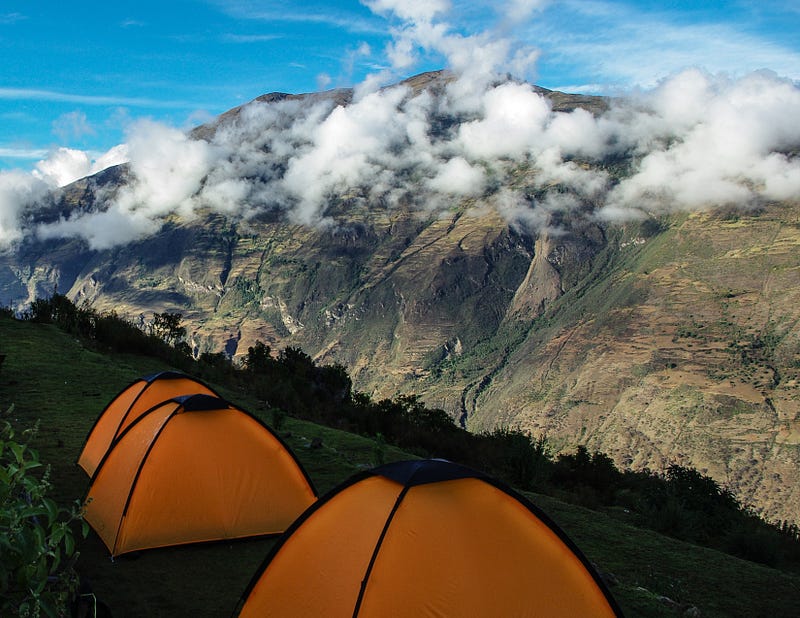
In the morning, Roberto bustled about organizing with his porters. A couple men led a team of donkeys burdened with food and camping supplies. I was only responsible for lugging my 220 pound frame straight uphill.
The daily grind
Although Roberto called his tour group Inca Runners, I planned on keeping my running to a minimum. I’ve trained with elite athletes before, and I know from experience that it’s stupid to try to keep their pace. You’ll blow up in a matter of minutes, and if you try a stunt like that at altitude it’s both stupid and dangerous.
I was the first to get up and get moving, though one of the porters came along to keep an eye on me. I’d usually hike for an hour or so only to have the Olympians come trotting by with a smile a little later in the day. Then it was up to me to knock off the miles at whatever pace I could manage.
I couldn’t believe that Martin and Roberto could run at all to be honest. Half the time it felt more like I was climbing a ladder than going for a walk. Most of the days were around 8 miles. I felt pretty good when I could maintain a 60 minute mile.
Choquequirao
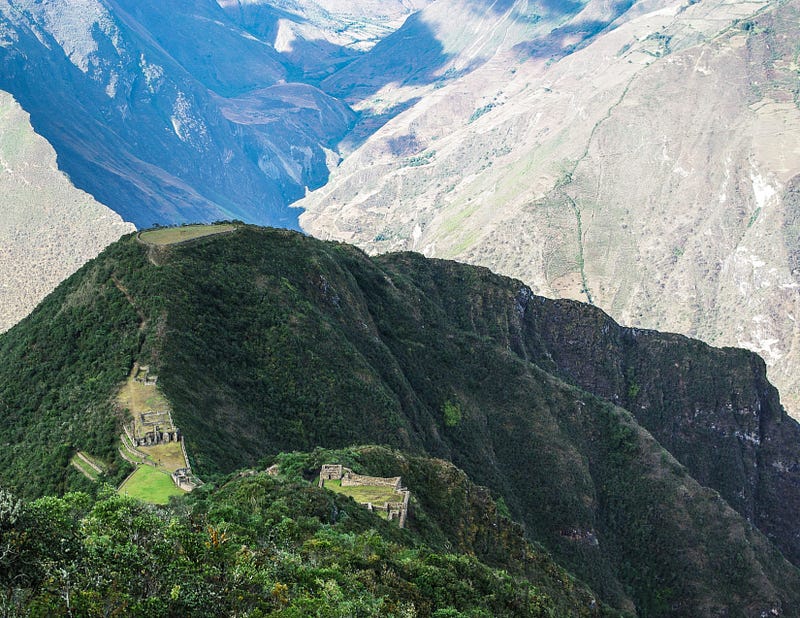
We made it to the foot of the ruins after the first day, and Roberto scheduled a whole day of exploration. Martin was more interested in his training, so he sprinted up and down the mountain, and Roberto had seen it before, so I was the only one who crawled around the ruins.
It’s an amazing thing to go to a place like Choquequirao and be completely alone. Machu Picchu has become so popular that it’s almost like Disneyland. It’s rewarding to be in the Andes and hear nothing but the wind and the sound of the river far below.
The passes
After Choquequirao, the real work began. To get to Machu Picchu we had to cross the 14,000 foot Victoria pass, then the 16,000 foot Yanama pass. Roberto didn’t bother to tell me about these challenges until we had arrived at Choquequirao.
By the third day, my body was pretty well broken down. I had massive blisters on both of my heels and I was concerned that the pain plus the exhaustion would be enough to provoke a misstep that caused me to tumble off the mountain.
Although a part of me remembers that I was in a lot of physical pain for most of the hike, mainly I remember the beauty of the surroundings and the sense of exhilaration just for being out there. This trip was the most physically intense undertaking I’d ever attempted, and were it not for the mental strength learned from running marathons, I don’t think I’d have made it.
The closing days
On one of the last days, when Machu Picchu was close and we only had a few more nights on the trail, Roberto started to relax a little more. As the guide and the leader of the expedition, he carried more stress than the rest of us. In addition to worrying about himself, he had to worry about me.
“When I do this trip with clients,” he said, “I have to interview them and get a sense of whether or not they’ll be able to make it. I’ve had people break down into tears out here.”
That confession surprised me because we’d never had such a discussion. I asked Roberto about the omission.
“Oh, I wasn’t worried about you,” he said, “you’re a marathoner.”
Why we run
In every marathon I’ve ever run, I’ve asked myself the question, “Why am I doing this to myself?” I’ve reflected on that thought a lot and the expedition to Choquequirao helped provide me with the answer.
Life is a series of challenges. You never know when and where they’re going to rise up. A marathon is a controlled event that allows you to keep your mind and body sharp. Running a marathon or two a year provides you with the tools necessary to navigate almost any hardship, both mental and physical, that might come your way.
We finished the trip, and I returned to Lima to hug my wife and daughter. My wife noticed that I’d lost a ton of weight, and I think I spent the next few days in bed recovering. These days, I don’t feel much compulsion to drop everything and embark on a crazy journey hiking through the Andes. But I’m glad I have the memory of that trip. I remember it with profound clarity every time I run a marathon, and I keep running marathons because you never know when the next challenge will come.
It’s good to be ready.
For more thoughts on running, check out this article:


