
Ruminations on the Triple Nipple
Most humans have two — but there are plenty of outliers
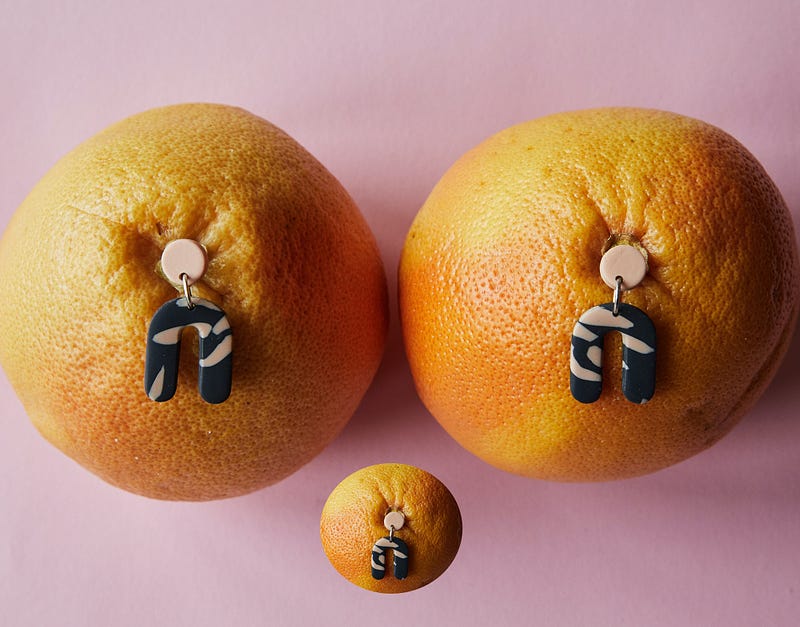
When my mom casually mentioned that what I thought was a birthmark below my left breast was actually a third nipple, I was horrified.
To be honest, I was horrified by most things at the time. I wasn’t the girl reading Are You There God, It’s Me, Margaret? wishing things would hurry along. I had been one of three girls in my 5th-grade class who needed to wear a bra and my period had come along that year as well. The week before Valentine’s Day. Good times.
When my new breasts were well, new, I was mainly concerned about their form. What they looked like in a bra, what they looked like in the mirror, what they would someday look like to someone else if I ever got up the gumption to reveal them.
I realized later that no one would have been the wiser about the discolored circle about as big as a thumbtack with a pinprick in its center. Certainly, I wasn’t like the 19th-century French woman who had a whole extra breast on her left thigh according to the BBC. Or the 74-year old man who had a female breast on the back of his thigh.
Later too, I would learn the scientific name of the condition which is called polymastia, for one extra nipple — or polythelia, for more than one. Yep, some women, and men, have up to eight extra nipples. Most don’t even realize what they have, although there are those people who require surgical removal of the gland.
The estimate is that 1 in 200,000 Americans have a supernumerary nipple or nipples— which is less than half a percent of people in the United States.
The National Institute of Health’s Office of Rare Diseases considers the condition a “rare disease.”
At least I’m in good company. According to the BBC, Mark Wahlberg, Tilda Swinton, Lily Allen, and Bill Paxton are all members of triple (or more) nipple club.
Maybe if I knew that Marky Mark and I had something in common back in the day I would have been more even-keeled. At the time, though, I just felt freaky. However, Cover Girl concealer masks a multitude of sins so I simply forged ahead — and eventually forgot about it.
Twenty years later as a new mother, I had a different take on my breasts. I really didn’t care what they looked like anymore — after all, that’s part of what got me into this mess in the first place — I was concerned with what they could do.
I wanted to breastfeed my first child and it wasn’t going well. He’d been in the NICU and got used to the ease of formula from the bottle. When we were reunited, he would latch on, but not get much of anything from me.
At first undeterred, I went to breastfeeding classes. I learned that even adoptive mothers can stimulate milk production. I rented an industrial-grade pump from the hospital. I walked around my house with a huge suction cup attached to my breast and little else.
Contrary to the teen me, I felt zero embarrassment. The 19th-century French woman fed five kids with her three breasts. I couldn’t even manage one. By the time I had to go back to work, we were mostly doing formula. I know there should be no shame in this. I was fed from a bottle and turned out just fine.
But didn’t I have breasts for a specific reason at this point in my life? And why weren’t they cooperating?
Maybe more functional nipples would have been a benefit. Like an oil well. At some point, I’d strike it rich.
A 1999 New York Times science article, ‘Of Breasts, Behavior and the Size of Litters, seeks to explain why most mammals, including humans, just have two nipples.
Apparently, this has been a question long pondered by esteemed academics like the philosopher Aristotle and the inventor Alexander Graham Bell. Aristotle I get, him being Greek and all, but Alexander Graham Bell? Good for him for branching out, no pun intended.
The two men posited the “one-half rule,’’ which means that a litter typically is one-half the number of mammaries with the maximum litter size equal to the total number of nipples. Humans mostly follow this. Other mammals with bigger litters have more teats.
The thought is that the configuration of nipple to offspring prevents competition for nutrients. Not every mammal, however, gets the benefit of a leisurely milking.
Dr. John Eisenberg, who was one of the world’s foremost experts on mammals before his death in 2003, said in the piece that opossum mothers don’t have nearly enough nipples for their broods. It’s literally survival of the fittest.
And pigs apparently go full-on Game of Thrones to get to the “milk-rich mammaries” near their mom’s head. That’s where we get the phrase “sucking the hind teat.’’
Some mammals have moms with a dedicated nipple but the moms can’t help them to the breast. Dr. Eisenberg told the Times that baby kangaroos have to find the teat themselves. If they don’t, it’s curtains for them.
My favorite story of a mammal mammary though belongs to the mole rat who has multiple mammaries and even more offspring. From the Times:
In mole rat colonies, as in bee or ant colonies, only a single female reproduces with the others at her beck and call. Fed and protected by members of the colony, the reproductive female appears able to provide so much milk that the young can all amicably share to satiation.
The mama mole rat just sits back and produces milk. Everybody knows she’s not going to run dry so they just take their turn at the teat.
Who ever thought I’d be jealous of a mole rat?
With my second child, I did have the luxury of not returning back to work and I rented the industrial-grade pump again. Once my kid caught on I truly was an actual geyser. Perhaps it was overkill but I took pride in my two glands serving their biological function.
Interestingly the left breast was the MVP, and my bonus nipple is below my left breast. Coincidence? I think not. At least it didn’t start weeping which can happen. That would have been too much, even for me at the time.
Now that I’m on the verge of sending my final eggs on their final voyage, I’m back to caring about form again. I care what my breasts look like in a bra, and what they look like in the mirror. I attend my yearly mammograms and keep my fingers crossed I get to keep them.
And I wonder what evolution is trying to tell those of us with a bonus. Maybe that we’re just that extra. The BBC said that the Greeks represented the goddess Artemis with more than two. In nearby Phoenicia, the plus-twos were considered a sign of fertility. This belief persisted in various places until the 1800s.
In The Descent of Man, Charles Darwin guessed that the extra nipples or breasts were atavisms, or rather evidence of our biological past. Hopefully, it’s not a harbinger of our future. One at a time is plenty for most human parents.
I barely notice my unique birthmark anymore other than as an interesting quirk, an aside at a dinner party if everyone just started talking about breasts. That has not happened yet — but if it did I wouldn’t be embarrassed to call myself a member of the Funky Bunch.
After all, what’s an extra nipple, or two?
Betsy Denson, 2022
If you decide to join the Medium Partner Program please consider using this link.


