
Rules I Follow to Keep My Life Somewhat Organized
Time management, space optimization, finances, projects
4 years ago I started my blogging journey and committed to waking up every day at 6 am to write an article. For the next year and a half, I published 3 articles a week every single week without fail, even while on vacation, even when I was swamped with my 9–5 job. Whether I had slept 9 hours or 4, whether I was in a good mood or grumpy, I committed to the routine. It wasn’t always easy, but when I look back now, those were the easy days.
Since then I got a kid, and if you’ve never tried to run a business and keep a 9–5 job while building a family, I’ll give you a little spoiler: it’s hard. When it comes to work, my routine has basically been crumpled into a ball of dirty diapers, thrown out the window, never to be the same again. I haven’t been writing every day like I used to, and my life has lost a lot of structure.
That being said, I’m still holding onto the tiny bit of organization I have left in my life, by following a set of rules I have developed over the last few years running my business. The fact that I now have a baby makes these rules even more important for me, but again I was following them back when I was just a solopreneur too. These rules can be used by anyone, no matter your situation, to hopefully become more organized.
I have categorized the rules into 4 key categories:
- Time management
- Space optimization
- Finances
- Projects & idea management
1. Time management
Organize your time on a weekly timeline (168 hours)
Ever since I started blogging, I’ve been using the 168-hour time management approach from Laura Vanderkam. In a nutshell, it’s much easier to plan and organize your time use when you look at it over a week (24 x 7 = 168 hours) rather than a day (24 hours). This method has literally changed my life, and I have created my own spreadsheet to keep track of how I use my time.
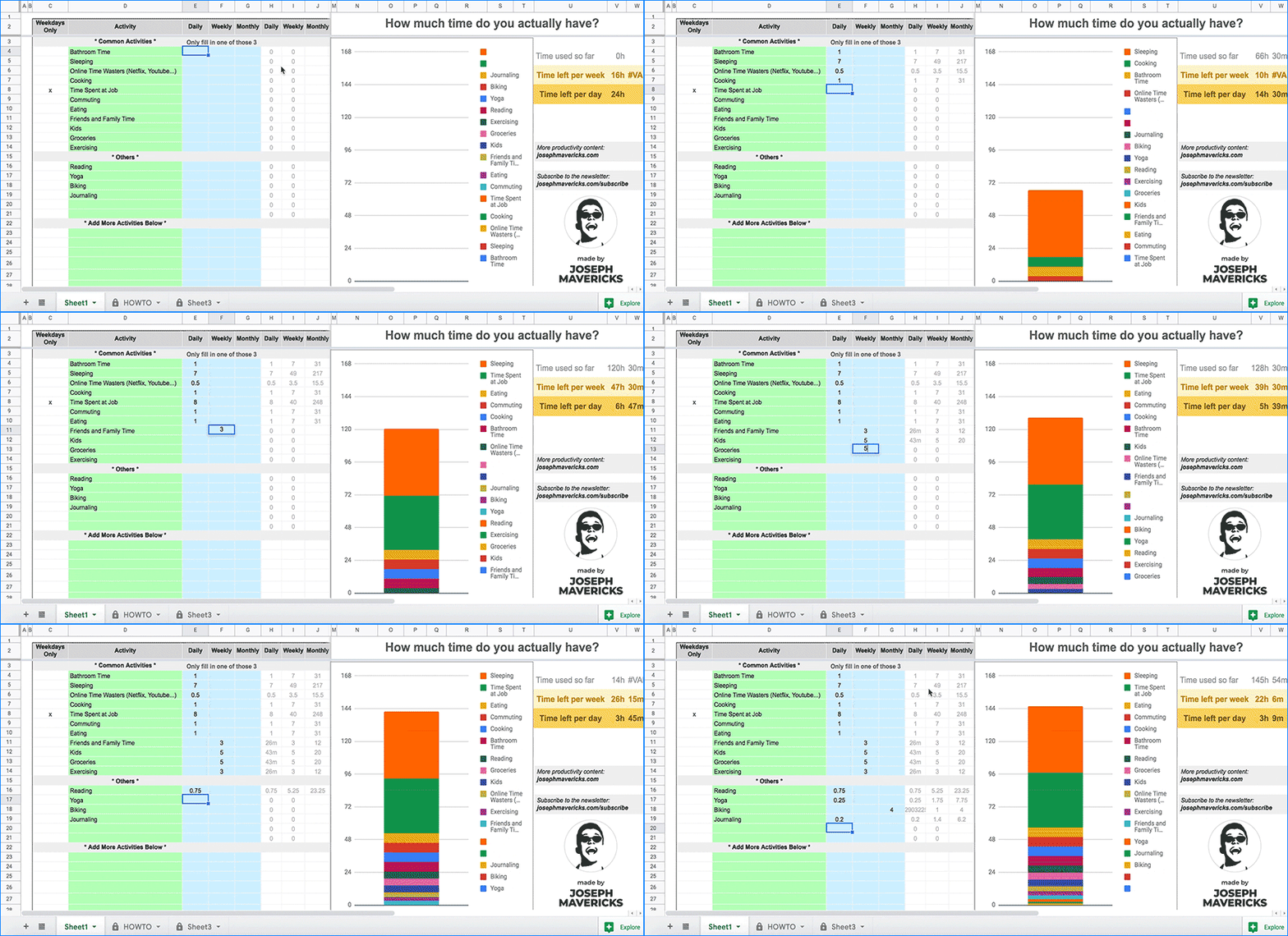
Even if you work 8 hours per day, commute for 2 hours, sleep for 8, and spend 5 hours on everything else: eating, family, exercising… You still have 27 hours per week to do a lot of different things. Most people think they don’t have time to do things, but the truth is they don’t have a good overview of their time use.
If it takes less than 5 minutes to do it, do it now
I don’t remember where I first read or heard this rule, but it somehow stuck with me and I use it all the time. Whether it’s loading up the dishwasher, sending an email, putting the final touches on an important project… This rule has been a great “procrastination fix” for me. If you can do it now and it takes less than 5 minutes, do it now instead of later.
Tackle your most important task of the day first
This is a concept well known in the productivity spheres and was made popular by books like Eat That Frog by Brian Tracy or The One Thing by Gary Keller.
“Mark Twain once said that if the first thing you do each morning is to eat a live frog, you can go through the day with the satisfaction of knowing that that is probably the worst thing that is going to happen to you all day long. Your “frog” is your biggest, most important task, the one you are most likely to procrastinate on if you don’t do something about it.” — Brian Tracy
Full disclaimer, I obviously do not follow this rule at this point in my life, because I have a 7-month-old baby to take care of (I’m also on paternity leave by the way) and I sleep when I can, which sometimes means in the morning.
However, back in my heydays, I used this technique to write an article draft first thing in the morning every weekday.
Use TickTick
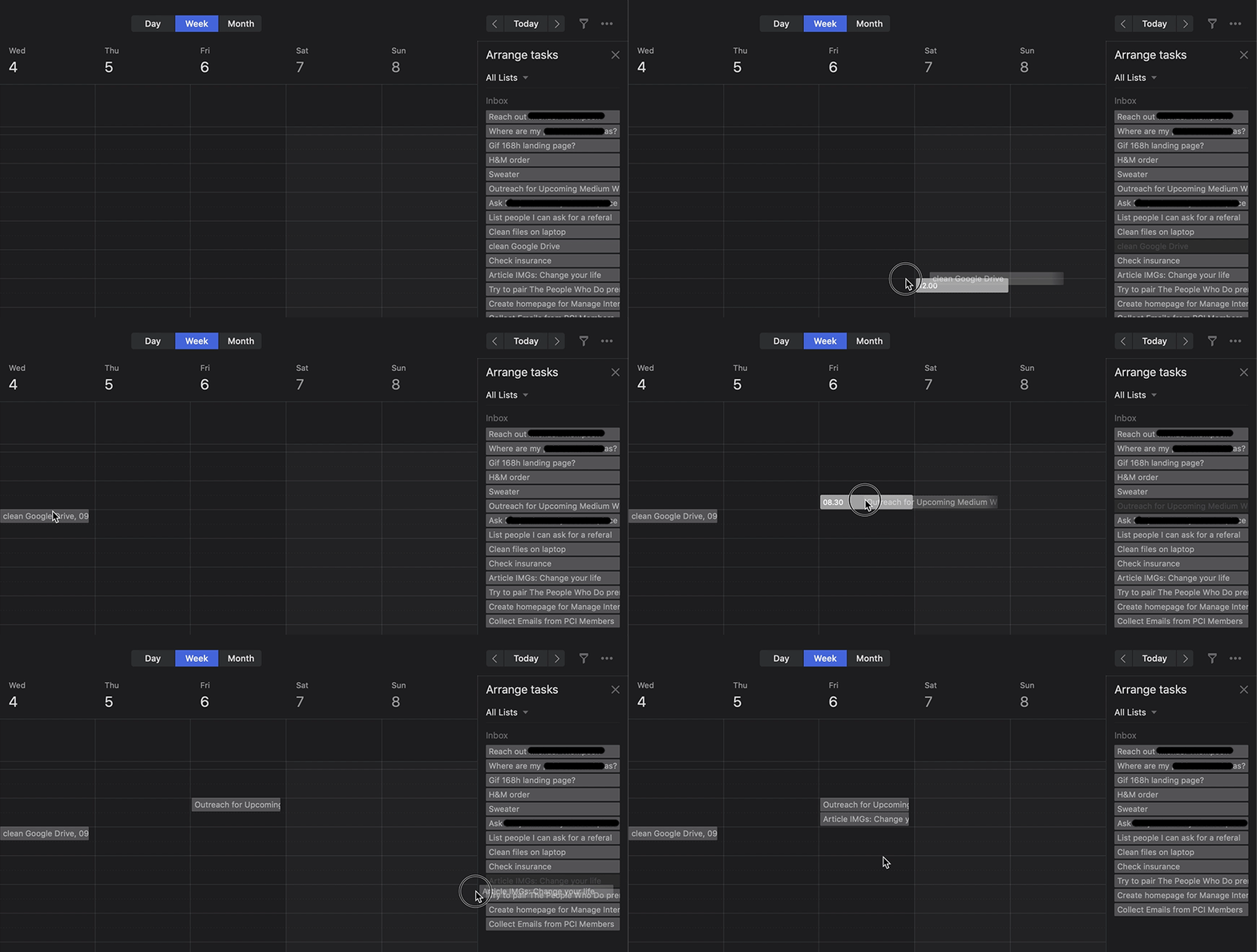
I’m a huge fan of Ticktick, and in particular of the “Arrange tasks” functionality which I haven’t seen done anywhere else. I can display my list of tasks on the right of the calendar, and drag and drop them straight from the list to the calendar. I can choose what tasks to display in the list: overdue items, only specific project items… This option is especially amazing for rescheduling overdue items because you can see how much of your week is already packed versus how much you have to add to it. I usually just type down all the things I have to do in one big list, and then switch to this view to move things over to the calendar.
2. Space optimization
Clean up after yourself
Again, full disclaimer, my office is a huge mess at the moment, and that’s because I didn’t clean up after myself. In my defense, it is currently being used by my girlfriend as a bedroom because it is adjacent to our son’s room, which makes it easier for her to go feed him when needed. And in my defense, I’ve always been messy, and I have a kid now.
I more and more force myself to clean up after myself, and to organize everything in boxes with labels. And this, by the way, doesn’t apply just to my office but also to the kitchen, the laundry room… I try to always remember to clean up after myself and to put things back where they belong/where I took them.
Label everything
Part of my effort towards more organization has been to put everything in boxes with labels on them. It’s a simple but time-consuming process:
- Spread all the things you want to sort through on the floor
- Based on what you see, come up with categories, move things around
- Very important: if one category has a lot more stuff than the others in it, you need to split it up into smaller categories
- Put everything from each category in separate boxes
- Label the boxes so you remember what is in them
Take things out of packages and put them in boxes
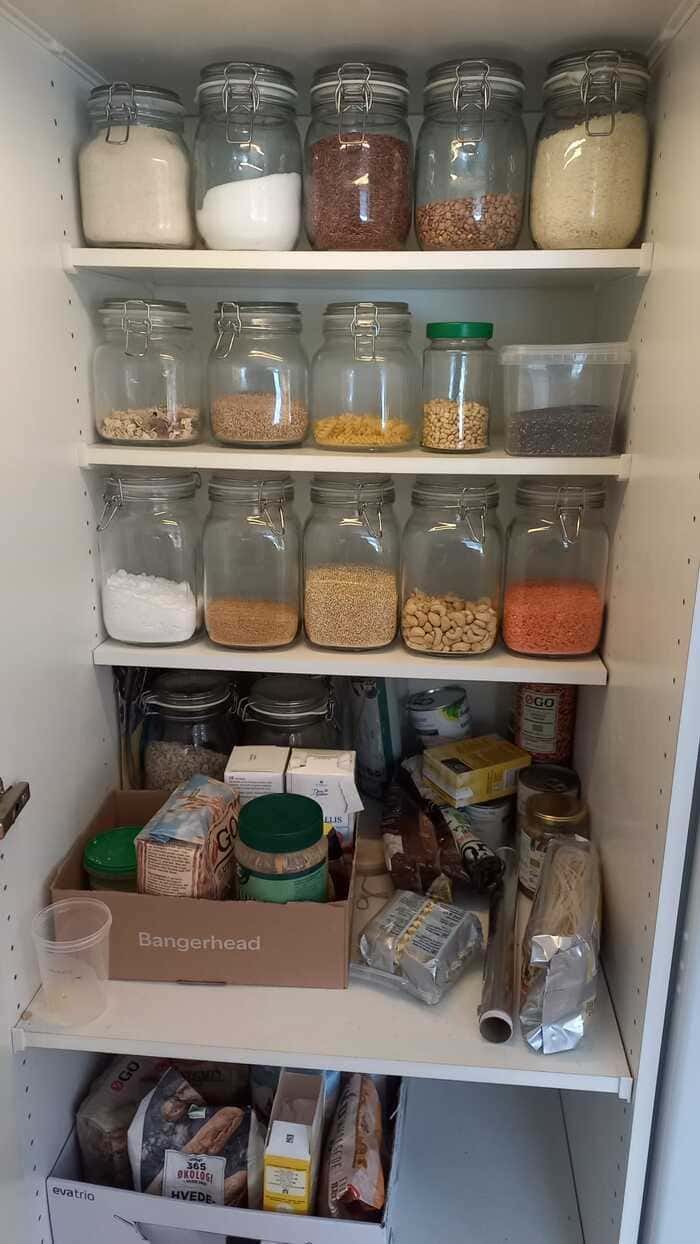
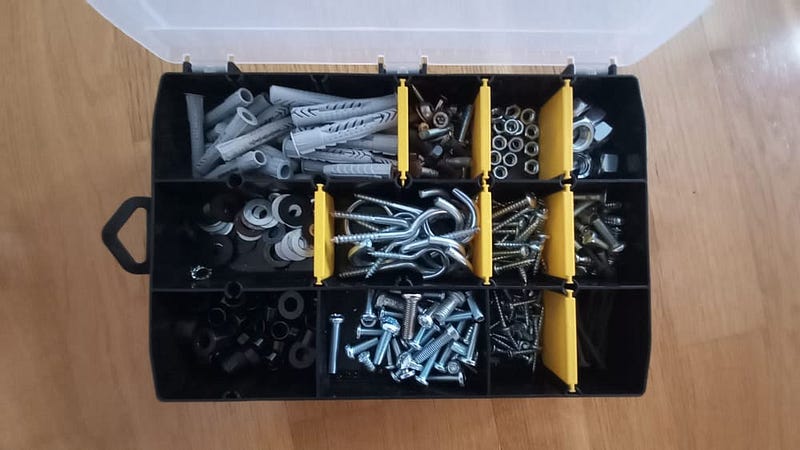
I just reorganized our pantry and I’m really proud of it. That’s the kind of side project I thrive in as a new dad on paternity leave. This organization trick definitely applies more to the kitchen, but it’s also useful for any room that would normally hold a lot of packaged goods. For instance, if you’re a DIY person and have a lot of screws and bolts, it’s better to sort everything in a clear plastic box with separators inside rather than keeping everything in its original packaging.
3. Finances
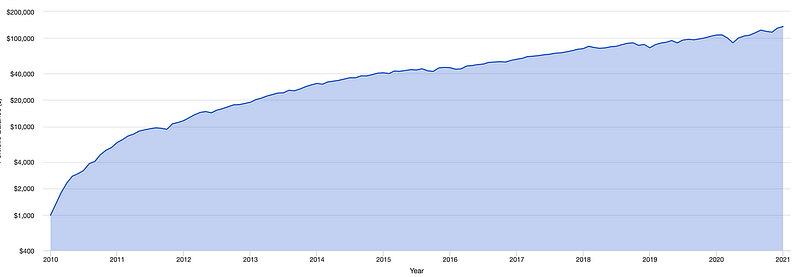
Invest 10% of your income
This is a rule I have followed ever since I started making decent money, and every month I can afford to invest more than 10% I do it without hesitation. I invest 90% of the money in the S&P 500 and the rest in stocks I think could do well, which is essentially stock picking (stay away from stock picking unless you can afford to lose the money).
“Compound interest is the eighth wonder of the world. He who understands it, earns it … he who doesn’t … pays it.”
— Albert Einstein
Some of the greatest fortunes in this world were built thanks to compounding (think Warren Buffet), and the best time to start investing your money that way was always yesterday.
Consider the value you get from purchases
Generally speaking, any physical item you buy will lose more than 50% of its value over the next 3 years. For this reason, I always favor spending money on experiences rather than things, and when I do spend on things, I make sure they’ll be a catalyst for great experiences. For instance, I spend a lot of money on bikes, but I’ve always loved biking, I’ve gone on countless trips across Europe, and the joy I get from riding my bike in the middle of nowhere with my hair in the wind and my face in the sun is priceless.
When it comes to electronics, I only change my phone when it’s really needed (not every 2 years), and I try to limit the money I spend there on things I 100% need, not just stuff that’s “nice to have”.
Always buy the same clothes
I understand this might be a little controversial because just like I get pleasure from biking in nature, some people do get pleasure from choosing nice garments and dressing nicely. And that’s totally fine, as long as you budget it and make sure that you do it for yourself, not to impress others.
In my case, I couldn’t care less about the clothes I wear, I think it’s a waste of money, and that’s why I always buy the same stuff:
- Sneakers → Nike Tanjun
- Pants → Only & Sons Cargo pants
- T-shirts → Only & Sons black and white tees
- Flanels → Lee Leesure
I know my size for each brand and order everything only once or twice a year, and that’s that for my fashion shopping. I spend less than $400 per year on clothes.
If you can’t buy it twice, don’t buy it
Except when it comes to big “useful” purchases (like a house or a car), always apply this rule: if you can’t buy it twice, you probably can’t afford it in the first place. People spend $2,000 on an iPad without thinking twice about the dent this kind of purchase is going to put in their savings. When you start to imagine buying 2 of those iPads, it helps put things in perspective. $4,000 for 2 lame tablets is a huge amount (I bought an iPad once and I barely ever use it).
4. Projects & idea management
Keep a Notion board for all projects
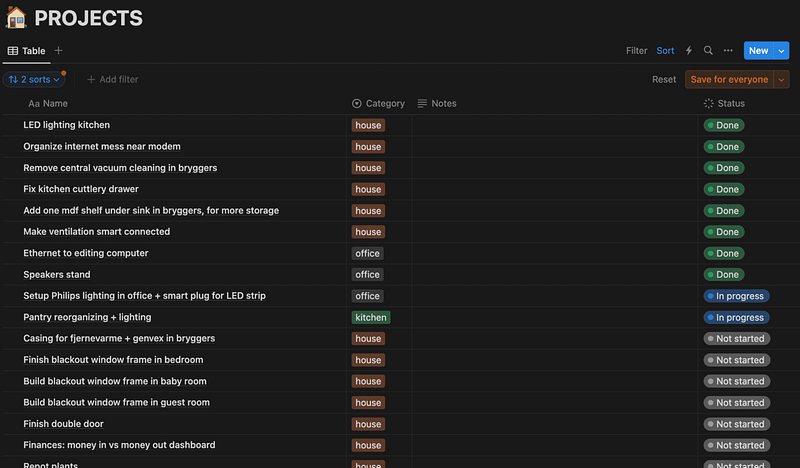
As much as I use Ticktick to plan when I’m going to work on specific tasks, I use Notion to keep track of the status of every project I have. Each project belongs to an overarching project category, which is laid out in a database in Notion. Here is an example of the table I use to keep track of projects around the house:
Except for more complex projects, I only have 3 possible statuses:
- Not started (grey)
- In progress (blue)
- Done (green)
Write down every idea, every time
I literally wouldn’t have written some of my best-performing articles which raked in hundreds of thousands of views if it wasn’t for writing down any idea I get at any point during the day (or the night).
I either write down in a notepad I almost always have with me, or on my phone if I don’t have time or I’m in a situation where I can’t write on paper. If I wake up in the middle of the night with a brilliant idea, I force myself to turn on the light and quickly jot it down on paper. I have also tried jotting things down without turning the light on (because that hurts my eyes) but this approach has been less successful. I would often wake up the next day trying to decipher a bunch of squiggles that made no sense, having no idea what I tried to write down anymore.
Prioritize
Finally, one of the main driving forces in my somewhat more-than-average productive life can be summarized in one word: prioritization.
A lot of people confuse a lack of time to do things with a lack of organization. Very rare are the people who actually have no time. “I don’t have time” is one of the most overused and overrated statements there is. “I don’t prioritize X Y or Z” is a more accurate statement.
We all have 168 hours in a week to do everything we want, and most of us can. The difference between productive people and the rest is that productive people take advantage of their time and know what to say no to, and what to say yes to.
I interviewed 50 productivity/business experts and made a 150+ page guide out of the project. This is road-tested advice from real people who get things done. Get it for free here.


