
Roux, the Ultimate Thickener
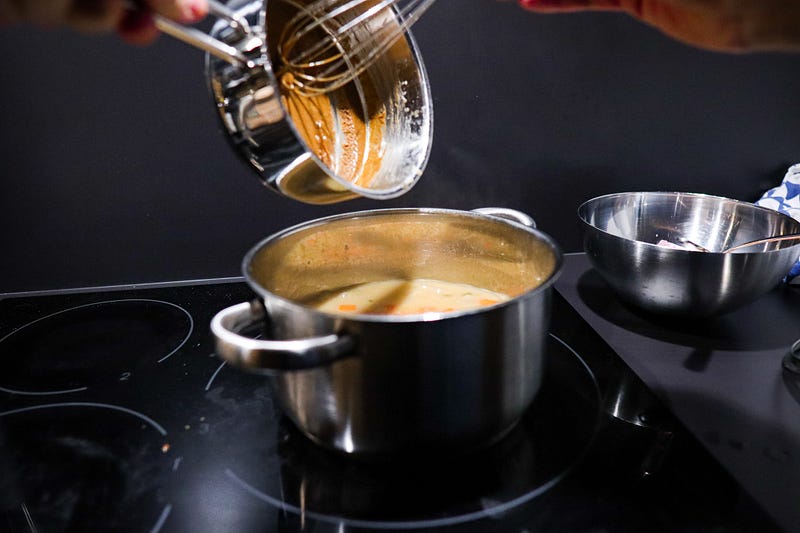
Chefs often say that a good sauce, soup, or stew should have “body” — a term they use to describe that ideal consistency where the liquid is neither too thick nor too thin, but just right. Recall the last time you had a soup that was too watery or a stew with the consistency of goop, and it quickly becomes evident what they mean.
In “35 Ways to Become a Better Cook,” I wrote about the three ways to thicken a cooking liquid: by reducing it through boiling, by adding a cornstarch slurry, and by incorporating a roux. Today, I’m going to try to convince you why roux is the most superior thickening method of all, and give you my hard-earned secrets to consistently getting it right.
Roux — pronounced “roo,” like in “rooster” — is a thickening agent originating from classic French cuisine. It’s prepared by whisking equal parts fat and flour in a saucepan and cooking the mixture, while stirring continuously, over medium-low heat.
To a classically trained chef, a roux is more than just a thickener: It’s the foundation of everything. Except for hollandaise, four out of the five mother sauces — béchamel, velouté, espagnole, and tomato sauce — start with a roux.
The great chef and restauranteur Auguste Escoffier, without whom today’s restaurants would not be as we know them, begins Chapter 1 of his 1903 book “Le Guide Culinaire” by introducing the reader to the principal basic culinary preparations. Prominently placed in the middle of his list is roux.
If you and I were to get technical, we would discuss that a roux is such a good thickener because it’s the cooked mixture of starches and fat. Cooking the roux accomplishes two things. First, it cooks off the raw-flour flavor. Second, it disperses the starches in the fat, preventing them from clumping when mixed with the liquid.
While you can make a roux with any fat or cooking oil and with any flour, the simplest preparation — using unsalted butter and all-purpose flour — is typically the best. (Once you’ve mastered the basics, get creative. When making cream soup, I like to brown bacon, pancetta, or guanciale, then separate the grease from the residue and use it to make a roux. The roux thickens the soup, and the browned cubes of meat become garnish.)
The keys to success are to use medium-low heat and to stir continuously, or the roux will blacken and burn. Since burnt flour tastes awfully bitter, you would have to discard the burnt roux and start over. Stir energetically but also carefully; you *do not* want to splatter hot, sticky roux on your arm, and I’m saying this from experience.
A good roux should be stiff and pasty. If yours is too runny, add more flour.
Depending on the extent of cooking, your roux can turn out white, blond, or dark.
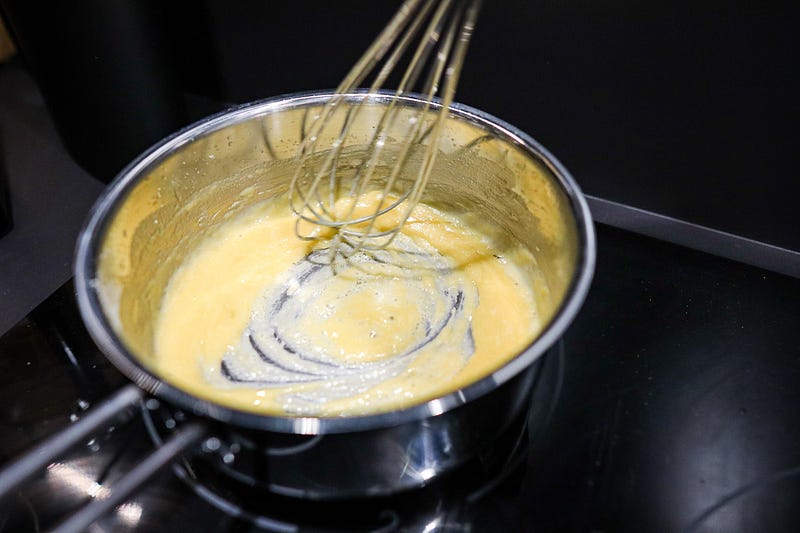
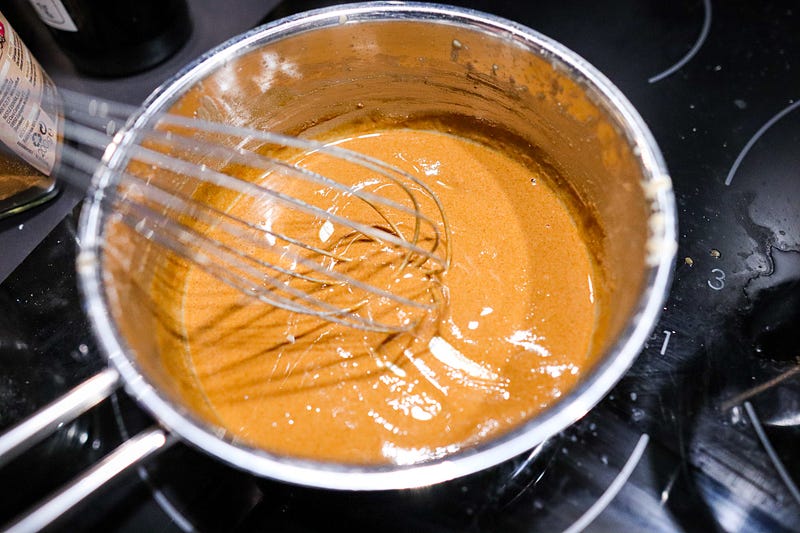
A white roux has minimal flavor and maximum thickening power. A dark roux can impart a lot of flavor to your dish but has lost a fair share of its ability to thicken. A blond roux is the golden middle that strikes a balance between the two.
White roux is done in 2–3 minutes. Blond roux, in 5–7 minutes. Dark roux can take 10 minutes, sometimes more.
The French like their roux white, cooked for just enough time to achieve a uniform consistency and cook out the raw-flour flavor. Across the Atlantic, the Cajuns and the Creoles like their roux — which they add to gumbo, jambalaya, and étouffée — dark, aromatic, and flavorsome.
Remove the roux from the heat and give it one or two minutes to cool down before incorporating it into the liquid. A roux that’s too hot will cause splatter, which hurts, and form lumps, which can ruin the mouthfeel of your dish.
What makes roux superior to all other thickening methods is its versatility.
The simplest way to thicken a cooking liquid is to boil it down. But prolonged boiling leads to overcooked ingredients, and more often than not, turning a dish into mush is a recipe for it being left uneaten. Although a cornstarch slurry involves less hassle, cornstarch makes your dish gummy and imparts it with a store-bought taste.
Roux, on the other hand, results in a gravy, cream soup, or hearty beef stew with the ideal consistency and provides you with significant control over the final result. For a basic thickener, make a white roux. To add depth and a richer color, cook your roux until it’s golden yellow or dark brown.
P.S. Thanks for reading! I post on Medium every week. Get an email whenever I do by going here →
You can also follow my Medium publication called Tastyble, where I — and other food writers — publish stories that get you cooking.