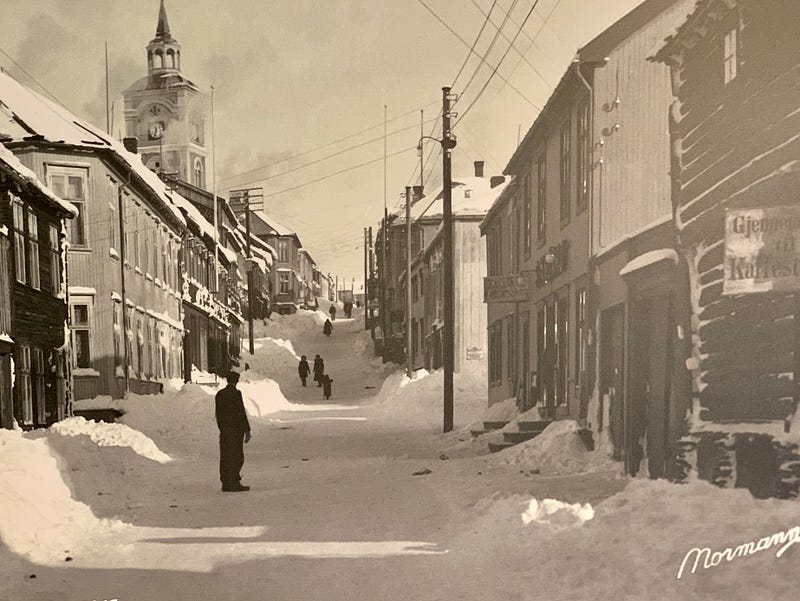
Roros: A Charming Town with a Dirty Past
The paradox of Norway’s pretty little Christmas town
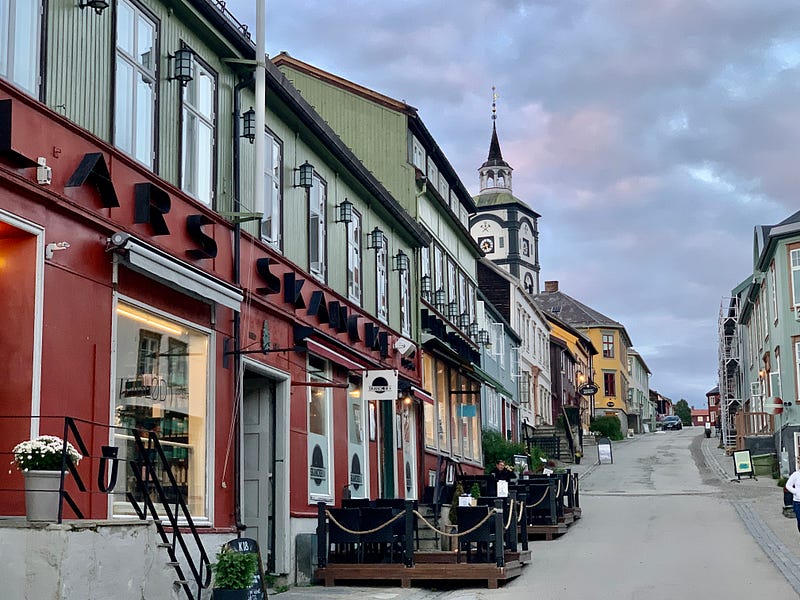
We knew we wanted to visit the historic copper mining town of Roros years before Teresa (my beloved spouse) and I planned our trip to Norway. While most towns have modernized over the years, Roros has meticulously preserved its traditional wooden houses; it’s like stepping into a historical film set. For this, it’s been designated as a UNESCO World Heritage Site.
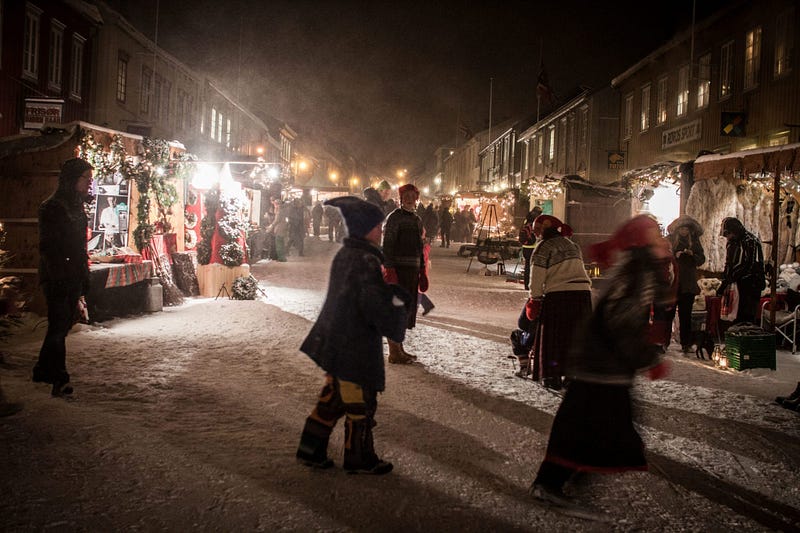
The town is most famous for how the residents do Christmas. As it says on the town website, “Røros is not decorated for Christmas — Røros is Christmas!” When it snows, the streets don’t get cleared. Instead, the roads stay covered in a soft white blanket. People ski through town or kick-push themselves along on a sledge — basically a cross between a scooter and a sled. The old wooden houses — gaily painted in reds, greens, yellows, or varnished so that the dark exposed timbers gleam beneath red-trimmed roofs — are all lit up with colored lights. There’s a Christmas market, and the whole town is a Christmas card.
Roros was featured in Netflix’s first Norwegian series, Hjem til Jul ( Home for Christmas in English), which is how Teresa and I first heard of the town. It’s the hilarious tale of a 30-year-old nurse named Johanne who works in Roros. She keeps getting put at the children’s table at her parent's home during their traditional Christmas Eve dinner because she is the only adult sibling in her family without a partner. In order to avoid this humiliation yet again, in early December the plucky but unlucky Johanne sets out to find a boyfriend for Christmas. Hilarity ensues, along with guffaw-inducing sexual hi-jinx. Who knew Norwegians could be so funny? The show showcases the best Christmas scenes of Roros. On-screen, the town looks absolutely enchanting.

Even though we arrived in late summer, Roros had us at “hei-hei” (Norwegian for “hello”). We drove through the main streets and immediately fell for the gorgeously kept rows of houses, we were utterly enthralled. Teresa had booked us into an air B&B in one of the historic homes, a 200-year-old wooden house built with thick, sturdy beams over a slate floor. Even the furniture was all old wood — handmade chests, heavy beds, and tables. As we toured the four large rooms that would be ours for three days, we felt as if we were living back in the 1800s.
Our hostess, Maren, told us because this was a historic house, it could not be modernized or altered in any way — other than adding electric wiring. So, no indoor plumbing? Well, the bathrooms were connected across a corridor in another part of the compound, but still completely private. This made for nightly adventures in the dark, feeling our way down uneven wooden stairs and over slate floors to distant toilet seats.
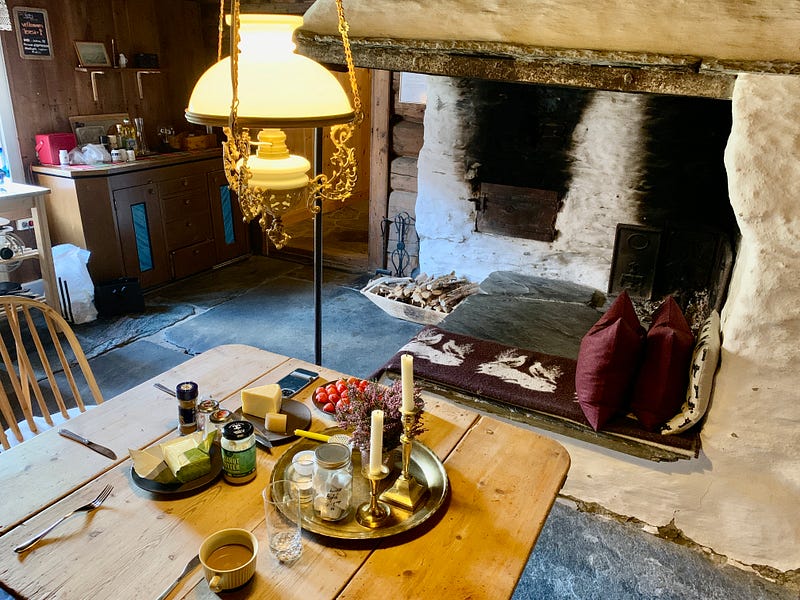
The kitchen featured a massive open fireplace in the corner with a fire already going. It had a traditional Norwegian design that sucked up all the smoke. Even without a grating, the open, slate-covered area around the fire was so wide, that there was no risk of sparks flying and flames spreading. Maren, told us, nonchalantly, that we could leave the house with the fire going, no problem.
After a stroll through the old town, Teresa gushed, “This is my favorite place in Norway!” (and Teresa’s not a gusher). I asked, what pulled her heartstrings so?
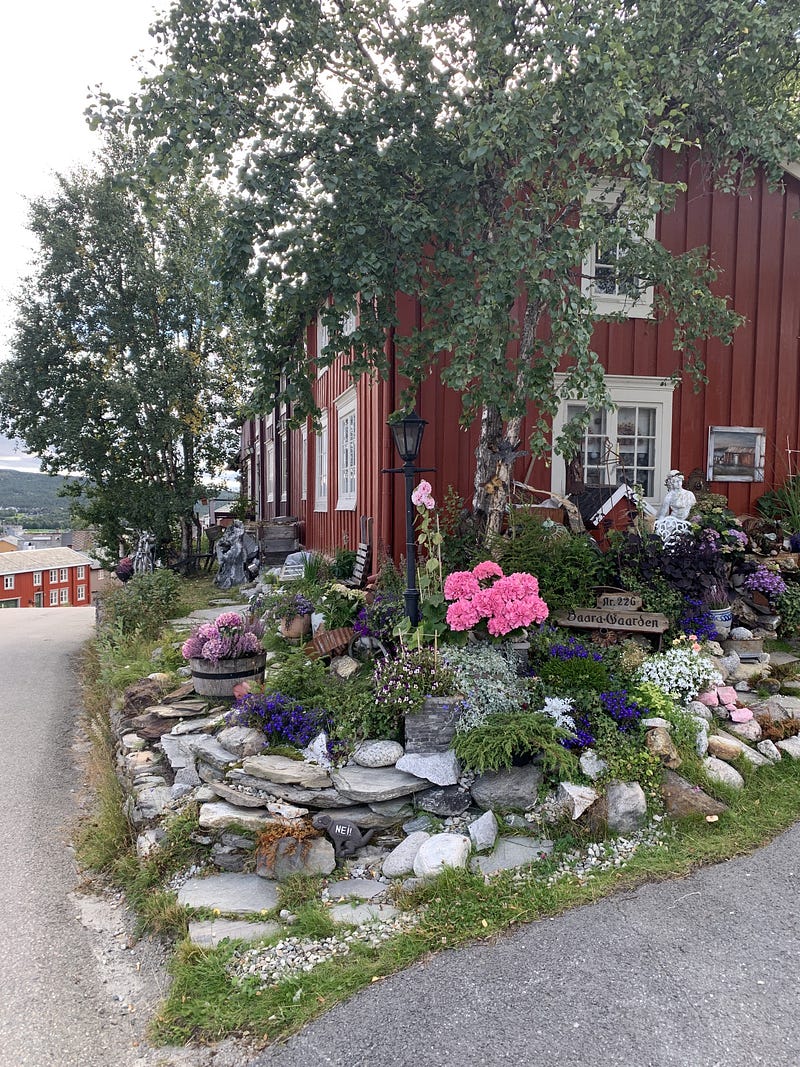
“It’s the careful attention to beautiful details in all the houses and shops.”
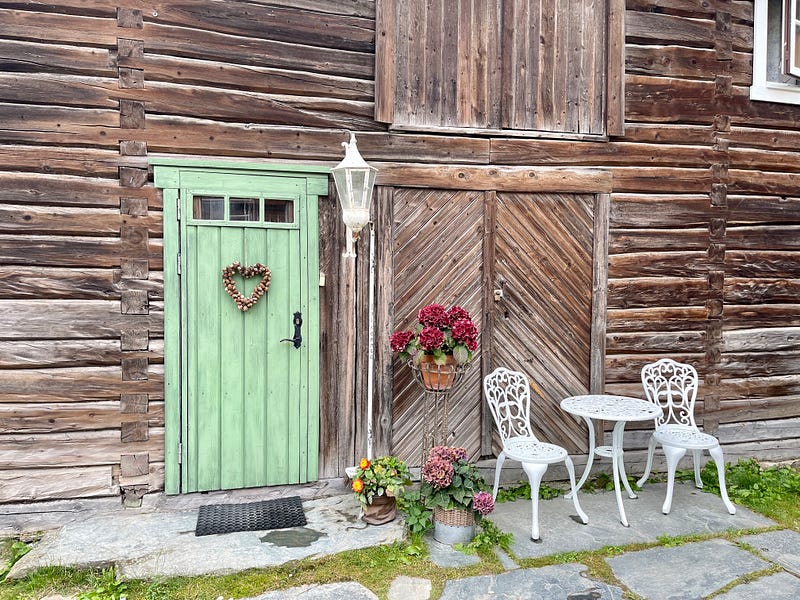
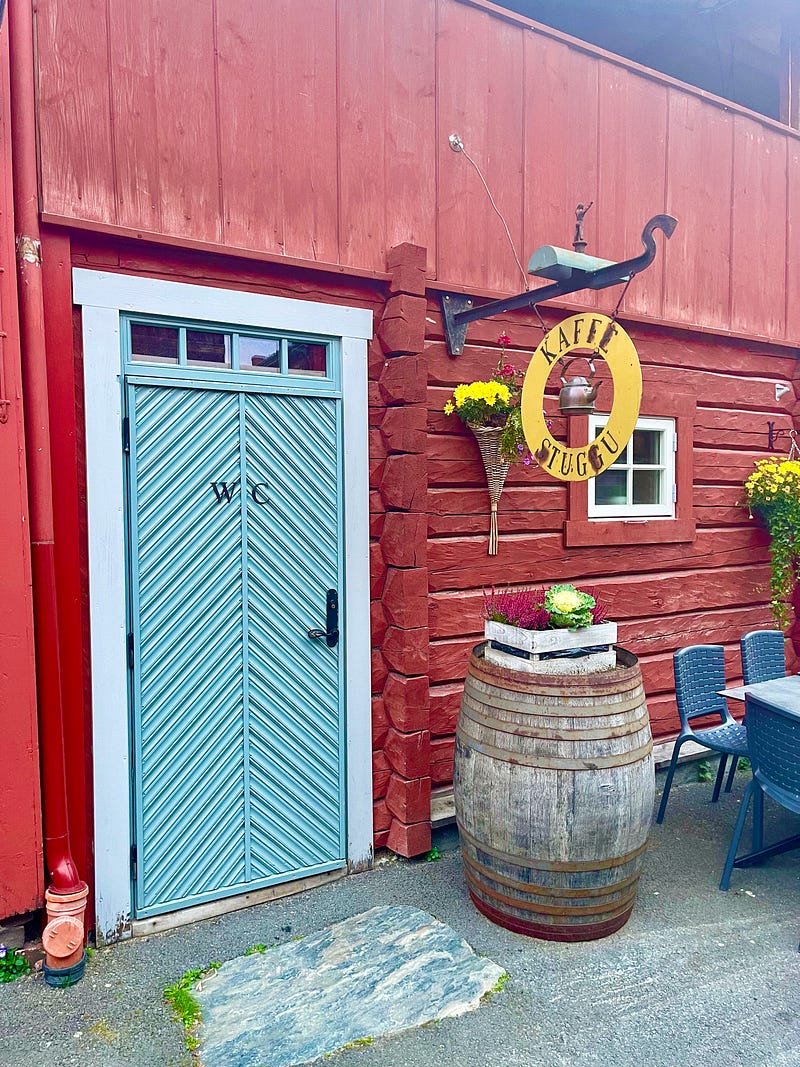
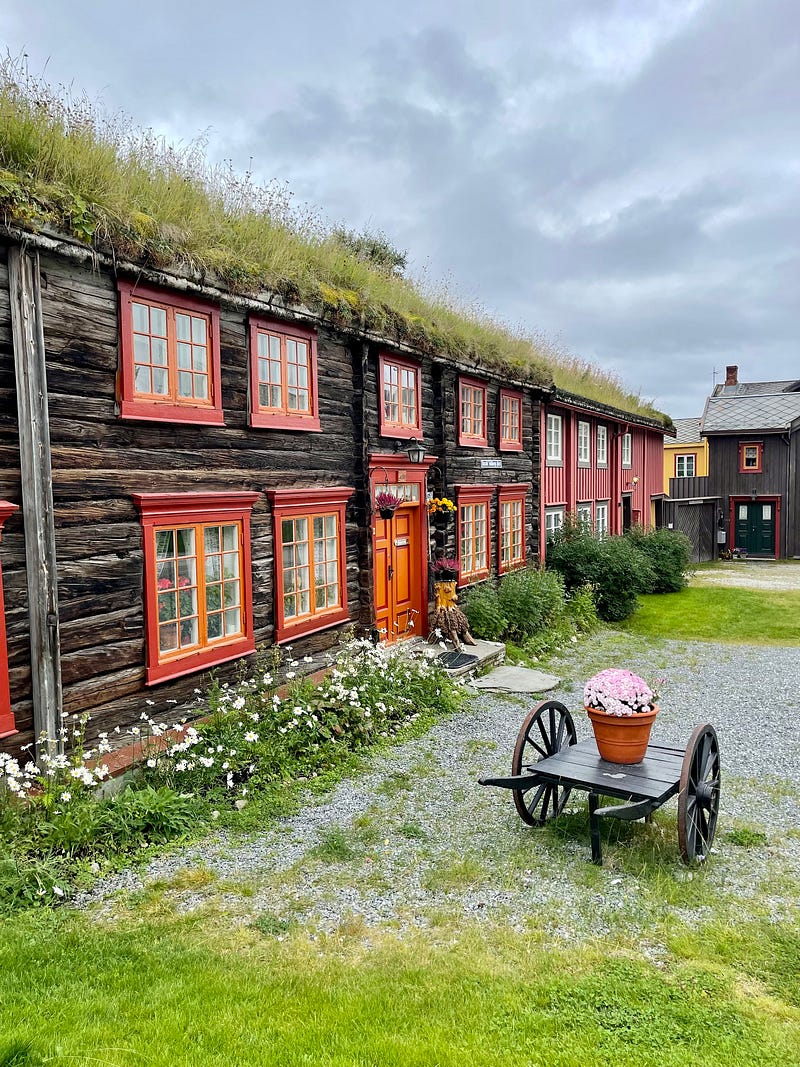
I saw it too: the flourishes in the facades, pots of colorful flowers set out by the doorways, whimsical statues, or works of art. It seemed as if the whole town devoted itself not just to preserving their heritage, but to celebrating it. This attention to detail is part of what has made it such a popular holiday getaway for Norwegians, and not just at Christmas time. It’s also a major wedding destination. On our second day there, a wedding was held in the massive 350-year-old town church up on the hill, overlooking the town.
“Roros gets vignettes,” Teresa declared, definitively. (And here are her best pictures, to prove it):
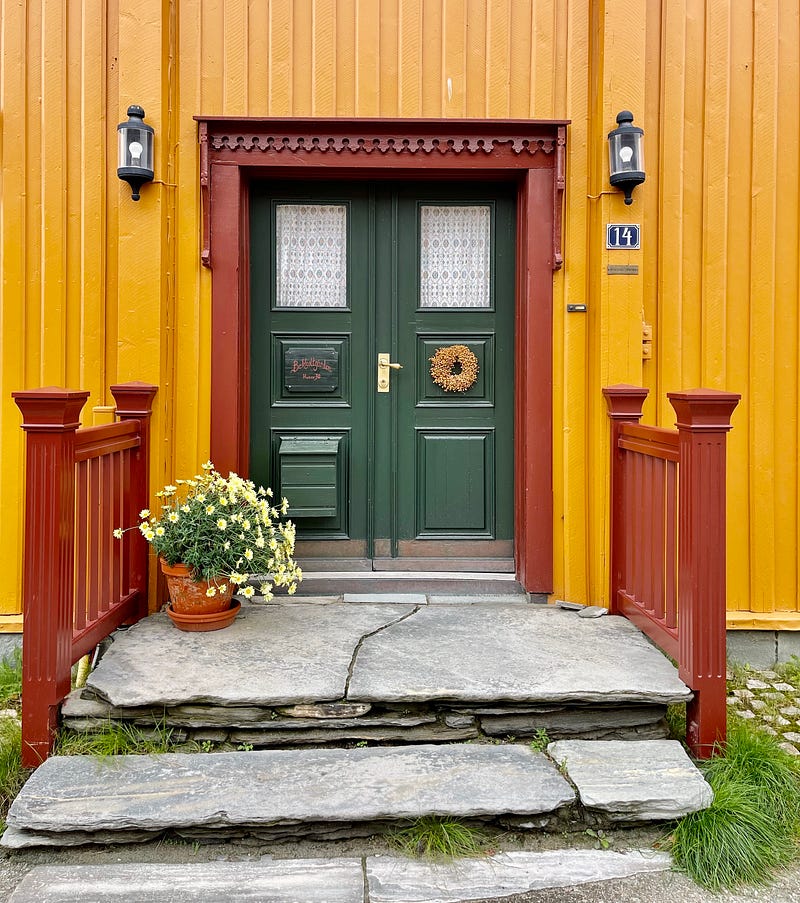
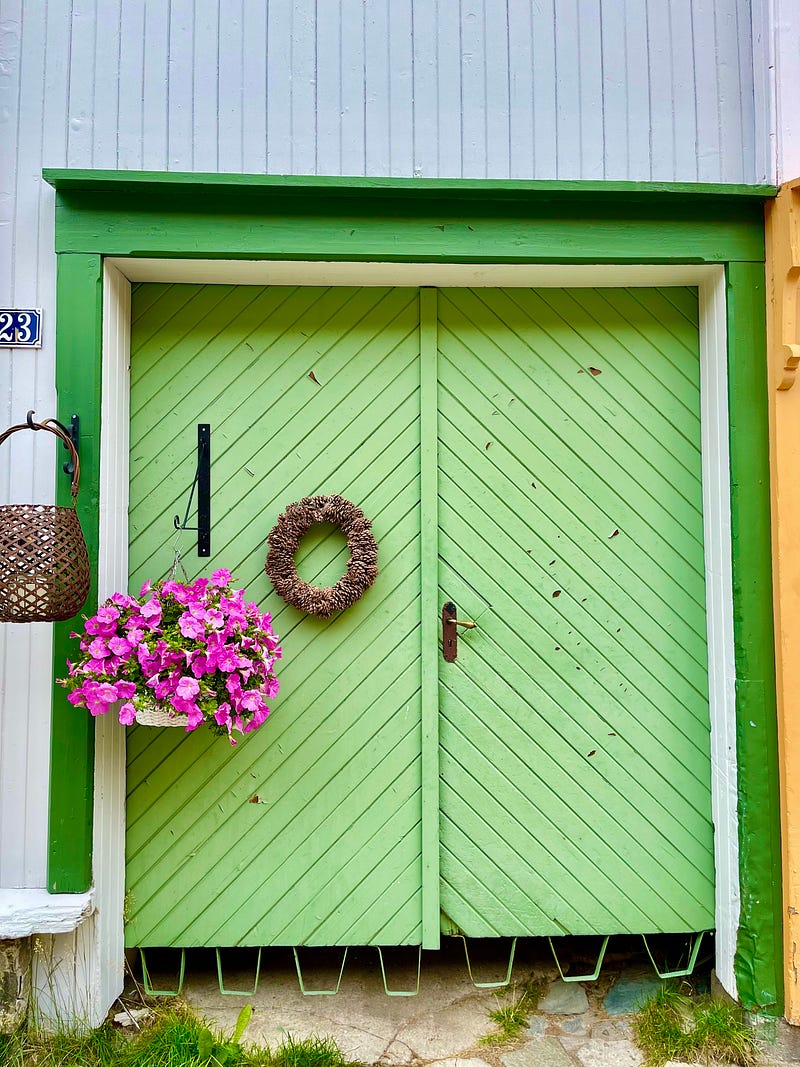
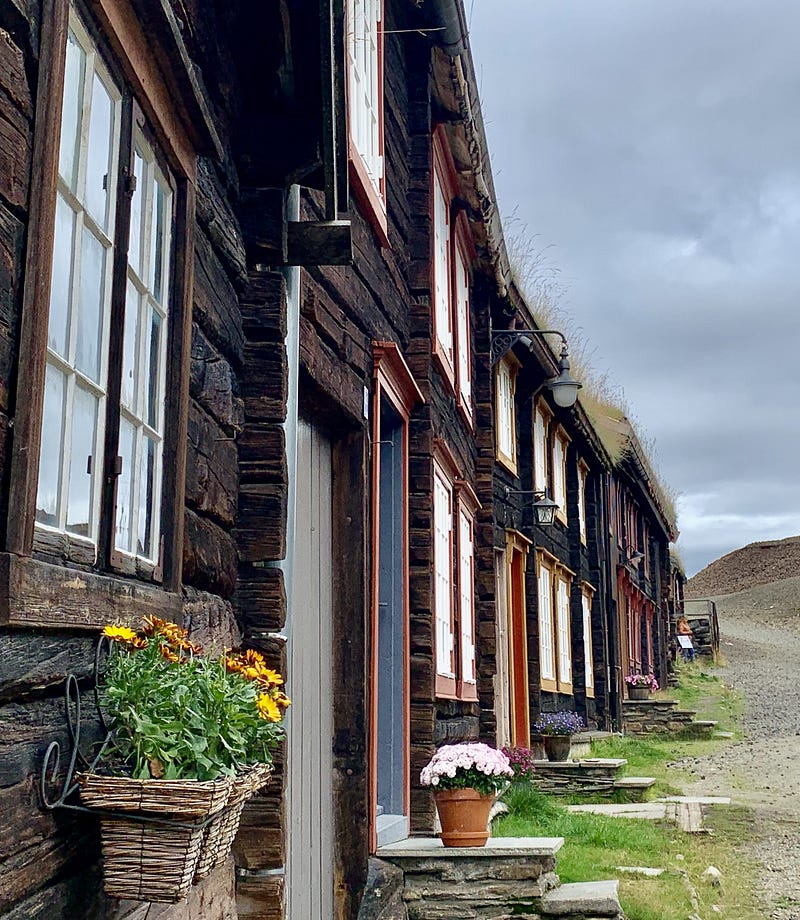
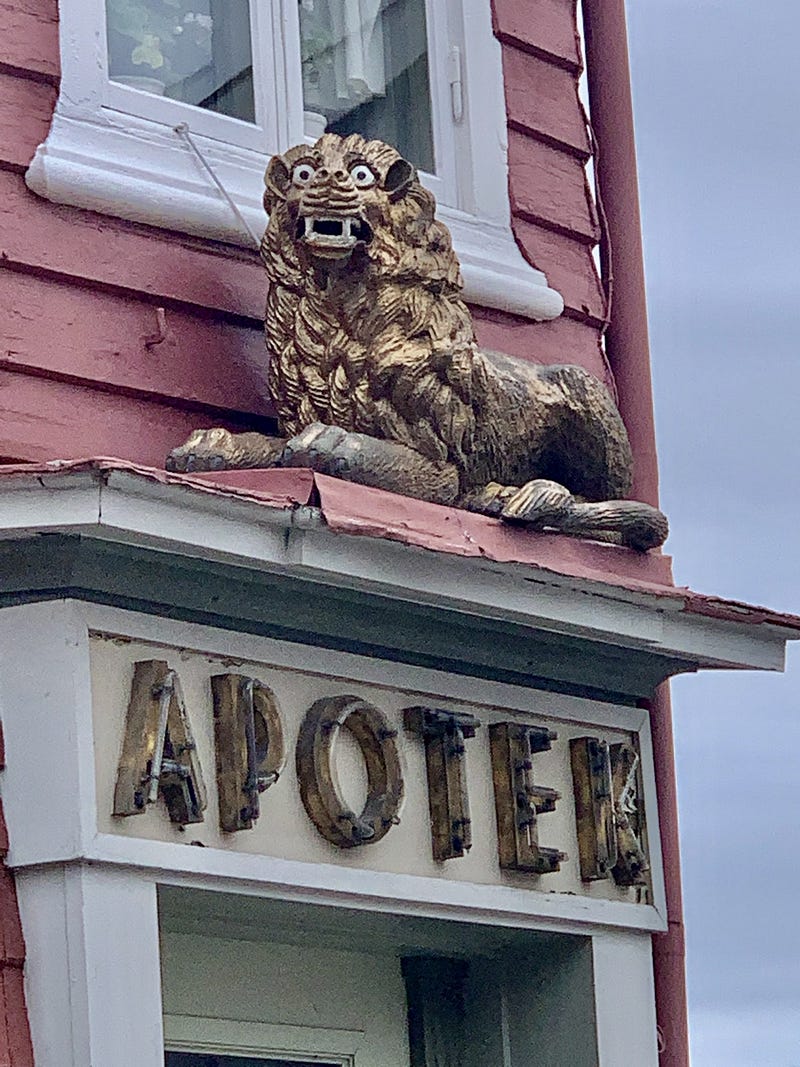
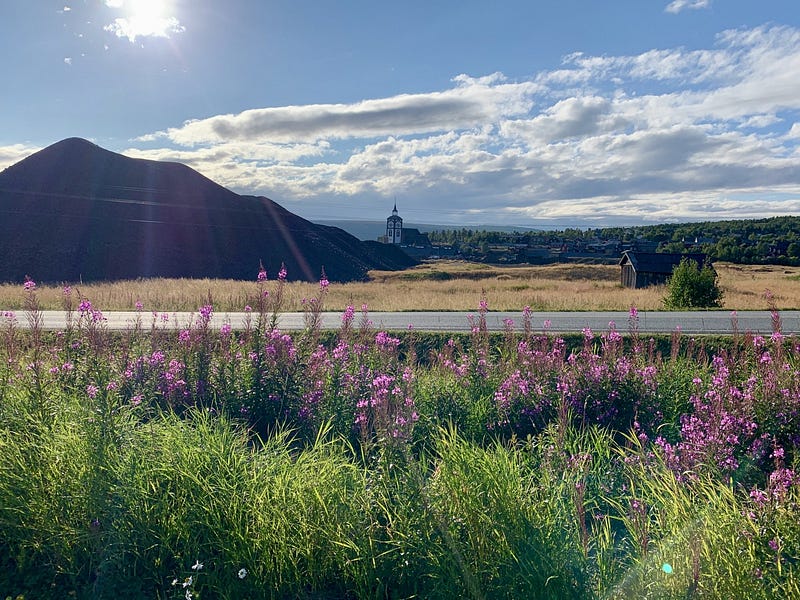
Just a few blocks from the church is the mining museum, housed in the town’s defunct copper smelter. It is also part of the UNESCO World Heritage Site. Across the cheerful little river from the museum are the Roros slag heaps: thousands of tons of pulverized brown-red rock that has been processed to remove the copper. The heaps rise more than fifty meters high, like massive, reddish-black sand dunes, on which nothing grows. They fill an area roughly the size of an Olympic stadium. They are also part of the UNESCO site. Signs warn visitors not to take any slag from the heap. No souvenirs!
The copper works are not simply part of Roros’ history, it is the very reason for the town’s existence. When copper deposits were discovered in the area in the mid-1600s, the king of Denmark (who ruled Norway at that time), granted a mining company (which became the Røros Copper Works) royal permission exploit all the resources within a 40 km radius — in return for a 10% share of the profits. The king also gave the company the right to compel farmers within that region to work for the new mine. Soon the town of Roros was built up near the first smelter, where the extracted ore was processed.
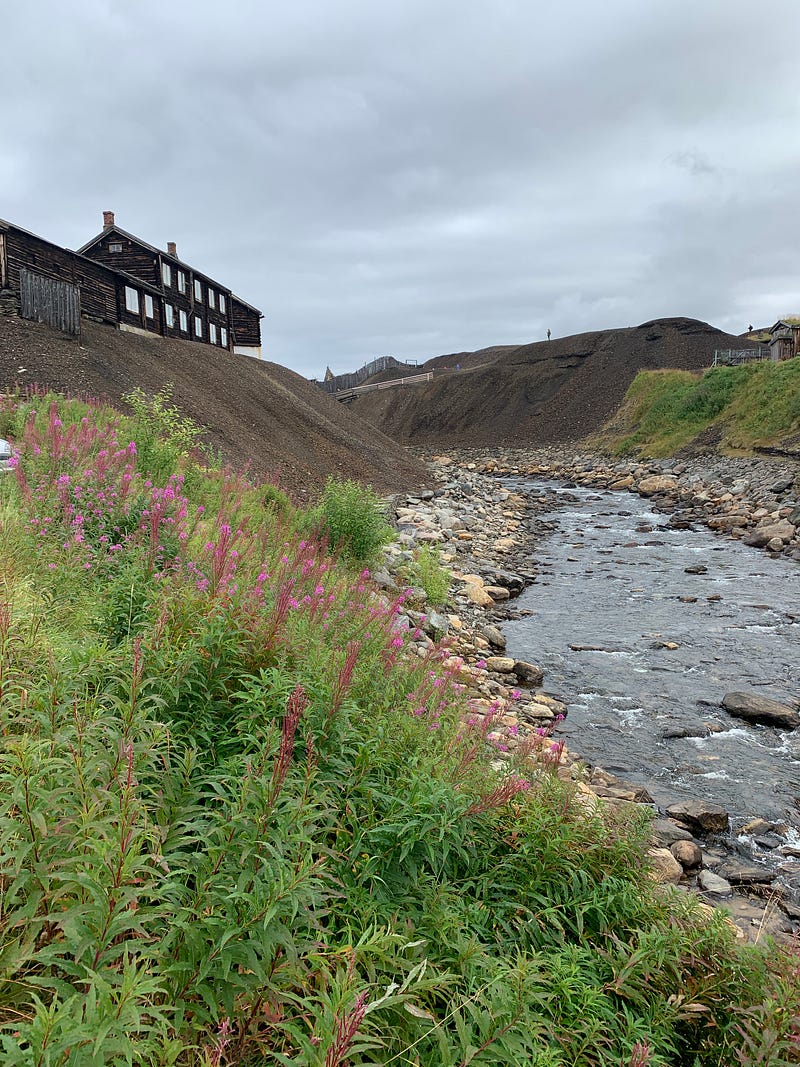
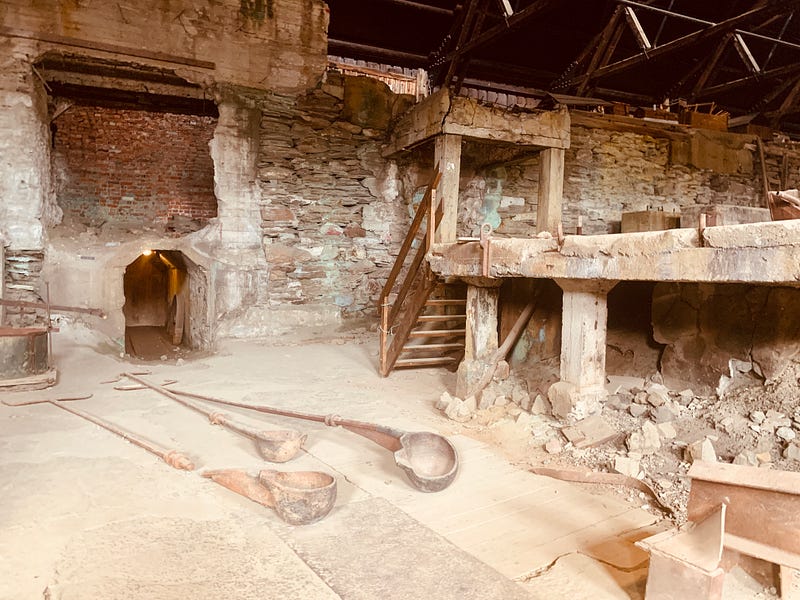
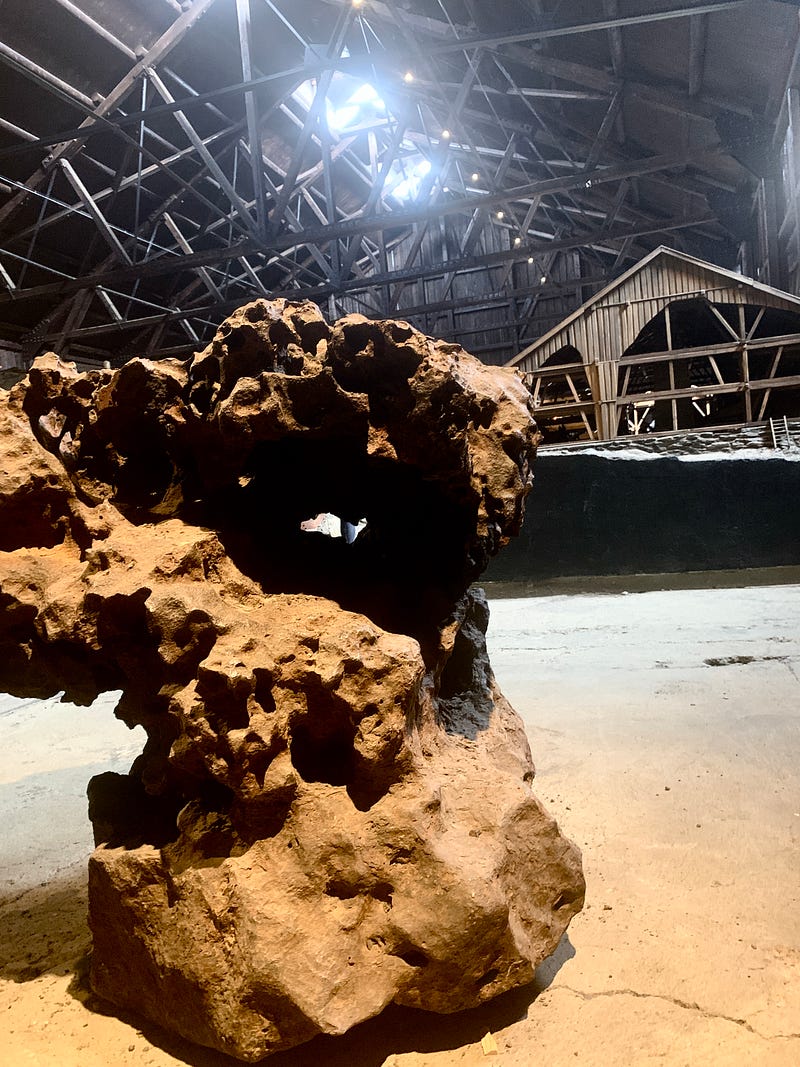
The process of mining copper involved not just digging up rock, but heating it, cracking it, and smelting it to separate the metal from the raw ore. To make heat hot enough for smelting they needed charcoal from burned wood. The forests around Roros were quickly chopped down for fuel. Soon, it became more economical to build new smelters in virgin forests and haul the raw ore overland from the mines — as several were now in production. Those new forests were, in turn, devoured to feed the smelters, and before more modern sources of heat were found, the entire 40 km radius of land, and more, had been cut clear of trees.
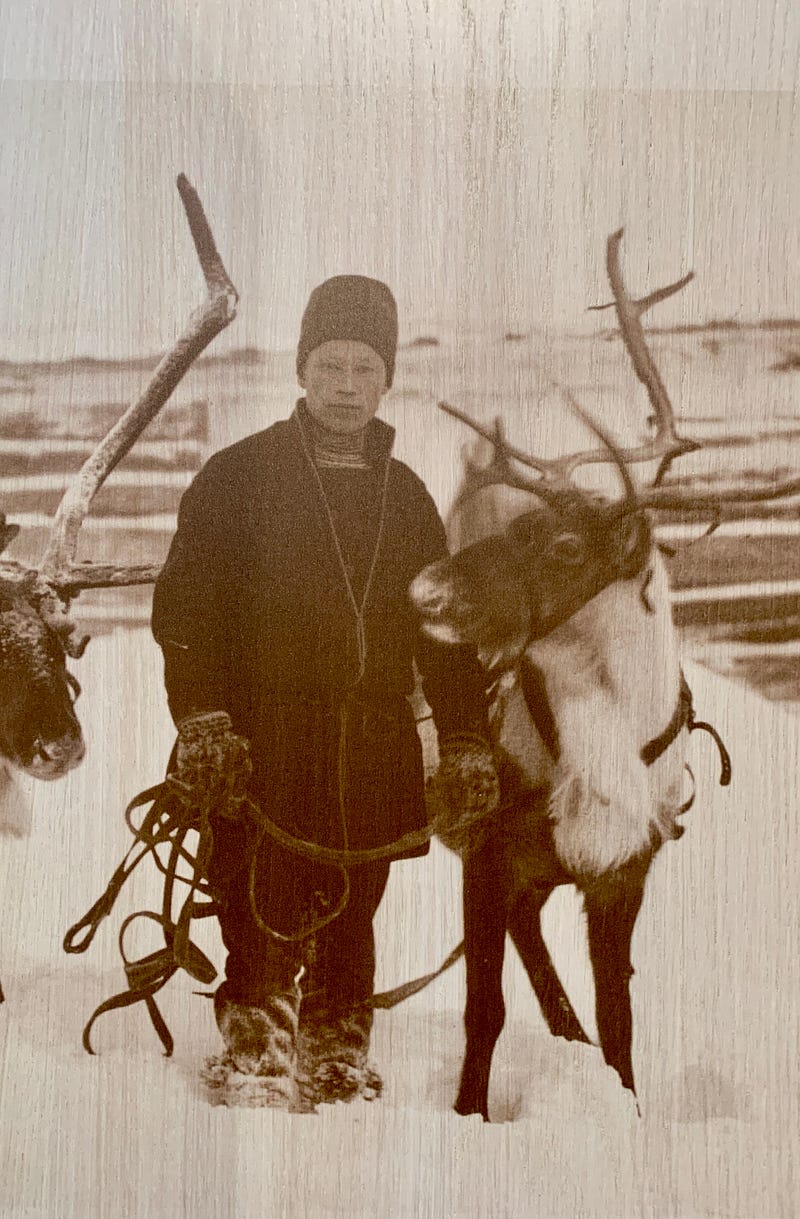
I try to imagine how this destruction must have appeared to the Southern Sami, the indigenous people who had lived sustainably on this land for thousands of years, hunting and herding reindeer. The museum includes a model of a Sami stone hearth found near Roros that dates from Viking times. What must the Sami have thought about the insatiable need of these new outsiders to demolish the whole forest in order to melt rocks for the shiny red substance?
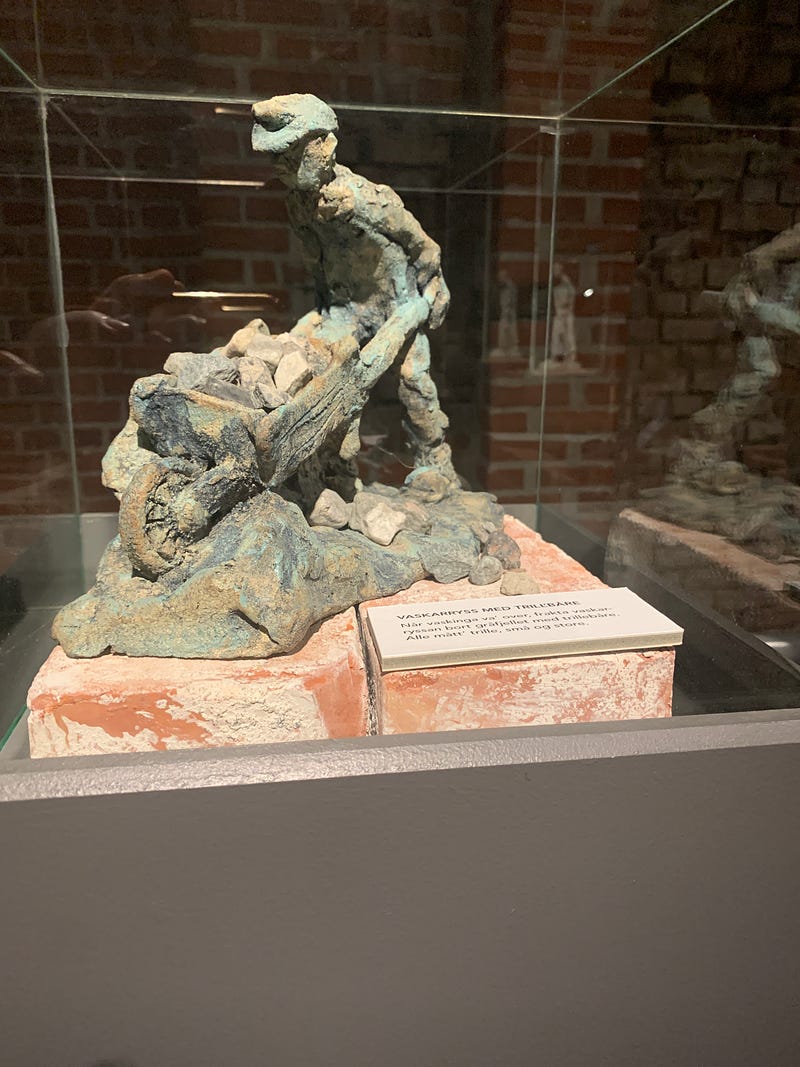
The miners were given allotments in Roros for houses and land to pasture their sheep and cows, for the mines did not pay well enough to feed them imported food. They had to grow their own. For a month each summer, the mines would close so that miners and their families could cut grass for winter fodder for their animals. The town — this shiny Christmas town — was usually submerged in a cloud of dust and sulphuric smoke from the smelter. It would fill the air and choke the inhabitants, until a smokestack was finally built in 1901, to send the fumes high into the sky instead.
From all this effort, 110,000 tonnes of copper were produced between 1644 and 1977 — to become copper coins, copper roofs, copper pots, and later, copper wire. A few men became very wealthy. Then in the 1970s, after several years of low copper prices, Røros Copper Works declared bankruptcy and went out of business.
But Roros remains. The forests have regrown, and the town has reinvented itself as a winter destination for cross-country skiing and snowmobiling, and in the summertime with hiking, and trail biking. Paradoxically, the town now thrives by promoting the very wilderness that it had obliterated in the preceding 300 years.
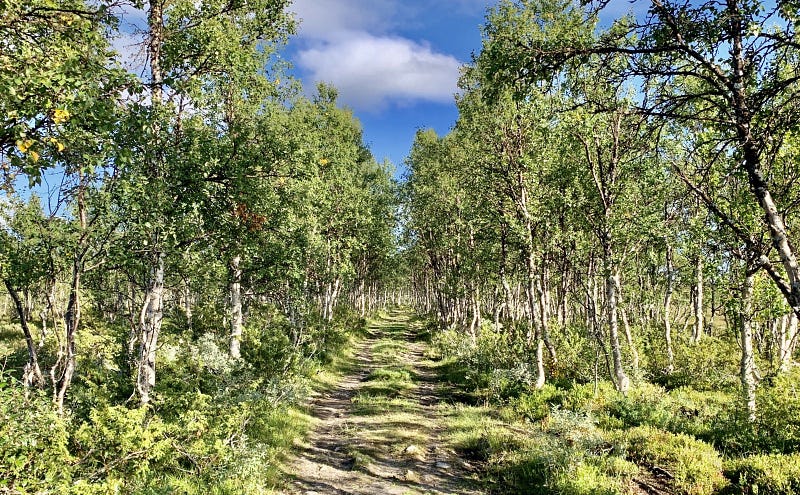
I went for a hike one afternoon, following a trail that led through the slag heaps to a straggly birch forest on the outskirts of town. I walked up a wild mountain slope along paths marked for use by bikers and cross-country skiers, depending on the season. The resilience of the forest surprised me. This land has healed itself. The Southern Sami people are still here too, as are their reindeer herds. They survived.
It made me think of Roros as a metaphor for humanity: we have so scarred the planet, even the atmosphere, in our wild rush toward industry and the mania for endless growth. But if we just simply stop in time, then with time, Nature will be capable of healing herself.