
Root Beer Roulette
Memorable venture into home-brewing
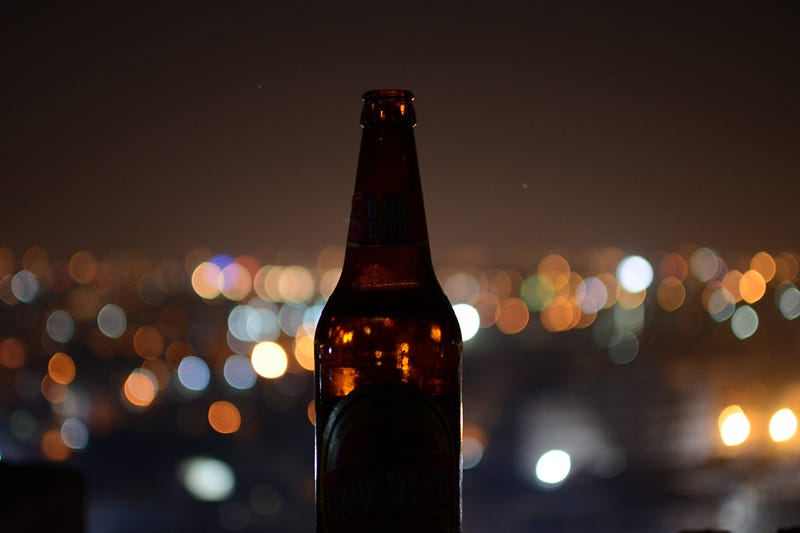
Prior to my being unceremoniously down-and-out-sized in 2004, I was a computer programmer at the Massachusetts Institute of Technology.
MIT has a reputation as a repository for the intellectually elite. Deservedly so as to its student and professorial population — auxiliary staff of the exalted acronym accrue I.Q. points by proxy.
By happenstance, I was the sole brunette amongst the bevy of blondes in my department. Tokenism insofar as hair color would have been superfluous — the day I came on board marked the commencement of my seventh month of pregnancy. My boss became a laughingstock when I waddled into work; my condition hadn’t been apparent at the interview ten weeks prior.
About a week after my arrival, I got to commiserating about labor with Trish, whose cubicle was cater-cornered to mine. We concurred that “labor” was a paltry misnomer for the process of pushing an eight-pound infant through a four-inch-diameter tube.
Like me, Trish was a two-time survivor; the first time, she’d suffered the misfortune of undergoing a C-section after twenty-two hours of labor. I’d had half the labor (minus the C-section) during which I had bemoaned — at max volume — the passing of the generation when the fateful words “Natural Childbirth,” were but a whisper in the ear of a sadistic obstetrician.
As to the present-day’s minimalist approach to anesthesia, I’d been peeved in general — and pissed in particular when, in my seventh month, I learned the miracle drug that had eased the agony of my second labor would not be on offer for my third. (Brand name: Nisentil, as in nice — until they take it off the market.)
After ten minutes of trauma-trading, Trish and I indulged ourselves in reminiscences of food cravings and aversions. Two months into my second pregnancy, I’d commenced to feel nauseated from the scent of sweets. The day I became queasy whilst preparing a batch of cookie dough was the day I self-diagnosed pregnancy number three.
Trish said that six weeks into her first pregnancy she’d developed an unquenchable thirst for root beer. She and her husband had sought out a recipe and gathered the requisite ingredients so that they could make their own.
Trish recounted their foray into home-brewing. Per the instructions, she and Joe had proceeded to boil water, birch bark, and ginger into a tea of sorts, then turned off the burner and left it to steep for two hours, after which they added sugar and molasses. After the liquid cooled further, to 75 degrees, they added yeast, let it sit for 15 minutes, then carefully poured the mixture into glass bottles, leaving two inches of room for expansion. After sealing the bottles, they placed them on the counter to ferment for the requisite three days prior to refrigeration.
It was about four hours thereafter, Trish recalled, that she and Joe were jolted awake by rapid gunfire; they cowered beneath their bed, praying for their lives and for the life of their unborn child.
She and Joe had lived in continual dread of Joe’s erstwhile partners in not-so-petty crime. The men had blamed Joe for a raw deal — now they had come to exact revenge! Trish and Joe prayed that the pair would content themselves with wreaking havoc and refrain from blasting brains.
Wishful thinking, most likely — they dashed into their closet, closed the door, and clutched each other until dawn. By then, it seemed safe to assume that the men, satisfied they’d delivered their “message,” had departed.
Trish and Joe tentatively descended the stairs to assess the damage to the ceiling.
It wasn’t as bad as they’d feared.
Most of the mess was on the floor, whereupon shards of glass had settled after the sixteen over-pressurized root beer bottles spewed their stuff.
When amateur brewers pour the brew into the bottle prematurely, the root beer completes its fermentation in the bottle, producing extra CO2 pressure that can cause bottles to explode.
This story is inspired by truth, massaged by imagination. The backstory as to the criminal-element is fictional.
So as not to give the ending away from the get-go, I retracted the draft spoiler subtitle: Rat-a-tat-tat! 1) run for cover; 2) clean up crime scene.


